You are using an out of date browser. It may not display this or other websites correctly.
You should upgrade or use an alternative browser.
You should upgrade or use an alternative browser.
How agriculture works thread
- Thread starter ArlyA
- Start date
- Views: 186782
More options
Who Replied?
/ How agriculture works thread
#321
sixdogs
Super Star Member
- Joined
- Dec 8, 2007
- Messages
- 15,727
- Location
- Ohio
- Tractor
- Kubota M7040, Kubota MX5100, Deere 790 TLB, Farmall Super C
Here's something developing for next year that looks like it's going to really take off. It's called "Short Stature" corn and will only grow 6' to 8' tall rather than the 9' to 11' height typical of field corn. It's less likely to be damaged in winds and presumably needs less water and fertilizer. You can read about it here:
:max_bytes(150000):strip_icc()/Mailson20Pignata-80428638420small-31723c138b15407da8e5f61ef410b0ba.jpg)
 www.agriculture.com
As with the new shorter wheat varieties, many fields are now planted with a type that is only maybe 18" tall rather than the old 3' and up varieties. It's way easier to combine and gone is the need to bale and get rid of all that straw on the ground.
New Bayer Row Crop Herbicide With New Mode of Action Coming by 2030
Bayer’s Short Stature Corn aimed for first commercial launch in 2024.
As with the new shorter wheat varieties, many fields are now planted with a type that is only maybe 18" tall rather than the old 3' and up varieties. It's way easier to combine and gone is the need to bale and get rid of all that straw on the ground.

Buggs67
Veteran Member
You often reference "around here" but your location is secret. I understand not wanting to give your address but a state or region would be interesting to those of us in other regions.The old moldboard plow went to the scrap yard a decade ago least around here. Everything here is no till but along with that comes the bug problem.
Richard is correct, row crop farmers cannot really cut back unless the go to fallow fields and there isn't any income in that.
Will be interesting to see what they do this upcoming year. I still maintain that the ones that are over extended will probably bite the bullet. They cannot weather more than one bad year and around here, last year wasn't good. Too much rain. So bad around here that they are taking corn off now or what they can get that hasn't fallen over. Beans weather cold and snow much better than field corn. The stalks get brittle and the roots rot and over they go. Combines cannot pick up corn on the ground. Me, I keep thinking about buying a new tractor or 2 but I'm waiting to see how farm auctions go around here. There are quite a few late model tractors than may wind up on the block and I have the money squirreled away to buy one or more if the price is right.
Brings me to another point and that is, I'm wondering if the current uptick in tractor prices (used, not new) is going to come to an end, at least for the post 4 units. I can see the value increasing on the pre 4 units as there are fewer and fewer available (not made anymore) and well cared for ones are commanding a steep price today.
Creamer
Elite Member
In the 70s I would pull into a quarter of native hay with a Super M TA pulling a 9' sickle bar mower and a 12' dump rake. 3 days later that quarter was done and I moved onto the next/ Two sickles a day and sharpen them both in the morning before I came out. Usually did not start cutting until 10:30 because of the dew and would quit around 7:30 because of the dew and it getting tough. A quarter would look awful big when you pulled into it but feel like a great accomplishment 3 days later.
I still have the 12' rake that I use for picking up small branches and twigs off of the various trees on my property as well as a little haying. I use a 7' siclke bar because I couldn't talk my brother into letting me have the 9' - they still use it for weed trimming and odd jobs around the ranch. (They use a double 9' sickle bar mower now for this type of hay.)
I still have the 12' rake that I use for picking up small branches and twigs off of the various trees on my property as well as a little haying. I use a 7' siclke bar because I couldn't talk my brother into letting me have the 9' - they still use it for weed trimming and odd jobs around the ranch. (They use a double 9' sickle bar mower now for this type of hay.)
OP

ArlyA
Super Star Member
- Joined
- Mar 18, 2016
- Messages
- 13,701
- Tractor
- Outlander1000 6x6, Ego lawn mower and shopping for tractor
I neat vidoe here from 1980 copping and crimping hay or grass. I can't tell where this film was made. Do note the Hessten shelf-powered coppers. This is the time frame I was working in the hay business.
OP
ArlyA
Super Star Member
- Joined
- Mar 18, 2016
- Messages
- 13,701
- Tractor
- Outlander1000 6x6, Ego lawn mower and shopping for tractor
Our good neighbors to the north in Saskatchewan Canada. This is very good planting to harvesting video plus he threw in some old film in the middle of it. I'll guess its his family binding wheat 60+- years ago. The little spots of trees in the fields might be homestead sites. I can't tell the size of the combines but they might be the largest class 9 JD's.
Last edited:

ovrszd
Epic Contributor
- Joined
- May 27, 2006
- Messages
- 33,727
- Location
- Missouri
- Tractor
- Kubota M9540, Ford 3910FWD, Ford 555A, JD2210
Excellent video. I shared it to my large farmer friends. Would have been a great place to have a Drone!!!!Our good neighbors to the north in Saskatchewan Canada. This is very good planting to harvesting video plus he threw in some old film in the middle of it. I'll guess its his family combining 60+- years ago. The little spots of trees in the fields might be homestead sites. I can't tell the size of the combines but they might be the largest class 9 JD's.
Thanks for posting this Arly!!!


JethroB
Veteran Member
- Joined
- May 19, 2020
- Messages
- 2,337
- Location
- Really Deep Southeast
- Tractor
- Kubota L5460 HSTC Cab, MF 135 Diesel
Lime spreaders are busy around here. I got behind a high clearance one doing 50 mph. I give them a wide berth as they are pretty intimidating meeting on the road.

Buggs67
Veteran Member
Never seen anything like that!!Lime spreaders are busy around here. I got behind a high clearance one doing 50 mph. I give them a wide berth as they are pretty intimidating meeting on the road.
View attachment 735577
But I had a combine with all his lights on come around the traffic circle at me one night. Made me think of Close Encounters.
OP
ArlyA
Super Star Member
- Joined
- Mar 18, 2016
- Messages
- 13,701
- Tractor
- Outlander1000 6x6, Ego lawn mower and shopping for tractor
They are not uncommon in the Midwest and they spread multiple products with them. New seen one doing lime.Never seen anything like that!!
But I had a combine with all his lights on come around the traffic circle at me one night. Made me think of Close Encounters.

ovrszd
Epic Contributor
- Joined
- May 27, 2006
- Messages
- 33,727
- Location
- Missouri
- Tractor
- Kubota M9540, Ford 3910FWD, Ford 555A, JD2210
I've spread thousands of tons of lime with a Big A. Tens of thousands of acres of dry fertilizer. Really hard on the knees.They are not uncommon in the Midwest and they spread multiple products with them. New seen one doing lime.
aczlan
Good Morning
- Joined
- Mar 7, 2008
- Messages
- 17,540
- Tractor
- Kubota L3830GST, B7500HST, BX2660. Formerly: Case 480F LL, David Brown 880UE
Saw someone who was converting one to run a big hay baler. Looked like quite the project.I've spread thousands of tons of lime with a Big A. Tens of thousands of acres of dry fertilizer. Really hard on the knees.
Aaron Z
Creamer
Elite Member
Why is it "hard on the knees"?I've spread thousands of tons of lime with a Big A. Tens of thousands of acres of dry fertilizer. Really hard on the knees.
Creamer
Elite Member
That is nice deep and friable top soil. He is plowing deep.And because small scale farming is also very important and a big part of the farming on my country, here is video of a TYM T450 preparing a small field.
ovrszd
Epic Contributor
- Joined
- May 27, 2006
- Messages
- 33,727
- Location
- Missouri
- Tractor
- Kubota M9540, Ford 3910FWD, Ford 555A, JD2210
The tires only run 3-5 psi air pressure for soft flotation. This causes them to be very squishy. So they tend to "bounce" along. Hard to stay in the seat. So, either fasten a seat belt tight which will rub you raw in a few hours. Or brace your feet on the floor, which wears out your knees by the end of a long day.Why is it "hard on the knees"?
Was common to spread 1,000 acres of dry fertilizer in a day, 60ft swath. That's approximately 137 miles of field travel. Plus however many miles of roading between fields.
sixdogs
Super Star Member
- Joined
- Dec 8, 2007
- Messages
- 15,727
- Location
- Ohio
- Tractor
- Kubota M7040, Kubota MX5100, Deere 790 TLB, Farmall Super C
Deere seems to be softening on the Right to Repair thing.
:max_bytes(150000):strip_icc()/IMG_2084-2000-6656a5cbf0b248d081e3d48cf1bfcbd6.jpg) www.agriculture.com
www.agriculture.com
John Deere Expands Access to Self-repair Resource Service
Customer Service Advisor offers manuals and allows users to take diagnostic settings and perform limited calibrations.
zoedog2012
Silver Member
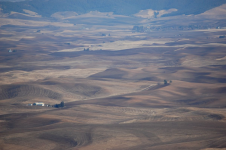
I drove Gleaner CH's in the 60'sCougsfan - Back in the 1970s I was project engineer for Gleaner's hillside combines - used only out in your country. Came across a family farmer in Whitman County north of St John, around Ewan. Started by father in the 1940s, was a schoolteacher, switched to farming. When I caught up with them in 1973 the family farm had grown to 20,000 acres. The father who started the farm is gone, as are his sons who joined him in the operation, but his grandsons are still running the operation. They incorporated when one of the two sons of that second generation got a divorce that nearly wiped them out. Result is still a little family operation, 20,000 acres in the most fertile wheat growing region of the USA (Whitman County produces the most wheat of any county in the USA due to its soil and climate). They would probably have incorporated anyway but a divorce forced the situation. Picture is from Steptoe Butte
View attachment 695758
sixdogs
Super Star Member
- Joined
- Dec 8, 2007
- Messages
- 15,727
- Location
- Ohio
- Tractor
- Kubota M7040, Kubota MX5100, Deere 790 TLB, Farmall Super C
What a spectacular view. How was land like this formed?Cougsfan - Back in the 1970s I was project engineer for Gleaner's hillside combines - used only out in your country. Came across a family farmer in Whitman County north of St John, around Ewan. Started by father in the 1940s, was a schoolteacher, switched to farming. When I caught up with them in 1973 the family farm had grown to 20,000 acres. The father who started the farm is gone, as are his sons who joined him in the operation, but his grandsons are still running the operation. They incorporated when one of the two sons of that second generation got a divorce that nearly wiped them out. Result is still a little family operation, 20,000 acres in the most fertile wheat growing region of the USA (Whitman County produces the most wheat of any county in the USA due to its soil and climate). They would probably have incorporated anyway but a divorce forced the situation. Picture is from Steptoe Butte
View attachment 695758