To till or not to till 😁

   / To till or not to till 😁 #1  

1930

Platinum Member
Joined
Sep 9, 2018
Messages
933
Location
Brandon/Ocala Florida
Tractor
Kubota B6100E Kubota L 2501 Kubota T1460
Help me to decide
Try to keep short
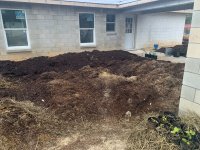
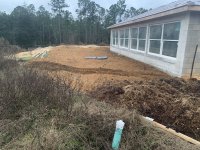
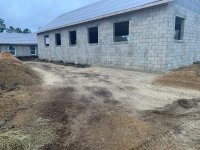
Foundation is 18 thick, dug down and removed approx 10 inches of sugar sand.
We get large amounts of horse manure dropped off free throughout the week, regardless of what google or scientists say we have had very positive results, ( we literally have thousands of plants growing on another property using the stuff that will one day come over here ) ( and we are feeding at least 1000 here on this property)
Pure sugar sand, very low nutrient levels in itself ( it’s been tested )
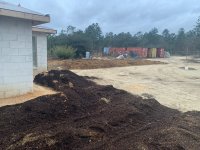
We’ve been placing this manure/shavings/hay mix around the house by the bucket full.
If we lay it about 20 + inches thick we figure in a couple/ few years we will end up with 4-5 inches of premium soil.
We look at the forest around us and note the pine tree’s that have been there hundreds of years with thick ( 4 inches ) compost at their base but under that pure white sugar sand.
We don’t understand why the soil isn’t dark rich under these tree’s?
You’d think after that many years the soil would be black?
We are considering purchasing a tiller to mix the sand and our compost together into the ground.
Then we consider that tillers are meant to break up hard compacted soil for root development, we have loose sandy soil.
Yes it can get pretty darn compact under the top surface but it’s still just sand, no rocks.
Are we wasting our time and money on a tiller?
Our ultimate goal is to have a garden to supplement food and also to enjoy healthy trees/plants on the property.
Thanks to all the farmers
 

Attachments
  • image.jpg
    image.jpg
    2.6 MB · Views: 230
  • image.jpg
    image.jpg
    3.1 MB · Views: 219
  • image.jpg
    image.jpg
    3 MB · Views: 214
  • image.jpg
    image.jpg
    2.4 MB · Views: 232
Last edited:
   / To till or not to till 😁 #2  
I can't really contribute much to the soil question other than passing along reading that the dropped pine needles have a compound in them that inhibits other plant growth which may help explain some the the soil quality in the woods
 
   / To till or not to till 😁 #3  
''We look at the forest around us and note the pine tree’s that have been there hundreds of years with thick ( 4 inches ) compost at their base but under that pure white sugar sand.''
''We don’t understand why the soil isn’t dark rich under these tree’s?
You’d think after that many years the soil would be black?''

Not sure if I understand correctly... the first 4'' layer is organic matter (top soil) and under that is sand ? that would make sense if the case, soil doesn't mix on its own it accumulate in layers. The sand was deposited there by floods, glacier and wind then organic matter pile on top of it. Trees help retaining organic matter in place.


Tilling would be good, it would mix the sand and the manure which would be beneficial for compaction, soil retention and adding mineral to the manure. It would offer a smooth transition, now I wouldn't buy a tiller just for that.. not tilling isn't going to hurt anything, the vegetation wont struggle to start on manure.
 
   / To till or not to till 😁 #4  
So, your soil sounds a lot like ours. I would try to get the newly placed organics Into the soil, not on top. Heavy rains, wind. ect, easily strip the light, small, organics, and float or blow them to other areas. Just a guess, but with the pines, I would guess there is a small amount of orangish clayey-sand down a few feet, that does have some mineral nutrients in it, but too deep to benefit most desirable plants.

A lot of advice from people will say "don't bury your top soil", with a sugar sand, I think burying it is a good thing.

Edit: checked your location, and you should have similar soils, as your probably with an hour or 1.5 hours from me.

The pines also point to most likely a very acidic soil.

You Should have great blueberry soils; if you get the acidity under control (if you have that problem), good peanut ground.
 
   / To till or not to till 😁 #5  
Ocala was widely varying ground; ranging from sand, hard pan, gumbo, sandclay, soft rock, chert, rocks ranging from a basket ball to the size of a house, springs, hills, muck, ect; as well as widely varying water tables, all, within just a few miles of each other.

But, if you look around, the soil can grow corn, cotton, peanuts, planted pines, citrus, berries, hay, ect
 
   / To till or not to till 😁 #6  
Only major issue with horse manure is going to be adding acidity, and a ton of weed seeds. Horses aren't an efficient digester, and many seeds survive their stomach. Neither of those draw backs outlay the benefits, and both can be controlled. I'm guessing your soil samples called for heavily liming?
 
   / To till or not to till 😁 #7  
So, your soil sounds a lot like ours. I would try to get the newly placed organics Into the soil, not on top. Heavy rains, wind. ect, easily strip the light, small, organics, and float or blow them to other areas. Just a guess, but with the pines, I would guess there is a small amount of orangish clayey-sand down a few feet, that does have some mineral nutrients in it, but too deep to benefit most desirable plants.

A lot of advice from people will say "don't bury your top soil", with a sugar sand, I think burying it is a good thing.

Edit: checked your location, and you should have similar soils, as your probably with an hour or 1.5 hours from me.

The pines also point to most likely a very acidic soil.

You Should have great blueberry soils; if you get the acidity under control (if you have that problem), good peanut ground.
I think your reasoning apply for topsoil but not manure, manure need oxygen to keep breaking down, burring it would slow down this process if not stopping it. Manure is quite coarse in composition and hold together not like topsoil...
 
   / To till or not to till 😁 #8  
Oxygen moves pretty well in sand.

One note on the tiller; with your soil, you will need to compact after tilling; yiu can't get good germination with soil as "fluffy" as you'll get with fresh tilled soils.

One of the biggest benefits of the organics is, water retention. For people not from FLa, they don't understand how we have such severe water problems with 50 to 85" of rain per year. Best way to discribe it is; Florida is a desert, where it rains a lot... figuriratively and literally; we used to be connected to the Sahara desert. Where I am, we can get 6" of rain, and within an hour. the ditches are dry.
 
Last edited:
   / To till or not to till 😁 #9  
Coming from clay soil that nothing grows in..dont till it. You would just be moving **** soil more near the surface.

I have noticed a large benefit in my soil since I have done two things. Mulch in the leaves and grass clippings into my lawn. For my garden I actualy import leaves from a neighboring town who bag them. Theres a large boost of earth worms.

I did start with horse manure. That did help but brought in tons and tons of weeds. I have taken to wood chips for free organics. Horse manure does work well however all mine was composted in a pile in the shade for about 5yrs.
 
   / To till or not to till 😁 #10  
Oxygen moves pretty well in sand.

One note on the tiller; with your soil, you will need to compact after tilling; yiu can't get good germination with soil as "fluffy" as you'll get with fresh tilled soils.

One of the biggest benefits of the organics is, water retention. For people not from FLa, they don't understand how we have such severe water problems with 50 to 85" of rain per year. Best way to discribe it is; Florida is a desert, where it rains a lot... figuriratively and literally; we used to be connected to the Sahara desert. Where I am, we can get 6" of rain, and within an hour. the ditches are dry.
And where I am not 25 miles from you, 6 inches of rain will shut me down from getting in most of my fields for a week to 10 days. To the OP mix it in with your soil it will help it, big farmers here in certain parts of Florida raise a lot of crops in poor sandy soil by getting the PH right with lime or dolomite, plenty of fertilize and most importantly walking irrigation systems.
 
   / To till or not to till 😁 #11  
So, a big question that hasn't been asked or answered; What do you want to grow, how big of an area, and how quickly you want it to grow?

20" of composed manure over even a 100 ft x 50 ft area is a massive ammount (310 cubic yards); 20" deep over an acre is 2700 cys. I think you would be best served spreading 2-3", applying lime (as required), and tilling, maybe 6" deep.

Another option for a garden; medium-heavy application, and strip tilling; only applying in the strips you intend to actively cultivate (4 ft wide; skip 32" for maintenance path; then another 48" growing bed). You could do a 4 ft x100 ft strip with just 7.5 cy. I would do 1 application of 3" and till, then compact, add another application, recompact, and plant? Probably apply lime on 2nd manure mix?
 
Last edited:
   / To till or not to till 😁 #12  
If we are just talking about growing yard grass; that's a totally different story. I would make sure your irrigation is on point, balance PH, seed and hay, and then apply many, thin layers on top.
 
   / To till or not to till 😁 #13  
I compost my horse manure, killing most of the weed seeds and producing great compost. I've been tilling composted horse manure into my clay soil garden for 20+ years. It took years to develop a nice garden. I can turn horse manure into nice almost weed free compost in about 6 months, turning the pile at least once a month.

Personally I'd till as much composted manure into your sugar sand as possible. 6 inches of compost into 6 inches of sand would be a good start.
 
   / To till or not to till 😁 #14  
We compost horse, cow and chicken manure with green grass clippings mixed with maple and oak leaves. The chicken manure after composted really helps with reproduction of earthworms in our clay soil.
We work the compost into the soil with a tiller. Within 2 weeks after we work the compost in, we check soil ph to see if admendments are needed.
 
   / To till or not to till 😁 #15  
Assuming you have space I recommend manure be dumped in piles/rows,kept moist,mixed/turned when steam slows until bulk is significantly reduced THEN placed where you want to plant and grow. As best you can move material on exterior of old pile to interior of new pile while turning.
Here's a trick to keep rainfall accessible to plants for longer periods and reduce amount of irrigation required during drought. Bury logs,limbs and twigs beneath soil and manure. Ideally the wood should have started to rot but use what you have and it will get there. Per cu ft rotten wood stores more moisture than composted leaves and grass. I Herd and Tha Said claim rotting wood ties up nitrogen but I say manure covering it has nitrogen to spare so it doesn't matter. I'll let you be the judge after you try it. In your sugar sand I suggest placing logs in a pit and extending above ground then covering with soil and manure. 2' mounds will shrink to grade level in a few years retaining a nice layer of soil below. o
 
   / To till or not to till 😁 #16  
If you are worried about the weeds in the horse droppings till the
soil 3 times a week for a few weeks that should kill any plant life
and tilling the horse droppings in with the sand will help losen up
the soil then you can add some barn lime to change the ph. Also
you should not use fresh horse droppings in your garden for at
least 5 or 6 months old and they are some plants that don't like
horse droppings

willy
 
Last edited:
   / To till or not to till 😁 #17  
I would have brought in top dirt if it were available.
 
   / To till or not to till 😁 #18  
Help me to decide
Try to keep short
Foundation is 18 thick, dug down and removed approx 10 inches of sugar sand.
We get large amounts of horse manure dropped off free throughout the week, regardless of what google or scientists say we have had very positive results, ( we literally have thousands of plants growing on another property using the stuff that will one day come over here ) ( and we are feeding at least 1000 here on this property)
Pure sugar sand, very low nutrient levels in itself ( it’s been tested )
We’ve been placing this manure/shavings/hay mix around the house by the bucket full.
If we lay it about 20 + inches thick we figure in a couple/ few years we will end up with 4-5 inches of premium soil.
We look at the forest around us and note the pine tree’s that have been there hundreds of years with thick ( 4 inches ) compost at their base but under that pure white sugar sand.
We don’t understand why the soil isn’t dark rich under these tree’s?
You’d think after that many years the soil would be black?
We are considering purchasing a tiller to mix the sand and our compost together into the ground.
Then we consider that tillers are meant to break up hard compacted soil for root development, we have loose sandy soil.
Yes it can get pretty darn compact under the top surface but it’s still just sand, no rocks.
Are we wasting our time and money on a tiller?
Our ultimate goal is to have a garden to supplement food and also to enjoy healthy trees/plants on the property.
Thanks to all the farmers
So if you try to use a tiller it will bind up and could take out your slip clutch. When trying to build compost you are much better to pile in long narrow windrows and turn often to make into useable material.
 
  • Good Post
Reactions: JJT
   / To till or not to till 😁 #19  
Help me to decide
Try to keep short
Foundation is 18 thick, dug down and removed approx 10 inches of sugar sand.
We get large amounts of horse manure dropped off free throughout the week, regardless of what google or scientists say we have had very positive results, ( we literally have thousands of plants growing on another property using the stuff that will one day come over here ) ( and we are feeding at least 1000 here on this property)
Pure sugar sand, very low nutrient levels in itself ( it’s been tested )
We’ve been placing this manure/shavings/hay mix around the house by the bucket full.
If we lay it about 20 + inches thick we figure in a couple/ few years we will end up with 4-5 inches of premium soil.
We look at the forest around us and note the pine tree’s that have been there hundreds of years with thick ( 4 inches ) compost at their base but under that pure white sugar sand.
We don’t understand why the soil isn’t dark rich under these tree’s?
You’d think after that many years the soil would be black?
We are considering purchasing a tiller to mix the sand and our compost together into the ground.
Then we consider that tillers are meant to break up hard compacted soil for root development, we have loose sandy soil.
Yes it can get pretty darn compact under the top surface but it’s still just sand, no rocks.
Are we wasting our time and money on a tiller?
Our ultimate goal is to have a garden to supplement food and also to enjoy healthy trees/plants on the property.
Thanks to all the farmers
I’d suggest asking your Ag Extension office - they are super helpful. Here is a link to the Marion County office: Marion County - University of Florida, Institute of Food and Agricultural Sciences - UF/IFAS
 
   / To till or not to till 😁 #20  
One trusts you have observed from the answers that you will not know until you try it for your particular objective. The folks in your area who historically crop have figured out how to use the sand as a root stand so to speak. Good ingenuity. With your being open to other's discoveries, you will find lots of tidbits like that you can turn into a profit. Two items historically known.
1. Your mulch is a slow release nutrient and water source if you use the sand as a root stand.
2. Your sand can keep the mulch from holding too much water if the surface of the sand is permeable (some are, some are not)
3. All forests have poor soil for conversation's sake. This is the reason that there is almost no sizeable areas of the original Great Southern Forest in the southern states. The last large areas are in Texas. Families would send members west two years ahead to clear a new patch to farm. Then when the current patch was cropped out quickly they would move west to repeat the process. Unlike the Great Southern Forest, the Great Plains was covered in grass which produces a rich lasting soil that is very thick. The Great Plains has operations in single sites/families that have been productive for generations.
4. Be aware that 100% manure will transfer a strong taste into whatever vegetables you grow. Most likely your Horse manure has shavings or other carbon matter mixed into it which will dilute this effect. You might want to taste a tomato.
5. In some clays, if you mix in sand presumably to "help" it you end up with a concrete like soil some or all of the year. You might want to do a test.
6. Most agriculture is site specific with shared traits from other areas.
 

Marketplace Items

2452 (A60432)
2452 (A60432)
MINI EXCAVATOR WOOD GRAPPLE (A60430)
MINI EXCAVATOR...
2017 Toyota Camry Hybrid Sedan (A59231)
2017 Toyota Camry...
Kubota HB84 Hopper Broom (A53317)
Kubota HB84 Hopper...
Spreader Attachment (A56859)
Spreader...
TEREX LIGHT PLANT / GENERATOR (A60429)
TEREX LIGHT PLANT...
 
Top