FEL Diagnosis

   / FEL Diagnosis #1  

woolyAcres

Platinum Member
Joined
Jun 10, 2010
Messages
789
Location
Western PA
Tractor
Antonio Carraro TTR 4400
As many of the Yanmar forum members know, my loader has some issues. I posted the first details over in this thread, but decided to start a new thread. That other one had lots of good info but wasn't focused on the FEL only. It might be more useful to future users looking for info on their FELs to find it here rather than sift through that (rather long) thread.

After lots of good info in that other thread, I finally got hold of a 5000PSI pressure gauge. After plumbing it in today, my conclusion is that both the loader control and the pump have issues. But I was also surprised at the pump pressure behavior in different operating modes.

I put my gauge on the high-pressure side just before the loader control valve. This is what I had parts for and it made watching the gauge while using the tractor pretty easy.

The first thing I noticed is that while using the 3PT lift, (with a 5' box blade) the gauge would rise to about 1000PSI anytime I lifted the box blade off the ground. The pressure would stay at 1000PSI even once the box blade had reached the desired height. As long as the implement was raised at this height, the pressure stayed at 1000PSI. If I lowered the implement just a bit (say an 1". Implement still off the ground but moved the lever down slightly) pressure would drop to near zero.

The next thing I found was that using the loader (with the box blade resting on the ground; 3PT hitch not 'active') pressure never exceed ~1000PSI. Lift and lower speeds were okay- 8-10s. Curl was a bit slow, but okay. However dumping the bucket took forever and there was NO increase in pressure when dumping. It appears the loader valve isn't providing any pressure for the dump function.

The final thing I noticed was, the only way I could get the pressure above 1000PSI was to have the box blade raised off the ground so the system had 1000PSI (presumably for lifting and holding the rear implement) and simultaneously operating the FEL (lift or curl). In this configuration the pressure would jump to about 2000PSI.

I purchased the 5000PSI valve based on suggestions that spikes in the system can exceed 4000PSI. Whether my gauge is too slow to respond to those spikes, or possibly too damped to noticed impulse behavior I don't know. But I never saw anything over 2000PSI.

My conclusion from this is that my pump is a bit weak and my control valve is not functioning correctly. Am I drawing the correct conclusions? Is constant 1000PSI when the rear 3PT hitch is off the ground expected? I was actually expecting occasional 'cycling' of the rear 3PT to pull the implement up after it had drifted down, but not constant pressure there. I need to go back and read California's description of 3PT 'modes'- buried somewhere in my other thread. Better organization is part of the reason I started a new thread. :laughing:

Now that I have this diagnostic tool what else should I be looking at/for to confirm what needs repairing, replacing, or works as it should?

I'm grateful for all the help I've received so far and any additional guidance will be greatly appreciated as well. Thanks
 
   / FEL Diagnosis #2  
I would think it only makes sense to have constant pressure when 3pt is lifted. Cause its only a one way deal not like a cylinder. Gravity pulls down implement and forces the piston down to push fluid out of the cylinder. To combat this the fluid would have to be pressured all the time. As you lower the lever it allows the pressure to go down as the fluid is leaving the cylinder slowly as gravity is allowing the implant to go down.

If it was not so late I would go pull my 240 service manual to see if there is anything about preasure s in it. But its late I am in bed and just got to then the tv on today. Maybe tomorrow I will find it.
 
   / FEL Diagnosis #3  
Your test only told you what psi it took to do the job. You have to run the cyls all the way in or out to open the relief valve to give you max psi. That well you some ideal if the pump is good. The 3pt I need to think about that a little more.
 
   / FEL Diagnosis #4  
The relief valve pressure on the 240 is suppose to be set at 2200psi. Your showing 2000psi on your gage indicates you "may" not have a pump problem. If you want to check pump further you can put the 3 point handle in the up position, then "slowly" close down on the stop valve. You should be able to hear the engine begin to load and see the pressure gage begin to rise. According to my reading your relief valve should go off at 2200psi. If so you should be able to hear it. Do this test at your own risk. I wouldn't hesitate to do it but proceed at your own risk.

With your 1000 psi back pressure on the loader valve you are taking power away from the loader. Your pressure has to reach 1001psi in order for the loader to function. That is the main reason power beyond is recommended.

I do think you have a loader valve problem in the curl area.
 
   / FEL Diagnosis
  • Thread Starter
#5  
Your test only told you what psi it took to do the job. You have to run the cyls all the way in or out to open the relief valve to give you max psi. That well you some ideal if the pump is good. The 3pt I need to think about that a little more.

I can certainly do that. Everything is still plumbed. In fact, it's pretty fun to watch the gauge. When I get this all fixed I'm sure I'll remove it but for now I kinda like it! I'll get back to you the relief value.
 
   / FEL Diagnosis
  • Thread Starter
#6  
I would think it only makes sense to have constant pressure when 3pt is lifted. Cause its only a one way deal not like a cylinder. Gravity pulls down implement and forces the piston down to push fluid out of the cylinder. To combat this the fluid would have to be pressured all the time. As you lower the lever it allows the pressure to go down as the fluid is leaving the cylinder slowly as gravity is allowing the implant to go down.

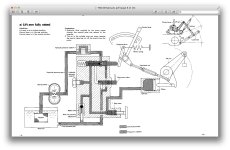
What you describe would certainly work. I'm trying to figure out what the attached diagram says.
3PTUsage.jpg
My simple understanding is, when actual lifting is required the system is pressurized. Once it's reaches the expected height, the system is smart enough to see that and it locks the fluid in place- no added, no lost- and the 3PT stays in place without additional pressure. When it comes to lowering the 3PT, it's done by gravity.
 
   / FEL Diagnosis #7  
What you describe would certainly work. I'm trying to figure out what the attached diagram says.
View attachment 442753
My simple understanding is, when actual lifting is required the system is pressurized. Once it's reaches the expected height, the system is smart enough to see that and it locks the fluid in place- no added, no lost- and the 3PT stays in place without additional pressure. When it comes to lowering the 3PT, it's done by gravity.

Also note in your attached schematic that the relief valve is between the pump and stop valve.
 
   / FEL Diagnosis
  • Thread Starter
#8  
The relief valve pressure on the 240 is suppose to be set at 2200psi. Your showing 2000psi on your gage indicates you "may" not have a pump problem. If you want to check pump further you can put the 3 point handle in the up position, then "slowly" close down on the stop valve. You should be able to hear the engine begin to load and see the pressure gage begin to rise. According to my reading your relief valve should go off at 2200psi. If so you should be able to hear it. Do this test at your own risk. I wouldn't hesitate to do it but proceed at your own risk.
What about this is risky?


With your 1000 psi back pressure on the loader valve you are taking power away from the loader. Your pressure has to reach 1001psi in order for the loader to function. That is the main reason power beyond is recommended.
That does seem to be the way things are functioning, but it doesn't seem right to me that the first 1000psi is 'dedicated' to the loader. I'll look to see what happens when I use the FEL with the 3PT hitch in the lowest position. This should remove the first 1000PSI being sucked off by the rear. I'll be surprised if the loader gets all 2000. I suspect it will still only get 1000 but I'll do the test and find out.

I do think you have a loader valve problem in the curl area.
I agree. I've gotten the go-ahead for a new loader valve. :thumbsup: I've got a suspicion there's more that's not quite right.... I see the pump rebuild kit from Hoy is only a few dollars. But I don't want to create problems where there aren't any (yet).
 
   / FEL Diagnosis
  • Thread Starter
#9  
The relief valve pressure on the 240 is suppose to be set at 2200psi. Your showing 2000psi on your gage indicates you "may" not have a pump problem. If you want to check pump further you can put the 3 point handle in the up position, then "slowly" close down on the stop valve. You should be able to hear the engine begin to load and see the pressure gage begin to rise. According to my reading your relief valve should go off at 2200psi. If so you should be able to hear it. Do this test at your own risk. I wouldn't hesitate to do it but proceed at your own risk.
So I did this. Or at least what I thought you were suggesting. With the back blade in the highest possible position on the rear (and loader on the ground) the pressure in the system is about 1100psi (at about 1000RPM). I slowly closed the stop valve under the seat. There was no change whatsoever in the engine, the pressure, or sounds. I don't think I even heard the relief valve. Pressure stayed constant throughout. Once the stop valve was completely closed, I tried to lower the rear box blade by lowering the lever. It stayed right at the top where it should have.

I was a bit concerned that this would dead-head the pump. Though I'm not certain what that term means, only that it's bad for hydraulic pumps. The stop valve only stayed closed for about 10 seconds total. Long enough to get it closed and attempt to lower the lift. I then re-opened it.
 
   / FEL Diagnosis
  • Thread Starter
#10  
You have to run the cyls all the way in or out to open the relief valve to give you max psi.
Running the cylinders all the way out (on the loader lift arms) pressure maxes out at just under 1000psi. I can hear something bypassing. I suspect that's the relief valve in the loader valve not the one in the rear. With the bucket empty, lifting the loader takes about 800psi, curling the bucket takes about 600. I can't get the hydraulic pressure in the system to exceed 1000PSI using only loader functions. To get it above 1000 I have to have the rear end going simultaneously.
 
   / FEL Diagnosis #11  
Put a load in the bucket and lift. Also see what happens when you try to something withe three point that is heavier than what it is rated for??
 
   / FEL Diagnosis #12  
What about this is risky?

I really don't think anything is risky about this on your 240. I really believe your relief valve would take care of any pressure once the stop valve is closed. Some models, not sure which can be over pressured and crash the pump when closing the stop valve. I am just not confident enough in my knowledge not to warn anyone to be careful.

Try this test. 1. Put the 3 point handle all the way down (lowered). 2. Close the stop valve. 3. Very slowly begin raising the 3 point handle watching the gage. You should see pressure rise to 2200 lbs and relief valve go off. No more comment until you try this and report findings. Might have to get engine higher than idle to achieve this.
 
   / FEL Diagnosis
  • Thread Starter
#13  
What about this is risky?
Try this test. 1. Put the 3 point handle all the way down (lowered). 2. Close the stop valve. 3. Very slowly begin raising the 3 point handle watching the gage. You should see pressure rise to 2200 lbs and relief valve go off. No more comment until you try this and report findings. Might have to get engine higher than idle to achieve this.

So here's what happens. With the 3 point all the way down and the loader on the ground, I closed the stop valve. With engine RPM at about 2000 I began raising the loader. Loader goes up like it should and pressure runs about 800psi. Same as before. When it hits the top and can no longer extend, pressure jumps to about 1000psi.

I know you didn't suggest doing this next part but...

With the stop valve closed I very gently and slowly tried to raise the 3PT. Almost immediately the pressure jumped to 2200 and I could hear the pressure relief valve on the rear. So, as long as my little test didn't damage the pump, I think my pump is ok. And my conclusion from all this is that the loader relief is set to ~1000psi. There are problems with the loader valve not working the curl correctly, but I'm done worrying about that. The valve is getting replaced. I also think the pump is good. What I don't understand is why there is pressure in the system when the 3pt is up but not moving. Based on that drawing in post #6 it seems like the system should pressurize to raise it but once it's up where it belongs it should not need pressure. It might pulse once in a while to bring it back into position.
 
   / FEL Diagnosis
  • Thread Starter
#14  
Put a load in the bucket and lift. Also see what happens when you try to something withe three point that is heavier than what it is rated for??


With a load in the bucket greater than the tractor can handle pressure goes up to ~1000psi. Unfortunately I don't have anything too heavy for the rear. I think this box blade is the heaviest thing that will fit my cat1 hitch. I've got a cat2 back blade but that won't attach.
 
   / FEL Diagnosis #15  
So here's what happens. With the 3 point all the way down and the loader on the ground, I closed the stop valve. With engine RPM at about 2000 I began raising the loader. Loader goes up like it should and pressure runs about 800psi. Same as before. When it hits the top and can no longer extend, pressure jumps to about 1000psi.

I know you didn't suggest doing this next part but...

With the stop valve closed I very gently and slowly tried to raise the 3PT. Almost immediately the pressure jumped to 2200 and I could hear the pressure relief valve on the rear. So, as long as my little test didn't damage the pump, I think my pump is ok. And my conclusion from all this is that the loader relief is set to ~1000psi. There are problems with the loader valve not working the curl correctly, but I'm done worrying about that. The valve is getting replaced. I also think the pump is good. What I don't understand is why there is pressure in the system when the 3pt is up but not moving. Based on that drawing in post #6 it seems like the system should pressurize to raise it but once it's up where it belongs it should not need pressure. It might pulse once in a while to bring it back into position.

I thought that was what I suggested. In my opinion you have proved your pump is good and your 3 point relief valve is good. Would you be against upping the relief valve pressure on your loader valve?

I went back to your original thread and looked at pictures of your loader valve. Couldn't find any picture showing the location of your relief valve. Just guessing it will be behind a cap nut on the front of the valve, toward the radiator.

As to why your 3 point is holding backpressure. With the loader setting on the ground does it read the same 1000psi. That is with the 3 point in the up position or maybe just a tad down from all the way up.
 
Last edited:
   / FEL Diagnosis #16  
They say pumps rarely go bad. Only ones I think we seen here were dead headed? Even aaron at hour and those guys rarely suspect pumps there just that rare to go.
 
   / FEL Diagnosis #17  
I think there is pressure when its up but not moving to hold it up. Cut tractor off with it in air and see how long it holds up. The pressure may be to hold it up?
 
   / FEL Diagnosis #19  
Check the feed back rod and make sure it is working right and not binding. That should let the oil dump to tank when it gets to where you set the lever and the 1000psi should go away. Also check the spring in the loader relief valve, could be broken or the valve is stuck open a little.When you get the 2000psi it might be because the gpm is greater then what the relief valve can dump.
 
   / FEL Diagnosis
  • Thread Starter
#20  
I thought that was what I suggested. In my opinion you have proved your pump is good and your 3 point relief valve is good. Would you be against upping the relief valve pressure on your loader valve?
No. I've got no objection to trying that. But because the loader valve has other problems (curl function, lacks float, etc) I'm replacing it regardless.

I went back to your original thread and looked at pictures of your loader valve. Couldn't find any picture showing the location of your relief valve. Just guessing it will be behind a cap nut on the front of the valve, toward the radiator.
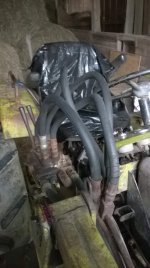
The only (possibly) useful photo I have of the control valve is below. There look to be a couple 'plugs' on one side. Maybe that set screw is under one of these.

As to why your 3 point is holding backpressure. With the loader setting on the ground does it read the same 1000psi. That is with the 3 point in the up position or maybe just a tad down from all the way up.
When the loader is on the ground, and the 3 point is anywhere but on the ground, it reads 1000psi. It will drop down if I lower the 3 point just a bit. It almost seems as if there's something sticking that holds open a valve which allows pressure to build up. I think LeeJohn might be onto something. I'll have to look at the linkage tomorrow (ran out of daylight today). Maybe something there is bound up and preventing it from returning as it should.
 

Attachments

  • WP_20150913_002.jpg
    WP_20150913_002.jpg
    314.2 KB · Views: 353

Marketplace Items

378721 (A54865)
378721 (A54865)
PIN PULL AERATOR (A60430)
PIN PULL AERATOR...
2020 Ram Promaster City 1500 Cargo Van (A59230)
2020 Ram Promaster...
16ft x 8ft Flat Bed (A57454)
16ft x 8ft Flat...
(4) UNUSED FORERUNNER 12-16.5 SKID STEER TIRES (A60430)
(4) UNUSED...
MANIFOLD TRAILER (A58214)
MANIFOLD TRAILER...
 
Top