
You are using an out of date browser. It may not display this or other websites correctly.
You should upgrade or use an alternative browser.
You should upgrade or use an alternative browser.
Safe Kids
- Thread starter Rara Avis
- Start date
- Views: 2579
More options
Who Replied?
/ Safe Kids
#1
WarrenF
Gold Member
I am headed out to buy racing helmets for my children and grandchildren....I am now going to require that they wear the helmets ANYTIME the go outside. I sure don't want a falling meteor to hit them and kill them. 
MikeD74T
Veteran Member
I see that one's much less likely to drown or be victim of tractor, ATV, or snowmobile accident while in Washington DC. No statistics on likelyhood of being shot or drug overdose though!!! MikeD74T
The truth is a consensus supported by facts, facts are statements that support the truth, the world is flat!
The truth is a consensus supported by facts, facts are statements that support the truth, the world is flat!
Quoted WarrenF Re: Safe Kids
I am headed out to buy racing helmets for my children and grandchildren....I am now going to require that they wear the helmets ANYTIME the go outside. I sure don't want a falling meteor to hit them and kill them. end qoute
WOW I sincerely hope you never have to tell the mother of a 6 year old her baby is not ever coming home..
We are all SO sure and superior UNTIL in an instant we aren't
May that day never be....
I am headed out to buy racing helmets for my children and grandchildren....I am now going to require that they wear the helmets ANYTIME the go outside. I sure don't want a falling meteor to hit them and kill them.
end qouteWOW I sincerely hope you never have to tell the mother of a 6 year old her baby is not ever coming home..
We are all SO sure and superior UNTIL in an instant we aren't
May that day never be....
pat32rf
Veteran Member
On the other hand, it does say something about the intelligence/common sense etc of those who survive.
WarrenF
Gold Member
farmfun said:Quoted WarrenF Re: Safe Kids
I am headed out to buy racing helmets for my children and grandchildren....I am now going to require that they wear the helmets ANYTIME the go outside. I sure don't want a falling meteor to hit them and kill them.
WOW I sincerely hope you never have to tell the mother of a 6 year old her baby is not ever coming home..
We are all SO sure and superior UNTIL in an instant we aren't
May that day never be....
You have no idea the number of family members I have stood over their caskets, or the number of family members I have held in my arms while they took their last breath. What annoys me about a comment like that is your supposed superiority you have on display. People have to live!!! Funny how you miss the point that freedom does have its risk. Do you think you will live forever? Next you will want to tell me I can't eat at McDonalds or how bad eating FRIED EGGS AND HASH BROWN POTATOES SMOTHERED IN GRAVY is for me.
I hope someday someone finds me dead underneath a tractor or up along a ditch bank. Cause they will know that I was doing what I enjoyed. Better than finding me dead in a nursing home with someone wiping the spit off of my chin and changing my diapers!!!!!!!
OP
Rara Avis
Veteran Member
WarrenF said:[/B][/COLOR]
I hope someday someone finds me dead underneath a tractor or up along a ditch bank. Cause they will know that I was doing what I enjoyed. Better than finding me dead in a nursing home with someone wiping the spit off of my chin and changing my diapers!!!!!!!
Well, if they find you in time...you might just end up a quad...in a nursing home with someone wiping the spit off of my chin and changing my diapers...AND EMPTYING your family's savings...
BE SAFE OUT THERE...

davitk
Platinum Member
I just came in from the barn, my 11 year old son has a friend over, they were setting up a ladder so they could walk across one of the beams. Luckily I came along to rescue them and set up a somewhat less unsafe ladder arrangement
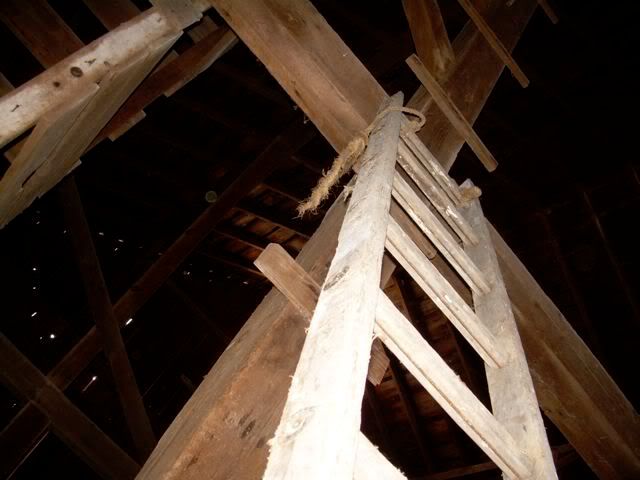
(click thumbnail)
We moved to the farm to provide a richer environment for the kids. Sure hope they make it!
WarrenFQuote:
Originally Posted by farmfun
Quoted WarrenF Re: Safe Kids
I am headed out to buy racing helmets for my children and grandchildren....I am now going to require that they wear the helmets ANYTIME the go outside. I sure don't want a falling meteor to hit them and kill them. end qoute
WOW I sincerely hope you never have to tell the mother of a 6 year old her baby is not ever coming home..
We are all SO sure and superior UNTIL in an instant we aren't
May that day never be....
You have no idea the number of family members I have stood over their caskets, or the number of family members I have held in my arms while they took their last breath. What annoys me about a comment like that is your supposed superiority you have on display. People have to live!!! Funny how you miss the point that freedom does have its risk. Do you think you will live forever? Next you will want to tell me I can't eat at McDonalds or how bad eating FRIED EGGS AND HASH BROWN POTATOES SMOTHERED IN GRAVY is for me.
I don't think I came across as superior, but if so, I apologize upfront. You're right I dont know how many folks you buried nor do you know about me..
I read a flyer with a list of facts and suggestions about safety. Listed items that a free person could consider beforehand and maybe save a kid from injury or death. Yes - we all need to live and with all our parts, sometimes in a routine daily rush we can forget and I know what that is like...
I'm sorry for your loss.
Originally Posted by farmfun
Quoted WarrenF Re: Safe Kids
I am headed out to buy racing helmets for my children and grandchildren....I am now going to require that they wear the helmets ANYTIME the go outside. I sure don't want a falling meteor to hit them and kill them. end qoute
WOW I sincerely hope you never have to tell the mother of a 6 year old her baby is not ever coming home..
We are all SO sure and superior UNTIL in an instant we aren't
May that day never be....
You have no idea the number of family members I have stood over their caskets, or the number of family members I have held in my arms while they took their last breath. What annoys me about a comment like that is your supposed superiority you have on display. People have to live!!! Funny how you miss the point that freedom does have its risk. Do you think you will live forever? Next you will want to tell me I can't eat at McDonalds or how bad eating FRIED EGGS AND HASH BROWN POTATOES SMOTHERED IN GRAVY is for me.
I don't think I came across as superior, but if so, I apologize upfront. You're right I dont know how many folks you buried nor do you know about me..
I read a flyer with a list of facts and suggestions about safety. Listed items that a free person could consider beforehand and maybe save a kid from injury or death. Yes - we all need to live and with all our parts, sometimes in a routine daily rush we can forget and I know what that is like...
I'm sorry for your loss.
WarrenF
Gold Member
farmfun said:WarrenFQuote:
Originally Posted by farmfun
I don't think I came across as superior, but if so, I apologize upfront. You're right I dont know how many folks you buried nor do you know about me..
I read a flyer with a list of facts and suggestions about safety. Listed items that a free person could consider beforehand and maybe save a kid from injury or death. Yes - we all need to live and with all our parts, sometimes in a routine daily rush we can forget and I know what that is like...
I'm sorry for your loss.
Don't apologize!!! This is a forum where people are free to express their opinions and others can react to that opinion. I would hope that my skin is tough enough to take any disagreements. Also just because I disagree with you or you with me doesn't make either one of us a bad person.
Regarding family members I have lost....thank you....but they are better off. Once I truly understood that FACT....I remember them fondly and with joy!! I bet you a million dollars if given the choice....they would not want to come back to this messed up world AT ALL....

ampsucker
Platinum Member
kind of jumping in on the tail end of this here. good points by all so far ;-)
anybody who travels outside of the US very much will notice the distinct lack of safety equipment and safety legislation in almost every other country. i used to joke when we went to mexico or europe or the caribbean that they tend to treat people more like adults than children. they figure people who have lived long enough to come for a visit are by definition smart enough to know when they are doing something dangerous. you won't find protective fences around steep drop offs. you won't find seat belts in half of the public transportation. you won't find guards on dangerous equipment. i always got the distinct impression that the people of these countries had bigger fish to fry like keeping their families fed and clothed. the finer issues of safety were not that high on the radar screen.
i'm not saying that we shouldn't look out for our kids and make every effort to keep them safe. i just wish uncle sam would keep his nose out of my private business and not try to leglislate my child's or my safety. if there's two things the US doesn't need it's more unenforceable laws and more people in jail. imagine losing your child to an accident and then the "man" coming to take you away to jail because the safety police didn't like the condition of your tractor tires or whatever. at some point it just gets kind of ridiculous. life is dangerous and we live around dangerous machines we have created to make our industriousness more manageable.
it's really hard to draw the line between an act of God, an unfortunate accident, a foreseable accident and an accident where negligence is involved. sometimes bad things happen to good people. it's been that way since the beginning of time.
anybody who travels outside of the US very much will notice the distinct lack of safety equipment and safety legislation in almost every other country. i used to joke when we went to mexico or europe or the caribbean that they tend to treat people more like adults than children. they figure people who have lived long enough to come for a visit are by definition smart enough to know when they are doing something dangerous. you won't find protective fences around steep drop offs. you won't find seat belts in half of the public transportation. you won't find guards on dangerous equipment. i always got the distinct impression that the people of these countries had bigger fish to fry like keeping their families fed and clothed. the finer issues of safety were not that high on the radar screen.
i'm not saying that we shouldn't look out for our kids and make every effort to keep them safe. i just wish uncle sam would keep his nose out of my private business and not try to leglislate my child's or my safety. if there's two things the US doesn't need it's more unenforceable laws and more people in jail. imagine losing your child to an accident and then the "man" coming to take you away to jail because the safety police didn't like the condition of your tractor tires or whatever. at some point it just gets kind of ridiculous. life is dangerous and we live around dangerous machines we have created to make our industriousness more manageable.
it's really hard to draw the line between an act of God, an unfortunate accident, a foreseable accident and an accident where negligence is involved. sometimes bad things happen to good people. it's been that way since the beginning of time.

N80
Super Member
Let's look at the article:
"Each year, approximately 70 children ages 14 and under die from injuries occurring on a farm."
Clearly a horrible thing. But stats don't exist in a vacuum. For instance, how does this compare to SIDS, child abuse, bathtub drownings, swimming pool drownings, bicycle or skateboard deaths. None of this is intended to give license to unsafe behavior. 'Being safe' is always a good idea. Outside of that though, conclusions need to be drawn extremely carefully when considering appropriate preventive action, particularly when legislation is involved. The family farm is nearly extinct in this once proud agricultural nation. Just a tad more legislation here and a tad more oversight there and the family farm will be lost forever. And that would be a tragedy greater than all the stats we've seen so far.
"In 2002, more than 13,400 ages 14 and under were treated in emergency rooms for equestrian-related injuries. Nearly 40 percent of equestrian injuries result in hospitalization. Head injury is the most common cause of equestrian-related death and serious injury."
Horses scare me. And I own 2 of them. All the advice given later in this article seems useless except for the helmet part. Even the most docile horse in the world can spook and bolt. And there is such a huge philosophical difference when it comes to safety between the 'western' and 'English' worlds of riding. My duaghter does both. When she rides English it is always required and expected that a helmet will be worn. When she rides western on the farm, it is expected that a helmet will not be worn. I'm torn on this one.
"Nearly 40 percent of farm deaths among children are due to machinery, and another 23 percent are due to drowning."
Unexpected. I would have thought machinery deaths would be higher. This indicates that 28 of the yearly 'rural' deaths are from machinery (of any sort, could be trucks, tractors, pickups, atvs, golf carts, etc). And it means that 16 of the yearly deaths are drownings. There aren't many farm ponds, or creeks in Brooklyn.
"Only about 5 percent of farms in the United States are covered by safety regulations specified in the Occupational Safety and Health Act."
That's 5% too many. The use of the word 'only' in this statement betrays the author's intent, which is more regulation. The intention to help save children is noble, the method is not. OSHA has got no more business on the family farm than they have do in my house when the kids are employed by me vacuuming the den or in my yard when they are mowing.
"Youths of any age may work at any time in any job on a farm owned or operated by their parents."
May it always be so.
"Do not allow children to perform farm work without supervision or when the tasks are inappropriate for the child痴 age, size, strength, cognitive ability or prior experience."
Excellent advice. Now, who will or should make that determination? The parents or a salaried bureaucrat?
The surface message we should all take home, is, of course, to be safe. But I think the article is a bit misleading and a tad incomplete. A child in India is more likely to be eaten by a Bengal tiger than a child living in Watts or East LA. But that doesn't mean the kids living next to a crack house are safer than the kid living in the Bengali jungle.
But what the article really seems to miss is that the very things that make rural living so 'dangerous' are the things which benefit the 'survivors'. And granted, that was probably not the intent of the article but it frequently compared rural ot urban injury and death rates. In my mind the work, the cows, the creeks, the horses, the ponds, the risks, the responsibilites, the freedom, etc etc are what make farm kids less likely (I suppose) to die or be injured by drugs, sexually transmitted diseases, gun crimes, pyshiatric problems, etc etc.
There is a price for everything. And given the stats cited in this article, I'd prefer my kids taking their chances with horses, tractors, pickups and farm ponds than crack houses, street crime and urban angst.
"Each year, approximately 70 children ages 14 and under die from injuries occurring on a farm."
Clearly a horrible thing. But stats don't exist in a vacuum. For instance, how does this compare to SIDS, child abuse, bathtub drownings, swimming pool drownings, bicycle or skateboard deaths. None of this is intended to give license to unsafe behavior. 'Being safe' is always a good idea. Outside of that though, conclusions need to be drawn extremely carefully when considering appropriate preventive action, particularly when legislation is involved. The family farm is nearly extinct in this once proud agricultural nation. Just a tad more legislation here and a tad more oversight there and the family farm will be lost forever. And that would be a tragedy greater than all the stats we've seen so far.
"In 2002, more than 13,400 ages 14 and under were treated in emergency rooms for equestrian-related injuries. Nearly 40 percent of equestrian injuries result in hospitalization. Head injury is the most common cause of equestrian-related death and serious injury."
Horses scare me. And I own 2 of them. All the advice given later in this article seems useless except for the helmet part. Even the most docile horse in the world can spook and bolt. And there is such a huge philosophical difference when it comes to safety between the 'western' and 'English' worlds of riding. My duaghter does both. When she rides English it is always required and expected that a helmet will be worn. When she rides western on the farm, it is expected that a helmet will not be worn. I'm torn on this one.
"Nearly 40 percent of farm deaths among children are due to machinery, and another 23 percent are due to drowning."
Unexpected. I would have thought machinery deaths would be higher. This indicates that 28 of the yearly 'rural' deaths are from machinery (of any sort, could be trucks, tractors, pickups, atvs, golf carts, etc). And it means that 16 of the yearly deaths are drownings. There aren't many farm ponds, or creeks in Brooklyn.
"Only about 5 percent of farms in the United States are covered by safety regulations specified in the Occupational Safety and Health Act."
That's 5% too many. The use of the word 'only' in this statement betrays the author's intent, which is more regulation. The intention to help save children is noble, the method is not. OSHA has got no more business on the family farm than they have do in my house when the kids are employed by me vacuuming the den or in my yard when they are mowing.
"Youths of any age may work at any time in any job on a farm owned or operated by their parents."
May it always be so.
"Do not allow children to perform farm work without supervision or when the tasks are inappropriate for the child痴 age, size, strength, cognitive ability or prior experience."
Excellent advice. Now, who will or should make that determination? The parents or a salaried bureaucrat?
The surface message we should all take home, is, of course, to be safe. But I think the article is a bit misleading and a tad incomplete. A child in India is more likely to be eaten by a Bengal tiger than a child living in Watts or East LA. But that doesn't mean the kids living next to a crack house are safer than the kid living in the Bengali jungle.
But what the article really seems to miss is that the very things that make rural living so 'dangerous' are the things which benefit the 'survivors'. And granted, that was probably not the intent of the article but it frequently compared rural ot urban injury and death rates. In my mind the work, the cows, the creeks, the horses, the ponds, the risks, the responsibilites, the freedom, etc etc are what make farm kids less likely (I suppose) to die or be injured by drugs, sexually transmitted diseases, gun crimes, pyshiatric problems, etc etc.
There is a price for everything. And given the stats cited in this article, I'd prefer my kids taking their chances with horses, tractors, pickups and farm ponds than crack houses, street crime and urban angst.

SkyPup
Elite Member
- Joined
- Dec 3, 2003
- Messages
- 3,079
- Location
- North Central, Florida
- Tractor
- Kubota L-39 GST TLB, Kubota L3130GST, Massey 1030 HST, Kubota ZD-21 ProDecK, Two Euro VW TDIs
How true.
Our family, kids, and grandkids have made it through upteen dirt bikes, upteen ATVs, upteen tractors, upteen horses, upteen dogs, upteen firearms, upteen hurricanes, upteen severe thunderstorms, umpteen lightning stikes, umpteen falling trees and tree limbs, umpteen poisonous snakes, and a major flood.
Thing that worries me most everyday is the drive to and from work......wish I could just stay home and work on the farm and be safe.
Our family, kids, and grandkids have made it through upteen dirt bikes, upteen ATVs, upteen tractors, upteen horses, upteen dogs, upteen firearms, upteen hurricanes, upteen severe thunderstorms, umpteen lightning stikes, umpteen falling trees and tree limbs, umpteen poisonous snakes, and a major flood.
Thing that worries me most everyday is the drive to and from work......wish I could just stay home and work on the farm and be safe.
OP
Rara Avis
Veteran Member
Well if you don't want OSHA in your home...how about the local car wash...
Mom Explains Why She Pressure-Washed Kid - Orlando News Story - WESH Orlando
Mom Explains Why She Pressure-Washed Kid - Orlando News Story - WESH Orlando


