You are using an out of date browser. It may not display this or other websites correctly.
You should upgrade or use an alternative browser.
You should upgrade or use an alternative browser.
Log splitters
- Thread starter Michelle K linnane
- Start date
- Views: 28481
More options
Who Replied?
/ Log splitters
#21


Piston
Elite Member
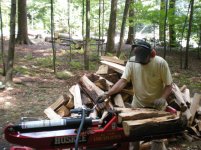
This is the wood splitter I purchased back in May of 2006......
American 6.5 High woodsplitter w/ 4way wedge and backer :: American Woodsplitters :: Outdoor Equipment :: Curtis Collectibles
Log Splitters - Wood Splitters - American Log Splitters Pulaski NY
American log splitters are virtually identical to the Timberwolf splitters. The creator of American log splitters is the brother of the guy that owns the Timberwolf splitters. They used to be partners at Timberwolf but for whatever reason the brother split, and started building American. Same quality for less money (supposedly)
Piston
Elite Member

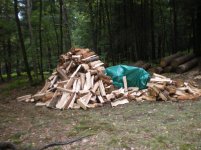
Mark, I like your carry all. That pic with the tractor, leaves, and stump is a really good pic. Makes me look forward to fall. :thumbsup:

rich_ncal
Gold Member
I have a 20 ton MTD log splitter. It has a 5hp motor. I split California valley oak, live oak and pine. I often it will not split oak if there is a big knot in the wood. The splitter gets to a point were bogs down and I can hear the strain on the motor, then I back of and try again or change the position of the wood. Bigger is better. Faster is better but not to the speed were you have to be very careful to do cut off a finger.

Red Horse
Veteran Member
- Joined
- Dec 12, 2010
- Messages
- 1,193
- Location
- Bolton, MA
- Tractor
- Deere 655ZTrak, Deere 4720 Cab, 400 X LT 155
Another 27 ton Troy bilt here- from Lowes- had it about 3 years now. Honda powered-have to agree, love American brands but I have four Hondas-including one on a 2400 PSI pressure washer that I've had for about 10 or 12 years- and one of my kids worked his way through college painting houses-talk about hammered! Key point, IMO can't beat being able to run horiz. or vert. Only thing I wish it had was an "on demand"( idle control) power feature. This thing runs wide open weather working or not- making noise and burning fuel. I think it was around 1400 bucks -I don't think for that money you will find one with this power rating and Idle control.

hunterridgefarm
Veteran Member
- Joined
- Jul 12, 2005
- Messages
- 2,131
- Location
- Western NC
- Tractor
- Kubota L3130DT, Kubota L185DT, JD LX277
This thread is just what I needed to read. I have been trying to decide or the Troybuilt form Lowes 27 ton or the one from TSC 22 ton. Price difference of $300-$400. I think I will get the one at TSC.
MBRCompound
New member
My new Timberwolf Tw6 got delivered yesterday and all I can say is wow. I got the 4 and 6 way wedges but as of now I am prefering the 4. It is a very well built machine that is capable of splitting wood as fast as your willing to feed it.

daugen
Epic Contributor
Largest TSC model here, the Huskey rated 35 tons, have used it pretty hard for almost two years, and while having a few design issues, it's very durable. I think the hoses aren't going to last long but
they aren't hard to replace. Briggs 1650 engine flawless. A bit much to pick up while going vertical, but all that seriously heavy iron makes it stay put when a large log is bounced on it. Never been able to stall it.
Not a cheap price, but without paying freight, TSC was reasonable. Log tray optional and well worth it. They also sell a four way wedge for the unit, haven't tried that yet. My wood is very variable in size so not
sure the four way would work for me.
Huskee 35 ton log splitter - YouTube decent video, running engine about half to 3/4 speed as i do. Makes it quieter but I've never needed full throttle. Why he splits this stuff vertically in the video is a question,
I think easier horizontal for anything but the big stuff.
they aren't hard to replace. Briggs 1650 engine flawless. A bit much to pick up while going vertical, but all that seriously heavy iron makes it stay put when a large log is bounced on it. Never been able to stall it.
Not a cheap price, but without paying freight, TSC was reasonable. Log tray optional and well worth it. They also sell a four way wedge for the unit, haven't tried that yet. My wood is very variable in size so not
sure the four way would work for me.
Huskee 35 ton log splitter - YouTube decent video, running engine about half to 3/4 speed as i do. Makes it quieter but I've never needed full throttle. Why he splits this stuff vertically in the video is a question,
I think easier horizontal for anything but the big stuff.
hunterridgefarm
Veteran Member
- Joined
- Jul 12, 2005
- Messages
- 2,131
- Location
- Western NC
- Tractor
- Kubota L3130DT, Kubota L185DT, JD LX277
This thread is just what I needed to read. I have been trying to decide or the Troybuilt form Lowes 27 ton or the one from TSC 22 ton. Price difference of $300-$400. I think I will get the one at TSC.
I went Saturday evening to TSC and bought the 22 ton. I had cut up a bunch of logs that morning and decided it was time to buy and I would be able to split for a couple of hours that evening.
I got home with the splitter, hooked it to the mule and went to the log pile. Primed it and pulled the rope, fired for about 1-2 seconds then would not crank. I started looking over the Briggs motor to see if there was a switch which I knew there wasn't and found a crack in the housing!
 Conpressions was still there but not what it should be.
I hook it back to the truck and back to TSC and got a refund. I told them I would come back next weekend since there was not enough daylight to split any once I got home. I will be buying the larger model with the Honda motor now. They offer me another 10% off if I came back to get it. I will buy the larger one with the Honda or go to Lowes for the Troybuilt with the Honda motor. I told them I did not think the rod was thrown but it would not take much for the housing to go once cracked.
I had wanted to start it before I bought and they offered to go get gas and crank it but I decided it was not necessary...I should have started it
:laughing: would have saved a lot of time.Everything like this I have has Honda or Kawasaki motors. so it will be the same for the log splitter now!
daugen
Epic Contributor
David,
was the original motor a Briggs or a clone? If a Briggs, I'm curious as to which model. I have the B&S 1650 in my TSC-Huskee splitter and it has been flawless.
If the Honda alternative was a GX spec one, I'd see the advantage. If the lower GC model, I'd stick with the Briggs. The non-Honda motors tend to be offered in a larger size
than the Honda option and one can only speculate why. Drew
was the original motor a Briggs or a clone? If a Briggs, I'm curious as to which model. I have the B&S 1650 in my TSC-Huskee splitter and it has been flawless.
If the Honda alternative was a GX spec one, I'd see the advantage. If the lower GC model, I'd stick with the Briggs. The non-Honda motors tend to be offered in a larger size
than the Honda option and one can only speculate why. Drew
hunterridgefarm
Veteran Member
- Joined
- Jul 12, 2005
- Messages
- 2,131
- Location
- Western NC
- Tractor
- Kubota L3130DT, Kubota L185DT, JD LX277
Drew,
The motor was a Briggs and original. I am not sure the model but the 22 tons all have the same Briggs motor. The crack was a spider type, lots of little fingers where it was hit or droped at one time. No oil was escaping and it look as though it could go at any time. The industry I work in machines a lot of casting and this looks like it was damaged during assembly or the motor was painted over after the cracking.
I am sure the Briggs would have performed great. It is just that once this happens I have to walk away for a while before I buy another. I would have done the same thing if it had been the Honda motor.
The motor was a Briggs and original. I am not sure the model but the 22 tons all have the same Briggs motor. The crack was a spider type, lots of little fingers where it was hit or droped at one time. No oil was escaping and it look as though it could go at any time. The industry I work in machines a lot of casting and this looks like it was damaged during assembly or the motor was painted over after the cracking.
I am sure the Briggs would have performed great. It is just that once this happens I have to walk away for a while before I buy another. I would have done the same thing if it had been the Honda motor.
daugen
Epic Contributor
well, the GC190 in my Husq push-trim mower certainly does run nicely...
The 35 ton is pretty overpowered with the 1650 Briggs (boy I wish they would agree on a hp nomenclature) and I always run
it at substantially less than full throttle. What I think might be nice, and the Honda version might offer it, is auto idle on the throttle.
With three guys I can keep that splitter humming, but when I'm doing wood by myself, and walking here and there with the wood, having the motor
idle down might save both gas and wear and tear. Wonder if Honda still has a patent on that feature; their gens all have it.
The 35 ton is pretty overpowered with the 1650 Briggs (boy I wish they would agree on a hp nomenclature) and I always run
it at substantially less than full throttle. What I think might be nice, and the Honda version might offer it, is auto idle on the throttle.
With three guys I can keep that splitter humming, but when I'm doing wood by myself, and walking here and there with the wood, having the motor
idle down might save both gas and wear and tear. Wonder if Honda still has a patent on that feature; their gens all have it.

retiredmgn
Platinum Member
- Joined
- May 8, 2010
- Messages
- 547
Picked up the Huskee 35 ton used - $1200. Slick rig. Aside from the plastic fenders I wouldn't change a thing on that machine. I don't have a problem converting from horizontal to verticle. A tad heavy for the first few inches but the piviot point balances well. Haven't run into anything it can't split. Only maintaince has been an 'o' ring kit.

murphy1244
Super Star Member
- Joined
- Nov 25, 2011
- Messages
- 19,515
- Location
- Ohio
- Tractor
- Kubota 1120 RTV Kioti DK-40, MF-135, Ventrac 4500Y
Picked up the Huskee 35 ton used - $1200. Slick rig. Aside from the plastic fenders I wouldn't change a thing on that machine. I don't have a problem converting from horizontal to verticle. A tad heavy for the first few inches but the piviot point balances well. Haven't run into anything it can't split. Only maintaince has been an 'o' ring kit.
I have dropped plenty of heavy wood on those fenders and am glad that they are soft plastic.
daugen
Epic Contributor
Picked up the Huskee 35 ton used - $1200. Slick rig. Aside from the plastic fenders I wouldn't change a thing on that machine. I don't have a problem converting from horizontal to verticle. A tad heavy for the first few inches but the piviot point balances well. Haven't run into anything it can't split. Only maintaince has been an 'o' ring kit.
I'm a little leery of the 35 ton Huskee's hydraulic hoses so suggest you check them. But those plastic fenders have never broken, or even scuffed badly no matter how many times I've dropped logs on them or squashed them while loading on a trailer. If they were metal, I think mine would look like a contestant in a demo derby. Maybe I'm just extra clutzy. I keep them sprayed down with Napa Protectant which keeps them slicker and sort of self cleaning.
If you know how to weld and could make some really HD fenders, the rest of the splitter is sure large enough to warrant them. When that second stage kicks in, it doesn't care if the woods splits or gets cleaved, it's coming through no matter what. Hit a big knot and it gets entertaining, though you might want to back up a smidge.
I'd also check on the transport tires for sidewall checking if your machine is older. That machine bounces around like crazy behind my truck even with limiting speed to 45 on our bumpy back roads. I'm always expecting those tiny
tires to fail, but they don't. I think I keep 30 pounds in them normally but they can be pumped up more. And don't forget your choice of travel plug in the oil reservoir air vent or you'll have oil everywhere.
paulraymondchace
New member
split fire 6.5 has not let me down in 5 years...........as we say in New England wicked pissah
I couldn't disagree more with regards to LDTs opinion on bi-directional splitters below.
"I am not a fan of the bi-directional splitters. For about 70% of what we split, it only takes running the ram half way out to bust. So now you have the wedge right in the middle of the table and the options are either retract it for the next split, or extend it the rest of the way out for the next split. This would make a bi-directional splitter just as slow as the old style. And also keep in mind that the bi-directional splitters dont have as much power in reverse."
I have only operated a Splitfire bi-directional. They are in my opinion the cadilac of the woodsplitter. It is quality made in North America. They are as powerful on the outstroke as on the back stroke. I split a lot of elm and it never splits half way. In fact you have to cut it right up to the end of the stroke. Even if a log does split half way IMHO it is more efficient to continue to a point where there is room to put the log on the cradle to then reverse it rather than pulling back on the lever to get the ram back for re-loading. Often a splitting log will jam on any splitter. With the bi-directional you can simply put a log on the other end and as you split it the bound piece will be pushed out. No wrestling with a half cut knarly piece of wood.
Now having expounded on the best woodsplitter made I must admit I bought an $1100 22 ton champion chinese splitter rather than the $3300 ade splitfire. The reason was simple economics. I only split a few cords a year and when I own the unit I don't need a speedy machine. I haven't found a piece of wood that my 22 ton can't split.

MotorSeven
Elite Member
I'm using a 26 ton now. It works fine, but it's loud and I really hate standing over the engine(breath deep). My next one will be a PTO splitter...one less engine to take care of:
CountyLineョ 3-Point Hitch Log Splitter - 2153304 | Tractor Supply Company
Old thread, but I ended up going with the NorthernTool dual action(splits both directions). I have done 6-7 cords so far and love the thing:
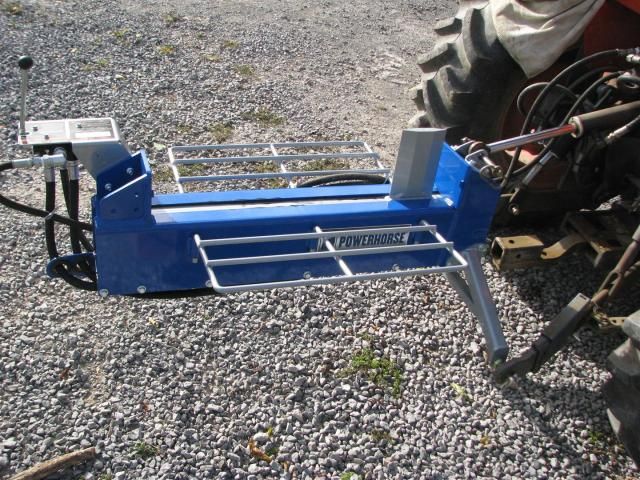
Here is a short video to show the speed behind my Kioti's 16gpm hydro pump:
PTOsplitter.mp4 video by motorseven | Photobucket
daugen
Epic Contributor
nice video!
Seems it would pop the log apart faster if the splitting edge was wider, but I'm sure it's designed just fine.
Like any of these things, you have to get in your groove and work steadily, and it gets done.
Seems it would pop the log apart faster if the splitting edge was wider, but I'm sure it's designed just fine.
Like any of these things, you have to get in your groove and work steadily, and it gets done.


