Tractor specifications. Are they inflated?

/ Tractor specifications. Are they inflated? #1  

Sean2202

Silver Member
Joined
Aug 21, 2018
Messages
129
Location
CT
Tractor
Kubota L305DT
Greetings,

Researching a new tractor for my work. The choices are NX6010hst MX6000 or M6060. This is for golf course work. The needs are 50HP minimum with Cat 2 3 pt hitch. 3rd function valve, minimum 2 Quick release rear ports, 1mph lock speed capable, 2,375 minimum 3pt hitch lift and cab.

Reading the specs the Kioti NX6010 states that the lift capacity 24" aft of hitch is 3177 lbs and the MX is only 2310 lbs while the M is 3307. Also the pump capacity on the NX is 17.9 GPM while the MX is only 9.5gpm and the M is only 11.

I have heard some talk of inflated numbers and curious if this applies here. How can the Kioti offer that much more and cost 10 thousand dollars less priced out? Maybe I am missing something here or reading the numbers wrong.

Thanks for any replies.
 
/ Tractor specifications. Are they inflated? #2  
Cause your paying for the other color orange, AKA brand recognition, brand reliability history, dealer network support, brand advertising, etc.... you are essentially paying for all of it in the higher price.
 
/ Tractor specifications. Are they inflated? #3  
The only things that I will comment on is that the Kioti GPM is a combined GPM, steering and implement total. The Kubota figures you posted are implement figures. Combine the 2 for the MX and you have 14.4 GPM. I don't see the steering GPM for the M6060.

As far as costs, the Korean tractors are less money than the Japanese units, just how it is.

Good luck with your research and final decision. ;)
 
/ Tractor specifications. Are they inflated? #4  
How can a Kia cost less than a Toyota or Ford? A few years ago you could get a new stripped ecobox Kia for under $10k with a 100k mile warranty. No radio but it was reliable & cheap.

When I looked a couple years ago the Koreans did have a better bang for the buck machine. Not quite the fit & finish Or engineering of Kubota or JD. Pretty close, but maybe a half generation behind. I noticed lots of little things like districts being barely accessible before a loader was on & really bad with the loader. In the end HST+ won me out on the Kubota along with me not liking the only dealer in Colorado selling Korean machines. I think on the bigger machines JD & Kubota have more & better powershift (GST) type transmission options options.
 
/ Tractor specifications. Are they inflated? #5  
Korean manufacturing labor is paid 20% less than Japanese manufacturing labor in $/US terms.
 
/ Tractor specifications. Are they inflated?
  • Thread Starter
#6  
@Fallon I agree with you 100% and you make some good points. The three Kiotis that we run here (two DK45S and RX6010C) with all over 2500 hrs. They run good but the fit and finish is very poor compared to other tractors I have operated in my lifetime. Its the little things that will nickel and dime you to death when you add them all up over time. Kiotis have a lot less dealer network around here anyway and good luck if you need some service work. The actual cost of an NX6010 with cab, all the accessories standard that you have to add on to the Kubota and loader is $34k delivered, hard to beat really.
 
/ Tractor specifications. Are they inflated? #7  
Greetings,

Researching a new tractor for my work. The choices are NX6010hst MX6000 or M6060. This is for golf course work. The needs are 50HP minimum with Cat 2 3 pt hitch. 3rd function valve, minimum 2 Quick release rear ports, 1mph lock speed capable, 2,375 minimum 3pt hitch lift and cab.

Reading the specs the Kioti NX6010 states that the lift capacity 24" aft of hitch is 3177 lbs and the MX is only 2310 lbs while the M is 3307. Also the pump capacity on the NX is 17.9 GPM while the MX is only 9.5gpm and the M is only 11.

I have heard some talk of inflated numbers and curious if this applies here. How can the Kioti offer that much more and cost 10 thousand dollars less priced out? Maybe I am missing something here or reading the numbers wrong.

Thanks for any replies.

Are you sure the Kubota doesnt split their steering pump and hydraulic pump ratings? I know they do on mine. Kioti might be giving you one overall pump GPM.
Theres a reason Kubota sells 10x + tractors to Kioti. How could they if they were so much more expensive and gave you so much less?
Kubota has an excellent, well deserved reputation. Their dealers are capable of handling repairs you cannot. They own the 20-150HP tractor market, the RTV market and the are a huge player zero turn markets. In the size tractor you are looking at buying, Kubota is the industry standard. The other brands are chasing their success.
 
/ Tractor specifications. Are they inflated? #8  
Cause your paying for the other color orange, AKA brand recognition, brand reliability history, dealer network support, brand advertising, etc.... you are essentially paying for all of it in the higher price.

Exactly. I paid about $10,000 less for my DK35se than a comparable Kubota.
 
/ Tractor specifications. Are they inflated? #9  
A lot of the price difference is the dealer. When I was buying most wanted full retail, one was even slightly over retail. Down south you could find Kubota dealers who discounted them 15% to 18%. Clearly they sell well enough up here to demand full price. Kioti wasn't much of an option and while a new dealer has started offering them who seams much more solid they still don't have the dealer network. Now that the other non Deere brands are getting dealerships in the area I'm sure they are putting pressure on the Kioti dealers to fight hard for sales.
 
/ Tractor specifications. Are they inflated? #10  
Adding the steering and implement pump outputs together is bogus when like in most modern CUTS they're separate circuits and can not be used together.

Also watch for loader and 3pt lift ratings that are measured differently. For example loader lift will be higher when measured at the pins but that's not a practical measurement since you're always lifting loads whose center of gravity is well out from the pins. They might be measuring without the bucket too.
 
/ Tractor specifications. Are they inflated? #11  
Adding the steering and implement pump outputs together is bogus when like in most modern CUTS they're separate circuits and can not be used together.

Also watch for loader and 3pt lift ratings that are measured differently. For example loader lift will be higher when measured at the pins but that's not a practical measurement since you're always lifting loads whose center of gravity is well out from the pins. They might be measuring without the bucket too.
Pin measurements are fine since there can be a lot of other variables, as long as they are both measured from the same place.

The issue I see is some manufacturers giving lift capacity at lower lift heights which will typically be higher.
 
/ Tractor specifications. Are they inflated? #12  
If you think all tractors measure lift capacity - 500mm out from the lift pins & 500mm off the ground - you might be getting fooled. Read the spec sheets carefully and understand what they are/are not telling you.
 
/ Tractor specifications. Are they inflated? #13  
The problem with lift capacity at the pins is that you will never be able to lift that much in real life. So for example if you get a loader whose listed capacity should just barely be able to pick up something important to you like an IBC tote cage full of firewood or a round bale, if the listed capacity is at the pins it might not be able to handle your object.

Another way the specs can fool the buyer is when the loader has a lower max lift height. The geometry change to do that gives the loader more lift capacity with the same cylinders. You may legitimately want that if getting the bucket high is not a concern for you, but it's something to be aware of. It's a legitimate tradeoff decided by the manufacturer but they may factor in to their decision buyers who shop by the spec sheets.
 
/ Tractor specifications. Are they inflated? #14  
There are MANY things to consider when comparing tractors other than just raw lift numbers. I don't see and have not seen any "fudging" of the numbers in tractor manufacturing specs. That said, you have to look very carefully at what the numbers mean as stated by the other posters above. In my opinion rating loader lift at the pins is fine, as long as you are comparing two loaders with the same way of measuring. Not comparing apples and oranges. . Also there are other things to consider other than raw lift. Like as pointed out above, loader geometry, and total lift height if that is an important parameter.

Another parameter is cycle times. All a manufacture has to do to increase lift capacity is put on larger cylinders. BUT a larger cylinder will require more fluid to fill, and the cycle time of the cylinder might be somewhat snail like unless the pump flow rate is upgraded to fill those huge cylinders rapidly. Then there is the matter of is the frame really big enough to justify picking up heavy loads that the loader can lift, but are dangerous to transport because the tractor size is too small.

The marketing/sales department and the engineering department are NEVER goin to see eye to eye on how to do things. And the Accounting department (bean counters) don't like either of those departments and has to keep an eye on them. You can see how these 3 departments have a constant war going over over making a product meet a particular standard but having some severe engineering compromises and some severe fiscal constraints all the while trying to maintain marketing position in the segment. It is a rough old world out there.
 
/ Tractor specifications. Are they inflated? #15  
There are MANY things to consider when comparing tractors other than just raw lift numbers. I don't see and have not seen any "fudging" of the numbers in tractor manufacturing specs. That said, you have to look very carefully at what the numbers mean as stated by the other posters above. In my opinion rating loader lift at the pins is fine, as long as you are comparing two loaders with the same way of measuring. Not comparing apples and oranges. . Also there are other things to consider other than raw lift. Like as pointed out above, loader geometry, and total lift height if that is an important parameter.

Another parameter is cycle times. All a manufacture has to do to increase lift capacity is put on larger cylinders. BUT a larger cylinder will require more fluid to fill, and the cycle time of the cylinder might be somewhat snail like unless the pump flow rate is upgraded to fill those huge cylinders rapidly. Then there is the matter of is the frame really big enough to justify picking up heavy loads that the loader can lift, but are dangerous to transport because the tractor size is too small.

The marketing/sales department and the engineering department are NEVER goin to see eye to eye on how to do things. And the Accounting department (bean counters) don't like either of those departments and has to keep an eye on them. You can see how these 3 departments have a constant war going over over making a product meet a particular standard but having some severe engineering compromises and some severe fiscal constraints all the while trying to maintain marketing position in the segment. It is a rough old world out there.

Seems like for the last 30 or so years, the bean counters have been winning more than the engineers. In most cases Yesterdays equipment lasts longer than todays.
I dont think complexity should be an excuse, either. If todays machines have exhaust filtration systems, they should be built to last. If not, they should be reasonably inexpensive to replace. They are neither.
 
/ Tractor specifications. Are they inflated? #16  
The problem with "at the pins" is that it's not a standard measurement. The pins on a Kubota could be closer or further from the bucket than a Kioti. Closer means the bucket will be able to lift more. Then there's the SSQA, add it and you add weight and push the bucket further forward. Both reduce lifting capacity. Depending on how it's designed the reduced capacity can add up. Unless it specifically says so assume that the bucket ratings are for a loader without SSQA.
 
/ Tractor specifications. Are they inflated? #17  
Most loaders have standard and optional buckets. Establishing a lift standard "at the pin" is the easiest and most universally standard measurement that can be easily replicated. The standard is the same regardless of the size or weight of the bucket, grapple, forks, whatever. If people can't read a specification and understand it, that's on them.

A rating of X at the pins does not mean the loader will lift X center mass at the cutting edge of the bucket. But too many tractor buyers simply can't or won't grasp that.
 
/ Tractor specifications. Are they inflated? #18  
Most loaders have standard and optional buckets. Establishing a lift standard "at the pin" is the easiest and most universally standard measurement that can be easily replicated. The standard is the same regardless of the size or weight of the bucket, grapple, forks, whatever. If people can't read a specification and understand it, that's on them.

A rating of X at the pins does not mean the loader will lift X center mass at the cutting edge of the bucket. But too many tractor buyers simply can't or won't grasp that.

That pretty much says it all.
 
/ Tractor specifications. Are they inflated? #19  
Most loaders have standard and optional buckets. Establishing a lift standard "at the pin" is the easiest and most universally standard measurement that can be easily replicated. The standard is the same regardless of the size or weight of the bucket, grapple, forks, whatever. If people can't read a specification and understand it, that's on them.

A rating of X at the pins does not mean the loader will lift X center mass at the cutting edge of the bucket. But too many tractor buyers simply can't or won't grasp that.

I agree. Rating at the pins is the only way to compare apples to apples (or as close as one color of apples can get to another). Buckets aren't the only thing that goes on a loader. When I bought my tractor my intention was to use it primarily as an offroad forklift. If I had to compare lifting capacities from brand A who rates it at the cutting edge of a 200lb bucket against band B who rates it at center mass of a 300lb bucket, vs brands C, D, and E, who rate theirs 3 other different ways, I would have a lot of work to determine to which one could lift more at center mass of a 48" pallet fork attachment. "At the pins" is the standard, and I for one think it's a good standard, whether it reflects real world achievable results or not.

To the original question, I have not seen much fudging of numbers in tractor specs. I suspect this is because this is one area where the numbers actually matter. It's not like a "5HP" shop vac that nobody ever puts to the test and actually needs or expects to hit 5HP, and most don't even know how to verify the claim. It would be a lot harder to get away with it in a tractor. If the tractor advertised a certain GPM and you use an implement which requires that GPM, you're going to know right away that it was an inflated rating and demand a refund. I suspect this is more trouble than its worth for the manufacturers, so they must find it more beneficial to advertise the truth. Maybe with some asterisks. Read the asterisks.

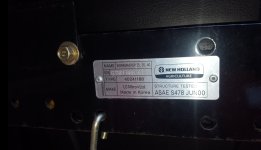
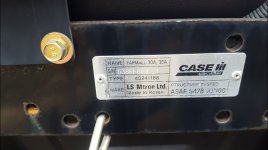
For those talking about the fit & finish of Korean tractors, I am curious what you think about the "American" CUTs by New Holland and Case IH.

I took these pictures last year at the county fair:

Screenshot_20201022-214935_Gallery.jpg

Screenshot_20201022-214710_Gallery.jpg

I bought an LS branded LS tractor and I got the same tractor as a Case / New Holland but for thousands less. And the loader that LS puts on them is much more stout than those Red and blue ones. It's a better loader than comparable Kubota and Mahindra models. I'm talking about the construction of it, not the specs. You can see the difference plain as day, just go look at them, take pictures, bring a pair of calipers if you want. LS is using 1" thick steel plate in places where Kubota is using 1/4" plate, and JD is using cast iron.

This wasn't supposed to be a promo for LS, just a counter example for the assertion that Korean = inferior in any way whatsoever. You DO get what you pay for, and what you are paying for is too often just a name.
 

Marketplace Items

Preliminary Listing / Full Catalog Coming Soon! (A53317)
Preliminary...
UNUSED SDLANCH SDLGC100 ELECTRIC GOLF CART (A60430)
UNUSED SDLANCH...
2012 FREIGHTLINER CASCADIA SLEEPER TRUCK (A59904)
2012 FREIGHTLINER...
2006 Ford E-350 Enclosed Service Van (A59230)
2006 Ford E-350...
2005 JLG Skytrack 10054 10K Capacity Telehandler (A59213)
2005 JLG Skytrack...
1629 (A57192)
1629 (A57192)
 
Top