How agriculture works thread

   / How agriculture works thread #421  
This year, least around here, agriculture isn't working all that good. Everything is too expensive and new crop prices are down.
Around here I am noticing many fields that are not yet planted or tilled, just weed filled, while many others have corn 6-8" and beans and alfalfa growing. Seems like a lot of inactivity. I was wondering why; we've had good rain and temps. Possibility of farms changing hands or family crisis. One farm it's known the farmer died.
 
   / How agriculture works thread #422  
Most of it is fuel cost and the price of amendments (fertilizer and such) and seed has also went through the roof so if it's a marginal operation (and there are a lot of them), the alternative is to not plant because they CANNOT afford to plant and possibly go **** up.
 
   / How agriculture works thread
  • Thread Starter
#423  
This is a Big Bud tractor taken near Ondia SD. My Bro says there are several being used in that area. More pics from that area will be posted later.

bigbud.jpg
 
   / How agriculture works thread
  • Thread Starter
#424  
It had rained while I was in Onida and I tried and about got stuck in his machinery yard. So I took some distant pics from the road. 🥺

These are his combines but while harvesting, they contract more and will run as many as 12 at a time. These 9 series are the largest JD builds.
P1060779.jpg
P1060780.jpg


My bro said his most powerful tractor was 500 something HP. This is a few of his tractors and I believe he has 4 or 5 large JD's. Yes these photos are lame.
P1060778.jpg


As you might guess, this is big farm country. Some of his storage.
P1060782.jpg
 
Last edited:
   / How agriculture works thread #425  
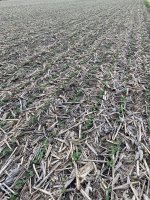
Here's the future of farm fields. No more, or very little bare dirt with plowed or tilled fields spring and fall. Planting in bare dirt subject to wind or water erosion and other bad things, including excess compaction has all that obsolete.

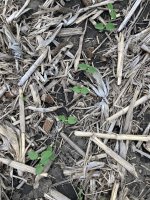
The word on the street now is to leave as much vegetative "trash" on the ground to control erosion, hold moisture and reduce compaction. Here's a pic of a field this year that was in corn last year and has already been planted this year. Look at the surface cover of old corn residue from last year with some still there from two years ago. Hardly the days of yore.

IMG_2094.jpg IMG_2095.jpg .


The field has been in this no-till state for nearly 20 years and yields are great with not much compaction to speak of. It gets sprayed with weedkiller and fertilizer in the spring--one pass--planted and then harvested in the fall. That's it. Weed control is excellent because most seeds are underground and can't sprout. Way less fuel, proven less compaction and. exceptional yields. The field is the poster child of good behavior.


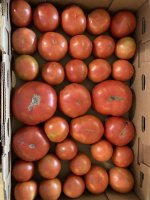
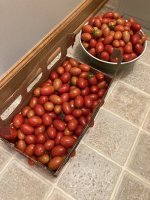
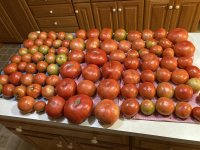
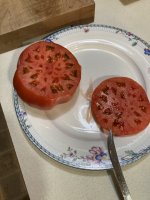
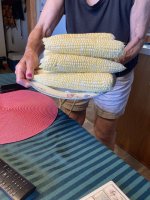
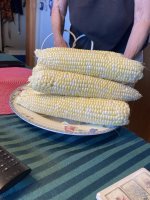
More fields are looking like that these days including my garden. With little surface disruption, worms are everywhere and organic matter is way up. With my no till garden I got 462 lbs of tomatoes off of 11 plants last year and have witnesses to prove it. Pics of some below. Check out that 83 day sweet corn. Plus my sweet corn from this year.


IMG_1250-2.jpg IMG_1249.jpg IMG_1248-2.jpg IMG_1242-2.jpg .IMG_1053-3.jpg IMG_1054-3.jpg .IMG_2154.jpg

And that's the way it is.


.
 
   / How agriculture works thread #426  
Here's the future of farm fields. No more, or very little bare dirt with plowed or tilled fields spring and fall. Planting in bare dirt subject to wind or water erosion and other bad things, including excess compaction has all that obsolete.

The word on the street now is to leave as much vegetative "trash" on the ground to control erosion, hold moisture and reduce compaction. Here's a pic of a field this year that was in corn last year and has already been planted this year. Look at the surface cover of old corn residue from last year with some still there from two years ago. Hardly the days of yore.

View attachment 750516 View attachment 750517 .


The field has been in this no-till state for nearly 20 years and yields are great with not much compaction to speak of. It gets sprayed with weedkiller and fertilizer in the spring--one pass--planted and then harvested in the fall. That's it. Weed control is excellent because most seeds are underground and can't sprout. Way less fuel, proven less compaction and. exceptional yields. The field is the poster child of good behavior.


More fields are looking like that these days including my garden. With little surface disruption, worms are everywhere and organic matter is way up. With my no till garden I got 462 lbs of tomatoes off of 11 plants last year and have witnesses to prove it. Pics of some below. Check out that 83 day sweet corn. Plus my sweet corn from this year.


View attachment 750518 View attachment 750519 View attachment 750520 View attachment 750521 .View attachment 750524 View attachment 750523 .View attachment 750527

And that's the way it is.


.
It takes commitment to convert to this, and faith in slightly later planting as teh ground doesn't warm up as quick, and some early yields are not as good until the soil structure gets re-established but after about ten years the farmer is much better off with less fuel and other inputs and getting better crops.

Thanks for the great photos to add emphasis.
 
   / How agriculture works thread #427  
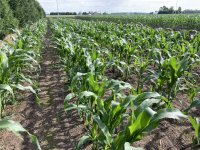
I noticed more no till fields around here this year. From what I've heard the reason is because of high fuel costs to till the fields. However, I believe they use more herbicide, that has gone up quite a bit.
It also makes a difference on what type of soil the farmer has.
No till is nothing new around here. I saw it 35-40 years ago.
 
   / How agriculture works thread #429  
I noticed more no till fields around here this year. From what I've heard the reason is because of high fuel costs to till the fields. However, I believe they use more herbicide, that has gone up quite a bit.
It also makes a difference on what type of soil the farmer has.
No till is nothing new around here. I saw it 35-40 years ago.
Typically it is more herbicide when you start no till but less herbicide once you have been using the system for a few years.

Please keep in mind there is no-till as in it wasn't tilled it was just planted and then there is never till where nothing that does tillage is ever brought to the field. The only soil disturbance is the cutting of the typical disc opener to plant the seed and maybe some trash wheels to clear a little away before the opener gets there. The never-till is what gets away from a lot of herbicide over time but again not the first, second or third year.
 
   / How agriculture works thread #430  
I tried no till in my garden once but I couldn't find the onions after the lambs quarter and pigweed took over.
 
   / How agriculture works thread #431  
Another trend here is "cover crop". Rye grass, wheat, even turnips. By Spring some of the fields have 8-12" of green cover. Spray to kill the cover, wait until it's dead, then no till plant. USDA is pushing this type of minimal tillage farming. That pressure finds it's way thru the State Conservation Service, down to the local County office and finally to the farmer. Not participating can mean "non compliance". A situation no farmer can survive in.

In my area erosion is a problem. My large farmer friend told me the other day that one of his farms was thrown into "non compliance" because there were 4" deep ditches below a set of terraces. Now he has to add a grass waterway below the terraces to control this. A person must give that considerable thought and have an understanding of varying soil types. In my area 4" ditches are common.
 
   / How agriculture works thread #432  
They use a lot of radishes for cover crops here.
 
   / How agriculture works thread #433  
   / How agriculture works thread #434  
Cover crops keep the nutrients held in the soil in areas where there is not a sufficient winter to stop a lot of the movement so it makes sense that they are being pushed. They keep the nutrients in the plant matter and then when it is killed and rots down gives the nutrients to the crop. This keeps them from leeching out of the soil or getting bound into an inaccessible form in the soil. The radishes are crazy looking things that are long and relatively slim but are good at perforating the soil leaving a hole for water absorption when they rot. Roots like the corn roots I have talked earlier find these holes and get quickly through hard pan and into the subsoil where they access both water and nutrients.

Rye is becoming more and more common here because it can be killed without spray once it shoots for head in early spring. A farmer can just roll it down and break it off and it stops growing before it has created heads and provides a lot of plant material to build the soil plus a great cover for soybeans as a lot of it although broken springs back up. By harvest season it has all fallen down though and so it does not go through the combine.

Another option is grazing cover crops where possible to get an extra part of a crop in the same year as a regular crop. Since cattle eat the vegetation and process it and drop most of it on the same ground the nutrients stay there to be used by the next crop. It is funny to see a cow get ahold of a long radish and pull it out and eat it - it is way different than watching them eat grass. They seem to really like the radishes and turnips along with vegetative cover crops.
 
   / How agriculture works thread #436  
Grazing is highly discouraged here because of soil compaction.
 
   / How agriculture works thread #437  
Cutting and raking hay on very very steep hills in Austria.

 
   / How agriculture works thread #438  
Cutting and raking hay on very very steep hills in Austria.

Wow, great video. Thank you. If you have to wrk, scenery like that makes it better.

How many cows in a typical operation like that? How many days does the grass have to dry before baling? I ask because no conditioning and just tedding of the crop.
 
   / How agriculture works thread #439  
Wow, great video. Thank you. If you have to wrk, scenery like that makes it better.

How many cows in a typical operation like that? How many days does the grass have to dry before baling? I ask because no conditioning and just tedding of the crop.
Indeed great scenery. Somehow I find that anywhere you look in Austria, you just get some beautiful views.

Unfortunately, I don't know any details on the size of the operation.
 
   / How agriculture works thread #440  
Wow, great video. Thank you. If you have to wrk, scenery like that makes it better.

How many cows in a typical operation like that? How many days does the grass have to dry before baling? I ask because no conditioning and just tedding of the crop.
Not crimping only adds a day or two to the dry time depending on the dampness of the soil and the solar load. I typically lay grass hay down with a sickle bar and bale it on the third day. I have done it in two with the right conditions. Alfalfa about a day longer.
 

Tractor & Equipment Auctions

WHISPEREATT 25 GENERATOR (INOPERABLE) (A58214)
WHISPEREATT 25...
2001 BOBCAT 773 SKID STEER (A60429)
2001 BOBCAT 773...
500 BBL WHEELED FRAC TANK (A55745)
500 BBL WHEELED...
2014 KOMATSU HM400-3 OFF ROAD DUMP TRUCK (A60429)
2014 KOMATSU...
2017 John Deere 6120E (A53317)
2017 John Deere...
2019 Peterbilt 520 Heil Side Loader Garbage Truck (A55973)
2019 Peterbilt 520...
 
Top