Help Me Design/ Build a Shop

   / Help Me Design/ Build a Shop
  • Thread Starter
#21  
most likely you are correct and 100 amps for the shop with 200a - shop load for the house will be fine but it depends on what you are running at the same time as well as what is going on in the house at the same time. someone using the stove/ oven while some one is taking a shower can draw a lot of power with ac/heat on top of that.
also circuit breakers don't just trip when hit 201 amps for a few min they will take 10 min or so at 230 amps (more current less time) but on the other side unless they are 100% rated and most are not, that 200 amp breaker will trip at 80% or 160 amp after 4 hours continuous load (give or take).

as i said before you most likely will not have a problem with your load.

Good news with that is hot water and stove are both gas. Oven is electric so no getting around that one.
 
   / Help Me Design/ Build a Shop
  • Thread Starter
#22  
Also, I just thought about this. Realistically anything that I'm going to be using in the shop has been used in my house garage at one time or another. More lighting yes, possibly a bigger air compressor. That makes me think about it a little differently.
 
   / Help Me Design/ Build a Shop #23  
I ran a 400 (320)A service at my shop- installed a dual lug base and a 200A commercial panel in the shop. Am in process of trenching to the house build site from the shop- will pull another 200A set from the dual lug meter base to the homesite for its breaker panel. 1 meter for both house and shop.
 
   / Help Me Design/ Build a Shop #24  
I agree to a point, but I can have running the compressor, lights, heat(or possibly AC where the OP is), dust collector, and wide belt sander all at once and those are all on 30 or 40A 240 circuits, except the lights & heat (not that they draw full amps). A 200A service has the advantages of max number of breaker spaces available, which is nice given the 240v ones take 2 spots and you can end up with a number of them.

The number of circuit breaker slots in the building's panel does not depend on the service breaker size. The sum of the breakers in the panel is often much larger than the rating of the main breaker, because not all of that stuff is on at the same time and it doesn't draw what it's breaker says. For houses there's a complex formula that the electrician uses to calculate the load and thus the service amps needed. What's really interesting is that for 240v stuff that aren't normal household items you're pretty much on your own. It's up to you and the electrician to figure out which ones could be run at the same time and what their loads are.

If you had a 60 amp feed to a building you could use a 40 slot panel if you wanted. You don't have to fill all the slots of course. But if you had a lot of 240v equipment and were only going to run one at a time, you could use up a lot of the slots. (240v stuff is often supposed to be hard wired, each to its own breaker)

Also the service amps to a building is determined by the smallest breaker on the feed to the building. For example my main panel has a 125a breaker for the feed to the house and a 35a one for the well. I can put a "200amp" panel in my house with a 200a main breaker, which is totally to code. The 200a breaker in this case is really a disconnect. I'd still have a 125a feed to the house.

When planning my shop I used an on line version of the formula and got a number for house + shop + barn that was pretty close to what my electrician came up with. I'm using his work for the permit of course but mine was a useful ballpark.

One thing to keep in mind is power for electric car chargers. You might not be planning on getting one any time soon but in 10-15 years who knows?
 
   / Help Me Design/ Build a Shop #25  
The number of circuit breaker slots in the building's panel does not depend on the service breaker size. The sum of the breakers in the panel is often much larger than the rating of the main breaker, because not all of that stuff is on at the same time and it doesn't draw what it's breaker says. For houses there's a complex formula that the electrician uses to calculate the load and thus the service amps needed. What's really interesting is that for 240v stuff that aren't normal household items you're pretty much on your own. It's up to you and the electrician to figure out which ones could be run at the same time and what their loads are.

If you had a 60 amp feed to a building you could use a 40 slot panel if you wanted. You don't have to fill all the slots of course. But if you had a lot of 240v equipment and were only going to run one at a time, you could use up a lot of the slots. (240v stuff is often supposed to be hard wired, each to its own breaker)

Also the service amps to a building is determined by the smallest breaker on the feed to the building. For example my main panel has a 125a breaker for the feed to the house and a 35a one for the well. I can put a "200amp" panel in my house with a 200a main breaker, which is totally to code. The 200a breaker in this case is really a disconnect. I'd still have a 125a feed to the house.

When planning my shop I used an on line version of the formula and got a number for house + shop + barn that was pretty close to what my electrician came up with. I'm using his work for the permit of course but mine was a useful ballpark.

One thing to keep in mind is power for electric car chargers. You might not be planning on getting one any time soon but in 10-15 years who knows?
actually the NEC is very stringent on demand load calculations, if it is not listed equipment you have to figure it at 100% in a lot of cases so we work hard to try to fit a piece of equipment into a known load profile to get a demand factor. There are 240 volt receptacles and you are allowed to run them just like other outlets (more than one to a circuit) if your demand calculations show that the circuit is not overloaded.
the online calculations sites are usually a good start on demand calculations, but like everything else garbage in == garbage out so beware.

also for some loads you have to calculate the demand @ 125% of the connected load (it has to do with the 80% max continuous rating of most circuit breakers)

sorry if i'm comming of as mr know it all, just trying to pass on my 30 years as a electrical P.E.
 
   / Help Me Design/ Build a Shop #26  
Also, I just thought about this. Realistically anything that I'm going to be using in the shop has been used in my house garage at one time or another. More lighting yes, possibly a bigger air compressor. That makes me think about it a little differently.
then it sounds like you have a good handle on it good luck with the new shop, there is nothing like having a place to go and get things done where no one has borrowed that one tool that you have to have to finish your project that you now have to spend 2 hours asking everyone have they seen it, only to be met with blank stares, then to find it laying in the dirt where you son decided to disassemble the lawn mower only to leave the air cleaner laying in the dirt next to it. just for the record how do you use a $200 torque wrench to take a spark plug out of a mower?
 
   / Help Me Design/ Build a Shop #27  
... There are 240 volt receptacles and you are allowed to run them just like other outlets (more than one to a circuit) if your demand calculations show that the circuit is not overloaded.
...
I didn't know this. I'm adding a 3 car attached garage to my house and I'm planning on running a 220 outlet for my welder. I recently acquired a 220 volt air compressor that I was going to run a separate 220 line to. Since they will be about 15 feet apart from each other, and never used at the same time, is there any reason I can't have them on the same breaker?
 
   / Help Me Design/ Build a Shop #28  
I didn't know this. I'm adding a 3 car attached garage to my house and I'm planning on running a 220 outlet for my welder. I recently acquired a 220 volt air compressor that I was going to run a separate 220 line to. Since they will be about 15 feet apart from each other, and never used at the same time, is there any reason I can't have them on the same breaker?
are both receptacles rated for the amperage of the circuit? the compressor can be directly connected.
NEC 430.24 covers the load calculation.
this is out of the 2017 NEC but is still the same in the 23.
the NFPA has in their wisdom to not allow PDFs of the newer codes (they were losing money, never mind the safety of having more people access to the code)
you just need to size the conductors and overcurrent protection to provide the required current per the calculation and all of the components need to be rated for the current also.
short answer is yes you can.

BTW I finished HS in Henderson, went to Kilgore JC and worked in Lufkin for a few years

sorry had to remove the attachment due to copyright.
post name plate info on the loads and i will size it for you.
 
Last edited:
   / Help Me Design/ Build a Shop #29  
Since I don't think Eddie has any inspections where he is, the quick answer is you can do whatever you want... DaBear will be able to help you better with the load calcs if you want to follow code to the letter.

I did a few 240V circuit runs with multiple outlets on them down the sides of my shop for the less frequently used items. The heavy use items all get their own circuit just for peace of mind and simplicity. So if I roll out my big shaper to cope and stick doors, I can plug it in a few places. Same thing with my metal band saw...and my wood bandsaws too. Now the air compressor and dust collector? Those get their own circuits for sure as they can run at any time and are heavy loads. Same reasoning on the table saw, jointer, planer and (mini)wide belt sander.

Do you really want to be running your welder and have the comp kick on and trip the breaker on you mid-weld? Run yourself a 60-100A subpanel instead and then pull the comp on it's own circuit and add a few 240v outlets on another circuit so you can plug your welder or something else in wherever you want.
 
   / Help Me Design/ Build a Shop #30  
OP, in my recent shop build for wood working the electrician ran a 200a service. Panel has like 40 spots in it. All of the 240v tools have their own circuit to run on. One circuit may have 3 outlets on it. But no multiple tools running at the same time. Dust collector on its own circuit because it runs with all tools. Mostly a one person shop, but depending on tools and nearest outlet, a second person could run a tool, but my DC would not keep up. Just some thoughts. Jon
 
   / Help Me Design/ Build a Shop #31  
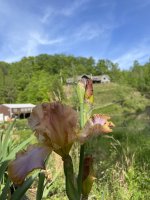
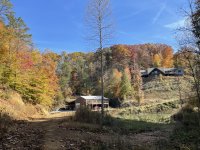
15 yrs. ago we move 550 miles from IL farm to 110 steep TN land (I've quipped --if I'd iron it out, it would be at least a 1/2 section). With no useable bldgs., we lived in RV & built a 40 x 50 steel bldg. 18' sidewalls. 20' of the 40 has 18' OH door. The other 20 x50 has an upper floor at 10' & became our 'barndominium'. Has a 8 x 10 OHD on same face as bigger door. Built barndo for permanency-- hdwood flrs. w/d, etc. Got involved in so may other projects we didn't get moved into a permanent house until 2018--600' of drive & 100' above barndo. Now it serves as guest house &/or rented out, 1K+ @ month. Added 40 x 50 shed roof off one side - roof extended under upper bldg. roof for drainage, but structures are not connected. Have since built a 1 a.+ pond where original 'house' sat. Water level would be somewhere near 6+' above its flr. level. HVAC on both levels, but use drying only on shop during hot seasons & min. heating in winter.
 

Attachments

  • IMG_8830.JPG
    IMG_8830.JPG
    1.4 MB · Views: 278
  • IMG_7542.JPG
    IMG_7542.JPG
    3.2 MB · Views: 280
   / Help Me Design/ Build a Shop #32  
I just started building my house, and all but decided to wait on the shop. My wife and parents are on me about going ahead and building it while the house is going up.... They have a point, I really want a shop and need indoor storage for several things. We are planning on this being our retirement spot. I'm 40 and My wife is 44 so it needs to last for many decades.

My dream was a 50x60x12 red iron framed building. With inflation driving the price of the house so high, not to mention the shop price, that is not in the cards. Now hoping for at least 40x50x12. I know I can get 40' wood trusses, potentially 45'.

Proposed shop use:

1) Honey house/ bathroom with shower/ kitchenette for canning etc. This will likely be a framed out room 15x15 - 20x20 no set size but large enough for chores with A/C and ideally set up like an efficiency apartment. Initially I will rough in the plumbing for the shop construction and build out the rest over time.
2) General shop related tasks. light/ medium wood work, wrenching on random stuff, tractors, mowers, etc.
3) storage/ I bought a big shelf system from Bed Bath and Beyond when they went under. 12' tall and probably 40' long. lightish duty. no pallets but great for totes.
4) Motorcycle, mower and additional vehicle parking.

Proposed style.

A) Red iron frame - too expensive
B) Post Frame - Wood in the ground, Rot, Termites etc. Longevity? Much worry.
C) Stick built - Looks like potentially the best option for me.

I plan on getting the pad ready myslef, hiring concrete finishers, hiring framers and hiring out the metal skin installation. Planning on pulling power to a sub-panel from the house and wiring myself. I don't know anything about foundation requirements. Would prefer to add any required footing type things and pour all at once as opposed to digging footers, laying blocks, filling, then pouring the slab. There is probably around a 2' fall on the pad location so I would need to build up with the fill I set aside from my pond. It's clay and Shale, it was almost all shale but when I dug it back out for the driveway lots of the shale has broken down into clay.

I might could do a lot of the framing myself but I don't know the requirements for door headers and anchoring to the floor etc. Basically I'm not scared of hard work and can follow a plan but I don't have the knowledge for what's required.

Planning on 2 man doors and 2-3 overhead doors. At least one of those being about 18' wide.

Please help me with this. I know there have probably been several threads about this exact thing so links would likely also be helpful.
Install an electrical outlet every 5 feet. Everyone can jack stuff up. Install some 'chain pots' so you can hold stuff down and move it around.
Seven years ago I sold my custom built garage having a 20' pit with air, and power and a powerful ventilation system, too. I miss having that pit nearly as much as I miss my youth. It allows you do things with ease you cannot imagine. Good luck. Plan carefully. And then plan some more.
 
   / Help Me Design/ Build a Shop #33  
My current shop is @ 1800 Sq' . I'm lighting the while shop with 4 lites . 2 100 watt LED hi bays with 14,000 lumens & 2 65 watt LED hi bays with 8,000 lumens . I bought them on Amazon & I think the 100 watts were @ $ 209.00 for the pair & the 65 watts were @ $ 70 something . I paid the extra 7 bucks for the extended warranty . been hangin for ovber 5 years now with no prob . I couldn't find the link for the 100 watters , heres the 65 link
I'm off grid so power consumption was a huge factor when choosing lites .
animal12
 
   / Help Me Design/ Build a Shop #34  
Good point about building the building so you could expand easily. If you make it 20' shorter than what you were planning on you could stretch it out when funds become available.
 
   / Help Me Design/ Build a Shop #35  
Plan on a way to charge EVs . SAE J1772 is the standard. Wish I had put in a sink and at least a hose bib. When you do build, think about where shelves are going to go so you can double frame there. Take lots of pics before dry wall. I have four skylights, and I love these. I set up for commercial Florescent tube lighting. Which isn't much of a choice these days. These were so loud I had to replace all the ballasts with less noisy ones. They gave me a head ache after 15 minutes. Some sort of built in fan would have been a good idea, as would have been a built-in air pressure line. I would build it WITH OUT gutters. I have gutters to feed rain water storage. Cleaning these are a major pain at 14 feet up. Half of the roof is set up to feed a 1500 gal cistern. If a do over, I would triple this to 4,500 gals.
 
Last edited:
   / Help Me Design/ Build a Shop #36  
I just started building my house, and all but decided to wait on the shop. My wife and parents are on me about going ahead and building it while the house is going up.... They have a point, I really want a shop and need indoor storage for several things. We are planning on this being our retirement spot. I'm 40 and My wife is 44 so it needs to last for many decades.

My dream was a 50x60x12 red iron framed building. With inflation driving the price of the house so high, not to mention the shop price, that is not in the cards. Now hoping for at least 40x50x12. I know I can get 40' wood trusses, potentially 45'.

Proposed shop use:

1) Honey house/ bathroom with shower/ kitchenette for canning etc. This will likely be a framed out room 15x15 - 20x20 no set size but large enough for chores with A/C and ideally set up like an efficiency apartment. Initially I will rough in the plumbing for the shop construction and build out the rest over time.
2) General shop related tasks. light/ medium wood work, wrenching on random stuff, tractors, mowers, etc.
3) storage/ I bought a big shelf system from Bed Bath and Beyond when they went under. 12' tall and probably 40' long. lightish duty. no pallets but great for totes.
4) Motorcycle, mower and additional vehicle parking.

Proposed style.

A) Red iron frame - too expensive
B) Post Frame - Wood in the ground, Rot, Termites etc. Longevity? Much worry.
C) Stick built - Looks like potentially the best option for me.

I plan on getting the pad ready myslef, hiring concrete finishers, hiring framers and hiring out the metal skin installation. Planning on pulling power to a sub-panel from the house and wiring myself. I don't know anything about foundation requirements. Would prefer to add any required footing type things and pour all at once as opposed to digging footers, laying blocks, filling, then pouring the slab. There is probably around a 2' fall on the pad location so I would need to build up with the fill I set aside from my pond. It's clay and Shale, it was almost all shale but when I dug it back out for the driveway lots of the shale has broken down into clay.

I might could do a lot of the framing myself but I don't know the requirements for door headers and anchoring to the floor etc. Basically I'm not scared of hard work and can follow a plan but I don't have the knowledge for what's required.

Planning on 2 man doors and 2-3 overhead doors. At least one of those being about 18' wide.

Please help me with this. I know there have probably been several threads about this exact thing so links would likely also be helpful.
I have been building pole barns for the past 30 years. This is by far the easiest and cheapest way to acquire a lot of square feet on a budget. My current home is inside of a 50' x 100' x 16' pole barn. Treated post will last longer than you regardless of your soils. You can section off the floor and pour concrete on any portion or the entire floor after the building is up so long as you have enough clearance under the door way you can back a truck in and pour regardless of weather. This can save you a bunch as a lot of concrete companies can't or won't pour in the rain. Once the pole barn is up you can stick frame in between the post with 2x4 lumber and have a standard wall for insulation, electrical and drywall. I would highly recommend sheeting the entire building with 1/2 inch osb or plywood, house wrap and flash the windows. If your doors are on the gable end, you may not need much of a header. This will depend on the truss you use. I have (3) 20' sliding doors on the long side ( truss bearing wall) and I used double 1.75" x 14" LVL for headers. I live in SD and we had 38" of heavy . wet snow this past winter and I have no problems. If I was closer, I'd bring a crew down and have this building completely framed and dried in within 5-6 days including all metal. If you can alter your building size, you can get more bang for your buck by going narrower and longer. The trusses get expensive when you get over 30-36 feet. If I was more tech savy I could send you photos of barns we have built and well as barn houses/shop house. All of this depends on your local building department or codes you must follow. Thankfully up here they still let us be Americans and we do not have to ask or pay for permission to build on our property.
 
   / Help Me Design/ Build a Shop #37  
I just started building my house, and all but decided to wait on the shop. My wife and parents are on me about going ahead and building it while the house is going up.... They have a point, I really want a shop and need indoor storage for several things. We are planning on this being our retirement spot. I'm 40 and My wife is 44 so it needs to last for many decades.

My dream was a 50x60x12 red iron framed building. With inflation driving the price of the house so high, not to mention the shop price, that is not in the cards. Now hoping for at least 40x50x12. I know I can get 40' wood trusses, potentially 45'.

Proposed shop use:

1) Honey house/ bathroom with shower/ kitchenette for canning etc. This will likely be a framed out room 15x15 - 20x20 no set size but large enough for chores with A/C and ideally set up like an efficiency apartment. Initially I will rough in the plumbing for the shop construction and build out the rest over time.
2) General shop related tasks. light/ medium wood work, wrenching on random stuff, tractors, mowers, etc.
3) storage/ I bought a big shelf system from Bed Bath and Beyond when they went under. 12' tall and probably 40' long. lightish duty. no pallets but great for totes.
4) Motorcycle, mower and additional vehicle parking.

Proposed style.

A) Red iron frame - too expensive
B) Post Frame - Wood in the ground, Rot, Termites etc. Longevity? Much worry.
C) Stick built - Looks like potentially the best option for me.

I plan on getting the pad ready myslef, hiring concrete finishers, hiring framers and hiring out the metal skin installation. Planning on pulling power to a sub-panel from the house and wiring myself. I don't know anything about foundation requirements. Would prefer to add any required footing type things and pour all at once as opposed to digging footers, laying blocks, filling, then pouring the slab. There is probably around a 2' fall on the pad location so I would need to build up with the fill I set aside from my pond. It's clay and Shale, it was almost all shale but when I dug it back out for the driveway lots of the shale has broken down into clay.

I might could do a lot of the framing myself but I don't know the requirements for door headers and anchoring to the floor etc. Basically I'm not scared of hard work and can follow a plan but I don't have the knowledge for what's required.

Planning on 2 man doors and 2-3 overhead doors. At least one of those being about 18' wide.

Please help me with this. I know there have probably been several threads about this exact thing so links would likely also be helpful.
what are the code requirements in your area for DIY? You don't want to build something that is uninsurable. Stick built is always going to be cheaper, are you going to make the floor with a damp proof membrane so that you can make it a habitable dwelling long term?
 
   / Help Me Design/ Build a Shop #38  
15 yrs. ago we move 550 miles from IL farm to 110 steep TN land (I've quipped --if I'd iron it out, it would be at least a 1/2 section). With no useable bldgs., we lived in RV & built a 40 x 50 steel bldg. 18' sidewalls. 20' of the 40 has 18' OH door. The other 20 x50 has an upper floor at 10' & became our 'barndominium'. Has a 8 x 10 OHD on same face as bigger door. Built barndo for permanency-- hdwood flrs. w/d, etc. Got involved in so may other projects we didn't get moved into a permanent house until 2018--600' of drive & 100' above barndo. Now it serves as guest house &/or rented out, 1K+ @ month. Added 40 x 50 shed roof off one side - roof extended under upper bldg. roof for drainage, but structures are not connected. Have since built a 1 a.+ pond where original 'house' sat. Water level would be somewhere near 6+' above its flr. level. HVAC on both levels, but use drying only on shop during hot seasons & min. heating in winter.
That's really nice!
 
   / Help Me Design/ Build a Shop #39  
I'm running the service from the road to the build site at 320/400A. Apparently there is no availability on 320A panels right now so I'll most likely be forced to run 200A to my house. I have a friend with a similar house and shop to what I'm planning. He ran a 200A to his house and a 100A sub panel from his house to his shop and has had great luck. He has been one of my mentors at work and I trust what he says. It would be rare to be pulling lots of amps in the house and in the shop at the same time. In the summer the AC will be the biggest draw in the house and it should run on 30A, I can't weld and run a table saw at the same time so I shouldn't have more than 30A running at any given time in the shop.

If that doesn't work I will have expansion availability for another meter pretty easily, I just don't want to add that extra bill if I don't have to.
In my previous house I had a 200 Amp service with a 40 slot panel and right next to it another 20 slot subpanel. Then in my basement area I had another sub panel. In my shop I had another subpanel. At my pool I had another sub panel.
Elect dryer, elect double wall ovens, elect cooktop, two central A/C units, whirlpool tub, pool pump, table saw, radial arm saw, air compressor, 50amp RV outlet, well pump. Never ever tripped a breaker anywhere and I can guarantee I had the table saw, compressor, pool pump, well pump, dryer, both A/C units, both ovens and cooktop, and my 5'er plugged in and all running at once and that doesn't include the normal 110 stuff running. You won't have a problem.

However, depending on what your plans are for the future, you just may want that polebarn to be on it's own service if you plan on conducting any type of business from it as in it's tax deductible.
 
   / Help Me Design/ Build a Shop #40  
I just started building my house, and all but decided to wait on the shop. My wife and parents are on me about going ahead and building it while the house is going up.... They have a point, I really want a shop and need indoor storage for several things. We are planning on this being our retirement spot. I'm 40 and My wife is 44 so it needs to last for many decades.

My dream was a 50x60x12 red iron framed building. With inflation driving the price of the house so high, not to mention the shop price, that is not in the cards. Now hoping for at least 40x50x12. I know I can get 40' wood trusses, potentially 45'.

Proposed shop use:

1) Honey house/ bathroom with shower/ kitchenette for canning etc. This will likely be a framed out room 15x15 - 20x20 no set size but large enough for chores with A/C and ideally set up like an efficiency apartment. Initially I will rough in the plumbing for the shop construction and build out the rest over time.
2) General shop related tasks. light/ medium wood work, wrenching on random stuff, tractors, mowers, etc.
3) storage/ I bought a big shelf system from Bed Bath and Beyond when they went under. 12' tall and probably 40' long. lightish duty. no pallets but great for totes.
4) Motorcycle, mower and additional vehicle parking.

Proposed style.

A) Red iron frame - too expensive
B) Post Frame - Wood in the ground, Rot, Termites etc. Longevity? Much worry.
C) Stick built - Looks like potentially the best option for me.

I plan on getting the pad ready myslef, hiring concrete finishers, hiring framers and hiring out the metal skin installation. Planning on pulling power to a sub-panel from the house and wiring myself. I don't know anything about foundation requirements. Would prefer to add any required footing type things and pour all at once as opposed to digging footers, laying blocks, filling, then pouring the slab. There is probably around a 2' fall on the pad location so I would need to build up with the fill I set aside from my pond. It's clay and Shale, it was almost all shale but when I dug it back out for the driveway lots of the shale has broken down into clay.

I might could do a lot of the framing myself but I don't know the requirements for door headers and anchoring to the floor etc. Basically I'm not scared of hard work and can follow a plan but I don't have the knowledge for what's required.

Planning on 2 man doors and 2-3 overhead doors. At least one of those being about 18' wide.

Please help me with this. I know there have probably been several threads about this exact thing so links would likely also be helpful.
Something like this to the size you need. :)

1688179898573.png
 

Tractor & Equipment Auctions

2018 CATERPILLAR 326FL EXCAVATOR (A60429)
2018 CATERPILLAR...
RIPPER ATTACHMENT FOR MINI EXCAVATOR (A58214)
RIPPER ATTACHMENT...
2013 Freightliner M2 106 16ft Stakebody Flatbed Truck with Liftgate (A55852)
2013 Freightliner...
Unused 2025 CFG Industrial QK16R Mini Excavator (A59228)
Unused 2025 CFG...
2025 MACK GRANITE GR64F DUMP TRUCK (A59823)
2025 MACK GRANITE...
2015 Freightliner 122SD T/A Wet Kit Day Cab Truck Tractor (A59230)
2015 Freightliner...
 
Top