Repairing rotten OSB subfloor

   / Repairing rotten OSB subfloor #1  

LD1

Epic Contributor
Joined
Apr 30, 2008
Messages
22,822
Location
Central Ohio
Tractor
Kubota MX5100
Long story...

I have a 3-unit rental over top of a concrete crawl space.

The hot water heaters all have the T&P valve piped down to a PVC floor drain that goes into the crawl space, makes a 90, goes over 4', then 90's down to a floor drain.

One unit had the T&P valve fail. And they didnt catch it. Best guess is it was leaking for 4-6weeks. Well at some point, the steam/water softened the subfloor that the drain pipe was screwed to and it broke loose out of the floor, resulting in hot steamy water must dumping into the open crawl space. When I got their to replace the T&P, it was flowing at probably 50%-kitchen sink rate. Which is alot.

Nothing flooded in the crawl space, due to floor drains, but that hot steamy water had everything at 100% moisture. It was literally RAINING from the subfloor and joists.

No moisture percolated to the above flooring, because its all laminate or tile and grout. And the laminate has the vapor barrier under it.

Confirmed this when the company the insurance had out there to dry everything took readings of subfloor below, and above. Laminate flooring was under 10%, but all subfloor was 99-100%

Well, that was last month. Everything is dry, and adjuster was out last week to assess the damage. Decided to have an engineer come out to determine exactly what subfloor needs replaced, and what is still good.

Now my question......is there any way to make a satisfactory repair from below? Given that everything is either tile and grout or laminate, repairing from topside is already gonna be a big project. Then factor in that its a 3-unit rental, displacing 3 tenants, etc.

So a couple of ideas that I have kicked around....given that the OSB is now DRY and we wouldnt be trapping any moisture....what about what about cutting strips of subfloor to fit BETWEEN the floor joists, pressing up tight to the "rotten" subfloor, and sistering the existing joists with some 2x4's See pic: Black is existing joists and subfloor, red would be added.
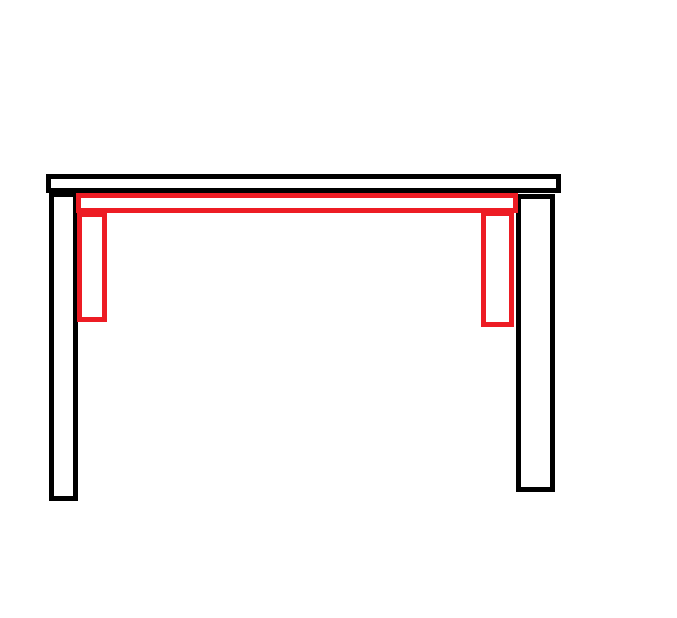
subfloor.png

OR another idea....what about a structural closed cell foam sprayed underneath in the effected areas?

Im torn on this. I want to be as minimally invasive as possible, and not have to displace tennants, and make the most cost effective repair. But also want this done right since this is an insurance job.

Obviously I am gonna have to go with whatever the insurance company and engineer decide to do, but just thinking outside the box....wondering if there is an "approved" way of fixing rotten subfloor from beneath.
 
   / Repairing rotten OSB subfloor #2  
Isn't the OSB delaminated, falling apart, cupped, crumbling, etc.???

The laminate floor might be strong enough to span the gaps and still leave a fairly level surface, but over time I think that old flooring will just continue to disintegrate and work its way out of every crack.

Need to pull the flooring up and replace the subfloor. Since you already have your insurance involved, your cost probably doesn't change beyond the basic deductible.
 
   / Repairing rotten OSB subfloor #3  
is it really rotten or simply bulge ? if it's moldy or rotten Id say no they will want to remove but if not option A should definitely work but usually the owner dosent have much word to say because the insurance take the word of the contractor but you can go though him, they will recommend or demanded that you paint all the affected wood with the anti mildew paint but that not a big deal.

tiles need a very sturdy surface to avoid movement so it all depends on the level of deterioration.
 
   / Repairing rotten OSB subfloor #4  
Also, just thinking about the day when you have to fill out an information sheet about the property for potential buyers -- listing any concerns or condition issues. This would be a red flag.

Even more concerning would be questions from people looking at all that additional patching, framing, and scabbing from below. I think the sight of that would reasonably concern potential buyers and inspectors.

Also, "STRIPS" of flooring between the joists would sag over time. This would not result in a good long-term solution. Need to just pull it up and fix it.
 
   / Repairing rotten OSB subfloor #5  
Is there any insurance coverage for temporary housing for the renters or loss of rental income while this is being repaired for certain? Once the insurance company pays whatever, it seems like all the future risk and potentially greater costs of repairs are on you if this isn't totally fixed today whatever that may entail.
 
   / Repairing rotten OSB subfloor #6  
Renters insurance covers temporary accommodation should unit become inhabitable.

Lost rent should be part of your owners policy.

Code here requires PTR valves to be piped to daylight and the piping heat rated so almost exclusively metal but there are composites approved to withstand heat.

At this point sounds like you are all in for new floors.
 
   / Repairing rotten OSB subfloor #7  
It should be fixed to The standards of the local building code. Insurance will probably demand this for repair payment and ongoing insurance.

with renters you have no option other than an approved fix.
 
   / Repairing rotten OSB subfloor
  • Thread Starter
#8  
Also, just thinking about the day when you have to fill out an information sheet about the property for potential buyers -- listing any concerns or condition issues. This would be a red flag.

Even more concerning would be questions from people looking at all that additional patching, framing, and scabbing from below. I think the sight of that would reasonably concern potential buyers and inspectors.

Also, "STRIPS" of flooring between the joists would sag over time. This would not result in a good long-term solution. Need to just pull it up and fix it.
I would be able to fill out a form for no concerns or issues with a clear conscience if its an insurance approved repair.

As to "strips".....how would they sag any more than the existing subfloor. If anything, with the sistering of joists it lessens the span.
 
   / Repairing rotten OSB subfloor
  • Thread Starter
#9  
Just to be clear, I am not trying to dodge an "approved" fix. And I am not advocating any of these repairs.

Yes my insurance covers loss of rent. But I still hate the idea of displacing the tennants.

No matter how the repair is made.....nothing is gonna come back on me. Because I am not repairing it, nor paying for it. I am leaving it to the insurance company.

This thread was to mainly inquire as to if there were any "other" approved methods that others have seen or heard of. And I gave a couple of examples in which I though would possibly work.
 
   / Repairing rotten OSB subfloor
  • Thread Starter
#10  
Is there any insurance coverage for temporary housing for the renters or loss of rental income while this is being repaired for certain? Once the insurance company pays whatever, it seems like all the future risk and potentially greater costs of repairs are on you if this isn't totally fixed today whatever that may entail.
I dont understand this logic. How would future repairs, risk, etc be my burden....if the insurance company chooses an approved repair other than total replacement?

If THEY choose a more cost effective method, and it fails in the future.....the structure is still insured by them.....its STILL their problem
 
   / Repairing rotten OSB subfloor #11  
Isn't the OSB delaminated, falling apart, cupped, crumbling, etc.???

The laminate floor might be strong enough to span the gaps and still leave a fairly level surface, but over time I think that old flooring will just continue to disintegrate and work its way out of every crack.

Need to pull the flooring up and replace the subfloor. Since you already have your insurance involved, your cost probably doesn't change beyond the basic deductible.
He may have some depreciation that will not be covered on the floor covering. Depending on age it might be significant.
 
   / Repairing rotten OSB subfloor #12  
Depending on where you are any history of water damage is a must disclose... no mater if repaired with permits.

Maybe it's an only in California thing upon sale?
 
   / Repairing rotten OSB subfloor #13  
I dont understand this logic. How would future repairs, risk, etc be my burden....if the insurance company chooses an approved repair other than total replacement?

If THEY choose a more cost effective method, and it fails in the future.....the structure is still insured by them.....its STILL their problem
Suppose an insurance company approved a car repair that used plastic filler and paid for it with the owner's approval. 4 years later the plastic filler falls off the car. What do you think the odds are that the insurance company is likely going to take the position that they already paid for the damage and not cover it when it fails over time?

Typically, insurance covers something that is sudden like a burst pipe, but doesn't cover damage that occurs over a period of time like a floor rotting away because moisture was trapped inside it.

You may want to consult an insurance advisor or attorney if this involves a lot of money, and it sounds like it may.
 
   / Repairing rotten OSB subfloor #14  
I would be able to fill out a form for no concerns or issues with a clear conscience if its an insurance approved repair.

As to "strips".....how would they sag any more than the existing subfloor. If anything, with the sistering of joists it lessens the span.

I was thinking you were going to block it up perpendicular to the joists. I see what you mean now. My bad.

The spots that might sag or feel "weak" over time would be directly over the existing joists. Do you think the floor might feel like a washboard over time?

In your repair option, it seems like you'd have a LOT of framing material involved. Don't know how much that cost would influence the decision.

Let us know what the insurance company or building inspectors or repair contractors think about patching it from below.
 
   / Repairing rotten OSB subfloor
  • Thread Starter
#15  
Just got home from dealing with the engineer.

Two areas to address, one is about 8' x 8', but to repair topside would involve removing furnace, waterheater, fridge, and a section of kitchen cabinets. And there is a wall (separating the kitchen from utility room). So quite an undertaking. This is all tile and grout....so odds are, all new tile and grout in kitchen AND dining room, which is about 200sq ft. That is if the decision to repair is topside. He also suggests sistering 3 of the floor joists for structural reasons (my un-expert opinion is they looked fine).

That is the area around what the active leak was. And 99% sure its all gonna be covered.

The other area of concern is clear on the opposite end of the tripex, 100' away. There is a circular area about 2' in diameter you can literally see some tile-backer board and can push a finger through the OSB with ease.

This must have been a past issue, unbeknownst to me. Its right where the fridge is. So at one point in time it probably leaked.

In the engineers opinion the insurance probably wont cover this area being pre-existing. In the event that they dont, I discussed options with the engineer, and he agreed that strips of 3/4" or heavier plywood between the joists and some 2x4's like my first picture would be a satisfactory repair. And would prevent any concern of someone falling through the floor...lol. And that if that localized area ever caused the tile and grout to crack or break, it could be addressed topside at a later date if necessary. So I'd only be out ~$50 in material to see if shoring it up from the bottom side will work.

BUT, I am gonna lobby the insurance for that area too. Since its obvious there was a prior issue there.....that prior issue may just have cause "some" damage and discoloration, but nothing structural that needed addressed beyond just drying. But that having a crawlspace full of steam, 100% humidity and 100% moisture content, has only just now made that area a structural concern.

I wont know anything for a few weeks because the engineer said it would take 7-10 days to do his report and submit to the adjuster
 
   / Repairing rotten OSB subfloor #16  
See pic: Black is existing joists and subfloor, red would be added.
This is exactly what I was thinking of when I started reading your post. If the insurance company/engineer approves I can't see how it would be a problem. Everything gets fixed someway over time and having to disclose something like that shouldn't concern any reasonable buyer. Just keep the insurance claim documentation and any reports they give you saying it's approved.

I don't know anything about your policy so this may not apply but: If your policy applies unrecoverable depreciation to floor covering then your suggestion would save that expense for you and the expense of the other replacement cost to the insurance company so they may be willing to consider allowing your deductible or part of it to be "absorbed" by the excess amount of the loss.
 
   / Repairing rotten OSB subfloor #17  
Depending on where you are any history of water damage is a must disclose... no mater if repaired with permits.

Maybe it's an only in California thing upon sale?
The Texas Realtor property disclosure include it also as well as a question about any damage subject to an insurance claim which was not repaired. Neither would apply here from what LD1 has indicated.
 
   / Repairing rotten OSB subfloor #18  
As a contractor, when I get a call from somebody wanting some work done, and they mention that insurance is paying for it, I refuse to do the work. If they say that they are paying for it, and they have the money, and whatever they get from their insurance is separate from the job, then I'll take a look at the job.

Insurance companies that I've dealt with, and that I've talked to other contractors about, always try to low ball what they pay after the job is done. I tell homeowners to wait until they get the check from the insurance company before starting repairs. Never trust your agent, or the company they work for. This applies to your wife, son, parent or anybody that works for an insurance company. Do not do anything until you have the money they owe you.

In my experience, the insurance companies don't care about he repairs, or what happens to the house. They will not pay you for that repair again, they never come out to make sure the repairs where made, and odds are good that they wont even answer your calls in the future.

As for the repair, whatever wood is damaged, it has to be removed. You cannot build up on, or next to bad wood. I've done floor repairs on floors with particle board, plywood, and tongue & Groove. A lot of subfloors have two layers of wood. It's a mystery until you start tearing it apart.
I do not believe that you can repair a sub floor from below. The sub floor is designed to be on top of the floor joists. The stiffens up the floor joist, and ties everything together.

I've never dealt the water damaged subfloor from below. I've dealt with lots of water damage from above. It tends to stop at walls and cabinets. I'd be surprised if the floor joists didn't stop the spread of the water damage from below, but I guess it could of still spread pretty far.

I would take everything out down to the joists, then inspect the joist, maybe add another pier or two for more support, spray the joists with swimming pool shok because it's the strongest bleach that you can buy, and then start rebuilding.
 
   / Repairing rotten OSB subfloor #19  
Second for tearing it down to the floor joist's and replacing the subfloor and I would go back with Advan-tech instead of OSB, it's a much better product.
 
   / Repairing rotten OSB subfloor #20  
Second for tearing it down to the floor joist's and replacing the subfloor and I would go back with Advan-tech instead of OSB, it's a much better product.
The proper way to do it.

The engineer in question may the best interests of the insurance in mind!
 

Tractor & Equipment Auctions

2007 Sterling L7500 Terex Commander C6060 T/A Insulated Derrick Digger Truck (A60460)
2007 Sterling...
2018 INTERNATIONAL 4300 26FT BOX TRUCK (A59905)
2018 INTERNATIONAL...
2020 CATERPILLAR 299D3 SKID STEER (A60429)
2020 CATERPILLAR...
Killbros 260 Seed Conveyor (A56438)
Killbros 260 Seed...
Kubota Z232 (A60462)
2019 KUBOTA U35-4 EXCAVATOR (A52706)
2019 KUBOTA U35-4...
 
Top
