how much loader drop is acceptable?

/ how much loader drop is acceptable? #1  

MF1652

Silver Member
Joined
Feb 4, 2010
Messages
212
Location
Vermont
Tractor
2016 John Deere 3039R
I have a 2010 Massey Ferguson 1652 with a DL130 loader. Over the past year I have noticed the loader dropping at a more frequent rate during use. When the hydraulics warm up it seems to drop faster. I have never disconnected any of the hydraulic fittings on the loader. All maintenance intervals have been done and the hydraulic level is reading fine(maybe just a tad high, but acceptable). Don't notice a leak any where.

I measured the loader drop with cold hydraulics in 35 degrees today. In one hour the loader dropped 4 1/2" measured at the tip of the bucket cutting edge. 1/2" of drop measured at the lift cylinder.

Doesn't seem like much when I measure it because I know all loaders will settle. Hoever, it seems like a lot when I have to keep lifting the loader up when driving with the tractor. When the tractor was new, the loader didn't seem to drop at all even with a 35 gallon water tank in the bucket.

The loader manual doesn't give an acceptable tolerance so my questions are this. What is an acceptable amount of settle in the loader hydraulics? Is this normal or should I be looking deeper for a leak?

P.S. my TPH will stay up with no problem.:confused2:
 
/ how much loader drop is acceptable? #2  
I have a 2010 Massey Ferguson 1652 with a DL130 loader. Over the past year I have noticed the loader dropping at a more frequent rate during use. When the hydraulics warm up it seems to drop faster. I have never disconnected any of the hydraulic fittings on the loader. All maintenance intervals have been done and the hydraulic level is reading fine(maybe just a tad high, but acceptable). Don't notice a leak any where.

I measured the loader drop with cold hydraulics in 35 degrees today. In one hour the loader dropped 4 1/2" measured at the tip of the bucket cutting edge. 1/2" of drop measured at the lift cylinder.

Doesn't seem like much when I measure it because I know all loaders will settle. Hoever, it seems like a lot when I have to keep lifting the loader up when driving with the tractor. When the tractor was new, the loader didn't seem to drop at all even with a 35 gallon water tank in the bucket.

The loader manual doesn't give an acceptable tolerance so my questions are this. What is an acceptable amount of settle in the loader hydraulics? Is this normal or should I be looking deeper for a leak?

P.S. my TPH will stay up with no problem.:confused2:

It should certainly no drop during operation. And minimal when stored. Sounds like a leak. :(
 
/ how much loader drop is acceptable? #3  
So much for me going Massey....:ashamed:
 
/ how much loader drop is acceptable? #4  
Cylinders will leak or bypass whether they have hyd pressure or not. Either push or pull weight.

If you have a good valve, and the loader valve is in neutral, the cyl circuit is supposed to be a closed circuit.

If the bucket or the lift arms drop, it is most likely cyl seals.

Excerpt:

[ In hydraulic cylinders, cylinder rod drift or creep and the cylinder’s inability to hold the designed load would be identified by increased leakage. The excessive leakage is the result of the fluid bypassing a piston seal either through a worn seal or a worn cylinder barrel ]

[ Low fluid viscosity or excessive heat (reducing the effective viscosity of a fluid) will also increase leakage rates. ] Warm fluid for instance, will leak more.

The amount of leak down is just simply what you can tolerate.

I have seen valve leakage rates using drops per minutes.
 
Last edited:
/ how much loader drop is acceptable? #5  
I have a 2010 Massey Ferguson 1652 with a DL130 loader. Over the past year I have noticed the loader dropping at a more frequent rate during use. When the hydraulics warm up it seems to drop faster. I have never disconnected any of the hydraulic fittings on the loader. All maintenance intervals have been done and the hydraulic level is reading fine(maybe just a tad high, but acceptable). Don't notice a leak any where.

I measured the loader drop with cold hydraulics in 35 degrees today. In one hour the loader dropped 4 1/2" measured at the tip of the bucket cutting edge. 1/2" of drop measured at the lift cylinder.

Doesn't seem like much when I measure it because I know all loaders will settle. Hoever, it seems like a lot when I have to keep lifting the loader up when driving with the tractor. When the tractor was new, the loader didn't seem to drop at all even with a 35 gallon water tank in the bucket.

The loader manual doesn't give an acceptable tolerance so my questions are this. What is an acceptable amount of settle in the loader hydraulics? Is this normal or should I be looking deeper for a leak?

P.S. my TPH will stay up with no problem.:confused2:

If you are really concerned about this and have some way of lifting the loader without tractor hydraulics and have quick disconnects in the lines you can run a simple test.

Raise the loader using the tractor hydraulics.
Support the loader to remove pressure from the cap end of the lift cylinders. Disconnect the quick disconnects in the cap end (raise) port of the cylinder.
Slowly allow the load back onto the loader.
Measure position of loader and check position in an hour.
Mechanically raise the loader to remove the pressure on the cap end and reconnect your QD.

If loader is drifting down the cylinders are leaking.

Loader didn't move, the valve is leaking. ALL spool valves leak, how much is determined by several factors.

Are you valves controlled by direct manual lever or through a push/pull cable? If the valve is not returning to center it would allow the cylinders to drift faster.

Depending on how big of a concern this is you can buy directional valves that have load holding work port checks built into them. Not inexpensive but will solve this problem.

Roy
 
/ how much loader drop is acceptable? #6  
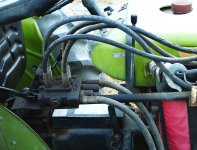
My 30 year old loader on the YM240 does this. Lift will stay up indefinitely but Curl leaks down. I put new piston seals and rod-packings in both curl cylinders, no improvement.

Then lifting something heavy I discovered the control valve dribbled fluid on the ground. Looks like its time to replace the control valve.

Does anyone know of a direct replacement for this valve? Nominal relief pressure is 2000 psi and 4gpm hydraulic pump. The name cast into the valve is 'AICO'.

P1190241rLoaderValve.JPG
 
/ how much loader drop is acceptable?
  • Thread Starter
#7  
I've noticed the loader control lever has gotten a lot of slop in it lately. I'll have to wait until next week to see if the lever has any sort of take up adjustment. May not be returning to neutral like another posted suggested. Thanks for the help folks.
 
/ how much loader drop is acceptable? #8  
Are you using cables to operate the valves. If so, cables might be binding and not allowing the valve to center.

There are springs in the valve, which are supposed to center the valve to neutral. If one of the springs is weak or broken, spool won't center, and may leak. The detent may also have rust, debris in the detent groove.

Most likely, your loader cyl's seals are leaking.

Can you max out the loader cyl's and get the relief valve to activate?
 
/ how much loader drop is acceptable? #9  
I cannot help this but JJ. you always give the best advice and you are looking mighty dapper in your Santa suit. Thanks for your great advice. Santa clearly knows if an hydraulic system is knotty or nice.
 
/ how much loader drop is acceptable? #10  
My 30 year old loader on the YM240 does this. Lift will stay up indefinitely but Curl leaks down. I put new piston seals and rod-packings in both curl cylinders, no improvement.

Then lifting something heavy I discovered the control valve dribbled fluid on the ground. Looks like its time to replace the control valve.

Does anyone know of a direct replacement for this valve? Nominal relief pressure is 2000 psi and 4gpm hydraulic pump. The name cast into the valve is 'AICO'.

View attachment 242597

Baileys seems to have some bargain valves lately. Check this one out:
Directional Control Valves 220-907 Detailed Information
If you want a float detent for the lift function: http://baileynet.com/index.php?dnfwd=1&page=ProductDetails&line=CVED&baileyno=220-956
Edit: Joystick option: http://baileynet.com/index.php?dnfwd=1&page=ProductDetails&line=CVED&baileyno=220-957

Surplus Center: http://www.surpluscenter.com/item.asp?item=9-7862&catname=hydraulic

Get the power beyond plug and add a hose from the return port to the tank to do it right.

While you're at it a couple of your hoses look ripe for replacement.

Edit: Bottom line, valves are pretty generic. You don't need an identical valve, just one with specs that match the function. Do pay attention to the port sizes. You may need adapters. I like the off-the-shelf hoses with npt fittings with adapters going to the valves as needed.
 
Last edited:
/ how much loader drop is acceptable? #12  
MF1652,
Does your loader drift down all the way to the ground or only drop a couple of inches and stop?

If clear to the ground your DCV is leaking.

Explanation based on this being a double acting single rod cylinder and both ends are full of oil.

With the cylinder extended and the DCV valve centered, this should block both cylinder ports.

With the cylinder ports blocks the cylinder can NOT retract due to there is no place for the oil to go.

example: 2 1/2"' bore cylinder with 1 3/8" rod & 24" stroke.

blind end of the cylinder holds 117.8 cubic inches of oil.

Rod end holds 82 cubic inches of oil.

That is a difference of 35.8 cubic inches so unless the DCV valve is leaking or their is an external leak the cylinders will NOT retract fully.

Roy
 
/ how much loader drop is acceptable? #14  
When a valve is leaking, where does the fluid go, to the return port, or return to the main gallery.

If the valve is in fact leaking, then you should be able to see it after raising the loader and then removing the hose to the return port or PB port.
 
/ how much loader drop is acceptable? #15  
oldnslo; said:
MF1652,
Does your loader drift down all the way to the ground or only drop a couple of inches and stop?

If clear to the ground your DCV is leaking.

Explanation based on this being a double acting single rod cylinder and both ends are full of oil.

With the cylinder extended and the DCV valve centered, this should block both cylinder ports.

With the cylinder ports blocks the cylinder can NOT retract due to there is no place for the oil to go.

example: 2 1/2"' bore cylinder with 1 3/8" rod & 24" stroke.

blind end of the cylinder holds 117.8 cubic inches of oil.

Rod end holds 82 cubic inches of oil.

That is a difference of 35.8 cubic inches so unless the DCV valve is leaking or their is an external leak the cylinders will NOT retract fully.

Roy

Your logic is sound, but

Fully retracted might physically place the bucket several inched below ground.

Might also have something to do with the size and shape of the bucket and the mounting pins are located. Just saying.

Check the cyl rod to see if fully retracted.
 
/ how much loader drop is acceptable?
  • Thread Starter
#16  
Are you using cables to operate the valves. If so, cables might be binding and not allowing the valve to center.

There are springs in the valve, which are supposed to center the valve to neutral. If one of the springs is weak or broken, spool won't center, and may leak. The detent may also have rust, debris in the detent groove.

Most likely, your loader cyl's seals are leaking.

Can you max out the loader cyl's and get the relief valve to activate?

I'm going to pull the cover off this coming week to see what I have. I don't think it uses cables, but I'll see. It's a cab tractor with the control lever tucked under the console so I don't think there will be rust or debris in there(probably find a mouse nest with my luck). I'm struggling to learn the hydraulics on this tractor so bear with me. If one of the lift cylinders has a leak wouldn't the second lift cylinder keep the loader up? Or would they both fail together? How would I know when the relief valve is activated?(Don't know where or what that is:ashamed:)

MF1652,
Does your loader drift down all the way to the ground or only drop a couple of inches and stop?

If clear to the ground your DCV is leaking.

Explanation based on this being a double acting single rod cylinder and both ends are full of oil.

With the cylinder extended and the DCV valve centered, this should block both cylinder ports.

With the cylinder ports blocks the cylinder can NOT retract due to there is no place for the oil to go.

example: 2 1/2"' bore cylinder with 1 3/8" rod & 24" stroke.

blind end of the cylinder holds 117.8 cubic inches of oil.

Rod end holds 82 cubic inches of oil.

That is a difference of 35.8 cubic inches so unless the DCV valve is leaking or their is an external leak the cylinders will NOT retract fully.

Roy

The loader drops all the way to the ground.

I'm going to also disconnect the loader after raising it to isolate if it's the cylinders leaking or the DCV. I'm concerned I'm not going to be able to connect the loader hoses back up after this so if anyone has any good ideas on how to relieve the pressure to make the connections, I'm open to suggestions. I was thinking maybe place a jack under the loader bucket and use that to take the pressure off to make the connections. Good idea? Bad idea won't work?

Thanks folks.
 
/ how much loader drop is acceptable? #17  
There is nothing to separate the cyl, so if a cyl is leaking both will appear to be leaking. You have to separate the cyl to check for leak. Some tractors might only have one cyl for curl.

You have to use something like a jack to relieve the pressure.

A rope tied off in a tree might work also.
 
/ how much loader drop is acceptable? #18  
When a valve is leaking, where does the fluid go, to the return port, or return to the main gallery.

If the valve is in fact leaking, then you should be able to see it after raising the loader and then removing the hose to the return port or PB port.

It will leak to the path of least resistance. If an open center circuit this could be both tank galley and pressure galley so removing the PB hose and blocking it may not stop the drift.

Closed center system it would be the tank galley.

Roy
 
/ how much loader drop is acceptable? #19  
Roy,

What I was getting to was that if the valve is leaking, with the loader raised, and you removed the PB, and return lose, you should be able to see and collect the fluid from the cyl leaking out the ports.
 
/ how much loader drop is acceptable? #20  
The loader drops all the way to the ground.

I'm going to also disconnect the loader after raising it to isolate if it's the cylinders leaking or the DCV. I'm concerned I'm not going to be able to connect the loader hoses back up after this so if anyone has any good ideas on how to relieve the pressure to make the connections, I'm open to suggestions. I was thinking maybe place a jack under the loader bucket and use that to take the pressure off to make the connections. Good idea? Bad idea won't work?

Thanks folks.

If you enough patience there is another check you can do before disconnecting any hoses.

With the tractor running very slowly start moving the lever until the loader just starts to raise. Mark this position.

Now slowly move the lever until the loader just starts to lower. Mark this position.

Let the lever go to its spring center. Are the two marks close to the same distance from center location?

If there is a significant difference in the distances I would suspect some thing has jammed in the linkage. Not real scientific but it may give you a clue.

On a tractor that is only 1 - 2 years old I would suspect a valve issue before a cylinder.

Roy
 

Marketplace Items

2017 Ram 3500 4x4 Crew Cab Service Truck (A60352)
2017 Ram 3500 4x4...
2013 Audi A4 Sedan (A55853)
2013 Audi A4 Sedan...
(20) 2.5cm X2M Ratchet Straps (A60463)
(20) 2.5cm X2M...
2000 FORD F-550 XL SUPER DUTY DUALLY SERVICE TRUCK (A60430)
2000 FORD F-550 XL...
2013 ORTEQ ENERGY GN182 GOOSENECK HOSE TRAILER (A58214)
2013 ORTEQ ENERGY...
2023 BOBCAT T770 SKID STEER (A62129)
2023 BOBCAT T770...
 
Top