Dock strike/Toilet paper shortage??

/ Dock strike/Toilet paper shortage?? #81  
I agree with you for the most part, but some of these workers being displaced don't have the skills to do any more than "grunt" jobs. With every generation, the number of jobs where you could go in off the street and learn all you need OJT decreases in favor of those requiring some sort of education. Even many of the trades are looking for someone who can at least hit the ground walking, if not running. I'm not sure what the solution to that is. Not everyone is cut out for college or even trade school.
I think this is where the several posts from others, about a hiring freeze, or at least slow-down, has real merit. Of course no one wants to push late-career guys out of the only work they’ve ever known, but it may be in the collective interest to dissuade younger guys from going into this profession, or advancing up the union ladder when other opportunities exist.
 
/ Dock strike/Toilet paper shortage?? #82  
How many of you took "Typing" in high school? When there were no computers or word processers? Who remembers the "magic" of the IBM Selectric "correcting" typewriter that would type "white-out" over your last letter typed? I had a Smith-Corona that could correct by swapping out the ink cartridge with a correction cartridge. This was state-of-the-art and pretty impressive at the time . . .

I took computer science in college. We used a card punch machine to record program language and then stacked that up into a card reader that executed one card at a time in a mainframe type computer. We had to wait in line behind other students in front of the actual device in order to insert our card deck. If there was an error, it would kick out the last card and the program would not execute. If the program ran, you got a printout on a dot-matrix printer. There was no disc drive storage or options for electronic output.

Like a lot of you . . . I started work when there were virtually no computers. There were no cell phones. There was no GPS. Everything we did was paper-based. Xerox copiers were our most modern office equipment.

I lived through the implementation of mainframe computer systems in the 80's / 90's. We had green-screen terminals and those applications were still used long after we moved to desktop PC's.

Desktop PC's opened up a lot of new applications -- mainly word processing and spreadsheet programs.

We started out with cellular bag-phones that were shared depending on who was on call. I probably had every variation of cell phone from the big bricks to the flip-phones to Blackberry and finally iPhones.

Throughout all this, the front-line workforce was included in the modernization. It took longer to adapt processes to the technology, but employee's went from working on paper to working on computers. They went from depending on two-way radios to cell phones. No one was laid off. A lot of people who were overdue anyway chose to retire. The transitions above spanned 30 years.

The ILA union has avoided the fundamental technological revolution that the rest of the world has experienced since the computer and cell phone revolutionized all work processes. They have a monopoly due to the nature of their work and infrastructure and this makes them very susceptible for government intervention. No rational union member can argue that "automation" or modernization is "BAD" -- yet this is the theme of their walkout.
 
Last edited:
/ Dock strike/Toilet paper shortage?? #83  
How many of you took "Typing" in high school? When there were no computers or word processers? Who remembers the "magic" of the IBM Selectric "correcting" typewriter that would type "white-out" over your last letter typed? I had a Smith-Corona that could correct by swapping out the ink cartridge with a correction cartridge. This was state-of-the-art and pretty impressive at the time . . .

I took computer science in college. We used a card punch machine to record program language and then stacked that up into a card reader that executed one card at a time in a mainframe type computer. We had to wait in line behind other students in front of the actual device in order to insert our card deck. If there was an error, it would kick out the last card and the program would not execute. If the program ran, you got a printout on a dot-matrix printer. There was no disc drive storage or options for electronic output.

Like a lot of you . . . I started work when there were virtually no computers. There were no cell phones. There was no GPS. Everything we did was paper-based. Xerox copiers were our most modern office equipment.

I lived through the implementation of mainframe computer systems in the 80's / 90's. We had green-screen terminals and those applications were still used long after we moved to desktop PC's.

Desktop PC's opened up a lot of new applications -- mainly word processing and spreadsheet programs.

We started out with cellular bag-phones that were shared depending on who was on call. I probably had every variation of cell phone from the big bricks to the flip-phones to Blackberry and finally iPhones.

Throughout all this, the front-line workforce was included in the modernization. It took longer to adapt processes to the technology, but employee's went from working on paper to working on computers. They went from depending on two-way radios to cell phones. No one was laid off. A lot of people who were overdue anyway chose to retire. The transitions above spanned 30 years.

The ILA union has avoided the fundamental technological revolution that the rest of the world has experienced since the computer and cell phone revolutionized all work processes. They have a monopoly due to the nature of their work and infrastructure and this makes them very susceptible for government intervention. No rational union member can argue that "automation" or modernization is "BAD" -- yet this is the theme of their walkout.
Don't forget the facsimile or FAX machine which was viewed in awe...
 
/ Dock strike/Toilet paper shortage?? #84  
Whats a fax machine..ll i think only you old people know what that is
 
/ Dock strike/Toilet paper shortage?? #85  
Since the topic header included "toilet paper", I was refreshing the roll just today, and noted that the bundle wrapper included the phrase "Longer lasting"/ Hmm... Longer than what?
And just how long is tp expected to last anyway? I expect it to last less than 10 seconds , but only AFTER it has fulfilled it's design function!
 
/ Dock strike/Toilet paper shortage?? #86  
Whats a fax machine..ll i think only you old people know what that is
Hmmm... visit Japan?

Fax machines are practically revered as honored ancestors there, and most government agencies require them;

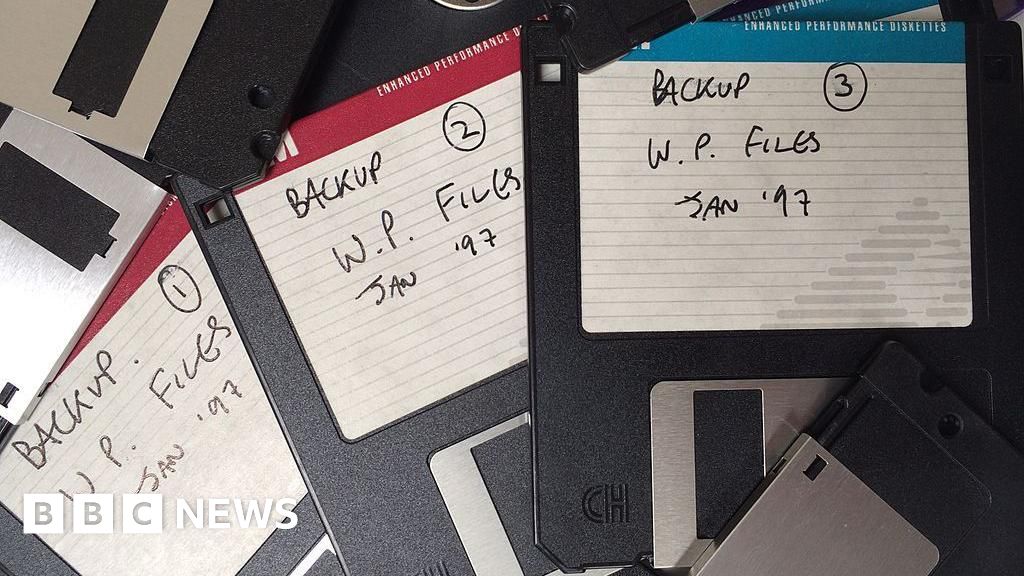
Did you know that 2024 was the first year that the Japanese government allowed data to be submitted on something other than floppy disks, which stopped production in 2011?

All the best,

Peter
 
/ Dock strike/Toilet paper shortage?? #87  
Hmmm... visit Japan?

Fax machines are practically revered as honored ancestors there, and most government agencies require them;

Did you know that 2024 was the first year that the Japanese government allowed data to be submitted on something other than floppy disks, which stopped production in 2011?

All the best,

Peter
What is the percentage of "old people" in Japan?

Might lead the world in that population.
 
/ Dock strike/Toilet paper shortage?? #88  
As a dairy Farmer we worked 7 days a week with a short day starting at 5:00 AM and ending at 8:00 PM so I have no sympathy for someone working 80 hrs week. Highly doubt dock workers did more manual labor or operated equipment that was much more dangerous than farm equipment.
I had to do a quick calculation because a guy was bragging about working 72 hours a week after I told him I pulled a 56 hour day. He didn't get it. Had to tell him that was straight hours. Factory work and field work. never went home and never slept. That's when I decided it was time to start evaluate what I was doing. I completely forgot when I milked. Wish I hadn't. He would have come up 30 hours short of a "normal" dairy farm week.

When I was Cummins there were 2 others that were from farming backgrounds. One had a hard time walking and in his 60's. All the whining and complaining about the hours, having to work on a Saturday, the changing of start time because something broke came from everybody else. Every time I heard whining I would just tell them you know where the door is. I remember well the days turning on the barn lights in the morning only to find a water cup stuck and ran all night. You knew then it was going to be a bad day. You don't get to turn them off and somebody else goig to take care of it.

What size dairy?
 
/ Dock strike/Toilet paper shortage?? #89  
Hear, hear for the dairy farmer! I was one back when I had a strong back and a weak mind. As I got older I better understood why we sold everything when me and my five brothers left the farm. I also gained an appreciation for the good life we had growing up. I do not see how that could be recreated anywhere but a working farm.

The farm is still there and mom still lives there by herself at 90 years old but she has constant visitors from us all.
My sister's family still milk cows. They have to milk about 1,500 to keep ahead though. It's not even close to how it was when I worked for dairy farmers when I was a kid. The cows do still have 4 teats though.
 
/ Dock strike/Toilet paper shortage?? #90  
Don't forget the facsimile or FAX machine which was viewed in awe...
Yes I remember getting the first mug shot over fax at the Police Dept. I thought we made the big time. It was slightly better than just a physical description if you looked hard enough. That was back when we arrested somebody, the perps information was typed on a 3x5 card and put in the file.
 
/ Dock strike/Toilet paper shortage?? #91  
Whats a fax machine..ll i think only you old people know what that is
We still have one and use it quite often. Some government agencies still require either fax or snail mail, no email allowed.
 
/ Dock strike/Toilet paper shortage?? #92  
When I was Cummins there were 2 others that were from farming backgrounds. One had a hard time walking and in his 60's. All the whining and complaining about the hours, having to work on a Saturday, the changing of start time because something broke came from everybody else.
There's also a difference between putting in some long/hard hours during a crisis, versus doing it week in and week out for years.

Having always worked in engineering and product design, there have been countless times when we pulled all-nighters and worked through weekends for a week or three, burning all sorts of hours to get a product out the door. Almost always due to bad management, folks whose ass isn't on the line making promises I need to fulfill, or vendors delivering our needed components late or out of spec... but once in a great while due to my own mistakes causing a delay or rework.

However, that's a lot different than a job requiring 70 hours per week for months or years on end, with no break. The former is a crisis management, the latter is a lifestyle!
 
/ Dock strike/Toilet paper shortage?? #93  
Don't forget the facsimile or FAX machine which was viewed in awe...

Good catch! FAX! Between FAX and copiers we used to have to deal with "copies of copies" getting ever harder to read. Now pretty much everything is a first generation document. Another huge improvement.
 
/ Dock strike/Toilet paper shortage?? #94  
Until a few weeks ago, the primary standards document governing a lot of the work I do was a paper copy from 1953. Or I should say, a probably-100th generation copy of the document, using every conceivable technology that has existed since 1950. Half the critical dimensions were almost totally unreadable, only deduced by collective comparison to surrounding numbers.

“Is that a 5 or is it a 6?” Was a daily question.
 
/ Dock strike/Toilet paper shortage?? #95  
Good catch! FAX! Between FAX and copiers we used to have to deal with "copies of copies" getting ever harder to read. Now pretty much everything is a first generation document. Another huge improvement.
How many people were actually displaced during any of these office revolutions?
 
/ Dock strike/Toilet paper shortage?? #96  
How many of you took "Typing" in high school? When there were no computers or word processers? Who remembers the "magic" of the IBM Selectric "correcting" typewriter that would type "white-out" over your last letter typed? I had a Smith-Corona that could correct by swapping out the ink cartridge with a correction cartridge. This was state-of-the-art and pretty impressive at the time . . .

I took computer science in college. We used a card punch machine to record program language and then stacked that up into a card reader that executed one card at a time in a mainframe type computer. We had to wait in line behind other students in front of the actual device in order to insert our card deck. If there was an error, it would kick out the last card and the program would not execute. If the program ran, you got a printout on a dot-matrix printer. There was no disc drive storage or options for electronic output.
I took one semester of typing in my junior year of high school. Even back then (1966) it seemed a useful skill to have...little did we know just how useful it would become. It was also a good class to take to meet girls. :ROFLMAO:

Much of my early career was in the computer industry, I worked with early word processing systems as far back as the early 70s. First place used cassettes for data storage, the second used drum memories...huge things the size of a washing machine with a whopping 8 meg (yes, meg!) of storage!! Wow! We'll never fill that up! :LOL::ROFLMAO:
We started out with cellular bag-phones that were shared depending on who was on call. I probably had every variation of cell phone from the big bricks to the flip-phones to Blackberry and finally iPhones.
You forgot pagers, we used them when we rotated off-hour on-call. My only experience with bagphones was at a radio station where I was a p/t DJ...we'd use them for remote broadcasts from places we couldn't get a Marti shot.
I have stubbornly refused to get a smartphone, at my wife's insistence I do have a prepaid flip phone which sits in a desk drawer 99% of the time.
 
/ Dock strike/Toilet paper shortage?? #97  
How many people were actually displaced during any of these office revolutions?

Some people were moved around. A lot of salary people had to shuffle positions and some of those jobs were eliminated. But hourly workers didn't experience any layoffs.
 
/ Dock strike/Toilet paper shortage?? #98  
What is the percentage of "old people" in Japan?

Might lead the world in that population.
Pretty much. Median age in Japan is 49.5 years, compared to 39.8 for China and 38.8 for the US.

Japan is #2, beaten only by Monaco, (total population 39,000) is said to be #1. Demographics of Japan - Wikipedia

Lots of Japanese villages are dying out as the elders die because of the low fertility rates and younger folks moving to cities. Prior to WWII, 2/3rds of the population did not have access to piped water, with the usual diarrheal diseases of cholera, dysentery, and typhoid being common. Post WWIII, the US required disinfection for water supplies. The Japanese life expectancy had a big boost after the end of WWII, due in part to modernization efforts, like clean water and sewage treatment. Like Italy, and several other European countries, there are programs to give away homes to younger people if they will move there and rehabilitate the homes.

All the best,

Peter
 
/ Dock strike/Toilet paper shortage?? #99  
Among all the talk of technology replacing jobs, look at our last 55 years, and consider all of the automation that has been deployed in that time:

1728313421000.png


Again, the decreased pricing afforded by automation only increases consumption, never curtails total jobs. Some will require re-training, but generally new opportunities out-pay the old.
 
/ Dock strike/Toilet paper shortage?? #100  
Productivity per employee has gone up quite a bit since the '70s but worker wages have remained basically flat. However CEO and executive pay has gone through the roof. In the '70s the typical big corp CEO made 25-30x what their average employee made. Now it's 300x-500x.

This has coincided with a fall in union membership. Yea unions are not perfect, but collective action is the only way for employees to get bargaining power. Bargaining as an individual isn't all that effective, even when you're a vital employee, which most people aren't. Old time American unions seem kind of hide bound. I like the German model where the union is on the board and in on major decisions, representing the employees. It's not as adversarial as old time American unions but very successful for both employees and companies. (it doesn't prevent companies like VW from making stupid decisions though).

It's funny how people complain about union bosses having nice houses but don't complain about the CEO buying his fifth house and the COO his fourth house. That money was pay the employees didn't get, even though they made it possible.
 

Marketplace Items

John Deere Z997R (A60462)
John Deere Z997R...
2461 (A58376)
2461 (A58376)
1993 Military Potable Water Tank Trailer (A59228)
1993 Military...
GE WASHER & DRYER (A60432)
GE WASHER & DRYER...
UNUSED RAYTREE RMDM72-72" HYD DRUM MULCHER (A60432)
UNUSED RAYTREE...
New Holland 650 Hay Baler (A53317)
New Holland 650...
 
Top