Driving T-posts

/ Driving T-posts #1  

rutwad

Platinum Member
Joined
Jul 28, 2006
Messages
815
Location
Alabama
Tractor
Massey Ferguson 5465, Kubota M5040, Farmall H (2), Minneapolis Moline R, Case 530CK, Cat 416C
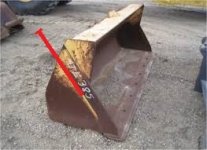
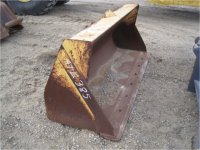
I knew that installing 12' T-posts was not going to be an easy task with just a modified post driver, so I came up with a simple solution. Since the FEL won't clear the posts to push them into the ground, I welded a piece of pipe approximately 3' long to the side of the bucket running parallel to the bucket side angle. Atop the pipe is a plate welded in place. So now with the FEL lifted completely, we can insert the T-posts into the pipe and gain 3' in height. Then simply position the bucket so the pipe is vertical and push the posts into the ground. Very, very simple and works well.
 
/ Driving T-posts #4  
/ Driving T-posts
  • Thread Starter
#5  
/ Driving T-posts #6  
Why 12 foot T posts? Are you installing a deer fence? Why not go with 10 foot T posts? I'm hoping to fence in about 30 acres with an 8 foot fence and I've been planning on using 10 foot T posts, but I'm hesitant because I'm thinking that I'm going to keep the fence six inches off the ground and run barb wire at 3 inches and then another strand at the top that will make the fence 9ft high, which means a ten foot T Post is only going to be a foot in the ground. That doesn't seem deep enough, but the idea of buying 12 foot T posts and sinking them three feet in the ground doesn't sound very appealing either.

Eddie
 
/ Driving T-posts
  • Thread Starter
#7  
Why 12 foot T posts? Are you installing a deer fence? Why not go with 10 foot T posts? I'm hoping to fence in about 30 acres with an 8 foot fence and I've been planning on using 10 foot T posts, but I'm hesitant because I'm thinking that I'm going to keep the fence six inches off the ground and run barb wire at 3 inches and then another strand at the top that will make the fence 9ft high, which means a ten foot T Post is only going to be a foot in the ground. That doesn't seem deep enough, but the idea of buying 12 foot T posts and sinking them three feet in the ground doesn't sound very appealing either.

Eddie

Eddie, it is for 8' deer fence, so 4' in the ground. With shade cloth the 10' post will lean over because that cloth catches wind like a sail. I don't know what your soil is but I would never put a 10' post only 1' in the ground. What is your 9' fence going to be for?

Driving them 4' in the ground probably takes only a minute. And the method we are using would take about the same driving a 10'.
 
/ Driving T-posts #8  
I'll see if I can get one today.

I definitely want to know how to use my FEL to drive fence posts! Consider this a tag!

Thanks,
 
/ Driving T-posts #9  
That's exciting. I'm wanting to raise a few different species, but elk would be the largest and the ones to test the fence the most. I'll probably go with galvanized 11 foot T posts after reading your post. What I've read about spacing is that with you only need four T posts for every 100 feet with a wood post at every hundred feet. To me, that seems kind of light and I'm going to double that, or maybe even go every ten feet.

The more that I look at the Man Saver T post driver, the more I like it. I read some reviews of other brands and they don't really seem to do much of anything. Watching the Man Saver on youtube shows that it's doing all the work.

Post pics and keep us updated. I'm very interested in what you're doing.

Eddie
 
/ Driving T-posts
  • Thread Starter
#10  
Guys I absolutely forgot to take a picture today, but I will get one. But maybe this will give you a better idea of it. We just insert the T-Post inside the tube welded to the side of the bucket. Now instead of having to get the bottom of the bucket to clear a 12' post (it won't), we have about 3 more feet of clearance. Since the bucket won't clear the 12' post, the bucket is rolled back at angle enough for someone to insert the post. The ground person holds the post while the bucket is "dumped". Assuming the backhoe is level, the fence will be plumb from left-right. The ground person just eyeballs it the from the side. He instructs the operator as needed to keep it plumb. bucket2.jpg
 

Attachments

  • Bucket.jpg
    Bucket.jpg
    117.7 KB · Views: 273
/ Driving T-posts
  • Thread Starter
#11  
Eddie, take into consideration any potential predators before raising your fence 6"s if predators are a concern.

Side note- a 20 ton class excavator is the absolute best way to set 6" x 6" pressure treated post 6' in the ground.
 
/ Driving T-posts
  • Thread Starter
#13  
NEW IMPROVED IDEA..........

My mind is screaming for my body to shut down right now, so a "new improved idea" is needed. It will probably come to me once I get out working on it. Operator drove it through the woods yesterday and ended up bending it, so now is the perfect time for a redesigned driver.
 
/ Driving T-posts #14  
Eddie, take into consideration any potential predators before raising your fence 6"s if predators are a concern.

Side note- a 20 ton class excavator is the absolute best way to set 6" x 6" pressure treated post 6' in the ground.

Predators are why I want to raise the fence six inches off the ground and install barbed wire. They can dig under woven fence pretty easily and the barbed wire is just a smidgen better at keeping them out. I'll keep an eye on it and add concrete to every place I see that they have been digging.

The other advantage to raising the fence six inches off the ground is that's where they woven fence rots out first. Having it in the air means it will last a lot longer.

At least that' what I've read and been told.

The extras row or barbed wire at the nine foot level discourages jumping. Animals that wont normally jump an 8 foot fence unless provoked will be even more hesitant to jump a nine foot fence. Something I learned in South Africa last month is that installing small disks or something solid to the fence will also discourage the animals from hitting it. They put round disks about the size of a coffee can lid on the fence every two feet in a staggered pattern. One a little higher, then the next a little lower, over and over again.

Since I'm only fencing in 30 acres, the fence has to be extra strong because it's considered too small an area and that increases the pressure on the fence from the animals. Your tip on using longer T posts makes a lot of sense for what I want to do.

Eddie
 
/ Driving T-posts #15  
I was a construction escort and watched a fence outfit in action at the prison I retired from. They had a skid steer with a hydraulic plate tamper attached. They had pipe or some sort of cylinder welded to the bottom of the tamper. They'd raise the lift arms and insert the post into the cylinder. Then a combination of down pressure and vibration would drive the post in.
 
/ Driving T-posts
  • Thread Starter
#16  
Eddie, most fences I see are on the ground. For predator control, they will install predator guard and I don't know if that is actually the name or just what they call it locally, but it's about a 5' tall fence with rectangles maybe 2"x 4". Cut the role in half for 2 rolls of 2 1/2' fence. Attach this to the bottom of the high fence on the outside and let it lay on the ground 2 1/2' out. Stake down as needed. It won't be long before it's covered in grass and the roots help keep it in place and make it much more difficult for predators to enter. Usually we see small holes that armadillos make, then coyotes will come along and dig more until they can fit under. I would be afraid they would do this even with barbed wire, but hopefully not. Remember though that any uneven terrain may leave spots where you are more or less than the 6"s you want. I have been to a few deer farms and even the places that raise the $$$$$ breeder bucks keep them behind an 8' fence. Sure a deer can clear 8', but I have never heard of one getting out. I helped a friend with in his 2 acre breeding pen and we were walking around trying to get a wild doe to another pen. She went running and did jump at the fence, however she was not nearly high enough. I doubt she would have even cleared a 6' fence. Not sure about the different animals you will enclose, but deer tend to walk along the fence a lot.

Just remembered at my friends place with 8' breeder pens a dog did get in where a tractor had driven into the pen. The tractor impression (not really a rut, but lower anyway) was enough for the dog to get in this 1 acre pen. Sadly not one deer survived.
 
/ Driving T-posts
  • Thread Starter
#17  
I was a construction escort and watched a fence outfit in action at the prison I retired from. They had a skid steer with a hydraulic plate tamper attached. They had pipe or some sort of cylinder welded to the bottom of the tamper. They'd raise the lift arms and insert the post into the cylinder. Then a combination of down pressure and vibration would drive the post in.

I talked with someone that installs high game fences and he said they use a lull with a basic vibrating compactor attached to the end. Sounds similar to what you saw.
 
/ Driving T-posts
  • Thread Starter
#18  
Today 2 men put in 21 T-Posts in just over an hour.
 
/ Driving T-posts #19  
That's exciting. I'm wanting to raise a few different species, but elk would be the largest and the ones to test the fence the most. I'll probably go with galvanized 11 foot T posts after reading your post. What I've read about spacing is that with you only need four T posts for every 100 feet with a wood post at every hundred feet. To me, that seems kind of light and I'm going to double that, or maybe even go every ten feet.

The more that I look at the Man Saver T post driver, the more I like it. I read some reviews of other brands and they don't really seem to do much of anything. Watching the Man Saver on youtube shows that it's doing all the work.

Post pics and keep us updated. I'm very interested in what you're doing.

Eddie

I watched the Man Saver video, looks like it works very well!
 
/ Driving T-posts
  • Thread Starter
#20  
I watched the Man Saver video, looks like it works very well!

I wasn't sure what the Man Saver was, so I watched it on youtube. In the video I saw they were driving what looked like a 6' post. I guess for 11' posts you could stand in the back of a truck or UTV. I really am not knocking it, but just mentioning a couple of things to consider. I can't help but wonder how his arms and wrists feel after a day of use. Also we have ran across 2 posts so far that have obviously hit a root or something because they stop driving. We simply pull it out with the FEL and move over about 6"s.

Good luck with your work guys.
 
 
Top