how much ballast for L3301?

   / how much ballast for L3301? #1  

tradosaurus

Super Member
Joined
May 8, 2017
Messages
5,979
Location
Texarkana, TX
Tractor
Kubota MX5400 HST, heavy duty bucket, 3rd function, R1 tires (rears filled), 2 remotes
Now that I have bought my first tractor I've been researching tractor ownership.

One item I see is ballast. I'm getting the rear wheels filled so would just carrying around a box blade in the back be enough ballast for most of my work?

Or would I need to buy a 3 pt ballast box?
 
   / how much ballast for L3301? #2  
It really depends on how much weight you intend to lift with the loader. These tractors (I have one) are very light in the rear. Dare I say almost dangerous. A heavy box blade and filled tires is the minimum that I have on mine when doing any loader work. Even that isn’t enough at times. I live on a hill, that contributes to the need for a lot of ballast as well.
 
   / how much ballast for L3301? #3  
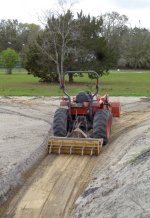
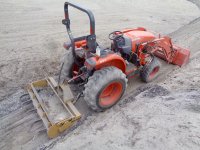
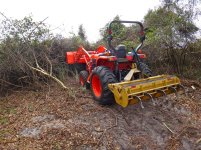
Box Blades and PTO-powered Roto-tillers are implements often used for Loader counterbalance.

Box Blades vary considerably in weight. Buy heavy, eighty pounds per foot of width. You will probably want a 66" or 72" wide Box Blade. Research Rollover Box Blades too. PHOTOS.

A Box Blade and filled rear tires will be ample ballast for any/all L3301 Loader work. LA525 lift capacity = 1,400 pounds.


Ballast Boxes are mostly for garage stored tractors used for Landscaping, where storage space is at a premium and implements other than a Loader are not contemplated.


Insert L3301 into your T-B-N PROFILE.
 

Attachments

  • DSC00072.jpg
    DSC00072.jpg
    5 MB · Views: 323
  • DSC00070.jpg
    DSC00070.jpg
    6.4 MB · Views: 447
  • DSC00177.jpg
    DSC00177.jpg
    1.2 MB · Views: 441
  • DSC00178.jpg
    DSC00178.jpg
    1.1 MB · Views: 302
  • DSC00176.jpg
    DSC00176.jpg
    1.2 MB · Views: 322
Last edited:
   / how much ballast for L3301? #4  
1000# if the weight is in close.

700# if its a few feet back
 
   / how much ballast for L3301? #5  
I would not waste my money on a ballast box. It won't do any work for you. Get a heavy box blade. At least, it can do work. Need more weight than the box blade - add bags of sand, chunks of RR iron, etc to the BB when doing heavy FEL chores.

Also - don't go overboard and exceed the limits of your 3-point system.
 
   / how much ballast for L3301? #6  
I have 800-900# total for the ballast box on my L3200, which is similar to your 3301. It's a good amount overall. I tend to leave it on full time unless I have to use an implement instead.

I used to rely on my box blade for ballast, but it was large and unwieldy in many situations, and not heavy enough (I was always having to pile additional weight on it, which made it even more unwieldy to use). The ballast box is a lot more compact sitting behind the tractor. The increase in traction is amazing.
 
   / how much ballast for L3301? #7  
My L3800 has a box blade that’s probably 500 pounds and loaded tires. It’s still a little light. I use the box blade all the time. I can’t imagine trading it for a useless ballast box.
 
   / how much ballast for L3301? #8  
I'll concur that a ballast box is of limited practical use. I made mine a couple years ago out of a leaky 60 gallon air compressor tank. I've used it a few times on my former L3200 & now L4060. But really it just sits. I use an impliment as it does something useful in addition to being heavy. Generally a box blade or mower.

The Economy L machines can lift more than they should for their weight. The back end of the L3200 got really light moving some hay bales that were as much as the loader could lift. I had a LandPride RC1860 rotary cutter on the back, which supposedly weighs 600lbs. That weight is far back to, making it even more effective ballast. I tossed maybe 200lbs of junk on the back of that mower for even more ballast.

The good rule of thumb is put as much weight on the 3pt as you plan to lift on the loader. By that mark the 1,200lbs bales were more than the ballast, even though it was a ways back. It definitely felt under ballasted.

Loaded rear tires help keep the rear tires on the ground, but make life worse for your front axle. Do you want all the weight over the huge dumb simple axle? Or do you want it over the small, complex, expensive front axle? Ballast on the 3pt not only keeps the back end down, it unloads weight off the front axle. Ballast in the rear tired will let you overload the front axle easier.

Think of a tractor like a teter toter with 2 pivot points. Put the fat kid on the end of the teter totter with the simple & strong axle, not the expensive weak one he'll crush.
 
   / how much ballast for L3301? #9  
It takes an enormous amount of rear ballast to “save” the front axel. Adding 1000 pounds or less loads the front axel heavier than if you did nothing. It’s impractical to get enough weight on the back of little tractors to lighten the axel past the starting point.
 
   / how much ballast for L3301? #10  
It takes an enormous amount of rear ballast to “save” the front axel. Adding 1000 pounds or less loads the front axel heavier than if you did nothing. It’s impractical to get enough weight on the back of little tractors to lighten the axel past the starting point.
You arent lightening the weight on the axle to less than before you picked the heavy load on the loader. You are just taking a percentage of the load off.

There have been several threads on here a year or 2 ago on this debate. If I recall the skeptic was going to prove us all wrong. He ended up posing some good numbers indicating a reasonable reduction in front axle weight regardless of a load on the loader or not when proper ballast was used. I'm sure you can search up the thread with some digging.
 
   / how much ballast for L3301? #11  
You arent lightening the weight on the axle to less than before you picked the heavy load on the loader. You are just taking a percentage of the load off.

There have been several threads on here a year or 2 ago on this debate. If I recall the skeptic was going to prove us all wrong. He ended up posing some good numbers indicating a reasonable reduction in front axle weight regardless of a load on the loader or not when proper ballast was used. I'm sure you can search up the thread with some digging.

I’ve seen several such threads and you definitely aren’t saving the front axel with an average amount of ballast. It would take thousands of pounds or a boom pole to “save” the front axel. Adding 750 pounds to a tractor this size is definitely not enough to reduce the front axel load. I really doubt 1000 pounds is.
 
   / how much ballast for L3301? #12  
I’ve seen several such threads and you definitely aren’t saving the front axel with an average amount of ballast. It would take thousands of pounds or a boom pole to “save” the front axel. Adding 750 pounds to a tractor this size is definitely not enough to reduce the front axel load. I really doubt 1000 pounds is.

Depends on how one looks at it.

If you need to move 500# in the bucket....and have no ballast.....that tractor with loaded tires will certainly do it....allthough it will be very light in the rear.

Add some rear ballast....ANY AMOUNT is gonna reduce the front axle load.
 
   / how much ballast for L3301? #13  
Depends on how one looks at it.

If you need to move 500# in the bucket....and have no ballast.....that tractor with loaded tires will certainly do it....allthough it will be very light in the rear.

Add some rear ballast....ANY AMOUNT is gonna reduce the front axle load.

But if you’re trying to lift 1200 pounds with no ballast or barely enough to do the job despite the fact with no ballast you failed at doing the job the front axel was still loaded less on the first test vs the second test. Of you’re only moving 500 pounds it’s moot point. You might tip the tractor but you aren’t going to bust the axel. IMO ballast helps the front axle a lot more by adding traction to the rear axel vs taking weight off.
 
   / how much ballast for L3301? #14  
As long as the rear tires are on the ground, adding ballast lessens front axle load.

If the rear tires are in the air....then the entire machine weight + ballast weight + loader weight IS on the front axle.

So if adding ballast still lifts the rear....then yes the front axle sees that increase weight.

You have to add enough ballast to keep the rear down and then some. And for the machine size in question....like I said.....1000# close (like a ballast box/barrel) or 700# if its something long like a rotary cutter.
 
   / how much ballast for L3301? #15  
As long as the rear tires are on the ground, adding ballast lessens front axle load.

If the rear tires are in the air....then the entire machine weight + ballast weight + loader weight IS on the front axle.

So if adding ballast still lifts the rear....then yes the front axle sees that increase weight.

You have to add enough ballast to keep the rear down and then some. And for the machine size in question....like I said.....1000# close (like a ballast box/barrel) or 700# if its something long like a rotary cutter.

Which is in the thousands of pound range. The numbers you suggested would be the bare minimum of not enough. If you drained the rear tires ( which do nothing to lighten the front axel) I believe my l3800 would lift the back tires with a 1000 pound barrel. Currently it lifts the rears with the loaded tires and a pretty beefy box blade. It’s all 3/8 plate and quite a bit of reinforcement around the hitch area. I doubt you’ll find many heavier blades on a tractor of this class and even if you did it’ll be a waste. This one takes more bite than this L3800 will pull.
 
   / how much ballast for L3301? #16  
I have a ballast box only because some of my early work required maneuvering through spaces that the box blade made extremely difficult with it's 72" width and extra length. Those jobs are done, and I don't think I've put the ballast box on for anything other than roading the tractor in over a year. The only reason I do that is to help with ground clearance, as the box blade hangs down past the lower arms, while the fully raised ballast box does not.

Crossing heavily crowned roads can be...interesting on a tractor.
 
   / how much ballast for L3301? #17  
Which is in the thousands of pound range. The numbers you suggested would be the bare minimum of not enough. If you drained the rear tires ( which do nothing to lighten the front axel) I believe my l3800 would lift the back tires with a 1000 pound barrel. Currently it lifts the rears with the loaded tires and a pretty beefy box blade. It’s all 3/8 plate and quite a bit of reinforcement around the hitch area. I doubt you’ll find many heavier blades on a tractor of this class and even if you did it’ll be a waste. This one takes more bite than this L3800 will pull.

I really aint in the mood for hashing it all out again. Argue the merits of ballast and how it does/doesnt effect the front axle all you want.

The guy asked how much ballast for the 3PH and he is loading the tires. 700# in the form of something ~2.5' or so back is sufficient. 1000# if in closer. 10 years and 1000+ hours on a L3400 with either a 700# rear blade (COG 33" back) or a 55 gallon barrel of concrete tucked up close and weighing 1000#. The combination is stable and sufficient. And you arent gonna lift a back tire unless you stomp on the breaks going down hill with max load in the loader.

With that combination....if I was lifting 200 or 300 pounds up front....the weight on the front axle is LESS with the ballast.
...................................if I was lifting 500 or 600 pounds up front....the weight on the front axle is LESS with the ballast.
...................................if I was lifting 1000 pounds up front.....well it wouldn't lift it without ballast. BUT, having the 1000# barrel on the back results in LESS weight on the front axle vs having a 300-400# implement on the back.
 
   / how much ballast for L3301? #18  
We had a L3800 prior to our current MX5800. I used a 800 lb ballast box some and would have preferred more weight. I used more than anything else a 580 lb box blade with five 35 lb suitcase weights on it, to get up to 745 lbs. That was close to the ballast-box's weight and obviously more practical so the ballast box stayed on the tractor the most. The best option for me if I really needed ballast was a heavy duty 6' rotary mower, with the weights added to it if needed. As others have pointed out, the farther away from the rear axle the center of gravity of the ballast is, the less weight you need for effective ballast (but of course the more cumbersome it is to work in tight spaces).
 
   / how much ballast for L3301? #19  
I think it's a mistake to only think about offloading the front axle. Because of the huge lever arm the front loader has compared to the ballast when relative to the rear axle, the ballast has limited effect on the front axle. Where it has a huge effect is when you look at lever arms relative to the front axle.

Many times I have lifted heavy loads in my L3200 with no ballast and saw obvious signs that the rear wheels lost a lot of traction and down pressure. That is bad for many reasons. That doesn't happen with rear ballast. It helps immensely to keep the rear wheels planted on the ground.

The basic L models are especially bad in this regard. I remember test driving my L3200 on the dealer lot after the loader was installed but before they added ballast to the rear tires, and it was borderline unsafe to me. I can't imagine anyone operating these tractors with a front loader installed and unfilled rear tires. And in the same respect, I can't imagine lifting a load in the front loader without additional ballast, beyond that in the tires. I've done both of these things and it's just not safe or stable.

Do the math to translate this to an effect on the front axle if you want, but to me the real important thing on these basic L models is keeping the rear wheels planted. Tire ballast helps offset the effect of the front loader install (empty bucket). Additional ballast is needed to offset loads in the bucket.
 

Tractor & Equipment Auctions

1977 Heil T/A Tanker Trailer (A59230)
1977 Heil T/A...
CATERPILLAR 72" HANG-ON WHEEL LOADER FORKS (A60429)
CATERPILLAR 72"...
1453 (A57192)
1453 (A57192)
KUBOTA U55-5 EXCAVATOR (A59823)
KUBOTA U55-5...
2010 CATERPILLAR 303.5C CR EXCAVATOR (A60429)
2010 CATERPILLAR...
2016 FREIGHTLINER CASCADIA TANDEM AXLE SLEEPER (A59905)
2016 FREIGHTLINER...
 
Top