Tractor Sizing HP Advice

/ HP Advice #21  
size ? I have 40 acres here and have a MX5100 HST 4WD. It does all I need to do, and it does it very well
 
/ HP Advice #22  
We have 35 acres between us and in-laws. Our big tractor is a Kubota L3830, its enough to run a 7' finish mower, a 7' snowblower, a 5' bush hog, a 9' sickle mower conditioner, a small square baler and it is just big enough to run a 5x5 round baler to make 5x4 bales.
A little more horsepower, HST and an enclosed cab would be nice, but we make due with what we have.

Aaron Z
 
/ HP Advice #23  
Never operated HST, but nobody seems to have anything bad to say.
What is your "procedure" for going down hill ? Presume with FEL on the front?

Proper procedure for any Tractor no matter the type of trans would be to stop turn around and back down the hill when you have a load in the front bucket!
 
/ HP Advice #24  
I've gone to two different dealers and told them the same thing. They have both advised almost identical size tractor in terms of HP.
Love to know what you suggest.
I have 20 acres with the majority in pasture grass so bush hogging is the main thing. None of it is flat with one or two quite steep hills. It is a dairy farm that hasn't been worked or maintained in years so pastures are a bit rough. Some woods on steeper parts but only 3 acres of so. I'll cut and haul some firewood but probably get it out with a winch
I want to move some dirt as well so planning on backhoe and FEL.
I'm in middle Tennessee so snow isn't really an issue. And, I don't have a long gravel drive to maintain. I
I am getting a bit older and want to save my back, etc by not doing as much manual work as I used to.
Given that, what would you recommend for HP? Advice very much appreciated!

We have 14 acres mostly pasture and keeping them cut takes time even with a 74” flail mower.

Here is a thread with some options.
http://www.tractorbynet.com/forums/attachments/361034-shopping-12-batwing-flex-rotary.html

http://www.woodsequipment.com/files/Products/Literature/BW12_Batwing_Dare_To_Compare.pdf
 
Last edited:
/ HP Advice #25  
Never operated HST, but nobody seems to have anything bad to say.
What is your "procedure" for going down hill ? Presume with FEL on the front?
Make sure the tractor is in 4 WD, FEL is about 1 foot (or less)off the ground, always travel straight up and straight down and never try to turn on a steep hill. With HST, just back off the pedal to slow the tractor and if really steep and speed picks up, lightly ride the brakes (both).
As for tractor size, I wouldn't go more than 40 HP. My brother in law has a New Holland 2310 and uses a 6 foot bushhog, moves round bales easily, can stack them 2 high and carry one on the rear and 1 on the FEL.

I really don't know how well a 3 PH backhoe works but my B26 TLB works pretty well and the hydraulic thumb is a great tool for picking up rocks and small trees. I have used mine to lift trees so I could saw them are an easy height and that really saves the old back.
The previous owner pulled a 5 foot bush hog with it all the time. The back hoe comes off in less than 5 minutes (a bit longer going back on due to having to line every thing up) but it is just pull two pins, use the stabilizers to lift it up, drive forward about 1 foot, lower the backhoe to release all the pressure on all the cylinders, unplug the 2 hoses from the backhoe and then plug them back together on the tractor so the oil circulates in a loop- you are finished except for installing the 3 PH arms which is about 10-15 minutes work installing pins and snap rings.
I would recommend a B26 for your work especially if you can find a lightly used one. New are quite expensive. The Kubota L35TLB would be good if you wanted a bit more HP. The Kubota TLB tractors weight quite a bit more than the same HP CUT due to the heavy frame and some under armor to protect the bottom of the tractor. The HST filter is still vulnerable though so watch out for that.
If you elect to get a CUT of any brand, 35 PTO HP should be plenty to run a 6 foot bush hog which is plenty big for 17 acres of pasture. If it is as rough as my pasture, 4-5 MPH is about the max you can travel without getting beat to death so about 3 acres per hour is good if you don't have many trees to mow around.
 
/ HP Advice #26  
Heck For cutting grass / pasture , I use the Kubota ZD1021. It does a better job and I can cut faster than using the brush cutter with my large tractor
 
/ HP Advice #27  
Heck For cutting grass / pasture , I use the Kubota ZD1021. It does a better job and I can cut faster than using the brush cutter with my large tractor

I too use my 52" Ferris IS 750 to mow my 6 acres of pasture sometimes and I can do it faster than I can with my 7 foot bush hog and get everything even right up against the trees. I cant get the tractor in to some of the places with trees. The Ferris is also smoother on the rough ground than the tractor.
 
/ HP Advice #28  
+1 for the thought of mowing as much as possible with a zero-turn mower. As to size of tractor, we have a MX5800. It replaced a L3800. The main reason for the change was to get more power, especially with the lifting capacity of the FEL. Both are/were HST, which is a feature that will be on any tractor we have from now on. The predecessor of the L3800 was a M5700 with the gear-shift type transmission. The HST is much more convenient, although it does soak up a little power.
 
/ HP Advice #29  
I have 20 acres, 17 acres in pasture grass. Nothing flat. One or two steep hills. Some woods on steeper parts but only 3 acres. It is a dairy farm that hasn't been maintained so pastures are rough.

Bush hogging is the main thing. I want to move some dirt. Planning on backhoe and FEL.

I am getting older and want to save my back.

What do you recommend for HP?

Mowing around 17 acres is your main task. If you tell us either width of mower you want to use, or how much time you find acceptable for mowing 17 acres, and the usual length of grass on acreage, we can recommend horsepower. Without that info no one can give a valuable answer.

Here is a mowing calculator:
Mowing Calcuator | How many acres can I mow in an hour?

In terms of saving your back, a Kubota "Grand L" is probably the least demanding 4,000 pound bare tractor to operate. The "Grand L"s have Kubota's wonderful HST/PLUS transmission and deluxe kit all around.

I am age 70. I had two 'standard' tractors prior to purchasing my small Kubota Grand L. Grand L choice was money well spent. I spend 200 to 300 engine hours per year operating my tractor ~~~ depending on hurricanes.

For your hill conditions I recommend either the naturally aspirated L4760 @ 49-horsepower or the turbocharged L6060 @ 62-horsepower, depending on what width mower you decide to pull. (Kubota offers intermediate horsepower options.)
VIDEOS (2): Kubota Standard L Series VS. Grand L Series - YouTube
Kubota HST Plus Transmission Features - YouTube

KUBOTA LINK: https://www.kubotausa.com/products/tractors/compact/grand-l60#features

Disc Harrows and PTO powered roto-tillers, both soil mixing Three Point Hitch implements, are the equipment most frequently used for leveling pasture. Box Blades and Rear/Angle blades are used for leveling pasture less frequently.


Teachu2; POST #8;5052710 said:
As much as I found a backhoe attractive, I realize Backhoe is not as practical as it appeared. Backhoe has to be off the tractor to use the three point hitch, and 95% of the time I'm mowing, or using the box blade. I'd have to store it, mount it, dismount it, and pay for it - for a piece of equipment I'd rarely use and was an inferior tool when I did use it.

Express in greater detail what tasks you foresee for a $7,000 Backhoe. There are cheaper alternatives for SOME tasks, which eliminate need to mount/dismount a Backhoe. Tractor newbies usually want a Backhoe until the wife reviews potential tractor order relative to the household budget.
 

Attachments

  • IMG_0428.jpg
    IMG_0428.jpg
    189.6 KB · Views: 134
  • DSC00451.JPG
    DSC00451.JPG
    3.4 MB · Views: 130
Last edited:
/ HP Advice #30  
The best way to shop for tractors is to list your tasks first, then determine how much bare tractor weight you need to SAFELY accomplish your tasks. Bare tractor weight is a tractor specification easily found in sales brochures and web sites, readily comparable across tractor brands and tractor models.

For most tractor tasks greater chassis weight is more important than tractor horsepower. This tractor fundamental is difficult for people new to tractors to comprehend. In subcompact and compact tractor categories it takes a 50% increase in bare tractor weight before you notice a significant tractor capability increase. It takes a 100% increase in bare tractor weight to elicit MY-OH-MY!

Heavier tractors have more tractive power pulling ground contact implements. Greater mass of heavy-chassis tractors increases tractor stability when transporting loads in the FEL bucket, the most rollover prone of routine tractor tasks. Heavier tractors have larger wheels and tires better able to bridge holes, ruts and downed tree limbs, yielding a smoother, less disturbing passage over rough ground.

Safe hillside operation demands more tractor weight than flat land operation. Heavier tractors have wider wheel spreads making heavier tractors less laterally unstable. Rear wheel spreads may be decreased or increased after jacking up the rear.

Shop your weight range within tractor brands. Budget will eliminate some choices. Collect a dealer brochure for each tractor model in your weight range. I spreadsheet tractor and implement specs, often a revealing exercise. I have a column for cost per pound.

Tractors under 3,000 pounds bare weight are offered in one configuration. Most, such as the high volume kubota standard L series, are sparely equipped to hit competitive price points. Others, such as the Yanmar YT235 and Kubota B2650/B3350 series, include enhanced productivity and comfort components.

Most tractors under 3,000 pounds bare weight are operated in residential applications on one to five fairly flat acres. These "residential tractors" fit in a typical garage.

Tractors over 3,000 pounds bare weight are generally offered in a utilitarian configuration and a deluxe configuration, on a common chassis. Deluxe kit enhances productivity and operating comfort ~~~ but you have to pay. Many tractors over 3,000 pounds bare weight are too tall to fit in a typical garage, even with ROPS folded.

Selling a used tractor is easy. Selling light implements in order to buy heavier, wider, implements for a heavier tractor you take a hit in depreciation. Passing time with multiple browsers is a pain. ((Ask me how I know.))

For most new to tractors a quality dealer, reasonably close, available for coaching, is important. Dealer proximity is less important to others, well experienced with tractors, who perform their own maintenance. My kubota dealer is six miles away. I feel my local dealer continues to add value to my equipment.

Horsepower is only a primary consideration operating PTO powered implements.

BUY ENOUGH TRACTOR.​
 
Last edited:
/ HP Advice #31  
An HST transmission is a fluid pump.
The higher you set the engine speed, the more fluid it will pump, and, the more you press the directional pedals, the more fluid will flow from that pump to a hydraulic motor that is attached to the drive system.
The pump works with a swash plate. It's at a 90 degree angle when not moving. You step on the pedal a bit, and the angle changes and it pumps fluid. The more you step on the pedal, the greater the angle of the swash plate, the more fluid it pumps and the faster you go. If you let your foot off the pedal, the swash plate returns to 90 degrees and the tractor stops moving. If you step in the reverse pedal, the swash plate angles in the other direction, and pumps the fluid backwards, which turns the hydraulic motor backwards, which turns the drive system backwards.

Fluid cannot be compressed. So when you let off the pedals, the fluid cannot flow through the system, and it effectively locks the machine in place.

So going down a hill, you want your engine RPMs up as high as they'll go, so you have more responsive hydraulics, which = responsive hydraulic braking when you let off the pedal. It won't freewheel down the hill and it shouldn't pick up speed. You should be able to let off the directional pedals and it will stop itself.


In fact, some machines are kinda brutal as to how fast they'll stop if you whip your foot off the pedals. My old IH2500b had a circuit to soften the hydraulic braking effect.

My current machine is all hydraulic and it doesn't even have brakes; only a parking pin.

Hope that helps explain it a bit. :confused3:

MossRoad, that's a great explanation of a basic single range variable speed HST transmission. And theoretically all any tractor needs is just a basic single range HST transmission. But that's theory. Lucky for us gadget guys, there's there's a lot more that a HST transmission is capable of doing. This may sound like a adv. but it's not; transmissions fascinate me and I haven't seen one yet to compare to Kubota's HST+.

The Kubota HST+ transmission can be operated manually just like MossRoad explains - but it also has a fancy computer aided mode.

Now HST+ doesn't have to be operated in fancy mode. It can be worked all day just using the HST pedal and hand throttle exactly as MossRoad explained. Used that way, the HST+ will stay in a single range & the throttle is adjusted manually. I've done it that way a few hours just to remind myself how HST used to work when it first came out. But HST+ also has some more features.

1. To start with, HST+ has 3 selectable ranges plus a selectable high/low in each range. THe ranges are always manually selected, but the High/Low can be manual, manual override, or let the tractor choose.
2. The tractor will automatically look after itself with varying loads if the operator wants it to. Push a button on the dash, and the HST+ does this by comparing HST pedal position against engine RPM. It will then automatically advance the throttle to match the load, apparently it will even automatically shift between high and low range if needed.
3. Anytime it is in load sensing mode if there is no load, then the tractor automatically returns the engine to idle. I sure like this. On one brand of tractor I had to move a lever to idle every time I let off on the HST pedal. With HST+ this happens smoothly and automatically. All user selectable through that same dash switch.
4. Finally the hydraulic braking effect of any HST tranny that MossRoad refers to is adjustable with the HST+. There is a dial on the dash that allows you to vary the HST response rate from slow to fast. Best to tighten the seat belt before setting it to "fast".

My hat's off to those guys....Kubota made one very clever transmission.
rScotty
 
/ HP Advice #34  
"The doggone German's ain't got nothin to do with this!"

- Sherriff Buford T. Justice, Smokey and the Bandit....:)

hahaha love that movie

Don't you hear good, this is Sheriff Buford T Justice OF TEXAS

I hear perfectly, the fact that you're a sheriff is not germane to the situation.
 
/ HP Advice
  • Thread Starter
#35  
Can't tell you how much I appreciate all the input and your time here.
I've revisited dealers today. In part based on dealer response and location I've settled on two very similar tractors.
Mahindra 2638 (38 hp) and Kioti CO 3510 (35 hp), in part due to budget, etc. The Mahindra is a slight favorite at roughly 20% heavier (hills again!) for 10% more money. May come down to how much more aggressive the dealers can be on price.
 
/ HP Advice #36  
I too use my 52" Ferris IS 750 to mow my 6 acres of pasture sometimes and I can do it faster than I can with my 7 foot bush hog and get everything even right up against the trees. I cant get the tractor in to some of the places with trees. The Ferris is also smoother on the rough ground than the tractor.

I thought I was the only onewith a rough pasture. I understand why they put a seat belt on the z turn. It keeps me in the seat when mowing the rough pasture @ wide open speed
 
/ HP Advice #37  
MossRoad, that's a great explanation of a basic single range variable speed HST transmission. And theoretically all any tractor needs is just a basic single range HST transmission. But that's theory. Lucky for us gadget guys, there's there's a lot more that a HST transmission is capable of doing. This may sound like a adv. but it's not; transmissions fascinate me and I haven't seen one yet to compare to Kubota's HST+.

The Kubota HST+ transmission can be operated manually just like MossRoad explains - but it also has a fancy computer aided mode.

Now HST+ doesn't have to be operated in fancy mode. It can be worked all day just using the HST pedal and hand throttle exactly as MossRoad explained. Used that way, the HST+ will stay in a single range & the throttle is adjusted manually. I've done it that way a few hours just to remind myself how HST used to work when it first came out. But HST+ also has some more features.

1. To start with, HST+ has 3 selectable ranges plus a selectable high/low in each range. THe ranges are always manually selected, but the High/Low can be manual, manual override, or let the tractor choose.
2. The tractor will automatically look after itself with varying loads if the operator wants it to. Push a button on the dash, and the HST+ does this by comparing HST pedal position against engine RPM. It will then automatically advance the throttle to match the load, apparently it will even automatically shift between high and low range if needed.
3. Anytime it is in load sensing mode if there is no load, then the tractor automatically returns the engine to idle. I sure like this. On one brand of tractor I had to move a lever to idle every time I let off on the HST pedal. With HST+ this happens smoothly and automatically. All user selectable through that same dash switch.
4. Finally the hydraulic braking effect of any HST tranny that MossRoad refers to is adjustable with the HST+. There is a dial on the dash that allows you to vary the HST response rate from slow to fast. Best to tighten the seat belt before setting it to "fast".

My hat's off to those guys....Kubota made one very clever transmission.
rScotty

Yes, things are getting pretty darn amazing when you start adding computer control. There are some machines that do it mechanically, as far as adjusting the throttle to the load. Saves a lot of fuel over the life of the machine, as well as wear and tear.

However, we now also have to add up the costs of those features, and can we afford them.... hahaha:)
 
/ HP Advice #39  
While I agree with most points in this thread, I will say there are upsides to more horsepower in the smaller frame tractors. May have been mentioned but I didn't thoroughly read every post.

Everyone keeps saying that without the weight of a big frame machine that the extra power is wasted. If you're brush hogging, I disagree. For dirt moving and ground work, yes, weight helps a lot, but if your primary use is brush hogging then extra power to spin a larger unit would come in handy.

More power also lets you get through thicker brush without bogging down.

Just something else to consider. Just make sure you have enough weight out front to keep the nose down! ;)
 
/ HP Advice #40  
While I agree with most points in this thread, I will say there are upsides to more horsepower in the smaller frame tractors. May have been mentioned but I didn't thoroughly read every post.

Everyone keeps saying that without the weight of a big frame machine that the extra power is wasted. If you're brush hogging, I disagree. For dirt moving and ground work, yes, weight helps a lot, but if your primary use is brush hogging then extra power to spin a larger unit would come in handy.

More power also lets you get through thicker brush without bogging down.

Just something else to consider. Just make sure you have enough weight out front to keep the nose down! ;)
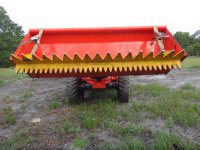
In the same vein, I occasionally do some brushhogging for the welding shop down the road with our L3830. He also has had someone with a Ford 4000 (or similar size) tractor, there are many of the softer areas where the lighter (and 4 wheel drive) L3830 will float through and but the heavier 2 wheel drive Ford would sink in and get stuck.

Aaron Z
 

Marketplace Items

UNUSED FUTURE 90-PLATE COMPACTOR (A60432)
UNUSED FUTURE...
2019 FORD F-150 XL CREW CAB TRUCK (A59823)
2019 FORD F-150 XL...
2015 GMC Sierra 1500 SLT Crew Cab Pickup Truck (A59230)
2015 GMC Sierra...
2024 Chevrolet Tahoe SUV (A59231)
2024 Chevrolet...
JLG E300AJP TELESCOPIC/SCISSORING BOOM LIFT (A60429)
JLG E300AJP...
2008 New Holland T2420 (A60462)
2008 New Holland...
 
Top