You are using an out of date browser. It may not display this or other websites correctly.
You should upgrade or use an alternative browser.
You should upgrade or use an alternative browser.
HYDROGEN ENGINE???
- Thread starter Williy
- Start date
- Views: 3066
More options
Who Replied?
/ HYDROGEN ENGINE???
#1

Not so fast. Hydrogen storage is a major problem requiring tanks containing 5000+ psi to hold enough to have any kind of decent range. Filling stations won't allow drunk, ignorant, and careless owners to operate the dangerous connections required, so tank swapping is required. Oil used to lubricate any of these engines will burn in small amounts at each cycle, and that small quantity nowdays will require downstream processing via catalytic converters (please don't call it a cadillac converter, that is so ridiculous). Plus oxides of nitrogen 'pollution' is also produced by the high flame temperatures, so we're back to EGR feedback to kill the efficiency. The government has not banned nitrogen in our air, (yet).
On the good side, any tank rupture resulting in a fire will see flames going straight up because it's so much lighter than air. That's important for EMS & fire teams. Crashes are still unavoidable.
Carbon atoms are the core element of the highest density fuels because they store so much energy in their covalent bonds. Ever wonder why people are essentially carbon based ? Nature lalways selects the easiest, simplest, and most efficient systems. Silicone based people are kinda rare in the universe unless the air temperature is like that of Jupiter's moons.
On the good side, any tank rupture resulting in a fire will see flames going straight up because it's so much lighter than air. That's important for EMS & fire teams. Crashes are still unavoidable.
Carbon atoms are the core element of the highest density fuels because they store so much energy in their covalent bonds. Ever wonder why people are essentially carbon based ? Nature lalways selects the easiest, simplest, and most efficient systems. Silicone based people are kinda rare in the universe unless the air temperature is like that of Jupiter's moons.
BTW: When I worked for GM Engineering, we had a hydrogen powered vehicle project joint venture with Honda and Cornell University. This involved a hydrogen powered fuel cell to produce electricity for electric motor propulsion. The Chevy Volt was originally designed around an intended fuel cell powered drivetrain. But the States balked at having hydrogen filling stations and the very high pressure tanks. It's introduction was delayed by the need to now have a very small motor generator to supplement the battery. Driver's and passengers tend to like A/C, heat, a defroster, power windows, wipers, bright lights, and heated seats.

Jerry/MT
Elite Member
- Joined
- Feb 2, 2008
- Messages
- 3,141
- Location
- North Idaho-The Palouse
- Tractor
- New Holland TD95D, Ford 4610 & Kubota M4500
You have to think about the entire "system" not just the hydrogen powered engine or fuel cell.
What do you hope to accomplish with hydrogen power? Water vapor and the oxides of nitrogen are green house gases. What about the infrastructure to produce, store, and distribute hydrogen? What about the safety aspects of hydrogen fuel? If the goal is to get away from fossil fuels, then the infrastructure costs to do that are enormous. And for what?
Running an IC engine or a gas turbine engine on hydrogen fuel is old hat. Boeing flew a hydrogen fueled single engine on a 707 back in the late '50's.
What do you hope to accomplish with hydrogen power? Water vapor and the oxides of nitrogen are green house gases. What about the infrastructure to produce, store, and distribute hydrogen? What about the safety aspects of hydrogen fuel? If the goal is to get away from fossil fuels, then the infrastructure costs to do that are enormous. And for what?
Running an IC engine or a gas turbine engine on hydrogen fuel is old hat. Boeing flew a hydrogen fueled single engine on a 707 back in the late '50's.
hiddentacocatneddih
Platinum Member
- Joined
- Jan 31, 2019
- Messages
- 842
- Tractor
- Mahindra 485DI
Wonder about stationary engines such as permanent generators and such. Especially in industry where hydrogen is supplied for process gasses so it is already available.
Tractor Seabee
Elite Member
- Joined
- Oct 5, 2011
- Messages
- 3,910
- Tractor
- Kubota BX25
All compressed fuel gases have the same problem. VOLUME = Range. Hydrogen being the lightest element compounds that issue and it is also leak prone. Welds and other connections that hold other elements and compounds may well leak under hydrogen pressures. Pressure of the gas = thickness of selected materials, weldability, =weight and mass of the containment vessel. Dragging extra weight around increases horsepower requirements and expands fuel requirement.
Catch 22 suituation. We are a longway, if ever, to see high horsepower requirements rely on electricity or compressed gases. Compressed natural gas, for these reasons has never been popular except for short distance travel. The pressures required/attendant energy and equipment costs negate user compression from utility source such as NG.
Industrial users of most gases store them in a liquid state either held under pressurenor in a cyrogenic container depending pressure/temperature relationship. Propane, butane, CO2 are good examples of pressurized storage.
Catch 22 suituation. We are a longway, if ever, to see high horsepower requirements rely on electricity or compressed gases. Compressed natural gas, for these reasons has never been popular except for short distance travel. The pressures required/attendant energy and equipment costs negate user compression from utility source such as NG.
Industrial users of most gases store them in a liquid state either held under pressurenor in a cyrogenic container depending pressure/temperature relationship. Propane, butane, CO2 are good examples of pressurized storage.

skramer360
Silver Member
- Joined
- Aug 1, 2022
- Messages
- 138
- Location
- Southern half of Indiana
- Tractor
- New Holland TC30, SDLE20 mini ex
If hydrogen is so out of the realm of safety etc. etc. why is this available?

 www.toyota.com
2026 Toyota Mirai | Toyota.com
Explore the all-new, 2026 Toyota Mirai. Driven by hydrogen and designed to inspire.
Gator6x4
Super Star Member
Because your facts are different from misinformation. Your facts says the only by product produced by a hydrogen car is water.If hydrogen is so out of the realm of safety etc. etc. why is this available?
2026 Toyota Mirai | Toyota.com
Explore the all-new, 2026 Toyota Mirai. Driven by hydrogen and designed to inspire.
OP

Williy
Elite Member
- Joined
- Apr 26, 2020
- Messages
- 3,627
- Location
- Texas
- Tractor
- Yanmar YT 235C Yannar YRC 60 rotary cutter, Yanmar RT72 rotary tiller B75 Backhoe & bucket & thumb, LS land grader
Hydrogen vehicle info :

 fleetvisionintl.com
willy
The first 44-tonne hydrogen tractor-trailer hits the road - Fleet Vision International
Belgian logistics company, Colruyt is the first to test a 44-tonne electric hydrogen truck in Europe. Dutch company VDL built the HGV, and it only emits water vapour and works with green hydrogen, generated with green power. The vehicle's fuel cell converts hydrogen into electricity to recharge...
fleetvisionintl.com
willy

MHarryE
Elite Member
- Joined
- Feb 15, 2009
- Messages
- 2,983
- Location
- Northeastern Minnesota
- Tractor
- Kubota M7-171, M5-111, SVL75-2, RTV900XT & GR2120; CaseIH 1680 combine
For those who think compressed gases are impractical (disregarding back in the 50’s and 60’s many tractor models had LP gas options), visit Italy where many cars are converted to compressed natural gas. Cost trunk space with the glass wound cylinders, but filling stations common (they won’t let you fill your own at these stations). And my Italian friends with methane cars retained small gasoline tanks for driving outside Italy. Seamless switch, and I do mean switch. I drove one and tangled between methane and gasoline under full acceleration and noticed no difference. Italian reason for the switch was methane cost less than 1/3 that of gasoline per mile. So compressed gas on-highway is not new but hydrogen is. Cummins wouldn’t be spending the research dollars if they didn’t think it had a future, especially in high pollution places like coastal cities.

I still think the bigger problem is where do you get the hydrogen from to fill your tanks to operate your vehicles. There is no free lunch.Not so fast. Hydrogen storage is a major problem requiring tanks containing 5000+ psi to hold enough to have any kind of decent range. Filling stations won't allow drunk, ignorant, and careless owners to operate the dangerous connections required, so tank swapping is required. Oil used to lubricate any of these engines will burn in small amounts at each cycle, and that small quantity nowdays will require downstream processing via catalytic converters (please don't call it a cadillac converter, that is so ridiculous). Plus oxides of nitrogen 'pollution' is also produced by the high flame temperatures, so we're back to EGR feedback to kill the efficiency. The government has not banned nitrogen in our air, (yet).
On the good side, any tank rupture resulting in a fire will see flames going straight up because it's so much lighter than air. That's important for EMS & fire teams. Crashes are still unavoidable.
Carbon atoms are the core element of the highest density fuels because they store so much energy in their covalent bonds. Ever wonder why people are essentially carbon based ? Nature lalways selects the easiest, simplest, and most efficient systems. Silicone based people are kinda rare in the universe unless the air temperature is like that of Jupiter's moons.

Monster5601
Platinum Member
Me too, I was at the proving grounds in Milford from 1998 through 2008 in the diesel and premium V8 engine group (building 3). I was shared among other groups and I remember when they built the hydrogen fueling station down by the tracks. I heard through the "grapevine" the program was shelved because of the worries over storing hydrogen on board vehicles and concerns with training first responders.BTW: When I worked for GM Engineering, we had a hydrogen powered vehicle project joint venture with Honda and Cornell University.
The EV group borrowed me for a while and after on-and-off sessions with them for around three years, the EV program was shelved because of the lack of ability to store any meaningful amount of energy. I think that is still a major hurdle today, particularly in cold climates.
It comes down to practicability and using hydrogen is not practical in a moving object that can get involved in an accident.
Tractor Seabee
Elite Member
- Joined
- Oct 5, 2011
- Messages
- 3,910
- Tractor
- Kubota BX25
A lot of hydrogen is generated by many industrial processes. Most is flared off due to cost to capture and store and much is used in compounds created by/for other processes. Manufacture of chlorine comes to mind having worked in those plants that use salt brine as a feed stock. The hydrogen flares went 4'+ into the air. Us old industrial pipefitters saw a lot of hydrogen wasted this way. the combustion air generated nitrous oxide from the burning flame, another greenhouse gas. All about cost, $$$.I still think the bigger problem is where do you get the hydrogen from to fill your tanks to operate your vehicles. There is no free lunch.
Ron
skramer360
Silver Member
- Joined
- Aug 1, 2022
- Messages
- 138
- Location
- Southern half of Indiana
- Tractor
- New Holland TC30, SDLE20 mini ex
Here is another one. I guess all those Honda and Toyota engineers don't know how terribly dangerous and impossible it is to store and use hydrogen fuel cells.
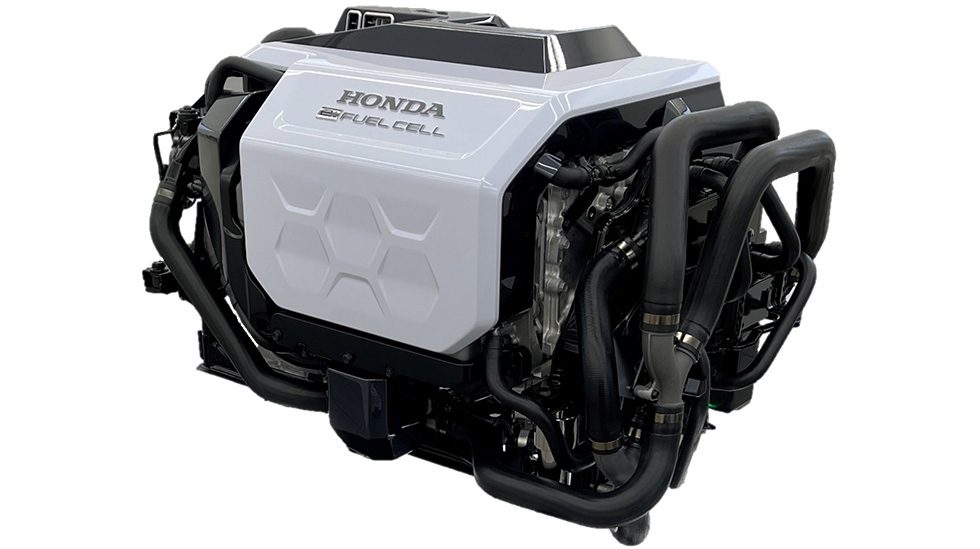
 thedriven.io
Honda pushes ahead with hydrogen fuel cell EVs, announcing plans for expansion
Japanese automaker says it is expanding its hydrogen business alongside a promise to “continue electrifying” its line-up of vehicles.
thedriven.io
WOW, small world. I was in #24 (N&V), #7 (Vehicle Dynamics), then on to #104 (Vehicle Dynamics & Noise Lab). Left in 2008 after 40 years.Me too, I was at the proving grounds in Milford from 1998 through 2008 in the diesel and premium V8 engine group (building 3). I was shared among other groups and I remember when they built the hydrogen fueling station down by the tracks. I heard through the "grapevine" the program was shelved because of the worries over storing hydrogen on board vehicles and concerns with training first responders.
The EV group borrowed me for a while and after on-and-off sessions with them for around three years, the EV program was shelved because of the lack of ability to store any meaningful amount of energy. I think that is still a major hurdle today, particularly in cold climates.
It comes down to practicability and using hydrogen is not practical in a moving object that can get involved in an accident.

Torvy
Super Member
Yup, most of the complaints about Hydrogen fuels come from those associated with American nameplate automakers. The spin is hilarious. Hydrogen at least has a chance at being a long term solution. Unless we ramp up electricity production first, EV will effectively implode as the PC alternatives cannot produce enough power.
Personally, I am a fan of use it all, coal, oil, LP, Natural Gas, Nuclear, Wind, Water, Solar, Bio, whatever. We all lose when bureaucrats try to decide what is best.
Personally, I am a fan of use it all, coal, oil, LP, Natural Gas, Nuclear, Wind, Water, Solar, Bio, whatever. We all lose when bureaucrats try to decide what is best.
ericm979
Super Member
There's a gas station not far from my office that put in tanks and a hydrogen dispensing pump a few years ago. The pump looks a lot like gas pumps though the nozzle is of course different. When gassing up there I sometimes see Mirai drivers pull in to refuel. One woman was trying to use the gas nozzle and could not figure it out. Maybe she borrowed the car. This station does allow drivers to refuel their hydrogen cars.

hornett22
Veteran Member
Costs about $25 to fill my 1626 with diesel from E mark. I get hours and hours of highly productive and impressive work in return for my $25. I honestly think it's a hell of a bargain.

Here are some similar links:


- Replies
- 124
- Views
- 23K