Niche segment oppurtunity

   / Niche segment oppurtunity #1  

Anomic

Member
Joined
Mar 31, 2013
Messages
45
Location
Front royal va
Tractor
Shopping
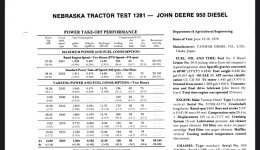
I currently own a John Deere 950 for background. I’ve been researching some about the 25hp “limit” where there is a large price jump to go up in power.

3025d 18,000$
3035d 22,600$

I’m having a hard time finding bare engine prices but looking at zero turns that have the same unit with different engine options for example

scag turf tiger 72” 25hp Kubota 23,999
Scag tiger 72” 40hp vanguard 18799

loose numbers a 40hp gas is 5k less than 25hp diesel which is 4.5k less than 35hp diesel. the gas would need to be water cooled in a CUT application but a hypothetical John Deere 3040D (gas) could come in under 14,000

I’m curious what y’all think. I know operating zero turns a 40hp gas can do a lot more than a 25hp diesel but how would it do for CUT application? I used Deere for this example but it may be even more beneficial for the budget brands to widen the price gap be the name brands while beating performance of the 25hp machines.

I love my diesel but using different zero turns I can not imagine paying 5k more for a 25hp diesel vs 40hp gas and most would agree. I wonder if that same logic applies to the CUT
 
   / Niche segment oppurtunity #2  
Gasoline tractors used to be more commonplace when gas prices were .39 gallon. Then the market shifted to diesels mainly because they just are more efficient to run for farming operations. Diesels also tend to be more durable because the diesel tends to lube the cylinder walls.

I'm not sure that all the price increase over 25hp is due to HP alone. There are emissions requirements once they go over 25hp.

Does any manufacturer actually sell a gas powered tractor these days?
 
   / Niche segment oppurtunity #3  
The lawnmower gas burners are with rare exception much lighter duty. Up until the emissions garbage came along building an equally durable gas wouldn’t be drastically cheaper and wouldn’t be worth the trade off for half the fuel economy. Now days I’m surprised nobody is offering an industrial gas.
 
   / Niche segment oppurtunity #4  
$4600 appears to be a big jump to gain ten horsepower - especially when you consider they may use the same basic engine. However, there's more than meets the eye. The additional cost is for a diesel particulate filter and the computer needed to run it. I believe the warranty on the emissions stuff far exceeds the basic tractor warranty. You can't even begin to compare a 25 horsepower gasoline engine to a 25 horsepower diesel tractor engine.
 
   / Niche segment oppurtunity #5  
In another year or two electric/battery powered subcompact tractors and zero turns will be entering the market. Wait.
 
   / Niche segment oppurtunity
  • Thread Starter
#6  
You can't even begin to compare a 25 horsepower gasoline engine to a 25 horsepower diesel tractor engine.
I agree completely. But I think you can compare one to a 40hp gas engine. I know I’m the zero turn world the 25’diesel performs about like a 30-32 gas.
 
   / Niche segment oppurtunity #7  
I'm actually surprised manufacturers haven't pursued this either, but I'm sure there is a reason. The longevity of diesel engines makes sense for big AG operations. But, how many CUT owners are putting 10k+ hours on their tractors?

I look at it as follows. A standard car gas engine can easily last 150,000+ miles. If the average car velocity is 30 mph over that lifetime, that equates to 5,000 hours of run time.

At the average homeowner rate of use at 100 hrs/year that equates to 50 years of life. I think that would satisfy the needs of the vast majority of users, and could be a significant cost savings.

Although, maybe that would turn tractors into disposable commodities that depreciate in value like cars, whereas now the economics seem to be that tractors retain their value very well: likely due to the perceived, and actual, longevity of them, even if it never actually directly benefits the vast majority of consumers.
 
   / Niche segment oppurtunity #8  
$4600 appears to be a big jump to gain ten horsepower - especially when you consider they may use the same basic engine. However, there's more than meets the eye. The additional cost is for a diesel particulate filter and the computer needed to run it. I believe the warranty on the emissions stuff far exceeds the basic tractor warranty. You can't even begin to compare a 25 horsepower gasoline engine to a 25 horsepower diesel tractor engine.


HP is HP is HP. It doesn't matter what produces it.
 
   / Niche segment oppurtunity #9  
I currently own a John Deere 950 for background. I’ve been researching some about the 25hp “limit” where there is a large price jump to go up in power.

3025d 18,000$
3035d 22,600$

I’m having a hard time finding bare engine prices but looking at zero turns that have the same unit with different engine options for example

scag turf tiger 72” 25hp Kubota 23,999
Scag tiger 72” 40hp vanguard 18799

loose numbers a 40hp gas is 5k less than 25hp diesel which is 4.5k less than 35hp diesel. the gas would need to be water cooled in a CUT application but a hypothetical John Deere 3040D (gas) could come in under 14,000

I’m curious what y’all think. I know operating zero turns a 40hp gas can do a lot more than a 25hp diesel but how would it do for CUT application? I used Deere for this example but it may be even more beneficial for the budget brands to widen the price gap be the name brands while beating performance of the 25hp machines.

I love my diesel but using different zero turns I can not imagine paying 5k more for a 25hp diesel vs 40hp gas and most would agree. I wonder if that same logic applies to the CUT
Why would a 40hp gas engine need to be water cooled in a CUT?
I've got a 25HP Kohler gas in my little PT425. Air cooled. I could easily swap out a larger air cooled gas engine into it if I had the space in the engine compartment.

What you are probably going to get with a diesel VS a gas is much better fuel economy and much longer engine life. But a 40hp gas turning hydraulic pumps is going to provide 15 more HP to those pumps than a 25hp diesel. That's a fact.
 
   / Niche segment oppurtunity
  • Thread Starter
#10  
Why would a 40hp gas engine need to be water cooled in a CUT?
I was thinking that for the continuous work at rated hp. You are right there are air cooled engines in applications that are similar.
As far as the hours comments I think I agree that 1000-1500 hours and it would start to get tired. But a new gas motor would be in the range of 3000$
The way prices are going I just see a market to come in 4000$ less (or more) than a 25hp diesel with more capability.
 
   / Niche segment oppurtunity #11  
Savings offset by fuel use and lack of torque and motor durability.

HP isn't the key factor in a machine used for plowing or mowing.

The gravely L was rated at less HP than the later models with higher HP Koehler engines that operated at higher RPM. Some are of the opinion that the lower HP L was easier to work with than the later models with more HP.
 
   / Niche segment oppurtunity #12  
HP is HP is HP. It doesn't matter what produces it.
It's the torque curve that matters. HP is usually reported as maximum HP, which is THE sweet spot on the torque curve. A powerful, peaky engine could be whimpy above or below its sweet spot.
 
   / Niche segment oppurtunity #13  
Gasoline tractors used to be more commonplace when gas prices were .39 gallon. Then the market shifted to diesels mainly because they just are more efficient to run for farming operations. Diesels also tend to be more durable because the diesel tends to lube the cylinder walls.

I'm not sure that all the price increase over 25hp is due to HP alone. There are emissions requirements once they go over 25hp.

Does any manufacturer actually sell a gas powered tractor these days?
I’m not aware of any gas powered CUTs of modern manufacture.
 
   / Niche segment oppurtunity #14  
Savings offset by fuel use and lack of torque and motor durability.

HP isn't the key factor in a machine used for plowing or mowing.

The gravely L was rated at less HP than the later models with higher HP Koehler engines that operated at higher RPM. Some are of the opinion that the lower HP L was easier to work with than the later models with more HP.
I'd take torque for plowing but HP for mowing.
 
   / Niche segment oppurtunity #15  
I'd take torque for plowing but HP for mowing.

I’ve got a 72” ZT with a 28hp Kubota diesel diesel in it. The diesel burns half the fuel a gas burner will maybe 1/3 the fuel as the newer 30-40 hp gas burners will. As expensive as gas is that’s a pretty big difference. Yes I know diesel cost more but using off-road brings them closer together. The diesel never bogs and just goes without complaining. Without the ability to get more grass out from under the deck faster you could have 100 hp and it wouldn’t help anything.
 
   / Niche segment oppurtunity #16  
Torque is the ability to do work, while horsepower is the speed at which you can do the work.

A machine with high torque and low horsepower does not make a good mower.

I realize everything has to have a balance, however, when talking strictly about torque and HP, fuel consumption is not part of the equation. Torque and HP are.

If you take a care with 200 foot pounds of torque and 100 HP and put it in a race with a car with 200 HP and 100 foot pounds of torque, the latter car will win the race every time. It'll also consume more fuel.

Cutting the lawn is a speed race, not a pulling contest.
 
   / Niche segment oppurtunity #17  
As a mechanical engineer, I always find these conversations somewhat entertaining due to common misconceptions.

As mentioned earlier, Hp=Hp=Hp. Horsepower is (expressed in a simple manner) the product of torque and angular velocity (i.e., speed)

Where individuals often go awry is assuming the engine characteristics (e.g., diesel vs gas, which have very different torque and power curves as a function of rpm) determine the performance of the system.

For example, how well you can mow is determined by whether you have a diesel or gas engine. This is not true. This is why tractors, mowers, etc. have gears. Gearing either increases rpm at the loss of torque, or vice versa. At constant power output (e.g., while plowing a field) with proper gearing you can get whatever torque or speed you want. This is why tractors have gears.

If you don't believe this, take apart a cheap hand held power screw driver. It uses a tiny motor that runs at a speed on the order of 1,000 rpm. They have such low torque that you can easily stop the motor shaft just by pinching it between your fingers. BUT, it then uses a planetary gear system with a gear ratio of around 100:1, which correspondingly increases the torque, while decreasing the rpm's. The result? You can drive a screw with a little tiny hobby-type motor.
 
   / Niche segment oppurtunity
  • Thread Starter
#18  
In regards to the tq and hp curves. On my gear drive unit it is nice to be able to set the hand throttle at 1000rpm select a gear then use the foot throttle to be able to adjust the speed between 1000 and 2300rpm. However with our hypothetical 40hp gas powered CUT having a modern hydro transmission couldnt you just run it at rated hp (and torque) the entire time and use the hydro to adjust speed? It seems that low rpm torque matters much less with a hydro but I have not used one much so correct me if I’m wrong.
 
   / Niche segment oppurtunity
  • Thread Starter
#19  
Savings offset by fuel use and lack of torque and motor durability.
.
If you have better numbers let me know but for comparison I found my diesel
Is about 1.75gph under load. My personal experience and based on forums for a 35-40hp carberated gas is about 2gph hitting the governor the whole time. I hear the newer efi are a bit better.
Let’s run the numbers for 1000hrs giving the diesel 1.5gph and the gas 2gph

Diesel:
1000hrs x 1.5gph x 5$/gal = 7500$
Gas
1000hrs x 2.0gph x 4$/gal = 8000$

I don’t know those numbers to be exact. My CUT has probably 10-15% of its hours at idle where a diesel will beat a gas at idle. Different warm up protocols.
Another data point based on zero turns again (only application where the exact same machine has the 25hp diesel and 35-40hp gas) diesel guys claim .5gph and gas guys claim 1.5gph if that ratio true it would be the gas would be 3500 more than diesel.

There are alotnof factors but based on rough numbers I don’t think saying paying an extra 5000$ for a diesel to save 500$ of fuel makes sense. If it’s closer to the second example of 3500 maybe.
 

Attachments

  • ED60EDE5-6209-4B26-98F0-54ED8C195BD5.jpeg
    ED60EDE5-6209-4B26-98F0-54ED8C195BD5.jpeg
    392.6 KB · Views: 101
Last edited:
   / Niche segment oppurtunity #20  
Torque is the ability to do work, while horsepower is the speed at which you can do the work.

A machine with high torque and low horsepower does not make a good mower.

I realize everything has to have a balance, however, when talking strictly about torque and HP, fuel consumption is not part of the equation. Torque and HP are.

If you take a care with 200 foot pounds of torque and 100 HP and put it in a race with a car with 200 HP and 100 foot pounds of torque, the latter car will win the race every time. It'll also consume more fuel.

Cutting the lawn is a speed race, not a pulling contest.

A lawnmower is a tool where once you have enough power more isn’t necessarily better. My 28hp ZT was built before the emissions regulation existed. If they felt like more power was needed they’d have given it more power. The drive motors on the mower aren’t going to go any faster. The ground smoothnesses usually keeps you off the full potential anyway. The deck drive belt isn’t going to deliver much more power. The deck is already working at its potential. It can’t take in 50 percent more grass than it already is and spit it out. If you wanted to repower the 28 hp diesel with 40 hp and actually do any good with it a complete redesign is needed.
 

Marketplace Items

2007 CATERPILLAR 725 OFF ROAD DUMP TRUCK (A60429)
2007 CATERPILLAR...
Champion Vibratory Roller (A60462)
Champion Vibratory...
KSI Conveyor (A61307)
2011 DRAGON 130BBL VAC TRAILER (A58214)
2011 DRAGON 130BBL...
(2) UNUSED 31" X 8 MM EXCAVATOR TRACKS W/ PINS (A60432)
(2) UNUSED 31" X 8...
2008 DOOSAN G25 GENERATOR (A58216)
2008 DOOSAN G25...
 
Top