When to worry about black smoke?

   / When to worry about black smoke? #1  

etpm

Veteran Member
Joined
Jun 30, 2021
Messages
2,344
Location
Whidbey Island, WA
Tractor
Yanmar YM2310, Honda H5013, Case 580 CK, Ford 9N
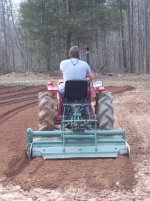
My YM2310 starts fairly fast even in cold weather and the Thermostart is broken. In warm weather it starts almost instantly. I recently got my tiller connected and when tilling at about 2000 RPM I can see some black smoke coming out of the exhaust. Not tons but I can see it. If I raise the RPM a little, to maybe 2100 RPM, the smoke decreases. If I let the RPM drop to about 1800 RPM when engaging the tiller fully in the ground and tilling the smoking will increase. It looks to me like a big increase. But what do I know? This is my first diesel machine. And the machine is 42 years old after all.
When doing other chores with the tractor which put less load on the tractor it really doesn't smoke much. And I know this is also a subjective thing. So, is there any thing I should be concerned about?
Before I bought it late last summer the seller said it had been sitting for two years without being started. The vegetation that had grown around it and the rodent nesting activity around the gas tank were also indicators that it had been sitting idle for some time. The seller told me he put the battery on a charger but that it wouldn't turn over and that I was welcome to figure out why. If I could get it to turn over he would sell it to me for the agreed price. I figured out the electrical problem and the thing started up almost instantly. It was hot that day, probably about 90 degrees. I used the directions in the manual and was so surprised by the quick start that it took me longer than it should have to back the throttle off to 1000 RPM.
So the upshot is that the tractor starts and runs well and is owned and operated by someone who is pretty ignorant when it comes to practical diesel engine operation. I do use some sort of additive that is supposed to clean the injectors and increase the cetane. Maybe that's why it starts in cold weather here, about 30 miles north of Seattle. Since I bought the tractor near the end of last summer I have only put about 35 hours on the tractor, so maybe the moose pee I have been adding to clean the injectors needs a little more time to work. Or maybe everything is OK and I'm concerned about nothing.
Anyway,
Thanks,
Eric
 
   / When to worry about black smoke? #2  
Eric, what engine oil is in the machine? 10W30 allows the engine to move better and there is way less smoke vs. the problems with the 15W40 in compact tractors like ours.

Are you also running the tiller on virgin ground and at a too much of a depth to increase load on the PTO and engine?

Do you see less soot smoke out the exhaust when tilling and the tractor moving slower?

Either the tractor is working too hard, has the wrong oil for the engine use or it's moving too fast for the tiller and engine to keep up while under load.

Lastly, how often does the machine run over 1600RPMs for over 10mins? And with the YM 3-digit machines, the OPS manuals state not to let the engine idle for more than 10mins that can cause soot build up in the exhaust system.

Welcome to owning a diesel. :) Yes, there is a certain knack to using it all. You did well not to operate at the higher end of the RPM band for the machine.
 
   / When to worry about black smoke? #3  
Sounds normal to me. The more you load them the more they will put out black smoke. Black smoke is unburned diesel. Your governor opens up the strokes on the injection pump when rpms begin to drop and if engine is overloaded the cylinders are unable to have a complete burn of the fuel and the result is black smoke.
 
   / When to worry about black smoke? #4  
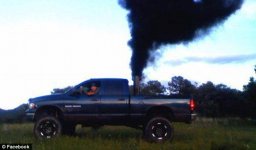
I only load up with much of any smoke unless I Bogg the mower wet grass etc. but clears right up when I get through it. When I tilled not much at all only Starting up. Nothing like this Pic. First season pass and low as it will go. Real deep with no Depth wheels.;)

Attachments

  • Picture 054.jpg
    Picture 054.jpg
    588.6 KB · Views: 460


The smoke clears right up even today.. I use to get Oil bombed/Carbon though. Had to clean the Exhaust out a couple times. Took care of that problem with just gas and the Air compressor.......
 

Attachments

  • Blk. Smoke.jpg
    Blk. Smoke.jpg
    150.3 KB · Views: 173
Last edited:
   / When to worry about black smoke? #5  
@etpm Yes, diesels smoke (a little) when loaded, and heavy tilling is definitely loading. Running the engine so that it isn't smoking heavily is the goal. So, increase the rpm's, or reduce the load or both. "Moose pee" will help clean the injectors, which will help all of the fuel get burned cleanly, which will reduce smoke. If the prior owner lugged the engine a lot, or only used the engine briefly and never got the engine hot, there will be carbon on the injectors and cylinder walls that will slowly get burned off as you use it more, and for longer periods when hot.

For older diesels like ours, "moose pea" cetane additives are essential. (Love that description!) I have used most of them and can't really tell the difference (SeaFoam, Power Service Diesel Kleen, and I am currently using Opti-Lube summer+), with one exception. Diesel Purge from LiquiMoly did really clean out my diesels and noticeably improved the clean burning, despite having always bought quality diesel, and always running one of the three other additives. It is best to use Diesel Purge straight by running the fuel line into the can, failing that, put a new fuel filter on, prefill the bowl with Diesel Purge, and put the rest the Diesel Purge in your fuel tank, when the tank is relatively empty. Try to run it with the engine running wide open; I find mowing to be a good use. As this tractor is new to you, would file it under the probably worth doing, can't hurt category.

It also never hurts to double check your air filter, but is suspect yours is new within the last 35 hours.

... I use to get Oil bombed/Carbon though. Had to clean the Exhaust out a couple times. Took care of that problem with just gas and the Air compressor.......
Sounds interesting! Can you elaborate?

All the best,

Peter
 
   / When to worry about black smoke? #6  
Don't know if it was talked about already but check the air filter out. Lord knows what that may look like..
 
   / When to worry about black smoke?
  • Thread Starter
#7  
Eric, what engine oil is in the machine? 10W30 allows the engine to move better and there is way less smoke vs. the problems with the 15W40 in compact tractors like ours.

Are you also running the tiller on virgin ground and at a too much of a depth to increase load on the PTO and engine?

Do you see less soot smoke out the exhaust when tilling and the tractor moving slower?

Either the tractor is working too hard, has the wrong oil for the engine use or it's moving too fast for the tiller and engine to keep up while under load.

Lastly, how often does the machine run over 1600RPMs for over 10mins? And with the YM 3-digit machines, the OPS manuals state not to let the engine idle for more than 10mins that can cause soot build up in the exhaust system.

Welcome to owning a diesel. :) Yes, there is a certain knack to using it all. You did well not to operate at the higher end of the RPM band for the machine.
I don't remember which oil I used right after I bought the machine but I think I used 10W30. I will be changing the oil again next week though and will be using 10W30.
The ground tills pretty easily so I don't think the load is excessive. I am running the tiller at full depth which is really only 4 or 5 inches. With RPM at 2000 it drops to about 1750 once tilling starts. The tractor is in first gear on the main transmission and first gear on the Powershift transmission. So the tractor is not moving forward very fast. I see more soot at 1750 than 2000. So I apply more throttle to get the RPM back to 2000 and the smoke decreases quite a bit.
I have read here on TBN different recommendations about how long and at what RPM to idle at. But I never idle above 1500 RPM.
One more thing that I should add. I read about "Wet Stacking" here and looked it up. And I have been seeing some signs of it I think. Around the end of the exhaust pipe I see evidence of wetness. Since I had been idling the engine at about 900 RPM I thought this might be the reason why so now I idle at 1000 or 1100 RPM.
Thanks,
Eric
 
   / When to worry about black smoke?
  • Thread Starter
#8  
@etpm Yes, diesels smoke (a little) when loaded, and heavy tilling is definitely loading. Running the engine so that it isn't smoking heavily is the goal. So, increase the rpm's, or reduce the load or both. "Moose pee" will help clean the injectors, which will help all of the fuel get burned cleanly, which will reduce smoke. If the prior owner lugged the engine a lot, or only used the engine briefly and never got the engine hot, there will be carbon on the injectors and cylinder walls that will slowly get burned off as you use it more, and for longer periods when hot.

For older diesels like ours, "moose pea" cetane additives are essential. (Love that description!) I have used most of them and can't really tell the difference (SeaFoam, Power Service Diesel Kleen, and I am currently using Opti-Lube summer+), with one exception. Diesel Purge from LiquiMoly did really clean out my diesels and noticeably improved the clean burning, despite having always bought quality diesel, and always running one of the three other additives. It is best to use Diesel Purge straight by running the fuel line into the can, failing that, put a new fuel filter on, prefill the bowl with Diesel Purge, and put the rest the Diesel Purge in your fuel tank, when the tank is relatively empty. Try to run it with the engine running wide open; I find mowing to be a good use. As this tractor is new to you, would file it under the probably worth doing, can't hurt category.

It also never hurts to double check your air filter, but is suspect yours is new within the last 35 hours.


Sounds interesting! Can you elaborate?

All the best,

Peter
The air filter looks great. Though it is the one that was in the tractor when I bought it it still looks clean. Or, I should say, looked clean when I bought the tractor. I took the filter element out and a visual inspection made me think the filter was recently installed and barely used. Nevertheless I used compressed air to blow it out from the inside and hardly dust blew out. I read about Diesel Purge after seeing your post and I'm gonna buy some and give it a try.
Thanks,
Eric
 
   / When to worry about black smoke?
  • Thread Starter
#9  
Well folks,
I will be changing all the filters and oils in the next week or so. It depends on how wet it is outside. Since the tractor was bought used I thought an immediate oil change was a good idea and then a subsequent one a little while after just to make sure any old stuff remaining and other crap gets removed. Even though the hydraulic oil looks good all sorts of folks want to spend my money on a new batch of the stuff and I'm gonna capitulate just so I don't have to feel guilty about lying and saying I changed out the oil when I didn't. Even though the oil looks great. It isn't discolored, doesn't show any signs of water, smells like fresh oil, tastes good, doesn't smoke when I'm making tempura earth worms, makes my skin silky smooth, etc. But I am gonna change it anyway.
So after I change the oil and fuel and air filters and run the Diesel Purge moose pee through the engine I will report back on the smoking situation. My feeling is the tractor just needs a good internal cleaning and new fluids.
Thanks everybody for the help, I really appreciate it,
Eric
 
   / When to worry about black smoke? #10  
My 336D smokes a bit under load and has for over 30 years. Seems pretty normal to me.
 
   / When to worry about black smoke? #11  
Eric,

Generally we flush the hydraulics with diesel. I filled mine about 80% or just over 2/3rds full. Drive the machine around for about 10mins and then drained.

Hydraulic Fluid Change

If you can drain 1-quart of engine oil and then add 1-quart of diesel, then start the tractor from a cold engine, let it run at 1,500rpms for 10 to 15 mins. This is basically a Gunk Motor Flush, but using diesel. Should you do this technique, be sure to also change the oil filter.

Hydraulic fluid is any fluid meeting the J20C specification, not being 'compatible' to the specification. At present there are a few class action lawsuits over the 'compatible' which is a marketing ploy and has no merits to mean equal nor better.

If you can find Yanmar TF500A, you found John Deere J20C in a Yanmar bottle.
TF500A=J20C_.jpg


Engine oil for the Yanmar 2T, 3T and 4T engines per the Yanmar website.

yanmar-oils.png


John Deere for the 50 Series of Yanmar made machines.

Yanmar-oils JD spec manual.png


Oil filter needs to have a blow-by should the filter become totally clogged. Not sense risking a stopped up oil filter to starve the engine. Filter needs to be no value less than the mid-20 micro media level, UNLESS you go with a taller filter. The taller filter allows better oil flow as the filter fills up each and every use. If you have a loader or other item in the way, make considerations on just how tall of a filter you can run with.

Hoye and Fredricks have the correct height air filters. Other distributors are using the generics that 'could' fit and allows some dirty air leakage. IF you do go with a 3rd party air filter, be sure to also buy 3/8-inch thick neoprene closed cell pad and cut it to shape to fit the gap. Neoprene closed-cell pad material is the same stuff Dr. Scholl's shoe inserts are made from. :)

If you are going to this trouble of a tune up, also SeaFoam thru the fuel tank. Follow the directions on the bottle.

Follow the ops manual and grease all the zerk fittings too. :) There should be about 20-ish for 2WD and about a dozen more for 4WD. Yes, crawl under the tractor and look up too. They are everywhere.
 
   / When to worry about black smoke? #12  
@etpm Yes, diesels smoke (a little) when loaded, and heavy tilling is definitely loading. Running the engine so that it isn't smoking heavily is the goal. So, increase the rpm's, or reduce the load or both. "Moose pee" will help clean the injectors, which will help all of the fuel get burned cleanly, which will reduce smoke. If the prior owner lugged the engine a lot, or only used the engine briefly and never got the engine hot, there will be carbon on the injectors and cylinder walls that will slowly get burned off as you use it more, and for longer periods when hot.

For older diesels like ours, "moose pea" cetane additives are essential. (Love that description!) I have used most of them and can't really tell the difference (SeaFoam, Power Service Diesel Kleen, and I am currently using Opti-Lube summer+), with one exception. Diesel Purge from LiquiMoly did really clean out my diesels and noticeably improved the clean burning, despite having always bought quality diesel, and always running one of the three other additives. It is best to use Diesel Purge straight by running the fuel line into the can, failing that, put a new fuel filter on, prefill the bowl with Diesel Purge, and put the rest the Diesel Purge in your fuel tank, when the tank is relatively empty. Try to run it with the engine running wide open; I find mowing to be a good use. As this tractor is new to you, would file it under the probably worth doing, can't hurt category.

It also never hurts to double check your air filter, but is suspect yours is new within the last 35 hours.


Sounds interesting! Can you elaborate?

All the best,

Peter
Oh yeah small droplets through the Exhaust. Esp on a long hot day. They would show up on the hood. And Me!!! learned quick don't try brushing them off. They smeared like dirty Blk. Grease!!!!. Cleaned the exhaust out a couple times and turned the Cap around and it finally quit. To the day I lift the cap lid and clean it. Which the Oil/Carbon does show up on.
 
   / When to worry about black smoke?
  • Thread Starter
#13  
Eric,

Generally we flush the hydraulics with diesel. I filled mine about 80% or just over 2/3rds full. Drive the machine around for about 10mins and then drained.

Hydraulic Fluid Change

If you can drain 1-quart of engine oil and then add 1-quart of diesel, then start the tractor from a cold engine, let it run at 1,500rpms for 10 to 15 mins. This is basically a Gunk Motor Flush, but using diesel. Should you do this technique, be sure to also change the oil filter.

Hydraulic fluid is any fluid meeting the J20C specification, not being 'compatible' to the specification. At present there are a few class action lawsuits over the 'compatible' which is a marketing ploy and has no merits to mean equal nor better.

If you can find Yanmar TF500A, you found John Deere J20C in a Yanmar bottle.
View attachment 741242

Engine oil for the Yanmar 2T, 3T and 4T engines per the Yanmar website.

View attachment 741243

John Deere for the 50 Series of Yanmar made machines.

View attachment 741244


Oil filter needs to have a blow-by should the filter become totally clogged. Not sense risking a stopped up oil filter to starve the engine. Filter needs to be no value less than the mid-20 micro media level, UNLESS you go with a taller filter. The taller filter allows better oil flow as the filter fills up each and every use. If you have a loader or other item in the way, make considerations on just how tall of a filter you can run with.

Hoye and Fredricks have the correct height air filters. Other distributors are using the generics that 'could' fit and allows some dirty air leakage. IF you do go with a 3rd party air filter, be sure to also buy 3/8-inch thick neoprene closed cell pad and cut it to shape to fit the gap. Neoprene closed-cell pad material is the same stuff Dr. Scholl's shoe inserts are made from. :)

If you are going to this trouble of a tune up, also SeaFoam thru the fuel tank. Follow the directions on the bottle.

Follow the ops manual and grease all the zerk fittings too. :) There should be about 20-ish for 2WD and about a dozen more for 4WD. Yes, crawl under the tractor and look up too. They are everywhere.
I already greased the many zerks when I first got the tractor. The tractor came with oil filters so I will check to see if they have the bypass and if they are the longer type. They are, I believe, WIX brand. I don't think the air filter is stock. The filter canister is a fairly long cylinder. The rings that go around it and which are bolted to the tractor do not fit tightly. But the air filter element inside does fit properly.

How important is it to flush the hydraulic system? It is working properly. If I do flush it then I will need to dump about 4 gallons of diesel. I don't think it will be a good idea to run it through the engine after using it to flush the hydraulic system.


I might check valve clearance too, but I don't think they will be out of spec.

When I changed the motor oil I poured the oil into the valve cover. The thin manual that came with the machine says to add oil through the dipstick hole. I find this odd. Did some engines not have a cap on the valve cover for adding oil?
Thanks,
Eric
 
   / When to worry about black smoke? #14  
I already greased the many zerks when I first got the tractor. The tractor came with oil filters so I will check to see if they have the bypass and if they are the longer type. They are, I believe, WIX brand. I don't think the air filter is stock. The filter canister is a fairly long cylinder. The rings that go around it and which are bolted to the tractor do not fit tightly. But the air filter element inside does fit properly.

How important is it to flush the hydraulic system? It is working properly. If I do flush it then I will need to dump about 4 gallons of diesel. I don't think it will be a good idea to run it through the engine after using it to flush the hydraulic system.


I might check valve clearance too, but I don't think they will be out of spec.

When I changed the motor oil I poured the oil into the valve cover. The thin manual that came with the machine says to add oil through the dipstick hole. I find this odd. Did some engines not have a cap on the valve cover for adding oil?
Thanks,
Eric

I repurposed the diesel for 'parts' washing or as a cheap penetrating oil or to douse on a burn pile that takes off nicely (way slower than gasoline).

Yanmar oil fill locations varied. Depends on both the engine and model. Most of the smaller 2 cylinder engines had the oil pour in thru the top. The 3 cylinder engines have an actual oil port and dip stick.
 
   / When to worry about black smoke? #15  
to me its normal, in my opinion tractors in the 80's produce more smoke then nowadays.
 
   / When to worry about black smoke? #16  
@etpm So, how is it going for you and your new to you tractor?

All the best,

Peter
 
   / When to worry about black smoke?
  • Thread Starter
#17  
Greetings Peter,
Things are going quite well with my new to me tractor. The bucket would not curl enough when at ground level to hold much dirt or rocks or whatever. To fix this problem I made extensions for the FEL arms. This changed the pivot point and added about 12 degrees more of curl. I lost some dump so now the dump angle is about 87 degrees. I don't remember exactly the degrees but I did make a post in the Yanmar group describing what I did complete with pictures. I also had to fix a problem with the shifting linkage for the PTO speeds. When I got the tractor the exterior linkage was frozen with rust. I eventually got everything to break loose. To prevent this problem in the future I needed to add zerks. The best place to add them was right on the steel shifting forks. Since these forks are only about 5mm wide I turned up some short 3/8 diameter pieces of steel, drilled 3/32 through, and then drilled and tapped for 1/4-28 for the zerks. I welded these pieces to the 5mm steel and used the 3/32 holes as pilot holes to drill through the center of the 5mm steel into the bushings that rotate around the shaft that the whole shifter linkage rides on. Now I can, and did, grease everything. I finally got the heim joint and ball joint for the power steering cylinder I bought and it looks like I may actually get the power steering done this week. My back is bad and is fusing itself, some sort of genetic condition. Apparently it happens in phases and it flared up recently which has prevented me from working on anything at all. But it started feeling a little better this morning so I will be in the machine shop tomorrow working on the power steering. In between all this work I have been working the tractor too. The ground is finally getting dry enough for me to start tilling so maybe this week, if my back lets me, tilling can start again.
Cheers,
Eric
 
   / When to worry about black smoke? #18  
Eric,

Generally we flush the hydraulics with diesel. I filled mine about 80% or just over 2/3rds full. Drive the machine around for about 10mins and then drained.

Hydraulic Fluid Change

If you can drain 1-quart of engine oil and then add 1-quart of diesel, then start the tractor from a cold engine, let it run at 1,500rpms for 10 to 15 mins. This is basically a Gunk Motor Flush, but using diesel. Should you do this technique, be sure to also change the oil filter.

Hydraulic fluid is any fluid meeting the J20C specification, not being 'compatible' to the specification. At present there are a few class action lawsuits over the 'compatible' which is a marketing ploy and has no merits to mean equal nor better.

If you can find Yanmar TF500A, you found John Deere J20C in a Yanmar bottle.
View attachment 741242

Engine oil for the Yanmar 2T, 3T and 4T engines per the Yanmar website.

View attachment 741243

John Deere for the 50 Series of Yanmar made machines.

View attachment 741244


Oil filter needs to have a blow-by should the filter become totally clogged. Not sense risking a stopped up oil filter to starve the engine. Filter needs to be no value less than the mid-20 micro media level, UNLESS you go with a taller filter. The taller filter allows better oil flow as the filter fills up each and every use. If you have a loader or other item in the way, make considerations on just how tall of a filter you can run with.

Hoye and Fredricks have the correct height air filters. Other distributors are using the generics that 'could' fit and allows some dirty air leakage. IF you do go with a 3rd party air filter, be sure to also buy 3/8-inch thick neoprene closed cell pad and cut it to shape to fit the gap. Neoprene closed-cell pad material is the same stuff Dr. Scholl's shoe inserts are made from. :)

If you are going to this trouble of a tune up, also SeaFoam thru the fuel tank. Follow the directions on the bottle.

Follow the ops manual and grease all the zerk fittings too. :) There should be about 20-ish for 2WD and about a dozen more for 4WD. Yes, crawl under the tractor and look up too. They are everywhere.
Which model has 20zerks for a 2wd!!!??? I swear my 2000 has like half that?
 
   / When to worry about black smoke? #19  
Just Greased mine I'm sure 7. With most on the Front and 2 on the Pedals. I was on Yard patrol Yesterday.
 

Marketplace Items

2019 Peterbilt 579 SLEEPER (A59905)
2019 Peterbilt 579...
2020 DRAGON ESP 150BBL ALUMINUM (A58214)
2020 DRAGON ESP...
Rockport Mobile Command Center (A59230)
Rockport Mobile...
KSI Conveyor (A61307)
2013 Freightliner CASCADIA DAY CAB (A59575)
2013 Freightliner...
2010 MULTIQUIP 25KW GENERATOR (A58214)
2010 MULTIQUIP...
 
Top
