Where should we locate the well?

   / Where should we locate the well? #1  

stumpfield

Gold Member
Joined
Dec 7, 2005
Messages
455
Location
Sierra Foothills
Tractor
2005 MT265B
We have zero experience on using a water well or ever live in a place with your own water well. We are about to have one drill in our rural property that we plan to move there and live full-time. So, here the situation and questions.

The property is 120 acres on the side of a mountain. There's no utility power (probably never will in our life time...) so we'll be off the grid using solar and diesel generator. Also, there's no other well in the area within a few miles. The neighbors below use spring water. There are many year-round springs with plenty of water 400-500' below us at the base of the mountain. No spring on our property.

So, common sense tells us we should have a gravity feed water system so we don't rely on power everytime we use water.

We chose our building site in the middle of the property for the view and privacy. There's small hill about 100' above and 1/4 mile away. This is where we think the water tank should be located for the gravity feed water system to get maximun water pressure. This also probably the worst location to find water.

About 150' below the building site and another 1/4 mile away is a meadow area where a seasonal creek runs though. Several ravines converge there. It seens like the perfect spot to find water. Another 200' elevation below the meadow is the neighbor's property with several year-round springs with plenty of water. I don't know if this is an indication that water is 200' below the meadow area.

So, here are some of our options:

1. Drill on top of the hill near the tank and go as deep as neccessary to find water. The pump and generator will be near the well & tank. Run a 1/4 mile of water line to the house. We'll get 40-50psi water pressure and sounds perfect. The down side was less chance of finding water or have to deal with pumping water from a very deep well.

2. Drill at the meadow area 150' below. Then we have to pump water up 250' and 1/2 mile run to the tank location. After that, still have to run a water line 1/4 mile back to the house.

3. Drill the well near the house. Take our chances in finding water. Pump water up 100' and 1/4 mile run to the tank and back. The generator/pump system will be near the house. We only need 1 integrated power system.

4. Some other combinations...

What do you think? Here's a few more questions:

Is there any advantage for having the well/pump near the house? Any maintenance issue? Sure it's no fun to walk 1/4 mile to find out what's wrong with the pump or generator.

Is there any advantage for having the well close to the water tank? Again, if I can avoid a 1/2 mile of water line and on going maintenace...

We talk to 3 well drillers so far. None seem very interested in our water system situation. They seem very reluctant to drill on our property probably due to difficult access. One guy said water should be 2-300 feet below. The other said 5-600. The 3rd guy said 800-1000 or may be more. They all point to the same location which at the entrance right off the road or where ever I want them to drill. There'a building boom in the area. They all said they drill a well everyday and there's a 4-6 week waiting period to get anyone of them to drill. The 3rd guy wants an extra charge above their normal rate because it's more difficult to bring drillling equipment to our property.

Sorry for the long post. I hope to learn from you guys. What would you do if you were us? We welcome any sugguestions.

Thanks in advance.
 
   / Where should we locate the well? #2  
Just a few thoughts.

Water line. If your line to the tank goes anywhere near the house location you do not need two lines. The same line can be used to fill the tank and to feed the house.

Cost of running pipe to/from the tank will be a minor part of the overall cost of the system so don't let length of line be the overriding decision factor.

Barring catastrophies, there should be no maintenance needed on a buried water line if it is installed correctly and using the proper material (plastic, not galvanised).

Location of well will be mostly dictated by where the drill rig can get to.

My personal preference is for the well to be near the house but it is not an overriding consideration.

No well driller will gaurantee finding water at any specific depth unless you are blessed with being over a known aquifer and you don't seem to be. They won't even gaurantee finding water at all.

The elevation of the springs are a good (but not certain) indication that you will find water at that level, actually somewhat above it. You could hit water a good distance higher than that.

Harry K
 
   / Where should we locate the well? #3  
Sounds like a huge money pit with limited chances of success. Have you consideree an alternatives to drilling a deep hole in the ground?

The seasonal creek and springs on your neighbors land make me wonder if that's an alternative for you. I've dug around dried creeks befor and found water near the surface.

A friend in Central CA had a sistern dug off the side of his seasonal creek that stayed full year round. It was dug with a backhoe and around 12 feet deep. Even during the drought in the late 80's to early 90's, it never went down!!!

He used a generator to pump water through a filter system before it went to a storage tank above the cabin. The water flowed from the tank by gravity.

As for locating the pump, it doesn't matter where it's at. If it's a deep well, then the pump will be at the bottom of the well anyway. Shallow pumps work fine above ground.

Once you figure out the location of the well, than run wire to the location for you pump. Leave the generator at the house or barn.

If you do get lucky and find surface water at some point, you might want to look into Ram Pumps. They don't need electricity to pump water, just a minimal amount of fall to generate the energy used to lift the water.

Eddie
 
   / Where should we locate the well? #4  
I'll say right up front that I know little about springs, the water kind anyway.

That said, is it possible that a new drilled well uphill from these springs could disrupt water flow. Maybe his well would disrupt the flow so that it would be less, or ever stop altgether. Has this ever happend that anyone knows about?
 
   / Where should we locate the well? #5  
I think you are approaching it totally the wrong way. My well is 1200 ft from my house because that is where the water is. It is 100% solar powered. The pump in the well runs off of solar panels no generator long wires ect. It pumps into a 1800 gallon storage tank. I then have seperate solar panels charging two golf cart batteries that run two 12 volt pumps to pressurize two standard 50 gallon pressure tanks. It works perfectly and is almost no maintenance. Drill your well where the water is and pump it to your house. Or if you really want gravity feed up to the storage tank and gravity feed back to the house. That would save you the pressure tanks. A good solar pump and 400 to 600 watts of panels will pump all the water you can use.
 
   / Where should we locate the well? #6  
In Arizona a solar system sounds great.

I rather like the approach of a tank on the top of the hill to gravity feed the system with a reservoir that will last several days. Figure 60 gallons per person per day to size a nice big plastic tank set into the ground to keep it cool in the summer and not frozen in the winter. Put the well where the water is and pump into a line that runs past the house up to the tank. Then tee off of that line near the house and feed the home with it. You will note that the line between the house tee and tank will flow both ways depending on whether your filling or draining the tank. In the trench between the pump and the house run the power lines to the pump. A pressure switch anywhere in the system can be used to activate the pump to fill the tank back up. Or you could just wait until it runs dry and then pump it up to the pump cutoff pressure. You will soon figure out how often to fill the tank.

This is how my city's system works. Wells in the valley fill tanks on the hill and the tank elevation provides pressure. You can stuff water from a well into the water system anywhere to fill all the elevated tanks at the same time.

If I had a high hill, you can bet I'd use a tank for reserve flow in case of a power outage. Also, get this, the tank is a surge device meaning even if your pump only produces 2 gpm you can pull from the tank at super high flow rates until it is empty without sucking your well dry.
 
   / Where should we locate the well? #7  
stumpfield,
I'n no well expert so these suggestions are from what I've learned and from advice my well driller gave me.

My guy told me drilling for water at the low pints such as in a ravine that carries water is the worst place. He said the rock has pushed together so tight that there are likely no or small fishers in locations like that. He suggested right off to look at a ridge and as high up on it as possible. took him about 5 minutes to suggest a likely place for the well and he ended being right on. My guy also said often some wells lower on the ridge have to drill deeper to get to a good source.

First, is there a chance you can water witch your property near the top of that hill? If so, that would be the best all around location...gravity feed, possibly good water source. You'd have to level an area for the drilling rig. Get your solar power to run the pump from there. Drilling near the house is not a requirement, just need more pipe. that is the least of your problem. Locating the best water source is the first step, and then there are no gaurantees that they will find water there anyway! Be prepared for that at the worst. He might move over a few feet and find water, but you'll most likely pay by the foot, as I did. In any case, you really got no choice becasue you need the well.

Personally, I'm going to keep the generator, water tank, propane tank away from the house. One reason is the best place to drill was there. In my case that's about 500' or so. My experience and from what my neighbors told me is that you can hear that generator kick on and it does it in the middle of the night too. My solar battery house will be about ½ way closer to the house, where I'll build my barn and shop. I feel with proper plumbing and a good shed/house for the solar batteries, those systems will need little maintenance. Only periodical checks, etc.

Try witching up there. If you don't have a concern to push a maintenace road up there, you can always jump on your ATV to check things out. I don't have a link, but I read on the net about hard rock well drilling. Helped me understand what my well guy was trying to explain. One more thing...you're lucky you only have to wait 5 or 6 weeks to get in line. I had to wait 1 year for my guy!
 
   / Where should we locate the well?
  • Thread Starter
#8  
Wow! that's great information. I think I got most of the questions answered.

-Locate the tank on the hill for gravity feed.
-Drill where the water is and not worry about pumping.
-Run the water line so it can be tee off to the house. ...I have no idea that the water line can be use for both pushing water up and drain down. I wonder how water is kept from draining back into the well???

Now the $20,000 question is how to find water? What location have the best chance of finding a good quantity of water? Out here, it's solid granite a few feet below the soil. Digging near the creek is out. The creek is solid rock. I learned that the best chance of finding water is drill on fractured rock. Is a ravine an indication of rock fracture below?
 
   / Where should we locate the well? #9  
"I have no idea that the water line can be use for both pushing water up and drain down. I wonder how water is kept from draining back into the well???"

The standard submersible well pump is "always" equipped with a one way valve to prevent water from draining back into the well. A check valve.

Finding the water is a gamble. I would almost spend more time worrying about proper access to the well location, setbacks from septic components, setbacks from roads, setbacks from potential floods, and distance to house than trying to guess where the water is.

You're looking for the underground water. The shape of the earth's surface several hundered feet above the groundwater table has little effect on the elevation of the groundwater table. Erosion and glacial action don't change the water table level to great extents. If I had to guess, I would look to a low elevation on your property away from a surface water feature.
 
   / Where should we locate the well? #10  
that 20K question is that no one can make sure to hit water, even drilling 20' away from a known sourece.

deeper does not mean better either. or that you will iht anything. usually can hit salt wells the deeper you go. /forums/images/graemlins/frown.gif not sure on the fractures IN the ravine or on TOP of it? I'm no geologest and even if I were more than likely each area can be so different with out ground pen radar you really have little or know idea what lies below.

if it IS solid granet then you will not get much water below it unless it has fractures for the water to penetrate it. not to mention getting the drill through it /forums/images/graemlins/blush.gif /forums/images/graemlins/crazy.gif

anyhow like others said I pretty much see there points & agree with em. solar powerd is way to go up high and some south facing location.

mark M
 
   / Where should we locate the well?
  • Thread Starter
#11  
After reading the posts. JimBrown's right: I think I'm taking the wrong approach. Actually, the highest spot where we want to place the water tank is the easiest location to get to. It's almost perfectly flat. It's on a ridge. Not the highest part of the ridge but it's the highest location on our property. We don't have any concern about the initial cost. We want the most reliable water system. As close to city water convenient as possible except for the fact that I'm the city /forums/images/graemlins/grin.gif. Anyway, I always thought it's not a good idea to drill on ridge /forums/images/graemlins/confused.gif
 
   / Where should we locate the well? #12  
A single water line to flow bidirectionally is standard practice in nearly all water systems. You run the line from the tank to the house and "T" in the pump connection anywhere. The pump will have a check valve so that water can only go from the pump out.

Be aware that with a tank like that, there will be a vent to atmosphere, so that the air can make up water height differences. Problem is that this allows "things" to grow in the water. Bacteria, algea, etc. It will be likely that you will need to treat the water with chlorine.

One other consideration is to locate the storage tank near the home, perhaps underground. The house can be fed with a readily available pump that will provide the desired water pressure. The pumps operate only when there is a water demand. They are available in 120 VAC as well as 12/24 VDC. (Think RV water system). You might need two pumps (parallel with check valves) so that one can operate when AC is on and the other off of battery/solar when no AC is present. The cost of the pumps is way cheaper that the cost of the piping/trenching for the gravity feed. In an emergency, a hand pump could be used as well.

Just a thought. It keeps the system close to home (literally).

Paul
 
   / Where should we locate the well? #13  
Try and find out what the geology of your area is like. Also check and see if there is recorded information on surrounding wells.

Egon /forums/images/graemlins/grin.gif
 
   / Where should we locate the well? #14  
Spiker,
You're right about finding the "spot" but this part is not, according to my hard rock well driller. </font><font color="blue" class="small">( if it IS solid granet then you will not get much water below it unless it has fractures for the water to penetrate it. not to mention getting the drill through it)</font>

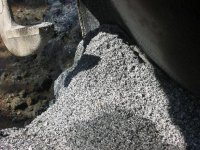
He told me that is the best place for hard rock wells. You just need to locate a fissure in it. Their drills are like a hammer drill with carbide knpbs on them. The cay cut through granite like you can't believe. If you're lucky enough to hit quartzite (sp) that an even better sign. He said the canyons and ravines that carry water are the worst to drill because the rock in those places have been squeezed together so tight that there are very few fissures in those locations. Going up on a ridge is a much better alternative. Funny, I thought the same about drilling in the ravine until he explained it to me.

Here's a picture of when he started to hit the quartzite rock.
 

Attachments

  • 841092-QUARTZITE.JPG
    841092-QUARTZITE.JPG
    87.7 KB · Views: 181
   / Where should we locate the well? #15  
techman has some good advice on the water tank. For that reason, we are drawing right from the well via a pump. The large tank is primarily there to satisfy the fire dept code in our area (min 4000 gals for them). We will have a valve located on the tank that can feed the house, but it has to be located above the 4000 gal mark. (according to code)

If you're off grid, your solar system will run the whole house and such via an inverter, and the 120v pump without the need for 12/24v pump, I think.
 
   / Where should we locate the well?
  • Thread Starter
#16  
The geology in the entire sierra foothill is as described by 3RRL. We are on the side of a gaint granite mountain. Underground water flows from the high elevation sierra nevada east to west. Everything ends up at the san joaquin valley which has a water table and plenty of water. Wells down there are in 1000's gal/min. Drilling any where in between will have to intercept fractures in the rock to get water. I searched the net but found nothing about finding favorable locations to drill in the sierra foothill. I did find a research paper on finding water in pennsylvania bedrock. The geological condition sounds very similar. I can't remember the link and not able to find it anymore. I did save a hardcopy. (don't know how to post a picture here...)

It said something like this:

-------------
Because most groundwater in Pennsylvania's bedrock flows through fractures and openings between rock layers, locating a well in an area with a high density of fractures may result in a higher yield, if the well is to be drilled into a bedrock aquifer. The more factures that a well intersects, the better the chance of encountering an adequate supply of water.
Determining the rock unit and the fracture density require that the person selecting the welll site have some geological knowledge. A simple way in for anyone to increase the likelihood of a good yield is to locate a well in a valley. Other things being equal, wells drilled in a valleys yield more water than those drilled on hillsides or hilltops.

The valley exist because the rocks are more easily eroded there, indicating that is a zone of weakness. The source of that weakness may be a concentration of fractures......
The rocks beneath a valley are more likely to be highly fracture than rocks beneath hillsides and hiltops.....
 
   / Where should we locate the well? #17  
</font><font color="blue" class="small">( He said the canyons and ravines that carry water are the worst to drill because the rock in those places have been squeezed together so tight that there are very few fissures in those locations. )</font>

OK, call me slow, but this just doesn't make sense to me. Ravines and canyons are caused by erosion, not movement of the plats. What would cause them to be sqeezed together?

I'm of the opinion that those locations are where the magority of the underground water suplly comes from. Rain doesn't come down heavy enough saturate the land down hundreds of feet. It just travel down there along a path of some kind. I always though this happened in the mountains from the crackes in the rock, and the the vast majoritiy of it came from lakes and rivers.

Could it also just be a story that well drillers tell to avoid having to deal with the absolute most dificult location for the to get their drilling rigs to???

Sorry for my ignorance,
Eddie
 
   / Where should we locate the well? #18  
Even if you went right next to a river and drilled a well, the groundwater would me way below the river. The canyon collects and is formed by water from the surface, not the ground. Our wells here on the valley floor between Mt. Rainier and the puget sound are several hundered feet deep despite our ground elevation of 60 feet above sea level.

They're just two different things.
 
   / Where should we locate the well? #19  
You've been getting some good info already. Some things I can add:

Witching for water does work. My driller didn't believe in them and drilled a totally dry hole at the best place he recommended (atop a small rocky ridge). We've been using the one we had him drill per the witch's recommendation for over 20 years (about a hundred feet away from his dry hole).

We have been off the power grid since we bought in 1977. Our battery bank is charged by solar panels and there is a propane generator for extended foul weather times. I have another gas generator for a backup. Diesel gensets are better (one reason is because it's easy to find ones that run 1800RPM instead of 3600RPM) but I chose propane because it is delivered (hauling gas or diesel is a pain).

Our well is in one building (pumphouse) and the water storage tank is in another (watershed). I use the two pipe system (pvc is cheap). One pipe to the tank from the well. I have a couple of pressure tanks in the watershed that are charged with a 110V jet pump (run from a dedicated inverter), which feeds a second pipe to the house and yard faucets. There is also a 12V pump to charge the tanks as a backup.

I have two other inverters -- one for lights and entertainment, the other for everything else in the house. Using just one inverter for the house caused the TV to "wink" off and back on when the washer or dryer started. All three inverters and the charging aparatus are together with the battery bank in the pumphouse.

The main inverter can be programmed to automatically start and stop the generator according to battery voltages but I prefer to run the gen myself. It's behind the pumphouse maybe a hundred feet from the house and is difficult to hear when it's on. I have remote switches in the house to control it. I also have a digital voltmeter in the kitchen so we can see the state of charge in the batteries easily.

I don't want to bore everybody with a book-long post, so I'll just say that I've worked out my power and water systems to my satisfaction and will gladly pass what I've learned on to you if you want. Either post here (I pretty much keep a TBN window open during working hours, makes sitting on "hold" much better) or PM me.

Phil
 
   / Where should we locate the well?
  • Thread Starter
#20  
I have the same curiosity as EddieWalker. What the well driller told 3RRL is in direct conflict with what I read on geologist/hydrolygist's paper indicate (published by pennsylvania water resource board). For my specific location, the ravine is a the creek. I can see the granite exposed and surface fractures everywhere. If it were less likely to have fracture below (water flow) because the rocks compress tightly together, then why is all the springs are located in the lower part of the ravine. The springs run year around to feed the lower parts of the creek which flows into the Chowchalla river. During the wet season, I can see water comes out of the rocks in the upper part too. This is weeks after it stops rainning.

I can undertand it's not practical to drill in the middle of a ravine becuase it's difficult to get the drilling rigs there. But how about just on the side of the ravine? Wouldn't it be more favorable than on top of a ridge? or a hilltop? I'm just curious.
 

Tractor & Equipment Auctions

2019 PJ TRAILER 32FT GOOSENECK (A55745)
2019 PJ TRAILER...
2012 FREIGHTLINER CL120 CONVERTED TANDEM AXLE GLIDER DUMP TRUCK (A59905)
2012 FREIGHTLINER...
15200 (A56857)
15200 (A56857)
Rooster Weathervane (A59231)
Rooster...
SD Launch SDLB25 (A53317)
SD Launch SDLB25...
2023 KRT ST650 STAND-ON SKID STEER (A60429)
2023 KRT ST650...
 
Top