WHICH LOG SPLITTER

/ WHICH LOG SPLITTER #1  

Cade

Bronze Member
Joined
Feb 26, 2007
Messages
97
Location
Northeast PA
Tractor
Kubota L2650GST
I am considering the purchase of a log splitter to split wood to heat my house and garage. Which do you have make/model etc and what are the pros/cons between an electric/gas and 3pt hitch?


THANKS for any responses.
 
/ WHICH LOG SPLITTER #2  
3PT:
pros: cheaper, harder to steal, no one wants to borrow it, you can set work height at waist level to save your back, easily taken to the wood site via tractor, cheap to run (tractor diesel), quieter than most self contained ones, one less engine and hydraulic system to maintain, more compact to store

Tow behind:
pros: you can loan it to friends, easy to move from lot to lot


Neither one will have an advantage over speed, capacity, etc. That is a function of the model you buy (HP and pump capacity).

Most will also tilt up vertical or work horizontal. The 3PT can be raised in the horizontal position. To me, that is probably the single best reason to buy one. You do not get an aching back when you are standing up to split.


If you later decide to get a 3PT splitter, then there will be another set of pros and cons about which type of 3PT.
 
/ WHICH LOG SPLITTER
  • Thread Starter
#3  
Thanks for the input. I like the idea of less back aches with the 3pt hitch. Excellent point!
 
/ WHICH LOG SPLITTER #4  
Cade said:
Which do you have make/model etc and what are the pros/cons between an electric/gas and 3pt hitch?
If money is a factor, it makes a difference whether your tractor already has at least one set of hydraulic remotes. The lower end TPH splitters rely on the tractor's hydraulic pump and remote valve to work. Higher end TPH splitters have their own pump, which is driven by the tractor PTO. But they'll likely cost more than the tow behing gasoline powered type.

So - if your tractor already has the right plumbing - I'd say TPH is the splitter of choice. Spend the extra few bucks to get one that works both horizontally and vertically (I got mine for under $600, less hoses and fittings). If you don't have the right tractor plumbing, it would likely be cheaper to get the tow-behind gasoline powered variety

//greg//
 
/ WHICH LOG SPLITTER
  • Thread Starter
#5  
No plumbing on mine. I guess I will lokk into the tow behind. Anyone out there have or used the DR electric splitter. There was a commercial on tv the other night on this.
 
/ WHICH LOG SPLITTER #6  
Others have talked about an advantage of the tow behind: You can work your tractor to bring wood to the splitter, take split loads out (say on pallets), and use the tractor as a saw buck. Search for threads on 3ph log splitters. There has been much discussion already.

Both have advantages. I'm still undecided as to which is "better". One problem with this new lousy ethanol gasoline is that you have to continually start all your machines or risk having a gummed up carb if you let it sit too long. For me it's a chore now, with tiller, lawnmower, ATVs, garden tractor, CUT, lawn vacuum, chainsaws, blower, weedeaters, hedgetrimmers, etc. etc. to have to maintain and keep in good running order.
 
/ WHICH LOG SPLITTER #7  
Cade said:
No plumbing on mine. I guess I will lokk into the tow behind. Anyone out there have or used the DR electric splitter. There was a commercial on tv the other night on this.

I'd still lean toward adding the rear remotes. Cost wise, it might be a wash between new remotes/pto splitter vs. a standalone. The rear remotes are so very useful for many attachments anyway. I like them so much that I added a set to my garden tractor too.

The electric splitters are light duty from what I've seen.
 
/ WHICH LOG SPLITTER #8  
I've got one of the TSC 35 ton Briggs Stratton (12.5HP) powered tow-behinds. For the most part, I like it. I often split big and gnarly stuff and this splitter has never lacked for power....if the grain is crooked and the wood doesn't want to split, it'll get sliced. Maybe they're all that way; only other splitter I've used is a home-made one that was lacking in some respects.

What I don't like is the starting problems brought on by bad gas and/or low temperatures. Like Gittyup said, it needs to be run frequently to start easily. Then there's the kick-back on the starter rope when it's feeling balky. That can hurt; but it usually just makes me mad and a battle of wills ensues. Once it's run a little, you can shut it down and it'll start easily the rest of the day.

I've got remotes on the B7610 but the tractor's hydraulic flow rate is only about half what the pump on the TSC splitter can deliver. I figured this would mean that any tractor hydraulic powered splitter would either be much weaker or much slower than the TSC splitter, so didn't pursue it. Didn't think of using a PTO powered pump. That would deliver plenty of flow. Might go that way when the Briggs dies.

Still, I sometimes tow the splitter behind the pickup truck to an elderly neighbor's place and help him split his wood. Nice not having to take the tractor along to power it. At home, the tractor's FEL is often needed to deliver big pieces to the splitter. Also, the hookup to the ball hitch is easier than a 3PH hookup and the thing can be moved easily without the tractor when it's in the way. So the standalone splitter does have some significant plusses.
FWIW
Bob
 
/ WHICH LOG SPLITTER #9  
The typical prince pto hydraulic pump is over 400$ to buy plus shipping. Super cool though. The smallest of the the typical stand alone hydraulic log splitters use an 11 GPM pump and a 4" ram for 18-20 tons of pressure at 3000 psi. Your tractor will probably have less psi and lower flow rate for a slower ram and lower overall force.

Go standalone.
 
/ WHICH LOG SPLITTER #10  
I looked and looked, used and new. I decided a tow behind-style made more sense for me.

I finally bought the tow-behind TSC (SpeeCo) 22-ton model with 6.5hp B&S new for a really good price due to a 10% TSC coupon they mailed me plus an in-store discount. It ended up being less than many used splitters I'd seen advertised.

Overall, I have to say I'm very impressed. Up to that point, I had mostly been splitting all my wood by hand, but the ugly pile was getting big. It split the gnarliest pieces I had.

I've been burning about 5 cords/year. I had rented a splitter once a couple yrs back, but at $60/day plus the trip/reservation hassle, it wouldn't take too many rentals to justify the purchase and convenience.

Look for a deal, (ask about floor models, etc. and look for coupons) and you can find a new one for less than a used one.
 
/ WHICH LOG SPLITTER #11  
I agree with Highbeam and Bob. Last year I bought the 12.5hp 35 ton Husky log splitter from TSC. It has a 16GPM two stage hydraulic pump. I have not found a log yet that will stop the ram from fully extending. It will either split the log or cut it and if the log sticks on the wedge it has feet to knock it off. For several years before I used a well built homemade splitter run off the hydraulics of my fathers 95hp 806 International which has a 12GPM hydraulic pump. That tractor has the psi and flow rate to use a large cylinder so force and speed are not a problem. There was a couple logs of elm with knots the tractor splitter could not split. The 35 ton Husky splitter did it with no problem. I have never had starting problems with the engine on my splitter.

My 2 cents, an electric splitter would be a waste of money.
 
Last edited:
/ WHICH LOG SPLITTER #12  
I to have the 22 ton SpeeCo built huskee from TSC, Plus I have a larger way older splitter bought used 12 years ago (needing an engine). I have split about 16 full cord with the speeco in the 3 years I've owed it. It has been flawless so far and nothing has stopped it splitting oak, ash, hickory and elm. I did not consider a 3Pt splitter, based keeping the tractor free to move wood and the slower cycle time with my tractors hydraulics, I believe the tractor is at 8.5 GPM
 
/ WHICH LOG SPLITTER #13  
Another happy TSC 22 ton owner here. SpeeCo makes them, and the 22 ton model has a faster cycle time if that matters to you. These newer models are tall too. I'm 6'3" and this is the first splitter that doesn't give me a backache after hours of use. Mine has never stalled out on a log, as others have said it will slice through the bad areas that won't split.
 
/ WHICH LOG SPLITTER #14  
I decided to go with a pull behind mainly because I pull the logs to a loading area and do all the fire wood cutting there. It is nice to have the tractor and bucket available to move logs around.

I went with th American CLS Splitter made in up-state New York. This is a picture of the splitter and although it was a lot of money I liked the idea of the larger tires and the four way splitter.

http://www.americanmsr.com/Images/AM24H-big-2.png

The only time I pulled it down the road was the day I picked it up from the dealer. I was not comfortable pulling it behind my truck and not being able to see it!

Oh here is a link to their website:

Log splitter, wood conveyor and firewood processor by American CLS
 
/ WHICH LOG SPLITTER #15  
I have a horizontal/vertical splitter. I rarely use it in horizontal mode since i do not need to split anything light enough that I feel like lifting it up there and holding it. Vertical mode is very efficient and easy on the back when working with large logs. Just roll them on, crouch down and operate the splitter. Push away split pieces, turn the big chunk and split again. Usually put a couple of logs within easy reach and split them, then do another batch.

Ken
 
/ WHICH LOG SPLITTER #16  
I have a swisher 22 ton 7 HP unit purchased about a year ago. I have yet to find a piece it wouldn't split. The only reason I chose the swisher is because the pump is belt driven and can be disengaged during startup. This featue is necessary if you plan on splitting in the cold. My neighbor has a model similar to mine that is direct driven and has built a charcoal fire under his unit to warm the oil so that it would start :eek:. I started mine this winter a couple of times to split and when engaging the pump it killed the engine once due to the high load on a cold engine. Now I let the engine run for 30 seconds and then engage the pump when it is cold outside. In the summer there is no need to disengage, just pull the rope. Here is a link to their products.

Jeff

Swisher Mower & Machine Co.: Products: Log Splitters
 
/ WHICH LOG SPLITTER #17  
I have a video of the DR electric wood splitter. They are a little slow in cycle time but are very compact and can be used in side a building without fear of fumes and noise.

I have a SuperSplit wood splitter. They are a commerical grade of splitter and have one of the fastest cycle times of all the stand alone splitters, 4 seconds. There is a work table that allows you to operate the splitter standing up, the down side is you have to lift each piece to that height. The size of the work table allows room for pieces that have to be split again. Price wise they are in the same ball park as the commerical hydraulic splitters.

TimberWolf also makes a good selection of splitters. I know two people who have them, one is the lower priced unit with a 12 second cycle time and the other is a commerical grade with a 9 second cycle time. They are horizontal models only but do have log lift options and 4 way wedges.

I have not used the hoz./vert. units but with big wood they probably do well but you still have to bend over to wrestle a big chunk in place.

Randy
 
/ WHICH LOG SPLITTER #18  
jejeosborne said:
The only reason I chose the swisher is because the pump is belt driven and can be disengaged during startup. This featue is necessary if you plan on splitting in the cold.


I have never had a problem with a direct drive connection down to single digits. Below zero, I usually do not try splitting wood.

Ken
 
/ WHICH LOG SPLITTER #20  
ksimolo said:
I have never had a problem with a direct drive connection down to single digits. Below zero, I usually do not try splitting wood.

Ken

I too don't split in the single digits but do enjoy splitting when temps are in the 30's. I guess I developed a desire to cut my next years wood in the winter since growing up and splitting with my dad in the summer heat brings back memorys I care not to relive. I also enjoy getting out and getting some exercise during the winter months.

I only have experience with 3 log splitters:

My dads with a 20 HP onan electric start propane engine which had no troubles in the cold.

The neighbors which will not start when cold.

Mine which does start but when I tried with the pump engaged, it pulled very hard. In fact, with the engine at full throttle it killed the engine when I quickly engaged the pump. I then slowly engaged the pump and I could hear the engine groan and load up almost to the point killing the engine. Now I let the engine warm up. This is obviously due to the thick hydraulic oil because once warm it is great. I am guessing your oil is thinner.

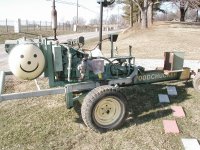
Here is a picture of my dads unit that includes a 4000 watt generator and overhead lights. This thing he built himself and has a hydraulic cylinder that allows the wheels to raise and lower the I-beam to the ground. I put many hours on this thing. Notice the fuel thank that will last two years.
 

Attachments

  • logsplitter.JPG
    logsplitter.JPG
    194 KB · Views: 13,637
 

Marketplace Items

Stertil Koni 18000lbs 4-Post Auto Lift (A61572)
Stertil Koni...
LAWN MOWERS/WEEDEATER/HEDGER (A67714)
LAWN...
1999 Express Trailers 22ft. T/A Enclosed Cargo Trailer (A66738)
1999 Express...
2013 CHEVROLET CAPRICE CAR (A66091)
2013 CHEVROLET...
TEREX 2300 TEREX 60TON CRANE (INOPERABLE) (A67714)
TEREX 2300 TEREX...
2017 Ford Explorer AWD SUV (A66738)
2017 Ford Explorer...
 
Top