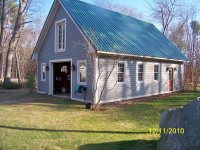
footings

   / footings #1  

lovemytoys

Gold Member
Joined
Jun 21, 2005
Messages
253
Location
andes ,new york
Tractor
bx24
im a little confused i been price footing and foundations and every one come back with diff sizes.one 8x10 another 8x16 and last 16x20
i can't get ahold go the inspector the guy with 16x20 said i need an 8 inch foundation wall .for a garage?
 
   / footings #2  
I am not sure what you mean by 8x10 ect. Here in Va most footers are 18" or 2' wide and 6" thick and an 8" block or 6"crete foundation wall would be correct for most cases.
 
   / footings #3  
I am a little confused also. There are only two measurements to the footer itself. Width, and thickness. Like Ed, most around me are 18-24" wide and 6-8" deep. Do I dont understand what you mean by 16x20???

And as far as the 8" foundation wall for the garage, that is correct. On a conventional stick build, They will dig below frost, pour the footer, and then lay 5 or 6 courses of block on top of the footer. Then you attach the ledger board to the block wall and build up.

It might help if we knew some more details as to what you are building or working on.
 
   / footings #4  
Trench with rebar:

DSCN5143.JPG


DSCN5125.JPG


Footer poured, block stacked:

DSCN5171.JPG


DSCN5170.JPG


DSCN5174.JPG


Sticks up, and partially sheathed:

DSCN5248.JPG


Apron poured:

DSCN5258.JPG


Getting there:

DSCN5400.JPG


Done:

DSCN5992.JPG


DSCN8268.JPG


Is that more or less what you are trying to do?

Wrooster
 
   / footings #6  
Trench with rebar:

....
Is that more or less what you are trying to do?

Wrooster

Really nice looking shop:thumbsup:. What size is it and how deep are your footing?
 
   / footings #7  
What size is it and how deep are your footing?
Note: you can count the blocks in the foundation. Each CMU is 16"x8"x8". :)

Seriously, though, internally the workshop is 13'x17'. I would have preferred at least twice the size (really -- who *doesn't* need a bigger workshop?) but alas it was a "rehab" of an existing structure and it was more straightforward for several reasons to rebuild the same size.

The top of the footings are at minimum 24" down from the finished grade, code here for a dwelling. Overkill for a workshop, but if you are going to go through the trouble you might as well do it right.

See Section 5.6 and Figure A-1 (in Appendix A) of the PDF here:
Structural Design Loads for One- and Two-Family Dwellings | HUD USER
--> http://www.huduser.org/Publications/pdf/strdesign.pdf

Here is a bigger JPEG of the map in Appendix A:
http://publicecodes.cyberregs.com/icod/oftdc/1998/images/ICODA2008081817542104946.jpg
The air-freezing index is defined as cumulative degree days below 32ºF. It is used as a measure of the combined magnitude and duration of air temperature below freezing. The index was computed over a 12-month period (July - June) for each of the 3,044 stations used in the above analysis. Data from the 1951-80 period were fitted to a Weibull probability distribution to produce an estimate of the 100-year return period.
For SI: ºC = [(ºF.)-32]/1.8.
FIGURE 403.3(2) AIR-FREEZING INDEX(ºF.) AN ESTIMATE OF THE 100-YEAR RETURN PERIOD

Wrooster

DSCN6923.JPG


DSCN6936.JPG
 
   / footings #8  
Thats real nice wrooster, I love the double doors.
I lost a *lot* of brain cells on them... LoL.

One day my wife came home from work, and I had taken the day off to finish top-coating the doors. She came downstairs into the basement and said, "Do you have *any* idea what the house smells like?". I said, "No, not really -- but do we own any old Jimi Hendrix LP's because I could really go for something like that!"

Wrooster

DSCN5931.JPG


DSCN5928.JPG


DSCN5970.JPG


DSCN5974.JPG


DSCN5997.JPG


DSCN6228.JPG


DSCN6232.JPG


DSCN6245.JPG


DSCN6242.JPG
 
   / footings #9  
The building codes, although standardized, are subject to interpatation by the local inspectors. They can require more but NEVER less than the codes dictate that have been acepted by their city/county. The footing sizes are always determined by zone i.e. frost depth. Small shallow footings will heave when the ground freezes and thaws under them leading to structual failure.
If your project is in a area that will be inspected, first, go to the inspection office and ask for information or to speak to an inspector if possible. You will probably feel that they do not want to help but keep in mind, most towns and counties are having financial issues and the staff is overworked, understaffed, under paid and most of all- constantly dealing with citizens and contractors who want it their way and not according to code. After a while of constant verbal abuse, they devolop a attitude right off the bat. Be polite and don't argue unless you KNOW they are wrong, you may find them easy to work with.

If not in a inspected area, seek a licensed/insured (verify) contractor with a established business and references.

Another note, there are lots of con artist that want you to get permit in your name and them do all the work because they are not licensed. They will take your money up front, do substandard work, and leave you with 100% responsibility. NO LICENSE or INSURANCE, NO WORK!!!!

Only my humble opinion as a Licensed Contractor!
 
   / footings
  • Thread Starter
#11  
ok i will see if i can explain this better .i called a comp.in to dig the footing and they said they will do a 8'x16' footing for $1700 .they also sent it to the company that does there cement work.he wants to do 16x20 footing for $2400.00 and 8"x4' fondation wall in cement for $3600.when i spoke to the inspector i said i was going to do 8x12" footing and he seamed fine with that .so i have 3 sizes of footings
 
   / footings #12  
lovemytoys,

Whats the size of your structure in total? The footers/footing is the base the buiding sits on. Is your garage/building 24x36' 30x40' and what are you building - in other words IT depends on your end project which hasnt been stated (unless I missed it)

In NY I would assume you need to be down at least 24-36" for a frost line or you can do a monolithic slab foundation like I have done in in NH 18" deep and 24" wide perimeter with lots of rebar and 6" core. It depends on local buildinig codes.

It also depends on what you are building a small 12x16 shed, a 24x40 garage, or a two story structure.

Please enlighten us as to your end project goal.

Carl
 
   / footings
  • Thread Starter
#13  
its a 16 x24 shed .guess my toys -tractor no cars or trucks and it 4 feet deep for footings
 
   / footings #14  
Here in NY frost line is going to be 42". Typical footer is twice the width of the wall being set on it. Therefore 8" block frost wall would need 16" wide footer 8" tall. The block should sit so that there is an equal amount of footer showing on both sides of block. Also the footer should have two continuous rows of #4 rebar, must be held up off ground when pouring footer. They make wire stands for this. Block with mortar amounts to 8" height, so you will need footer plus 6 courses of block to get above grade enough to keep framing dry. Hope this helps.

P.s. - Make sure the footer is poured LEVEL!!!! If not you are going to be screwed.
 
   / footings #15  
its a 16 x24 shed .guess my toys -tractor no cars or trucks and it 4 feet deep for footings

I would consider monolithic slab construction - essentially you scrape off the top soil and level the area, then dig a 24-30" x 18" wide around the perimeter, then add some crushed stone on the entire area, compact that and then set forms and rebar. The monolithic slab with a 18 x24 perimeter and rebar with a 6" interior concrete with the rebar will hold up in most climates.

It does depend on your subsoil and location - for instance you wouldnt do a slab on a 20 deg sidehill.

One last point about the size of your structure. It doesnt cost a lot more to do 24x36 than 16x24 and while you are at it build it big enough. Attached is my 24x36 mono slab build - two story clear span - no support posts on first floor.
 

Attachments

  • NY Regs Foundations.pdf
    452.3 KB · Views: 173
  • 100_0917.jpg
    100_0917.jpg
    1.1 MB · Views: 270
   / footings #16  
ok i will see if i can explain this better .i called a comp.in to dig the footing and they said they will do a 8'x16' footing for $1700 .they also sent it to the company that does there cement work.he wants to do 16x20 footing for $2400.00 and 8"x4' fondation wall in cement for $3600.when i spoke to the inspector i said i was going to do 8x12" footing and he seamed fine with that .so i have 3 sizes of footings

I guess I am wondering how the foundation or footing was poured physically. Whenever I poured a footing I always used 2x6s or 2x8s and set them about 16-24" apart and stake them in the ground. Put re-bar inside and pour and smooth off the cement. Your footings don't have 2x6s to hold the concrete at a certain width which seemed strange to me. It looks like they used the excavation as the border instead of boards. I just don't understand how they could get the top of the concrete level from one area the same as another area of the footing. Do you have any pictures of them actually pouring in the hole? The contractors must just have a different way of doing things, but it peaked my curiosity.:confused:
 
   / footings #17  
The size or very need of footings is based on area soil conditions. The 8" foundation wall is standard and anything thinner would be prone to breakage during backfilling. I would talk with some area house contractors or building inspectors to see what is customary in your location. If properly designed, a foundation safely spreads out the building loads on the underlying ground based on the loads and the soil bearing capacity. Most houses and garages really don't have much weight. There are instances in highly expansive soils where the foundation wall will be placed on the soil without anny footing to maximize the bearing capacity in an effort to limit future swelling and heaving. Around here, many garages are placed directly on "trenched" footings that are 8" wide without any bottom foundation and they act like a friction pile. As previously mentioned, some garages are placed on a "floating" slab which is a floor with a thickened edge. If frost is of little concern or you don't mind the building moving a little it can be an inexpensive alternative.
 

Tractor & Equipment Auctions

2014 Chevrolet Silverado 1500 Pickup Truck (A55973)
2014 Chevrolet...
2008 FORD F-550XL SUPER DUTY INSULATED BUCKET TRUCK (A60430)
2008 FORD F-550XL...
2022 CATERPILLAR 249D3 SKID STEER (A60429)
2022 CATERPILLAR...
2004 FORD F-350 SUPER DUTY (INOPERABLE) (A58214)
2004 FORD F-350...
2013 CHEVROLET SILVERADO EXT CAB TRUCK (A60430)
2013 CHEVROLET...
2007 FORD F750 XLT SUPER DUTY SERVICE TRUCK (A58375)
2007 FORD F750 XLT...
 
Top