Flat vs Horizontal

   / Flat vs Horizontal #1  

rmully

Gold Member
Joined
Sep 27, 2007
Messages
453
Location
North Carolina
Tractor
YM 2020
When a welding rod has a xx2x designation and says it if for flat or horizontal what the "H" is the difference .... seems the same to me. ??
 
   / Flat vs Horizontal #2  
Flat would be like welding on the floor.

Horizontal would be like welding in the wall, going left to right

Vertical is like welding on the wall going up and down

Overhead is like welding on the ceiling
 
   / Flat vs Horizontal #4  
Flat would be like welding on the floor.

Horizontal would be like welding in the wall, going left to right

Vertical is like welding on the wall going up and down

Overhead is like welding on the ceiling

That seems like a simple, yet very complete and easy to understand explanation. :thumbsup:
 
   / Flat vs Horizontal #6  
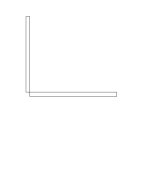
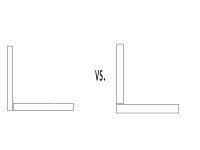
If you took a 2 pieces and made a 90 deg. joint that looked like a piece of angle iron and laid one piece flat on the table with the other side pointed vertically like an "L" would be a horizontal position weld. If the angle pieces were positioned like a "V" pointing up would be flat position. In a groove or butt weld, flat would be like the plates lying flat on the table and horizontal would be like they were mounted on the wall so you could weld left to right. Up and down would be vertical welding. Often times you have a combination of different positions.
 
   / Flat vs Horizontal #7  
I'm interested in technique on fillet welds (Mig). Is there any difference between the two configurations? Approach, whipping pattern?
fillet.jpg
 
   / Flat vs Horizontal #8  
A third option is this which I like to do

Open corner weld.jpg
 
   / Flat vs Horizontal #9  
With welding it's all about rod, torch, and gun angle. Don't believe me? Try welding pipe in the 5-G or 6-G positions. The angle changes all the time:confused2:. That's why it is so important to learn how to read the puddle. Once you learn to read the puddle then you can anticipate what you need to do ahead of time. Reading the puddle is so important to getting good / strong welds!;)
 
   / Flat vs Horizontal #10  
A third option is this which I like to do

View attachment 382157

That is the best and strongest way to do corner joints. You can make a perfect size fillet weld on the outside corner and don't need to weld the inside. Very common technique when building tanks where you can't get to the inside.
 
   / Flat vs Horizontal #11  
With welding it's all about rod, torch, and gun angle. Don't believe me? Try welding pipe in the 5-G or 6-G positions. The angle changes all the time:confused2:. That's why it is so important to learn how to read the puddle. Once you learn to read the puddle then you can anticipate what you need to do ahead of time. Reading the puddle is so important to getting good / strong welds!;)
Yes SA... I am doing better reading the puddle and thanks to your hands on training. Still wondering of there is a preferred orientation? I would guess that the vertical piece ideally should rest on the bottom piece vs vertical resting on ground and bottom piece butting up. Maybe it just doesn't matter? Anyways... Off on a business trip so I can't play myself.
 
   / Flat vs Horizontal #12  
Yes SA... I am doing better reading the puddle and thanks to your hands on training. Still wondering of there is a preferred orientation? I would guess that the vertical piece ideally should rest on the bottom piece vs vertical resting on ground and bottom piece butting up. Maybe it just doesn't matter? Anyways... Off on a business trip so I can't play myself.

Inside corner to inside corner is the best. The only time you might use something different is if the weldment you're working on doesn't allow it. :thumbsup: I worked in a shop with a second year apprentice who figured he was the lead hand, even though I was hired to be the shop supervisor (that's another story). He was building 4' square fire boxes and cutting a bunch of the plates smaller to fit inside the other plates and then getting other guys to go inside a manway to weld the inside. I tried to explain he could cut all the plates the same size and he wouldn't have to weld the inside but he thought he knew everything. Even worse was that the boxes had an angle iron frame around the outside as well. Not only was there a lot of wasted time and weld, the outside welds had to be ground flat to fit the angle iron frame on the outside. With inside corner to inside corner, there'd be very little grinding required to fit the angle iron. More time was spent just on the extra welding and grinding than what the entire boxes should have taken to complete. Anywhere else a guy like that would probably be run off for taking 3 times longer to a job because he "knew it all".
 
   / Flat vs Horizontal #13  
Still wondering of there is a preferred orientation?
dragon just like Arc welds is saying. When ever you can set them up corner to corner! Nest best is to bevel the the top plate.
 

Attachments

  • Tack.jpg
    Tack.jpg
    95.6 KB · Views: 117
  • Tack weld 2.jpg
    Tack weld 2.jpg
    69.9 KB · Views: 117
  • Full pin 1.jpg
    Full pin 1.jpg
    126.4 KB · Views: 116
  • Full pin 2.jpg
    Full pin 2.jpg
    134.6 KB · Views: 120
   / Flat vs Horizontal #14  
Inside corner to inside corner is the best. The only time you might use something different is if the weldment you're working on doesn't allow it. :thumbsup: I worked in a shop with a second year apprentice who figured he was the lead hand, even though I was hired to be the shop supervisor (that's another story). He was building 4' square fire boxes and cutting a bunch of the plates smaller to fit inside the other plates and then getting other guys to go inside a manway to weld the inside. I tried to explain he could cut all the plates the same size and he wouldn't have to weld the inside but he thought he knew everything. Even worse was that the boxes had an angle iron frame around the outside as well. Not only was there a lot of wasted time and weld, the outside welds had to be ground flat to fit the angle iron frame on the outside. With inside corner to inside corner, there'd be very little grinding required to fit the angle iron. More time was spent just on the extra welding and grinding than what the entire boxes should have taken to complete. Anywhere else a guy like that would probably be run off for taking 3 times longer to a job because he "knew it all".
Well okay then... I will stop overlapping and start doing it right!
 
   / Flat vs Horizontal #15  
Open corner outside welds are one of my favorite welds in steel and aluminum - no grinding required, just cut exact sizes needed and weld it up :D

....yeah, I'm a lazy welder and like to eliminate grinding when I can :laughing:
 

Tractor & Equipment Auctions

2018 MACK GU813 DUMP TRUCK (A59823)
2018 MACK GU813...
2008 TRANSCRAFT 48X102 STEEL FLATBED (A58214)
2008 TRANSCRAFT...
2013 Ford F-450 Dump Truck (A59230)
2013 Ford F-450...
404 (A52706)
404 (A52706)
GEARMATIC WINCH (A58214)
GEARMATIC WINCH...
2013 CATERPILLAR 336E L (A58214)
2013 CATERPILLAR...
 
Top