Barn Roof repair...looking for some tips

   / Barn Roof repair...looking for some tips #1  

chado613

Bronze Member
Joined
Feb 10, 2015
Messages
84
Location
Kingston, Ontario, Canada
Tractor
IH 624, IH B414, Kubota RTV 900, Kubota M7060
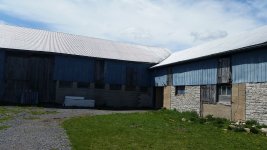
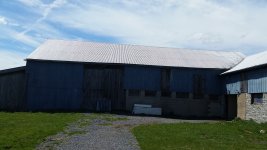
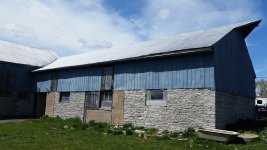
I have a 350-400 sq ft steel roof on an old barn that has numerous leaks. I suspect the leaks are coming from the washers around the nails have degraded.

Unfortunately it is very hard to identify where exactly the leaks are coming from, seems like its different every rain storm. Also I am not a huge fan of climbing up there.

My plan of attack is to go up on the roof with black jack ultra white (BLACK JACK White Ultra Roof 1 18.9 L White Roof Coating | Lowe's Canada) , some leak seal, some caulking, some new roofing screws and of course a safety harness

Some of the worst areas, I intend to cover all the screws with a dob of blackjack, replace any screws that are obviously messed up and caulk and leak seal as needed.

Any other tips from anyone out there??


20160507_143731_1463415110068.jpg20160507_143734_1463415109943.jpg20160507_143736_1463415109558.jpg
 
   / Barn Roof repair...looking for some tips #2  
Can you work with a partner who is inside watching while you run a water hose or bucket over the fasteners and seams ? Otherwise its gonna be a long Summer.
 
   / Barn Roof repair...looking for some tips #3  
Wait for a warm sunny day, after the snow has slid off, and go up there. That way the snow cushions your fall.

The thing to do would probably be to replace the nails with screws. But that would talk along time. A metal roof really shouldn't need caulking, unless you have something on it or through it, and then, caulking is supposed to be secondary, but often is primary.

I learned from a roofer to put the caulking under the metal, so the sun doesn't degrade it, when putting new metal on.

I don't like goin up on a metal roof with a 5 or more pitch.

You can screw a board along the bottom, to rest your feet against, for stability. Maybe bring bucket around.

What are you going to tie off to? That is the tough part. Don't tie off to the wifes car, on the other side, unless the keys are in your pocket.
 
   / Barn Roof repair...looking for some tips #4  
I think you are wasting your time with the roof coating. More then likely, the leaks are caused by the fasteners holding the roof in place. While it could be the gaskets, it is also very likely that over time, movement in the roof has loosened the nails and allowed the roof to move during a storm. If you do not stop this movement, nothing will seal it.

You need to remove the nails and install screws. This is a very slow, tedious task. It's not very expensive, but the learning curve to get the nails out and install the screws quickly is going to take some time.
 
   / Barn Roof repair...looking for some tips #5  
I just replaced a metal roof that was nailed. The best technique was to use a pry bar and a claw hammer. Use the hammer to tap the pry bar under the nail. Then place the hammer head flat between the roof metal and the pry bar. This saved the roof from damage and provides a good angle to remove the nail.

Definitely replace with screws.
 
   / Barn Roof repair...looking for some tips #6  
I was once involved in building a barn for a small private school where I was the only one present that had ever actually built one. The other volunteers vetoed my premise that the nails go on the top of the corrugation not in the valley "because it was too hard to nail on the top and they would hurt their fingers, besides the gasket will seal the hole". Of course it leaked immediately they couldn't pull the nails because they were in the valley. They put some roof cement on the nails but that lasted a short time then they poured some coating on it & that helped some but looked terrible. Getting the nails out of the ridge of corrugated steel is easier but is still a chore unless you have that wood that matches the corrugation under the metal may be made of foam now. If you don't you can make a support board from that same wavy board and another board glued to it this will give you something to push on with the hammer when pulling the nails and wont bend the steel. Or you could use a piece of the steel to mark a 2 x and cut it with a saber saw. Your roof sure looks steep to me. Be careful.
 
   / Barn Roof repair...looking for some tips #7  
I was once involved in building a barn for a small private school where I was the only one present that had ever actually built one. The other volunteers vetoed my premise that the nails go on the top of the corrugation not in the valley .

The nails or screw do go in the valley, or flat spot, not on the ridges. Maybe I am not understanding you. Did you want to put them through the 1" or whatever ridge? That is the wrong way to do it.
 
   / Barn Roof repair...looking for some tips
  • Thread Starter
#8  
I was wondering hoe effective the roof coating would be. My thinking is that it would have been faster to put a blob over the existing screws than to replace them all. I also figured it wold be more of a pain if and when I ever had to take the screws out.....I should have already gone up there and done a better inspection...for those interested I will provide a more detailed report after this weekend :).
Thanks all for your input so far
 
   / Barn Roof repair...looking for some tips #9  
The nails or screw do go in the valley, or flat spot, not on the ridges. Maybe I am not understanding you. Did you want to put them through the 1" or whatever ridge? That is the wrong way to do it.

Oddly, different metal roofing manufacturers will say to do it each way. The advantage to doing it on top of the ridges is it's out of the valley and less likely to leak. Disadvantage is that it will allow the metal to move more then when it's attached through the valley. Biggest advantage to securing the metal through the flat valley is that it's more secure as it's direct metal roof to purlin contact. If attached properly, the rubber washer will never have any problems keeping water out. When there are leaks from screws through the valley, it's always because the screw was over tightened and the rubber washer breaks or becomes dis formed.
 
   / Barn Roof repair...looking for some tips #10  
The nails or screw do go in the valley, or flat spot, not on the ridges. Maybe I am not understanding you. Did you want to put them through the 1" or whatever ridge? That is the wrong way to do it.

Morton has about 250,000 buildings that say otherwise. Depends on how panels are designed and thickness, etc. I have resided old wood barns and built sheds with cheaper siding that you had and were recommended to screw on the flat part. Morton panels, not so much, ridge is higher and stronger with thicker gauge steel.

On a side note, I have three Morton buildings. On one 6 years old had a leak at one screw on the ridge. Called salesman who used to be a crew worker. He stops out, say worst thing you can do is put a blob of caulk on. He replaced it for free. Said in 28 years with company has yet to charge a customer for a roof leak.
 
   / Barn Roof repair...looking for some tips #11  
Never use caulk or silicone on a roof for anything. If you have screws and the cause of the leak is the rubber gasket, it's best to replace the screw. Having said that, there are plenty of roofs out there where you just cant tell what screw is the cause of the leak. In those cases, using roofing flashing sealant designed for a roof works well. It's very important that it's specifically designated for metal roof flashing. Everything else will fail. It doesn't take very much, and it's important to work it in with your finger all around the screw head to make 100% sure that you sealed the leak.

This does not work for nails. Nails are failing because they are working their way out. Hammering them back in just prolongs the problem. Covering them with roofing sealant will only last a short amount of time because it does not stop the movement happening with the roof.
 
   / Barn Roof repair...looking for some tips #12  
The nails or screw do go in the valley, or flat spot, not on the ridges. Maybe I am not understanding you. Did you want to put them through the 1" or whatever ridge? That is the wrong way to do it.

To be clear when I was building barns it was over 40 years ago and was helping my father as a teenager. The fasteners we used were nails that had a thick lead coating on the head. We called them lead heads. The lead was suppose to help with several issues. 1 prevent the nail head from rusting out, I live on the coast and everything rusts here. 2 increase the size of the head to help keep the corrugated metal from pulling through and keep water from entering nail hole. 3. Seal the nail hole I don't think the seal was very good. To keep water from entering the hole the nails were placed on the ridge, water runs down hill and gravity works 100% of the time. We uses pliers to hold the nails when we drove them in, to save fingers, it is much harder to drive in the top because the metal flexes and absorbs some of the energy and the nail wants to deflect we also wore safety glasses since the nails would try to get away. My Dad was a project engineer for Chicago Bridge and Iron so I will defer to him for the construction practices of the day. This was way before rechargeable screw guns even sheetrock was still nailed up. I am sure some practices have changed but water still runs down hill and my barn doesn't leak.
 
Last edited:
   / Barn Roof repair...looking for some tips #13  
I'd probably plan on replacing all out dated nails with screws, those rubber washers are most likely deteriorated.
When I put my 16' metal roof on, I had 2 short 8' wooden ladders, secured them together, fasten a 2x6 on top of the ladder to hook on the roof, also had rope secured tight with turn-buckle, from one peak to the other, had another rope with quick connect link to hook on the top rope, that rope is going down the roof and had 3 small loops to hook into with another quick connector link that was on another rope around me, plan B was to have the rope around my wife.

Side note, my roof is screwed on the high part, pre-drilled, 2' on center-ish, My theory was, metal roof moves, movement on something sealed causes breaking seal, constantly breaking seals causes leaks, and leaks causes car to be used to get stuff to fix leaking problem, car being used burns gas, burning gas causes global warming, and global warming creates more government regulations, and we don't wanna go there........................
 
   / Barn Roof repair...looking for some tips #14  
Oddly, different metal roofing manufacturers will say to do it each way. The advantage to doing it on top of the ridges is it's out of the valley and less likely to leak. Disadvantage is that it will allow the metal to move more then when it's attached through the valley. Biggest advantage to securing the metal through the flat valley is that it's more secure as it's direct metal roof to purlin contact. If attached properly, the rubber washer will never have any problems keeping water out. When there are leaks from screws through the valley, it's always because the screw was over tightened and the rubber washer breaks or becomes dis formed.

I tend to think you people in TX just do things funny. Maybe intellectual incest.

Ice coming down the valley is going to be coming down the ridges too. Both are flat surfaces.


I have seen a few buildings, and read up a bunch before doing my first. None of them said to it on the ridge. I suppose there may be some put there that do. Seems you would have to be real careful screwing into a hollow, and having good fit with gasket. Especially with a hammer. As opposed to metal laying directly on a perlin.
 
   / Barn Roof repair...looking for some tips #15  
To keep water from entering the hole the nails were placed on the ridge, water runs down hill and gravity works 100% of the time. .

Don't you pitch your roofs? The ridge and flat, are at the same angle. The only difference is it is hollow under ridge.
 
   / Barn Roof repair...looking for some tips #16  
I have always screwed into the TOP of the ridges as suggested by my supplier for a roof.
With cordless drills and adjustable clutches it is a a snap.

For siding always on the flat.

We once roofed 2ea 60' X 200' barns with Makita 9 volt drills, 4 batteries and 2 chargers.
That was about 16 years ago and no leaks.
Pitches were 4/12. Very long sheets as each side was done one piece.
We would clamp the metal with a pair of vice grips and haul each sheet up one by one.
 
   / Barn Roof repair...looking for some tips #17  
Does any have links to a supplier that recommends this? I am curious why they would. I would think getting proper compression would be am issue, especially with a hammer.
 
   / Barn Roof repair...looking for some tips #18  
I second the nail replacement with screw choice. You put a glob of sealant on the nail, it snows and pushes the metal down and breaks the seal, the snow slides off, the weather gets warmer, the roof leaks. just my 2cents.
 
   / Barn Roof repair...looking for some tips #19  
Although I will defer to the northerners as to how to build barn roofs for snow and ice, I can guarantee that you haven't seen the the wind and rainfall we have here. I came home after the last hurricane and the "tin" was still on the barn so I guess the funny way we do things in Texas works well or us. As for those states directly to the north of us although your cyclones are a little smaller I doubt where or how many nails or screws you use in your barns would matter much in a direct hit.
 
   / Barn Roof repair...looking for some tips #20  
Side note, my roof is screwed on the high part, pre-drilled, 2' on center-ish, My theory was, metal roof moves, movement on something sealed causes breaking seal, constantly breaking seals causes leaks,

and leaks causes car to be used to get stuff to fix leaking problem, car being used burns gas, burning gas causes global warming, and global warming creates more government regulations, and we don't wanna go there........................
I am confused, what did you do to stop the movement from effecting the washer? Any where there is metal there will be movement. I believe as long as the washer isn't stuck to the metal, you are probably ok. Otherwise they would all be leaking.

Though if you are serious about believing in global warming, you may not be someone to ask. Burning gas is my joy in life.

I can really hear the roof move, it is annoying. More insulation might help, block the sound. If they sheeted it, would have helped too. Would have added weight, and we get a few feet of snow. But I think they did to save money.
 

Tractor & Equipment Auctions

NEW HOLLAND 706 30 INCH 3PT DIRT SCOOP (A55315)
NEW HOLLAND 706 30...
2025 Nationcraft 8.5X36TTA3 38ft Tri-Axle Enclosed Trailer (A59231)
2025 Nationcraft...
2016 INTERNATIONAL PROSTAR (A59904)
2016 INTERNATIONAL...
Pallet of Miscellaneous Duplex Polyester Webbing Slings (A56858)
Pallet of...
1992 AM General M998 HMMWV 4x4 Humvee Truck (A59230)
1992 AM General...
UNUSED FUTURE FT90 PLATE COMPACTOR (A52706)
UNUSED FUTURE FT90...
 
Top