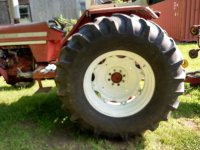
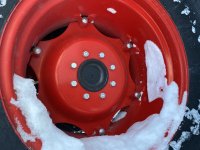
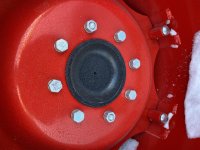
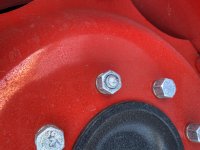
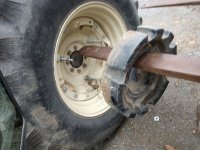
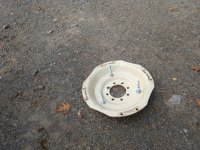
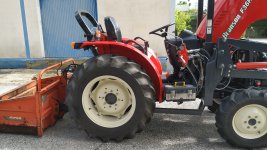
Flat rear tires on tractors are sort of a rarity. I suspect filling them with liquid ballast further reduces the chance of a flat. Come to think of it, in 40 years of tractoring I have never had a rear tire flat. (I have had a few flats on front tires though). I suppose some people do have a rear flat occasionally, but I sure wouldn't let that fear deter me from filling the tires. I suspect the reason they don't put holes in rims anymore is because not that many people put on wheel weights. I haven't checked out the price of wheel weights, but I can't imagine steel or cast iron being even being close to competitive in cost per lb compared to any liquid ballast.
I would have to say that depends on your circumstances,
Yes an individual with one tractor in low hour usage will likely seldom ever have a flat.
Just as many people will seldom have a flat with a car or pickup,
which is why so many can not perform a simple (to many) tire change.
The more tractors involved the more tires involved the more hours use per year and the more critical the equipments use,
the more likely hood of a flat.
When several tractors are involved or even just one when any down time can become a critical stopage,
the ability to self repair and patch or get by for a day or 2 becomes more important.
An air filled tire with bolt on weights can be plugged or the tube patched in just a couple of hours and be back in service,
the same tire if liquid filled becomes a major time issue and cost.
Pumping the fill that hasn't spilled or leaked, cleaning and drying the tire and or tube plugging and or patching then,
then reassembling and refilling it has become most of a day project.
Or calling in a mobile service truck to do the work with the tractor or equipment being down for a day or two and a major cost.
As far as liquid filling reducing the chance of a flat I don't believe so.
As far as the cost, yes iron does cost more, a bit over a dollar a pound.