Generator/Electrical Question

   / Generator/Electrical Question #1  

diesel85

Veteran Member
Joined
Jun 7, 2017
Messages
1,158
Location
Vernon, NY
Tractor
Kubota BX2200
I think I'm on the right track, but I want to ask folks before doing something messed up or potentially killing others or myself.

So I finally broke down and got a nice brand new generator at a very good price it's a 9kw portable genset. I plan on using it to power my 1/2HP (240v) well pump, my forced air gas furnace (120v), and a few LED lights when the power goes out.

On my house, I have an outdoor 6-50P receptacle for my welder which is directly fed to my main breaker panel for the entire house. Right next to the 6-50P receptacle is the grid's meter, and of course the grounding rod for the house.

My welder breaker happened to be right below the main circuit breaker for the whole house, so I installed an interlock with a LOTO. This way I can't inadvertently back feed into the grid and potentially kill a grid worker or some one else.

My only other question is the wiring of the genset. On the genset I got the usual L14-30P receptacle. The genset's neutral is bonded to the frame of the genset according to the manual and the front of the genset. It tells you to ground the genset frame.

I bought the materials to make a 6-50 to L14-30 adapter. I wired it up as follows:

6-50=L14-30
G=G
HOT=X
HOT=Y
empty=N

I plan on using a 6ga wire and ground the frame of the genset to the existing house grounding rod right below the meter and next to the 6-50P receptacle where I intend to temporarily run the genset.

I know this isn't OSHA or NEC approved, and this isn't a permanent installation. It is strictly for those situations when I absolutely need water, heat, and a few lights.

Main concerns:

1. I don't want to jeopardize the safety of a grid worker.
2. I don't want to touch metal casework in the house and get a nice jolt or die.
3. I don't want to touch the genset and get a nice jolt or die.

This is why I am asking before I just "do". :)
 
   / Generator/Electrical Question #2  
The third wire on your genset is neutral, not ground. That is why a ground is advised. Ground the frame of your genset to the house ground, a ground rod, or a metal water pipe. I'd be more concerned about preventing the panel from feeding back into the grid. At the very least you should plan on disconnecting or tripping the main breaker in the panel before you back feed from your welder outlet. The LOTO is a nice touch but you've not identified your system there. A transfer switch is the normal solution and depending on your situation the electrical utility may have to drop power while you wire this switch.
 
   / Generator/Electrical Question
  • Thread Starter
#3  
The LOTO I am referring to is on the main 200 amp breaker from the grid so there won't be back feed. It will be in the OFF position with a LOTO while the genset is running to prevent this from happening.

So instead I should re-wire my adapter as:
6-50=L14-30
G=empty
HOT=X
HOT=Y
G=N
 
   / Generator/Electrical Question #4  
Have a problem with your configuration..... The NEMA 6-50R receptacle is NOT for a generator hookup..... If you use any male end plug on end of cord from generator it has bare exposed conductors and if generator is operating you have a shock hazard or short circuit hazard at end of cord if it is out in free air....

And you description of a 6-50P for welder is wrong, it should be a 6-50R.... "P" is for plug (male) "R" is for receptacle (female)....

A LOTO (Lock Out Tag Out) is fine IF you remember to use it, a proper transfer swath preforms that duty merely by design and eliminate on step that may be unsafe....

Skip the micky motion and get a true transfer switch/distribution panel and use proper cords (plugs and receptacles) between generator and transfer switch .... Might be quite a shock to your "sweet thing" (wife or lover) to see you laying in the snow at 5 AM because you did something wrong just to get water into house and brew a cup of Joe....

Do it by NEMA specs so you don't jeopardies anything on your points 1 to 3 on your list.... Just remember to do temporary things well as they tend to become permanent...

For clarity there is no neutral on a 240 VAC circuit....
A neutral is return path for 120 VAC circuit...
A "ground" is a safety ground to prevent shock hazard and yes bonded to neutral at breaker panel and also to a driven ground rod...

Generator has L14-30R receptacle and a proper transfer switch should have proper L14-30P plug (shrouded male) if you use a proper plugs and proper cord (male one end, female on other) all the temporary garbage and adapters and funny redneck wiring goes away....

And transfer switch should be after "MAIN" breaker (200AMP ) and should not require utility company to drop power for installation of transfer switch.... Your 200AMP "MAIN" breaker disconnect at meter box should disconnect you (your distribution panel) from utility system...
 
Last edited:
   / Generator/Electrical Question #5  
I think I'm on the right track, but I want to ask folks before doing something messed up or potentially killing others or myself.

So I finally broke down and got a nice brand new generator at a very good price it's a 9kw portable genset. I plan on using it to power my 1/2HP (240v) well pump, my forced air gas furnace (120v), and a few LED lights when the power goes out.

On my house, I have an outdoor 6-50P receptacle for my welder which is directly fed to my main breaker panel for the entire house. Right next to the 6-50P receptacle is the grid's meter, and of course the grounding rod for the house.

My welder breaker happened to be right below the main circuit breaker for the whole house, so I installed an interlock with a LOTO. This way I can't inadvertently back feed into the grid and potentially kill a grid worker or some one else.

My only other question is the wiring of the genset. On the genset I got the usual L14-30P receptacle. The genset's neutral is bonded to the frame of the genset according to the manual and the front of the genset. It tells you to ground the genset frame.

I bought the materials to make a 6-50 to L14-30 adapter. I wired it up as follows:

6-50=L14-30
G=G
HOT=X
HOT=Y
empty=N

I plan on using a 6ga wire and ground the frame of the genset to the existing house grounding rod right below the meter and next to the 6-50P receptacle where I intend to temporarily run the genset.

I know this isn't OSHA or NEC approved, and this isn't a permanent installation. It is strictly for those situations when I absolutely need water, heat, and a few lights.

Main concerns:

1. I don't want to jeopardize the safety of a grid worker.
2. I don't want to touch metal casework in the house and get a nice jolt or die.
3. I don't want to touch the genset and get a nice jolt or die.

This is why I am asking before I just "do". :)
True story:
My neighbor wired his generator exactly as you propose. I advised him against it. Well, we were having a windy day and flickering lights. My neighbor was at work but since my shop is on my property my neighbor's wife called me to help with plugging in the generator. The power was still on but she wanted to be ready. She couldn't get the plug to go into the generator receptacle. I went over there. I asked if the breaker for the generator was in the off position and if the cord was unplugged. She said yes. The breaker panel and the receptacle for the generator cord was inside a storage room off of the carport behind a closed door so I couldn't see it. I looked at the plug and one leg was bent in a little so that's why it wouldn't go in. I grabbed the thing and it shocked the crap out of me. I should have personally checked but I did not. My neighbor's wife thought her husband had not plugged the cord in. And that the breaker it fed was off. I'm lucky I wasn't killed. If the plug had gone into the generator it would have destroyed the generator. I wish it had. I'm still pissed at myself for letting my neighbor do something so stupid. And because I trusted someone else to assure me that the power was off. Please just do the job right. There is a good reason to follow the NEC rules. They weren't made up just for fun.
Eric
 
   / Generator/Electrical Question
  • Thread Starter
#6  
I know that it's what I call a "deathdapter".

The only problem with the transfer switch, is that it doesn't have enough circuit space on it. Most of them are 10 circuits only. I want to be able to power the entire panel, and selectively choose what I want on the genset if need be.

From reading on Cutler Hammer, and Eaton's information books, my interlock kit I installed between my 200AMP and 50AMP breakers will work. It's common practice when situations exist when an entire panel needs to be energized.

It's just the extension cord I am using, I know, it's not the norm.

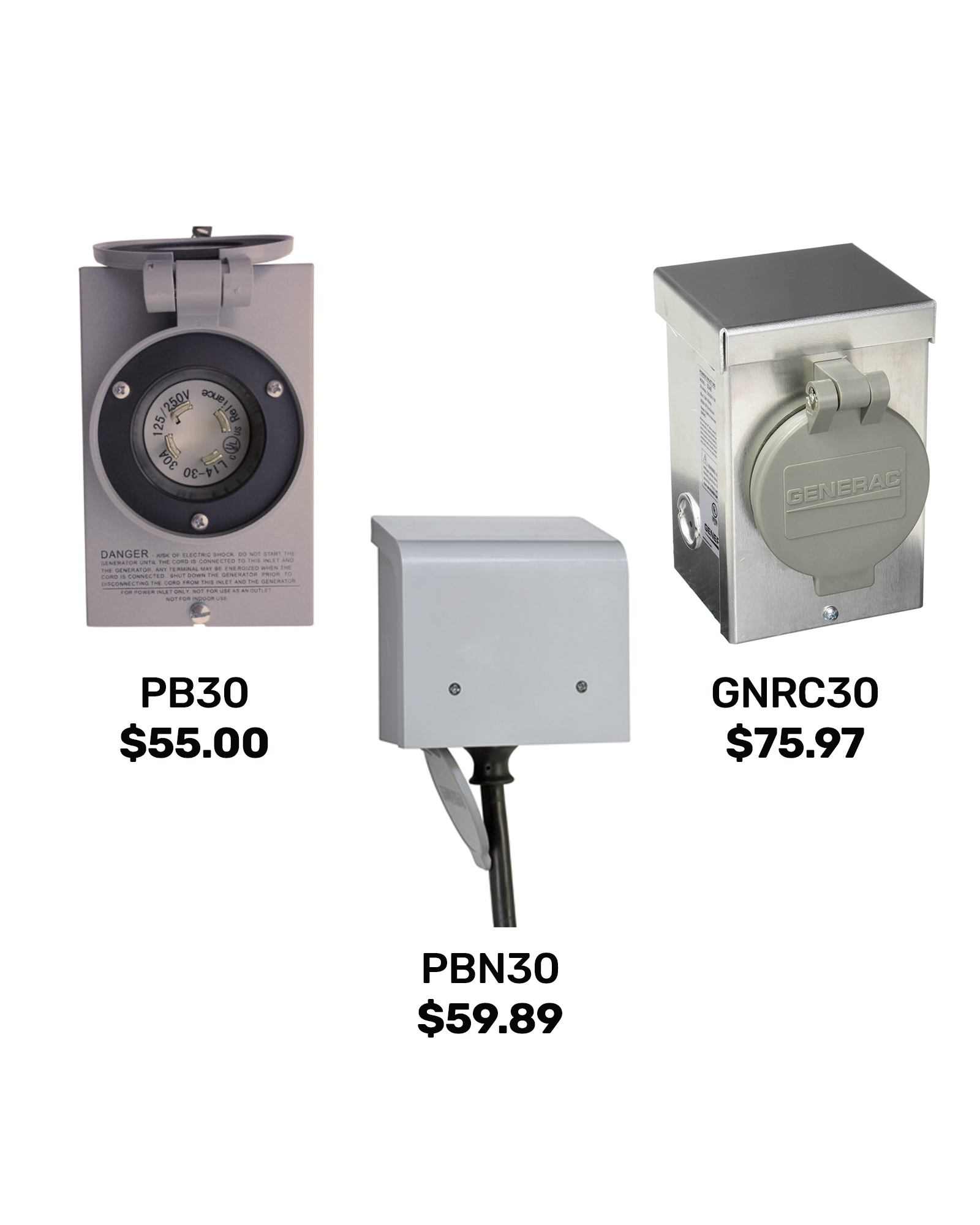
So I decided I am going to get a manual transfer switch and put yet another plug outside.
 
   / Generator/Electrical Question #7  
I know that it's what I call a "deathdapter".

The only problem with the transfer switch, is that it doesn't have enough circuit space on it. Most of them are 10 circuits only. I want to be able to power the entire panel, and selectively choose what I want on the genset if need be.

From reading on Cutler Hammer, and Eaton's information books, my interlock kit I installed between my 200AMP and 50AMP breakers will work. It's common practice when situations exist when an entire panel needs to be energized.

It's just the extension cord I am using, I know, it's not the norm.

So I decided I am going to get a manual transfer switch and put yet another plug outside.
Your first post said LOTO, not interlock. Big difference. Good idea to get the plug for outside and the proper cord end. Then you won't have a suicide cord.
Eric1
 
   / Generator/Electrical Question #10  
I do this for a living…and im still alive. Would not be if i fed a house the way you want to.

go here. Generator Interlock Kits | Electrician Interlock Kits | GenInterlock

chose an interlock that works with your panel. Run a dedicated generator interlock outlet OUTDOORS and feed it with 4 wire, 10/3 romex with ground , for 30 amp generator. The generator HAS to have a 4 wire, 240 outlet.

use anproper generator inlet receptacle so you dont use a suicide cord.
the interlock absolutely prevents backfeeding, plus you can access entire panel

a welder outlet does not use a neutral wire. Using this to backfeed panel with generator can destroy lots of sensitive electronics. Using ground path for neutral is an absolute no no.
 
   / Generator/Electrical Question #11  
I use this simple 240 Volt, 30 amp switch (w/interlock) for well only. Use a 100 Ft 12 Gauge extension cord from generator (120 Volt receptacle) to power up fridge and coffee pot .... Kind of primitive living but easily survivable and comfortable.... Water is my main concern...


Full option would be a 200 AMP "Transfer switch" (w/interlock) and not fool with anything less that is prone to cause a lot of mischief and problems...
 
Last edited:
   / Generator/Electrical Question #12  
I use this simple 240 Volt, 30 amp switch (w/interlock) for well only. Use a 100 Ft 12 Gauge extension cord from generator (120 Volt receptacle) to power up fridge and coffee pot .... Kind of primitive living but easily survivable and comfortable.... Water is my main concern...


Full option would be a 200 AMP "Transfer switch" (w/interlock) and not fool with anything less that is prone to cause a lot of mischief and problems...
thats a pretty cool little switch, never seen that one before
 
   / Generator/Electrical Question #13  
It does what I want, its wired in after my pump "breakers" in main panel .... When I got it several years ago it was only $125.... It also has the L14-30P (shrouded) for generator pigtail on bottom....
 
Last edited:
   / Generator/Electrical Question #14  
I have a 10 KW generator on wheels. I had an electrician install an interlock and an outdoor male receptical specifically for a generator. All by the book. I've done some wiring, including industrially, but it's such a safety (and liability) issue, on this one I decided to make it official. It powers my whole breaker panel.

I could probably use something more "creative" without a problem, but... what if I was sick? what if it was somebody else trying to make it work? what if we had to move away and the next owner was clueless? and on, and on.

It really wasn't that expensive to have it done in a foolproof way.

With power wiring, it's a bad idea to have anything arranged in such a fashion that other people would not expect.

I love surprises, but not if it involves lethal voltage.
 
   / Generator/Electrical Question #15  
I have a 10 KW generator on wheels. I had an electrician install an interlock and an outdoor male receptical specifically for a generator. All by the book. I've done some wiring, including industrially, but it's such a safety (and liability) issue, on this one I decided to make it official. It powers my whole breaker panel.
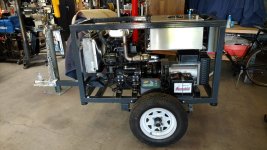
That's what I have too, 10KW powered by a 3 cylinder Yanmar, and I installed the receptacle on the house near the meter and the required interlock on the breaker box.
I got to use it a few weeks after I installed it when a storm knocked some power poles down. It powered the whole house, well pump, A/C and all with no problems.

IMG_20210811_142241190 (Medium).jpg
 
   / Generator/Electrical Question #16  
That's what I have too, 10KW powered by a 3 cylinder Yanmar, and I installed the receptacle on the house near the meter and the required interlock on the breaker box.
I got to use it a few weeks after I installed it when a storm knocked some power poles down. It powered the whole house, well pump, A/C and all with no problems.

View attachment 723576
Really clean looking genny and setup....
 
   / Generator/Electrical Question
  • Thread Starter
#17  
I really like the smoke stack and the anodized fittings.
 
   / Generator/Electrical Question #18  
That's what I have too, 10KW powered by a 3 cylinder Yanmar, and I installed the receptacle on the house near the meter and the required interlock on the breaker box.
I got to use it a few weeks after I installed it when a storm knocked some power poles down. It powered the whole house, well pump, A/C and all with no problems.

View attachment 723576
O my goodness me, yes, this is about the cleanest looking engine and generator I've seen. Mine is crammed together and much of it is hidden as if being able to service it would be an embarrassment to the maker. And it's streamlined on the outside, as if people are going to race it. In reality, when it's running, having it rocketing away on its cheesy plastic casters would be on of the last things I'd want.
 
   / Generator/Electrical Question #19  
O my goodness me, yes, this is about the cleanest looking engine and generator I've seen. Mine is crammed together and much of it is hidden as if being able to service it would be an embarrassment to the maker. And it's streamlined on the outside, as if people are going to race it. In reality, when it's running, having it rocketing away on its cheesy plastic casters would be on of the last things I'd want.
Thanks, I built it from scratch over a 20 year period. Long story.
Better picture.
 

Attachments

  • IMG_20210529_183928976 (Custom).jpg
    IMG_20210529_183928976 (Custom).jpg
    656 KB · Views: 138
   / Generator/Electrical Question #20  
I know that it's what I call a "deathdapter".

The only problem with the transfer switch, is that it doesn't have enough circuit space on it. Most of them are 10 circuits only. I want to be able to power the entire panel, and selectively choose what I want on the genset if need be.

From reading on Cutler Hammer, and Eaton's information books, my interlock kit I installed between my 200AMP and 50AMP breakers will work. It's common practice when situations exist when an entire panel needs to be energized.

It's just the extension cord I am using, I know, it's not the norm.

So I decided I am going to get a manual transfer switch and put yet another plug outside.
I had very similar circumstances you are having now.
Hope the following video I uploaded could be little help you understanding the electric wiring
John


Tractor & Equipment Auctions

2020 CHEVROLET SILVERADO CREW CAB TRUCK (A59823)
2020 CHEVROLET...
2018 Freightliner M2 106 AWD Altec AA55 56ft. Insulated Material Handling Bucket Truck (A60460)
2018 Freightliner...
2021 XCMG CV123PDU ROLLER (A60429)
2021 XCMG CV123PDU...
HYD QUICK ATTACH STUMP GRINDER (A52706)
HYD QUICK ATTACH...
Miller Big 40 Portable DC Arc Welder Generator (A55973)
Miller Big 40...
2008 CHEVROLET C8500 DUMP TRUCK (A59823)
2008 CHEVROLET...
 
Top