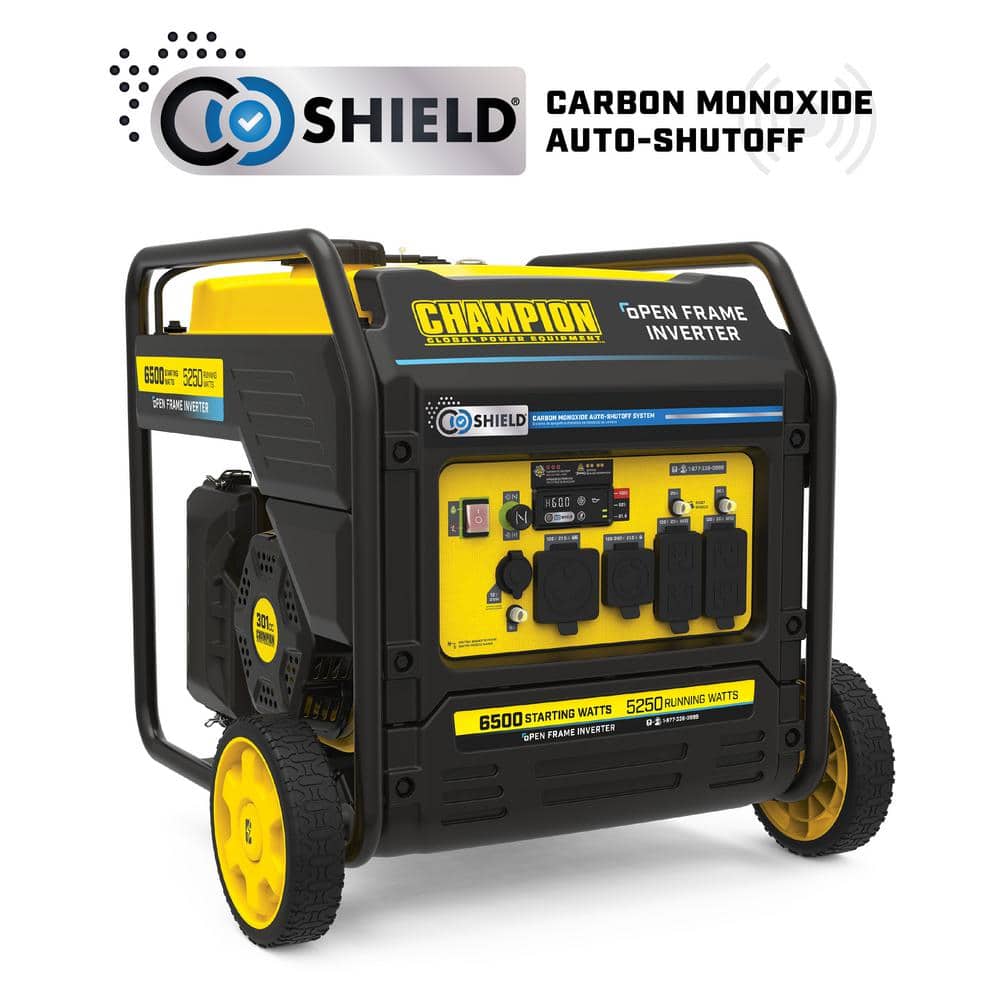
Generators, sizes and fuel options?

   / Generators, sizes and fuel options? #81  
I just skimmed the thread, hopefully not too much repeat here.

My area gets multiple-days power outages in the summer (because of <10% humidity + decent winds = power line fires) - hopefully less as they update power lines and better maintain the ROW's - and short to medium length outages in the winter (last January, out power went out for a day, but some friends a few miles away lost power for three weeks because of the same storm).

The biggest problem with an automatic transfer switch is that it's going to use up all of your fuel in a hurry. The typical generator is not exactly sipping fuel even at idle, unless you really shell out and get a diesel. The automatic transfer switch will power up that generator at 2AM when the power fails and though you've got 300W draw in the house, you're still using 1/2gph. This is fine, if you've got 250-300 gallons available and you're only expecting to have a couple days failure. A week? It's gone and you're out of power.

For DIY-ish people, my strong suggestion is a manual transfer switch for specific circuits - water well, a couple lights, furnace/heat pump, maybe something else. You connect your generator and run it manually and it will last a long time, because you turn the damn thing off as soon as you don't really have to have power.

We've had that setup, and I ran this place during an extended power outage when there was a (very) nearby forest fire and kept our fridge and deep freeze going, plus intermittent use of the well when we came back, with a 3.5kW generator - it wasn't on all the time; we just ran it occasionally to re-chill the stuff or when we really needed to flush. It's a hassle, but a 3.5kW generator barely uses any fuel this way.

I've put a lot of thought into doing a whole-house genset (and I plan to do it), but my situation is a bit different. I've got solar, plus batteries, and the whole house automatically swaps to battery already in a grid failure.

I can set up a generator as input to this system, so that it can recharge the batteries for winter use. With this, and judicious use of electricity in the house, I figure I can weather a 30-day power grid failure with zero solar recharge, which is really unlikely to happen (on a really dark stormy day I get next to no solar, but on a bright overcast winter day there's almost enough for my minimum use).

The way this works is - the system is programmed to fire up the generator when the batteries fall to 30%, and the generator will run at full load - where it's the most fuel efficient - until the batteries are at about 80%, and then turn off. The vast majority of time, the generator isn't running (blessed silence) as the house uses the battery, and it when it does run you get the most from it as possible (you can also set lock-out time periods where the generator won't run even if the battery is this low, unless it gets to another lower point - for instance I'd set the lock-out from 9pm-6am with a force turn-on at 20%, to keep things quiet at night).
 
   / Generators, sizes and fuel options? #82  
I just skimmed the thread, hopefully not too much repeat here.

My area gets multiple-days power outages in the summer (because of <10% humidity + decent winds = power line fires) - hopefully less as they update power lines and better maintain the ROW's - and short to medium length outages in the winter (last January, out power went out for a day, but some friends a few miles away lost power for three weeks because of the same storm).

The biggest problem with an automatic transfer switch is that it's going to use up all of your fuel in a hurry. The typical generator is not exactly sipping fuel even at idle, unless you really shell out and get a diesel. The automatic transfer switch will power up that generator at 2AM when the power fails and though you've got 300W draw in the house, you're still using 1/2gph. This is fine, if you've got 250-300 gallons available and you're only expecting to have a couple days failure. A week? It's gone and you're out of power.

For DIY-ish people, my strong suggestion is a manual transfer switch for specific circuits - water well, a couple lights, furnace/heat pump, maybe something else. You connect your generator and run it manually and it will last a long time, because you turn the damn thing off as soon as you don't really have to have power.

We've had that setup, and I ran this place during an extended power outage when there was a (very) nearby forest fire and kept our fridge and deep freeze going, plus intermittent use of the well when we came back, with a 3.5kW generator - it wasn't on all the time; we just ran it occasionally to re-chill the stuff or when we really needed to flush. It's a hassle, but a 3.5kW generator barely uses any fuel this way.

I've put a lot of thought into doing a whole-house genset (and I plan to do it), but my situation is a bit different. I've got solar, plus batteries, and the whole house automatically swaps to battery already in a grid failure.

I can set up a generator as input to this system, so that it can recharge the batteries for winter use. With this, and judicious use of electricity in the house, I figure I can weather a 30-day power grid failure with zero solar recharge, which is really unlikely to happen (on a really dark stormy day I get next to no solar, but on a bright overcast winter day there's almost enough for my minimum use).

The way this works is - the system is programmed to fire up the generator when the batteries fall to 30%, and the generator will run at full load - where it's the most fuel efficient - until the batteries are at about 80%, and then turn off. The vast majority of time, the generator isn't running (blessed silence) as the house uses the battery, and it when it does run you get the most from it as possible (you can also set lock-out time periods where the generator won't run even if the battery is this low, unless it gets to another lower point - for instance I'd set the lock-out from 9pm-6am with a force turn-on at 20%, to keep things quiet at night).
+1 on the energy and duration advantages of manually controlling loads.

Not being able to integrate a generator is my only regret on my solar + battery system. I went with AC batteries, and there really isn't a great way to integrate a generator.

Win some, lose some. It works great normally, but if the power goes out in the predictEd bomb cyclone, and it stays overcast, I know that I will be reaching for my generator(s).

All the best,

Peter
 
   / Generators, sizes and fuel options? #83  
I just skimmed the thread, hopefully not too much repeat here.

<snip>

The biggest problem with an automatic transfer switch is that it's going to use up all of your fuel in a hurry. The typical generator is not exactly sipping fuel even at idle, unless you really shell out and get a diesel. The automatic transfer switch will power up that generator at 2AM when the power fails and though you've got 300W draw in the house, you're still using 1/2gph. This is fine, if you've got 250-300 gallons available and you're only expecting to have a couple days failure. A week? It's gone and you're out of power.

<snip>
Good point.
How difficult would it be to wire the system so one could put the automatic transfer switch on some sort of delay, so it only came on after a set period of no power?
MOST of my outages have been temporary. In the last 40 years I've only experienced maybe 5 outages of several hours or more.
 
   / Generators, sizes and fuel options? #84  
they have a delay, but its only for so many minutes.. i think like 40 minutes max as i recall. on mine, if power dumps at 2 am, gen will start. i have to physically go out to shut it down. you can design a mcgyver's system to shut it down from indoors, but you need to first disconnect the load, let engine run for a few minutes unloaded, then shut down generator. cant be a simple switch. would require relays and contactors. Ive actually thought of doing something along these lines, but always too busy to mess with it. someday i will.

personally, i dont find it much of an issue to go and shut it down. if it was -20 outside, id just let it run.
 
   / Generators, sizes and fuel options?
  • Thread Starter
#85  
So I have spent time researching and adding up my load and I think I am over sizing my inverter. I have confirmed my load. Well pump is 3/4 Hp on 240v 20 amp for 1100 watts startup. My fridge is 9.5 amp startup for 1000 watts. My indoor boiler is negligible (Pilot light with propane) hot water is none(indirect water heater). Those just use power for zone valves and turning on the propane, so let’s say 100 watts total. I have 3 taco 007 pumps, total is 300 watts. My outdoor boiler blower is 1.4A x 120V = 168 watts and control unit is negligible, so 200 watts total. Then miscellaneous use items plugged in, phones and computers. So I think I will get a 5000-6000 watt inverter that runs on gas. Save some money for something else.
 
   / Generators, sizes and fuel options? #86  
are you sure about the well starting load. i guess it depends on depth. ive seen some deep wells struggle starting on larger generators. my big issue is everything tries starting at same time.
 
   / Generators, sizes and fuel options?
  • Thread Starter
#87  
are you sure about the well starting load. i guess it depends on depth. ive seen some deep wells struggle starting on larger generators. my big issue is everything tries starting at same time.
I think it is HP that drives the watts? Mine is only 250’ deep. Even if everything starts simultaneously it is still less than 3500 watts.
 
   / Generators, sizes and fuel options? #88  
So I have spent time researching and adding up my load and I think I am over sizing my inverter. I have confirmed my load. Well pump is 3/4 Hp on 240v 20 amp for 1100 watts startup. My fridge is 9.5 amp startup for 1000 watts. My indoor boiler is negligible (Pilot light with propane) hot water is none(indirect water heater). Those just use power for zone valves and turning on the propane, so let’s say 100 watts total. I have 3 taco 007 pumps, total is 300 watts. My outdoor boiler blower is 1.4A x 120V = 168 watts and control unit is negligible, so 200 watts total. Then miscellaneous use items plugged in, phones and computers. So I think I will get a 5000-6000 watt inverter that runs on gas. Save some money for something else.
Have you found a small inverter that does 240V?
 
   / Generators, sizes and fuel options?
  • Thread Starter
#89  
   / Generators, sizes and fuel options? #90  
Something like this.
That will probably do.

But for my use I just (about an hour ago) bought the Duromax , I was pleased to see I got my 10% military discount.
 
   / Generators, sizes and fuel options? #91  
My well - ¾hp pump 160' down - required all other loads to be disconnected from my 3.5kW generator, and then it was still a 50/50 chance that it would pop the generator's breaker on pump start-up; I think if you're expecting to rub other things at the same time as the well pump start, 5kW may be small.

Remember also that initially everything is likely to try to start together, but you don't have to let this be the case. When we used that 3.5kW generator I would first turn on the well, flush necessary toilets, wait a minute or two, then connect the other loads.
 
   / Generators, sizes and fuel options? #92  
I can get away with a small generator because I have an artesian well,

IMG-2413-S.jpg


It's the same water we have for the house, so I can go out and get a pail for flushing the toilet, or get some for cooking or just drinking.

Once you get past that big load, you really don't need a big genset for lights ect... My little Honda inverter generator can easily take care of those small loads, it's quiet and doesn't burn much fuel at all.

SR
 
   / Generators, sizes and fuel options?
  • Thread Starter
#93  
My well - ¾hp pump 160' down - required all other loads to be disconnected from my 3.5kW generator, and then it was still a 50/50 chance that it would pop the generator's breaker on pump start-up; I think if you're expecting to rub other things at the same time as the well pump start, 5kW may be small.

Remember also that initially everything is likely to try to start together, but you don't have to let this be the case. When we used that 3.5kW generator I would first turn on the well, flush necessary toilets, wait a minute or two, then connect the other loads.
Hmm, I don’t have my 20 amp breaker popping normally for my well pump so 6000 should be fine I would think.

I would think your non generator breaker would pop sometimes if you‘re pulling that much…
 
Last edited:
   / Generators, sizes and fuel options? #94  
Minus my well, I was able to run nearly everything off of my Harbor Freight 3500Watt inverter generator. That was a fridge (not freezer or second fridge), furnace, pellet stove, a few lights and the TV at times. Left on Eco -Idle, it only sounded like it was working when all of the items were running at once.

That little genny ran from Friday the 22nd in the afternoon to early Christmas morning without a break. Was quiet enough even on our front steps, and used maybe 5 gallons of gas. The thing ran beautifully.

The only "problems" are that if I'm not home, my wife has no way to connect and get it running. Second big one is that I cannot run the well on this system.
 
   / Generators, sizes and fuel options? #95  
Hmm, I don’t have my 20 amp breaker popping normally for my well pump so 6000 should be fine I would think.

I would think your non generator breaker would pop sometimes if you‘re pulling that much…
Are you sure it's on a 20A? Mine is a 30A.

Pulled this off the web, 240V @ 20A is 4800W. This question is probably pretty dependent on the specific equipment.
1672963449162.png
 
   / Generators, sizes and fuel options?
  • Thread Starter
#96  
Are you sure it's on a 20A? Mine is a 30A.

Pulled this off the web, 240V @ 20A is 4800W. This question is probably pretty dependent on the specific equipment.
View attachment 777933
Yes, definitely a 20 amp double. A 240/20 amp breaker is supposed to be 80% of the 4800w, that is the 3800 number I put. Maybe because mine is 3 wire single phase? But here is another chart.
87EA9ED5-05F3-47AB-B352-F1A4FA28FAD2.jpeg
 
   / Generators, sizes and fuel options? #97  
Also you need to take into consideration the size wire and the length of the run .
 
   / Generators, sizes and fuel options?
  • Thread Starter
#98  
This is why I started this thread. It seems to be voodoo to figure out the wattage you need. Many people have 4k units and then the other crowd says you need 10k. I pulled the trigger on a 6250 inverter. We’ll see if it works I guess.
 
   / Generators, sizes and fuel options? #99  
Many people have 4k units and then the other crowd says you need 10k
And then compound that with:
Are the 4K and 10K running 4K, 10K? or PEAK 4K 10K??
What fuel is the rating for?
Are they running a soft start device?
From my readings a 4K rated running with a soft start in the loop may beat a 10K PEAK w/o soft start.
And what elevation? Temperature?
 
   / Generators, sizes and fuel options? #100  
This is why I started this thread. It seems to be voodoo to figure out the wattage you need. Many people have 4k units and then the other crowd says you need 10k. I pulled the trigger on a 6250 inverter. We’ll see if it works I guess.

And then compound that with:
Are the 4K and 10K running 4K, 10K? or PEAK 4K 10K??
What fuel is the rating for?
Are they running a soft start device?
From my readings a 4K rated running with a soft start in the loop may beat a 10K PEAK w/o soft start.
And what elevation? Temperature?

I think that perhaps a reason for the "voodoo" aspects, is different motors have very different peak currents, and different generator models can have extremely different abilities to handle the peak draw of a motor starting that gets into the details of the generator bull, windings, insulation, and its control circuitry. There is also the detail of "do you want to be able to start your well once, ten times, or five times a day for a year, or for twenty years"? You get the picture.

I think well pumps are amongst the most demanding motors to start because the have a head of water on top of the pump that the motor is attached. A relative has a well pump that is 700' down, that's over 300psi. So in her case it isn't so much that the motor is a 3HP, it is the back pressure on the pump.

Net result: I think that you get a lot of folks saying "Hey, I can/can't do it with my XXXXwatt generator...." both can be true.

One of my engines is used in over the road trucking where the recommended rebuild time is 500,000 miles, or fifteen thousand hours, which ever comes first. The marine use is rated at a full rebuild in 1,000. The marine engine is tuned up to double the horsepower...

All the best,

Peter
 
Last edited:

Tractor & Equipment Auctions

25 DUAL AXLE GOOSENECK TRAILER (A55745)
25 DUAL AXLE...
Bush Hog 3pt 14' Mower (A53317)
Bush Hog 3pt 14'...
2016 Bobcat E85 Midi Excavator (A59228)
2016 Bobcat E85...
2020 INTERNATIONAL MV607 26FT NON CDL BOX TRUCK (A59905)
2020 INTERNATIONAL...
2017 KOMATSU PC360LC-11 EXCAVATOR (A60429)
2017 KOMATSU...
2003 INTERNATIONAL 9900I (INOPERABLE) (A58214)
2003 INTERNATIONAL...
 
Top