2020 gardens

   / 2020 gardens #21  
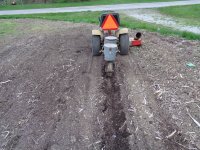
My soil was pretty bad, with some areas more heavy clay than others. I think what helped most was getting more organic matter incorporated. I changed my routine to add it yearly, without taking the gardens out of production. I till the whole garden once. Then I use bales of peat moss, one per 50' row, and spread it in line before I make my second tiller pass just prior to planting that row. I plant that row and move over to the next one, spreading the peat and tilling, and so on through the garden. That puts a moderate mix of peat right where I plant for that year. That improves the soil structure yearly. Next... Most of my crops get mulched with last year's leaves or straw. Tomato and pepper plants are mulched immediately after planting, and seeded rows are mulched once the plants are a few inches tall. Sometimes I mulch with wood chips. That mulch keeps plants moist and roots cool, and it improves the soil structure when it's tilled in at the end of the season. Next... Early fall after clearing most old plants (to a compost pile), I spread the mulch out and till lightly. I then broadcast oats and drag or roll it into the soil. I buy regular cleaned oats sold at Rural King for horses, because it's reasonably priced and convenient. It germinates within a week and covers the garden in a low green mat before freezing off over winter. That gets tilled in when I'm ready to start planting in the spring.
I never used to mess with all this, but started about 10 years ago to improve my soil. I don't mulch or use peat on one larger area where I plant sweetcorn, just planting oats in the fall. That area improved a little over the years. My smaller gardens though, wow! It's made such a dramatic difference it's hard to describe. Even my wife has noticed the better color and feel to the garden soil. This routine is easy, helps the plants hold moisture, and reduces weeds too.
 
   / 2020 gardens #22  
Ok have a question, the last few years our garden has be okay nothing like I would have liked. I'm going to get a soil test to see what it is lacking but my question is about the soil type. We have clay, hard clay, and bedrock so how would any of you combat growing in clay? This stuff is tough and stays soft only by watering. We water at night for about an hour or until the soil is nice and soaked by the end of the next day the soil is dry and cracking.

Anyone grow a garden in this soil type and have any pointers? I was thinking of having a couple loads of topsoil brought in and mixing it with a tiller. The garden is 25x100 so nothing huge just looking to get some vegetables maybe sell a few on our stand.

our soil is similar, we added compost and garden soil, tilled into the ground where our in-ground bed is. our raised beds are 1 part native soil, 1 part compost 2 parts top soil roughly, just scooping from each pile as they were filled.
 
   / 2020 gardens
  • Thread Starter
#23  
With added soil and compost mixed in to a good depth, you should be o.k. A lot of triple 10 or 12 helps a bunch too! --- Better dirt mixed in should keep the clay from getting that hard.
If you had access to manure, that helps but takes tons of it. --- I use horse manure here from a guy a mile down the road. They stable 4 or5 horses year round so I get 6 or so big dump trailer loads every year. I either spread it on or compost some of it for a year or two, then plow it under. This makes for REAL onions! lol! --- They get their ole roots in that and make stems like your arm and bigger than softball onions.
 
   / 2020 gardens #24  
Hi chas,

It make take several years to get some better soil.......that is if you buy/mix that load of top soil and then keep adding any compost that you can come up with.....e.g. composted leaves etc. as mentioned above......then there may be some horse or sheep manure that a neighbor would like to get rid of. I would think that after a couple years you would be pleased with the results. IIRC.. I even added some sand to mine. I used a walk behind tiller for years, and still do some times. Then there is lot of hand hoeing that keep the dirt/weeds loosened up. :2cents:

Right now I'm nursing a sudden back pain....even bought a brace yesterday....maybe that'll help. Real muddy here right now anyway.

Cheers,
Mike

Compost right now consists of of straw and our chickens' waste. We have been adding some sand used for sand bags and tilling that in. We use black plastic around the Zuch, Squash, Tomato plants it really seems to help retain moisture and keeps all the weeds down. On the beans or corn we usually use a tiller and go between rows then weed by hand until the stalks are tall enough where the weeds won't cover it up. We have a bunch of weeds but not much in terms of grass. I might cover plant next year to rye grass in the fall and till before planting in the spring.
 
   / 2020 gardens #25  
Hello Sonny..!! Imagine me finding you here too, LOL... Hope you don't mind if I join in the conversations here also. Seems a person can always learn something, and hopefully I can contribute some ideas here also.

I'm loving seeing the comments on using composts. I've been using leaves here for mulch around mostly tomato, and set plants here for 6-8 years for weed suppression. And, up until 3 years ago, plowed it down to add organic matter to the soil, although some parts were pretty high in it anyway. Sure made improvements to the upper part, that had a lot of clay. Just several years of plowing down the broken down leaves has made a big difference. Last year, I decided to leave the broken down leaf mulch, which pretty much turned to compost over the year, and plant down through it, using my Brinly planter. The compost residue left was aprox. 2" thick. It worked very well, and the Pea's and Beans were very healthy, and produced way more than I could use.

Due to the high amounts of rain we've gotten the lat 2 years, I did have some weed pressure, do to weed seed taking root that had came in from the outside edges of the garden, but were taken out with the rear tine tiller, just tilling 1" deep. Get them when they are just emerging, and they are a lot easier to kill.

I also learned more than several years back , that under that composted material, there are literally thousands of red worms, and night crawlers thriving under there. A win-win in the garden, with aeration, and all of those worm castings adding nutrients. Plus the fact of giving the good microbes a happy place to live, and thrive. I've also made the easy version of compost tea, putting composted leaves in a pillow case, and soaking it in a 35 gal. trash can of water, for 3 days,and it's ready. Just dunk it up and down every morning for 2-3 days depending on when you start it. Then apply the 3rd evening.

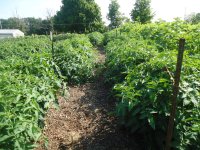
The other picture is of the tomato patch from 2018, and it was a bad year,due to all of the rain we had. Yet, the leaf mulch pretty much kept the weed pressure to "0". I could stroll through there every 3-4 days with the hoe, and take out anything that may have come up. That is the same exact area, I'm planting in,with the Brinly, minus the tomato plant debris. I can't help but think leaving the leaf compost in place, is like watering with compost tea, every time it rains. I only used a low nutrient level organic fertilizer given to me by a neighbor who uses it in his lawn service to try, as a starter fertilizer. But, I've tested my garden soil every 3 years, and still only needs 1 lb. of N-P-K, per 1000 sq.ft., so I'm very fortunate. This is a portion of the family garden we've been gardening in since 1953.

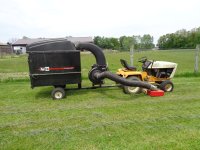
I also mulch with grass taken from the lawn, and pretty much all that I keep mowed, and "harvest" it with a lawn vac. What you're seeing in the last picture is a $400.00 investment, I hope will last quite a few years. The key is to mow grass before it goes to seed. Bluegrass here seems to go to seed in 10-14 days, but mowing weekly, I don't have a problem. 4" of grass mulch will last about 6 weeks, before needing top dressed. A little work putting it around plants, sure saves me a lot of time, and labor hoeing/cultivating later. And in the last couple of years, found that with all of this rain, I can go out and pick, within an hour of a heavy rain. The heavy mat of leaf mulch will support me to walk across it, without sinking in, and I weigh 240 lbs.

Better quit for now, I have a tendency to get carried away, don't mean to...!!
 

Attachments

  • DSC00128.JPG
    DSC00128.JPG
    7.9 MB · Views: 255
  • DSC02193.JPG
    DSC02193.JPG
    3.4 MB · Views: 196
  • DSC00181.JPG
    DSC00181.JPG
    7.9 MB · Views: 178
   / 2020 gardens
  • Thread Starter
#26  
Welcome DJ, ---feel free to join in here too. Ideas and what others do are always welcomed! There are a lot of people who won't share ideas!
Methods that work for some, won't work for others, but you can pick what works in your area and maybe get a few new ideas to try and see! --- I am still trying new ideas here from what others have said works for them.
For compost here its anything that will rot down! --- Biggest thing available to me is horse manure from a couple of horse owners not far from me, so that works for both them and me!
 
   / 2020 gardens #27  
We have 24 raised beds that are full of weeds right now. I've started spraying round up on the walkways and we're pulling weeds to get ready for planting. Usually we start planting around Easter. The plan this year is to focus on what we really need. The last couple of years we've wasted space on corn, gourds and melons, along with a dozen other plants that we didn't have any significant use for. My wife came up with a spaghetti sauce from what she grew that is the best that we've ever had. We ran out last month and haven't found anything at the store that comes close, so now we're just not going to have spaghetti until we can make our own sauce. We still have quite a bit of salsa left, so we're pretty good there. We also eat a lot of pickles, but our recipe is still being worked on. Squash grows fantastic here, and we eat it all the time, so we'll increase that too. If we can focus on what we actually use, we should be able to grow enough to last a full year. I also have room for another 48 raised beds, but watering is a bigger issue right now, so maybe this year I'll get that all sorted out. I'm leaning towards putting a pump in my big pond and using that for the garden.
 
   / 2020 gardens
  • Thread Starter
#30  
I till a lot to keep a "dust mulch" between the rows,--since any other kind of mulch causes soggy ground and bugs, air cut off from roots, etc. I know a lot of you can mulch and get by with, I on the other hand can't. Thats when I tried the dust method, slows weeds down, ground can breathe and no bugs hiding.
A lot has to do with trying different methods to see what works for you.
I have 3 raised beds here that I set up 14 years ago, used a couple years and weeds took over them since.---couldn't carry enough water to make them work.
Probably be a couple weeks before I attempt to start a few plants. Main plant starting will be in the outdoor hotbed along the South side of the house. It seams to work good here for later plants.
 
   / 2020 gardens #31  
I'm pretty fortunate to have a decent slope in my garden that allows the bulk of excess rain water to run off, so I can get by with mulching. I'm assuming your dust method involves just tilling the top few inches of soil. That's pretty much what I do where mulch isn't used, but I do it with cultivators, on my DB 2-wheelers. I choose to fight the weed seed bank in the top 2" or so of soil. Anything below that may get slowed down, and not germinate as fast, or Mother Nature will take care of a certain percentage of them. In my mind, deep tilling only brings up more weed seed at lower depths.

Here in this loamy clay, I have used the rear tine tiller to go in between rows, when we've had constant rains, preventing cultivating, or when plants get too tall for the Bradley's to straddle. I've found after doing it several times, and after more rain, when I go to hoe what was missed, the dirt is extremely hard & crusty. while rows not 5' away I'd cultivated, were very easy to work, with friable dirt. If you have a sandier soil, I can see this working.

The only bad part of a walk behind, whether tiller, or tractor, is the fact the first place weeds will appear, will be in your foot prints. And here, during the earlier growing season when ground moisture is abundant, but not wet, I'll see weeds start to reappear within 3 days, where as like Sonny using the dust method, makes it hard for weed seeds to germinate, due to lack of moisture, or germinate, then die from lack of water. I have seen weed seedlings continue to grow, if I've cultivated when a bit wet, leaving little clumps. With rain coming in the near future, I choose to go ahead and cultivate, and hope to get a 70% - 80% weed kill, dealing with the rest next time I cultivate, hopefully getting a few dry days with hot sun to kill them. Yet, certain weeds will continue to grow in the little clump of dirt, apparently getting enough moisture, to keep going. I usually stop, take my toe, and break that little clump of dirt, exposing the weed roots to the air, killing it.

Here when I was a kid, Dad would cultivate in the morning, then it was my job to hoe everything he'd cultivated, usually when it was going to be sunny & hot in the afternoon. We'd always go back out the next day to see how well of a job we did. The weeds still alive and doing well are the ones that still had dirt intact on the root base, sliding around the cultivator sweeps, or, one's I'd missed hoeing. I was again my job that day to go hoe out the survivors.

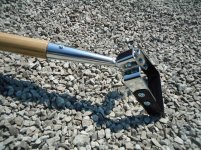
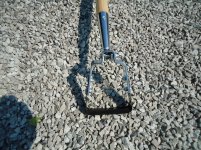
Lordy, what I'd have given to have a stirrup/scuffle hoe like I have now, back then, like pictured below. I looked at a lot of them, before buying this one. Built extremely well. Not even sure they make them exactly like this anymore. It's a Corona brand, that this one was built in California. At this time, I think they were just stating to prosper, and to keep up with demand, had them made across the pond. 2 years ago, I was looking to buy one of their wider 5" models, but all of those were made in China, and looked a bit cheaper in construction. I was pretty disappointed to see that, so never ordered one. I do keep looking at the local community auctions, in case one would happen to end up there. Haven't seen any yet. :( This one will be I'm thinking 6 years old this summer, and shows little wear, and I've used it a lot..!! Realistically, if I take care of it, it should last me the rest of my life.
 

Attachments

  • Corona Hoe 002.jpg
    Corona Hoe 002.jpg
    686.9 KB · Views: 144
  • Corona Hoe 001.jpg
    Corona Hoe 001.jpg
    745.1 KB · Views: 139
   / 2020 gardens #32  
Lordy, what I'd have given to have a stirrup/scuffle hoe like I have now, back then, like pictured below. I looked at a lot of them, before buying this one. Built extremely well. Not even sure they make them exactly like this anymore. It's a Corona brand, that this one was built in California. At this time, I think they were just stating to prosper, and to keep up with demand, had them made across the pond. 2 years ago, I was looking to buy one of their wider 5" models, but all of those were made in China, and looked a bit cheaper in construction. I was pretty disappointed to see that, so never ordered one. I do keep looking at the local community auctions, in case one would happen to end up there. Haven't seen any yet. :( This one will be I'm thinking 6 years old this summer, and shows little wear, and I've used it a lot..!! Realistically, if I take care of it, it should last me the rest of my life.
The neighbor lady had a stirrup hoe and it really worked good so I bought 2 of them. I then made a handheld model so I can work around small seedlings without disturbing the plants. They sure made hoeing more enjoyable.
 
   / 2020 gardens #33  
Never use a hoe any more. When I had the big garden down below, it was get on all 4s and go down between rows, weed pulling by hand to each side. Still basically how I do it with raised beds.

I've put about 2 inches of local Panorama Paydirt in 3 areas. Two years ago, I did the slope to the east of the swimming pool and got 23 butternut squash from 2 vines. Good stuff. Reputted to include some chicken manure in his Paydirt.

I actually removed about 3 inches of soil from my largely unproductive "asparagus" patch that never yielded any (in 3 tries) and put the Paydirt in there. Hopefully, the buried squash vine borer monsters will have gotten tossed out with the old soil. Got them foxed though with use of 1/2 a toilet paper roll put over the little squash. Stops the vine borer. I also skinnied up that wide asparagus patch last year. It was too wide to not have to walk on it.

Ralph
 
   / 2020 gardens
  • Thread Starter
#34  
I have a shuffle hoe an don't care for them. When I hoe I want it to dig so I didn't use it anymore!
I till a couple inches on top to make the dust mulch.--- when running the tiller----walk in the next row, NOT behind the tiller, you can't leave footprints! The cultivator is a whole different thing/method, not fine enough for good control, but breaks the crust and will slow the weeds down. I use my db a little but mostly just to drag off hi places before planting. I love the harrow on the db, does super job to incorporate chems. in with.
I cultivate the sweet corn one time with it early when plants are small, then I push dirt with the tiller wings when corn is 2 or 3 feet tall.--The rr corn only gets sprayed 1 time at half dose and follow-up with spot spray one time IF needed. ----no cultivation needed.
 
   / 2020 gardens #35  
I inherited a scuffle hoe from my Dad. It is "V" shaped with notches that cut the root of the weeds. It works pretty good in loose soil. Yet I still use just a plain ole hoe and sometime crawl like Ralph....because hoeing starts hurting my back nowadays. Generally I like to hoe since it is a peaceful chore.....I can even hill my potatoes with a hoe.....Saint Patrick's Day is my time to plant seed potatoes.......


BUT>>>>>>>>>>>>>>>>it is so wet and more rain forecast for over a week.:thumbdown:

Cheers,
Mike008.JPG
 
   / 2020 gardens #36  
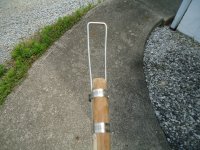
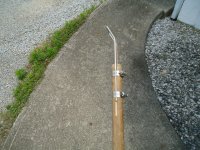
I looked and studied a lot of stirrup hoes, before getting this one. Looked at more than several brands in stores,before I decided on this one. #1., most were cheaply made, and #2., was the blades on others were somewhat blunt. This has a tempered, sharpened blade, and self sharpens when you use it. Again, being I choose to fight the seed bank in the top inch or so of soil, I don't want to go too deep. It does work much better when the soil is on the dryer side. If a little damp, you just disturb the top enough, the weeds will keep growing. Dryer, it seems to flip the roots up better.

For working around onions, and carrots,because planted so close, I made this weeder several years ago. You can get up right next to those tiny plants,push down, then pull away, without damaging them. This is made from a piece one one of several stainless steel rods I found along the road,probably 40 years ago. Being the pack rat I am, I stuck them up above in the shop on the ceiling joists, thinking I may find a use for them some day. A piece of that rod with a few bends, an old broken shovel handle with relief's cut in it, and a worm clamp, and I was in business. Leaving the rod round, 99% of the time, it will grab those tiny weeds, yet leave the dirt pretty much in place. Being round also keeps me from cutting the little plant off. A life saver, when baby carrots are first coming up. Another reason I want to experiment with carrot transplants..!!

About 8 years ago, reading about weed suppressants, I came across an article that contained an article about the "organic Preen." I believe it was the University of Iowa was trying to find a use for the glut of corn gluten that was piling up, after processing corn for various uses. They experimented with it for a low N fertilizer, to help get a new stand of grass to grow, in newly tilled soil. They had 2 different plots, sowed the grass seed, then applied the corn gluten, working it in the top 1" or so' along with the grass seed. Neither plot of grass emerged, within 14 days or so. Thinking it was a fluke of some sort, they tilled in a different area, and repeated the process, with the same results. This time, they looked closer, putting soil samples under a microscope. They found the grass seed had germinated, but had no roots, causing the grass to die. With that information, they experimented with using it as a weed suppressant in row crops. They found, they quite accidentally came across a grass/weed suppressant. They filed, and got a patent for it. That's why a 5lb. jug of Organic Preen, and/or Ortho brand weed preventer will cost you $3+ a lb., paying royalties to the University, for the rights to produce that product. If you look at the label on a jug of Organic Preen, it says 100% Corn Gluten.

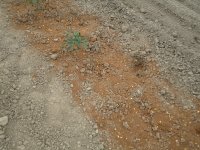
Me being the tightwad I am, I went to the local feed mill, and had them run 400 lb. of corn gluten pellets through their hammer mill, into a meal, and applied it around plants like below. Corn Gluten pellets cost me $8.00 per 100#, and they charged me $5.00 to grind it. I had my own feed bags, so that saved me a few bucks. I followed the instructions for Preen, stirring the meal into the top 1-1/2" of soil. It's best to do this right before a decent rain, as it takes moisture to activate it, around 1/2" should do it. I was pleasantly surprised it worked very well. It especially works well to suppress Foxtail. There were only 2 weeds that came up in that test plot, and both escape me at the moment. But those two come up from rhizomes, not seeds, and are far, and few between. I just go through with the hoe, and take them out, not disturbing the surface that much, if I can help it. It suppresses weeds for 6-8 weeks, and can be re-applied again. I will definitely be getting more this year..!!

This needs to be applied after your vegetable plants establish a root base. If put on when you plant, it will let the seeds germinate, but they will have no roots, and die. So, I cultivate, and hoe for a couple weeks, then apply the gluten, and stir it in, just before a decent predicted rain. It has worked well for me for the 6 out of 8 years I've used it. Below are the directions of use from Preen, if anyone cares to experiment with it, personally, I used a bit more. **Note** It will not kill existing weeds, it needs to have existing weeds removed, starting with a clean slate.

Remove existing weeds by either pulling them by hand or pouring boiling water over them.


2. Scatter Preen Vegetable Garden Organic Weed Preventer, from the shaker bottle, applying it evenly across the surface of the soil, using 5 pounds per 250 square feet of garden space. Wait until your vegetable plants are 2 to 3 inches tall to apply the product. It can be applied at any time when plants are established. The manufacturer claims it is safe to use up to twice this recommended rate. Wear gloves and protective eye wear when you apply this product.

If you're fortunate to have a feed mill in the area, that still grinds feed for cattle, they should have the corn gluten pellets. If you don't have feed bags, they'll probably charge 75 cents, to a dollar apiece for those. It's sure worth it to me, to take a couple hours to apply it, saving me many hours of cultivating, and hoeing, so as to do something else. I've literally poured it on some corn plants, getting it down in the leaves, and on green bean plants to see if it would burn, or harm them. I've never seen any damage doing so. Another plus is, it has a low N content, so it's like a low N side dressing giving plants a little kick. A win-win in my book, especially suppressing the Foxtail, which I seem to have a very heavy infestation of.
 

Attachments

  • DSC02167.JPG
    DSC02167.JPG
    3.5 MB · Views: 127
   / 2020 gardens #37  
Not surewhat happened to the pics of the weeder tool I downloaded, so I'll try again...
 

Attachments

  • DSC01781.JPG
    DSC01781.JPG
    3.4 MB · Views: 131
  • DSC01782.JPG
    DSC01782.JPG
    3.4 MB · Views: 130
   / 2020 gardens
  • Thread Starter
#38  
St Pat. day OR the 100 day here! Not gonna happen this year again. Sat. 14'th we had 6 inches of snow and most of it melted and making a slimy mess!
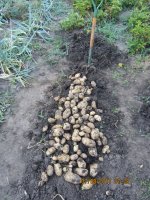
Love your spuds! Kenebecs ? --- We have best luck with Kens., Pontiacs, and Norlands here.-- tried a lot of varieties over the years a found these to be THE varieties to stay with.
 
   / 2020 gardens #39  
Which is the best keeper of those 3..?? I'm hoping to plants 100 lbs. this Spring, and as luck would have it, narrowed to those 3. I'll be planting for donation purposes, and selling. Trying to stay away from the high carb. foods for now, keeping the A1C in line. There haven't been any potatoes grown here to speak of for probably 40 years. Always planted 100 lbs. of Katahdin's and always seemed to get a 1,000 lb. return, of usable sized potatoes. They may have picked up a 10 qt. bucket of marbles, to put in green beans, or cut, and brown with skins on for a side dish.

There were a few years Dad planted 500 lbs., and would sell to Mom & Pop restaurants back in the late 50's, and early 60's. Here's a picture from, I'd have to guess 1959, with me standing in one of the potato patches. That Spring, Dad bought a used Farmall A, with a plow, and cultivators, and a drag type disk. If I remember right, he said he gave $400 for the whole outfit, and that was quite a chunk of change in those days. So growing potato's was a way to help pay for the tractor. The ole' A is long gone, traded for the IH 240 Utility, but still have the drag type disk I still use every year.
 

Attachments

  • 380689_3836702155512_1733075448_n.jpg
    380689_3836702155512_1733075448_n.jpg
    98.7 KB · Views: 135
   / 2020 gardens #40  
In above picture you see the Kenebec variety. I change varieties now and then just for the hellavit. Irish Cobbler, Norland, Yukon Gold and I really like the Red Viking. Think I'll go buy some seed this morning. Hope my knees and back are good for another year.

Cheers,
Mike
 

Tractor & Equipment Auctions

2013 Ditch Witch XT855 Tracked Loader (A56438)
2013 Ditch Witch...
2021 Delta Manufacturing 30ft 10-Ton T/A Gooseneck Flatbed Equipment Trailer (A55851)
2021 Delta...
PARTS ONLY - Has Title - 2023 Ram 1500 Classic Pickup Truck - Hemi 5.7L - Automatic Transmission (A56438)
PARTS ONLY - Has...
CATERPILLAR 305CR EXCAVATOR (A60429)
CATERPILLAR 305CR...
2 - WEATHER GUARD TOOLBOXES (A55745)
2 - WEATHER GUARD...
2019 Dodge Charger Sedan (A59231)
2019 Dodge Charger...
 
Top