Barn Cat?

/ Barn Cat? #1  

JSanders10

Silver Member
Joined
Aug 6, 2014
Messages
158
Location
South Alabama
Tractor
'98 MF231, MF451
What's the advice on keeping a barn cat on a property where I am NOT there but every 7-14 days... needed for the obvious reasons, to keep away mice, snakes, varmits, etc. Is it reasonable to expect I could keep a cat that way, fed with some automatic feeder, water, etc?
If an automatic feeder, there's nothing to keep the racoons and possums from the food is there?

:) I don't need a deep discussion of PETA-arguments about being cruel to the cat. My 'sensitivity' to the issue is why I am asking.

Thanks!
 
/ Barn Cat? #2  
With food and water constantly available, any animal that can get it the barn will be eating cat food until it is full or the food is gone. We have cat and doggy doors on an outbuilding where the pets are fed. We had to feed them twice a day to insure they ate their food and not someone else.
 
/ Barn Cat? #4  
Couple points.

First, a full feed system for a cat creates a cat that spends little to no time hunting mice. Why would it??

Second, in my area there are wild house cats roaming everywhere. I have two that live in the outbuildings on my farm. No human assistance required.

I wouldn't take a cat that has lived in a house and been humanly pampered to your place and turn it loose to fend for itself. That's a bit unfair.

But a cat that is currently surviving outside on it's own will handle the transition very well. Mother Nature will sort it all out.
 
/ Barn Cat?
  • Thread Starter
#5  
I agree with all of your points (especially so "a full feed system for a cat creates a cat that spends little to no time hunting mice".

I grew up on a farm, we had a couple barn cats, but our family was there full time. We are not now.

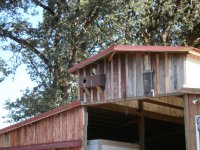
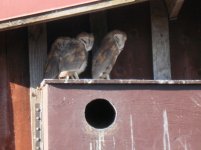
I do have owls in the barn... scare the **** out of me every time I approach it, as the two fly out.
Honestly, I'd like to remove them. Will plastic statues of pigeons scare them away? lol, j/k

Any other advice I appreciate... you're all confirming most of my thoughts already, and that is good.
 
/ Barn Cat? #6  
I need to get 2-3 barn cats. The owls, hawks or coyotes got the last one about a year ago. I always provided cat food & water until I noticed the cats never ate the food. The d++n magpies were the culprits. And the cats much preferred a trip down to the lake for water - there was always the chance to obtain another mouse on the trip.
I will get some cats this coming spring. This is not the time of year - around here - to start cats outside.

Ovrszd - you are exactly on point.

I would just be sure the cat(s) you get have been raised outside and unless you want a yard full wildlife(skunks, coons, possum, magpies etc) I would forego the food.
 
/ Barn Cat? #7  
When I bought my place we had a farm cat the old owners left. They did talk to us and said she was mostly wild but they had her fixed as a young stray that showed up. She was a great cat, I built her her own box & she kept mice away real well. She did vanish after a 8+ years when we had a LOT of Red Tails and Coyotes and a family of foxes moved in. The farm is not lived in as in I am not there 24/7 but there several times a week. We did give her small amounts of food as supplement (more in winter) & she became very friendly to myself and eventually my GF who was not around as much. She followed me around a lot and was great hunter any time I was mowing or tilling she kept pace and caught her fill of 4 legged free running food. Bagged a LOT of moles and with out her around those have gone nuts breeding... Wish i had her back & she was maybe 10 years or so old when she went missing, by that age I was feeding her more regularly but the BS Neighbors started moving lots of stray dogs in which harassed her a lot, (stopped following me when I mowed as the dogs would come after her when she was out in open.)

If you can keep a full water dish (non-frozen) and a warm place for them to sleep they will hang out and catch and eat / live well. I think female cats are better mousers and prefer the live food vs dry cat food. I agree that having a house cat tossed out is not how to have a barn/farm cat. Finding a wild caught one from a shelter that has been fixed is best bet, keep it in a cage and warm visit & feed it daily for a while to get it used to having a safe space of it's own. Make sure it has a box of litter as well nearby (inside it's cage too) and then move to less food AFTER you have left it out to roam area some with you staying close. Watch it for a few days too so it learns where you do and don't want it...

mark
 
Last edited:
/ Barn Cat? #8  
We used to have lots of feral cats around our place when we visited a couple of times a year, but in the last four years or so nada. I thought the coyotes had got them, but just this last fall while walking a couple of hundred yards back behind the house on a trail through some very dense pines I spotted a huge Northern goshawk sitting on a branch at eye level and suddenly the lack of any cats around made a lot of sense.
 
/ Barn Cat? #9  
Couple points.

First, a full feed system for a cat creates a cat that spends little to no time hunting mice. Why would it??

Second, in my area there are wild house cats roaming everywhere. I have two that live in the outbuildings on my farm. No human assistance required.

I wouldn't take a cat that has lived in a house and been humanly pampered to your place and turn it loose to fend for itself. That's a bit unfair.

But a cat that is currently surviving outside on it's own will handle the transition very well. Mother Nature will sort it all out.

Actually, recent studies have shown that a well-fed cat is a much better hunter than one left to forage on its own. Turns out that cats hunt as a matter of instinct -- not necessarily to gain food. A well-fed cat has sharper vision, better reflexes, and stronger conditioning and so is a much more effective hunter.
 
/ Barn Cat? #10  
my choice ladies and gentlemen, is to go for barn owls and not cats. The only downside I have experienced with owls is nothing. Their box requires cleaning out once a year. There are a lot of barn owl sites on the internet and most the box data is baloney, well meaning, but baloney. They will dump scat at their roosts and will scat on your beautifully painted truck parked in the barn. Easy enough to put a tarp over it. The owls require four rodents each a day. A nesting pair will eat eight, plus the ones they need to feed their offspring. Cat crap in barns goes nuts with cats that aren't spayed. Sooner or later you have kittens up the the kazzoo.

I recommend the Barn Owl Trust web page, and the Cornell University owl cams for information that is sound and solid.
 

Attachments

  • P6060011.jpg
    P6060011.jpg
    1 MB · Views: 252
  • P6060004.jpg
    P6060004.jpg
    670.1 KB · Views: 289
/ Barn Cat? #11  
The keys to a successful barn are the personality and how you introduce the cat.

Not much you can do about the first but for the second, you start off by keeping the cat in a decent sized cage (like a dog cage) in the barn for two weeks. Feed, water, and clean the litterbox in the cage for it, and keep the cat in there. This gets the cat used to to smells and sounds of the barn. Only feed in the morning and pull the food in the evening to get the cat used to eating during the day. After two weeks open the cage and keep putting food in the cage in the morning so the cat gets used to coming back there for food. Do not top off the food at night. Since raccoons and possums are nocturnal, food you put out at night is simply for them. Whatever the cat doesn't eat during the day the other critters get, the cat will figure it out.

This doesn't guarantee success because it also depends on the cat's personality and a lack of coyotes, etc. But it gives you the best chance for success.
 
/ Barn Cat? #12  
Actually, recent studies have shown that a well-fed cat is a much better hunter than one left to forage on its own. Turns out that cats hunt as a matter of instinct -- not necessarily to gain food. A well-fed cat has sharper vision, better reflexes, and stronger conditioning and so is a much more effective hunter.

Study, schmudy, not buying it. Actually I'd bet those doing the "study" don't know what a "Barn Cat" is.
 
/ Barn Cat? #13  
my choice ladies and gentlemen, is to go for barn owls and not cats. The only downside I have experienced with owls is nothing. Their box requires cleaning out once a year. There are a lot of barn owl sites on the internet and most the box data is baloney, well meaning, but baloney. They will dump scat at their roosts and will scat on your beautifully painted truck parked in the barn. Easy enough to put a tarp over it. The owls require four rodents each a day. A nesting pair will eat eight, plus the ones they need to feed their offspring. Cat crap in barns goes nuts with cats that aren't spayed. Sooner or later you have kittens up the the kazzoo.

I recommend the Barn Owl Trust web page, and the Cornell University owl cams for information that is sound and solid.

I'll research this. I have a lot of bird nests here where I live. A few at the farm. I'd be interested in having owls to observe. Wondering what type of terrain they would prefer. My buildings are located 100yds from a timber with only a few scattered trees next to them.
 
/ Barn Cat? #14  
my choice ladies and gentlemen, is to go for barn owls and not cats. The only downside I have experienced with owls is nothing. Their box requires cleaning out once a year. There are a lot of barn owl sites on the internet and most the box data is baloney, well meaning, but baloney. They will dump scat at their roosts and will scat on your beautifully painted truck parked in the barn. Easy enough to put a tarp over it. The owls require four rodents each a day. A nesting pair will eat eight, plus the ones they need to feed their offspring. Cat crap in barns goes nuts with cats that aren't spayed. Sooner or later you have kittens up the the kazzoo.

I recommend the Barn Owl Trust web page, and the Cornell University owl cams for information that is sound and solid.


Great pics, and you are LUCKY to get them in there. Owls are rare in most parts so getting a pair is not a matter of putting up a box. Cats are hunting day & night & target more "species" (birds in the barn or rats) as an example. Chipmunks are a BIG problem around here and I have issue with one under my lumber stack NOW so know where they can be as bad or worse than mice. This one put 20+ acorns into my air box on the SUV as it sat for a few days out front of the barn. I have not seen it inside YET but knowing these dang things it might not take long.

Anyhow I would LOVE to have that pair of birds at my place !!! I DO have some hoot owls in the area & hear them in evenings in summer usually hooting & can hear mates/others a mile or more away hooting back! Fun for sure and would most certainly put a camera in their box so I could watch em at night with a pair & chicks.

Mark
 
/ Barn Cat? #15  
We have two cats and they are fed twice a day and they still hunt. They have nothing else to do all day.
 
/ Barn Cat? #16  
The biggest BS is that you must starve an animal to make it hunt. Dogs and cats hunt because they love it. You can't stop them if you tried. you can sure slow them down by not feeding.
 
/ Barn Cat? #19  
The biggest BS is that you must starve an animal to make it hunt. Dogs and cats hunt because they love it. You can't stop them if you tried. you can sure slow them down by not feeding.


A predator only starves when there's no food supply. In the context of this thread that is certainly not the case. And no recommendations of starvation have been expressed.

I used to have a Shop Cat. Always food in the bowl. He'd catch a mouse if it was handy. Most times eat it. Then puke it up because he was over full. He'd also sleep and let mice play around him. I don't think that's the goal we are talking about here.
 
 
Top