Broken fastener removal

   / Broken fastener removal #1  

jwmorris

Veteran Member
Joined
Oct 3, 2007
Messages
1,135
I have removed hundreds of broken and stripped fasteners over the years but never took step by step photos and thought some welders here might pick up another “trick”. Also have used a number of methods like EZ out’s of different styles, left handed drill bits, machining and metal disintegration but my go to is a TIG welder and a nut, if they are a weldable material and not too deep.

I have successfully removed down to #2 screws and down to a #5 set screw with the method.

#1 rule of removing any fastener is to not do anything to make things worse than they already are. Very important, you drill an off center hole, then break an ez out off and I’d tell you, you should have come seen me earlier.

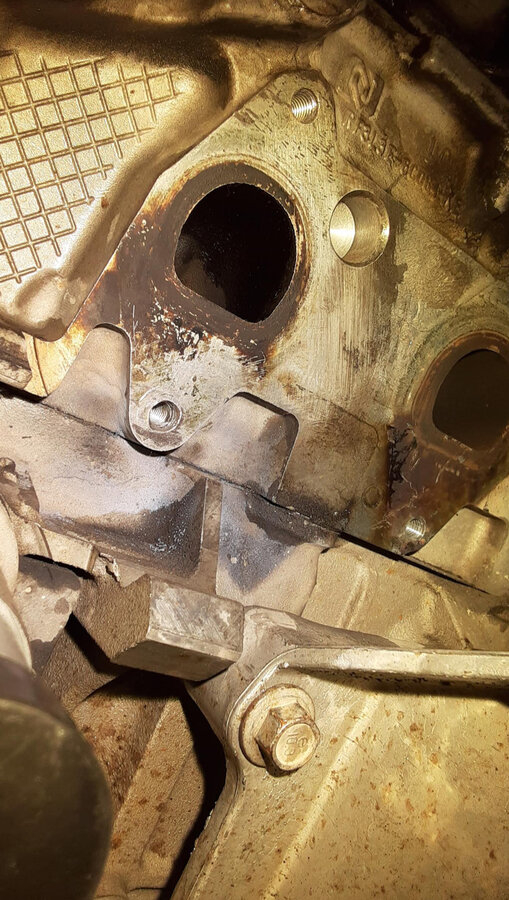
In this case an exhaust stud broke off in the head, a successful removal means the engine or head doesn’t need to be removed and as luck would have it the area was tight enough the fellow couldn’t get in there with a drill to mess anything up. It did however break off below flush.
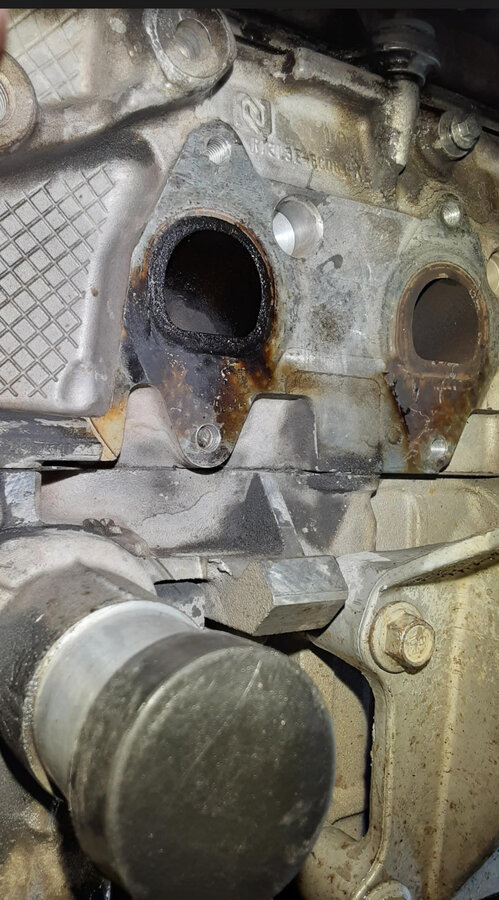
953CA6F8-C1E0-4C79-B0D0-A83037FEB243.jpeg


Used ER70s filler to weld to the stud and bring the puddle out side of the head, to the point I can set a nut on it and creat a “bolt”.
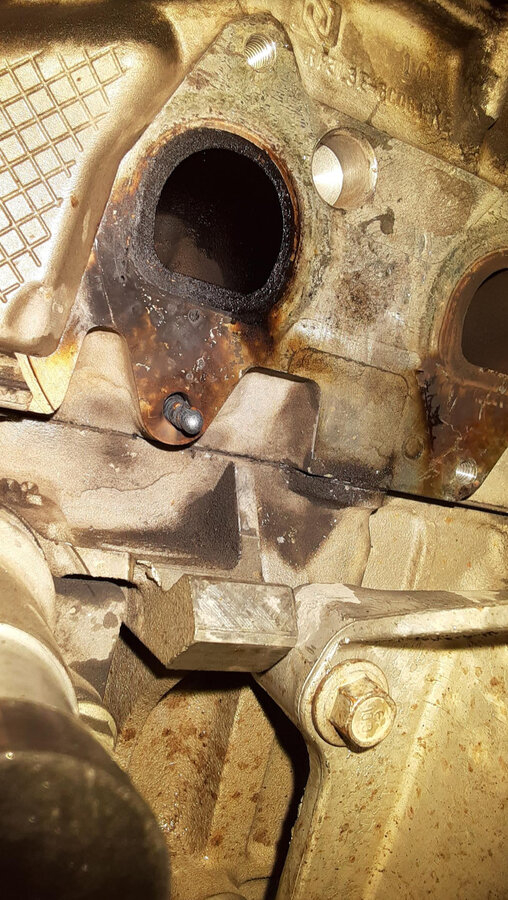
7A8336DA-445C-41B8-A22B-74F71B9C7BD5.jpeg


Then weld a nut to it and put a lot of heat into it. This expands what is stuck in the part as much as possible.
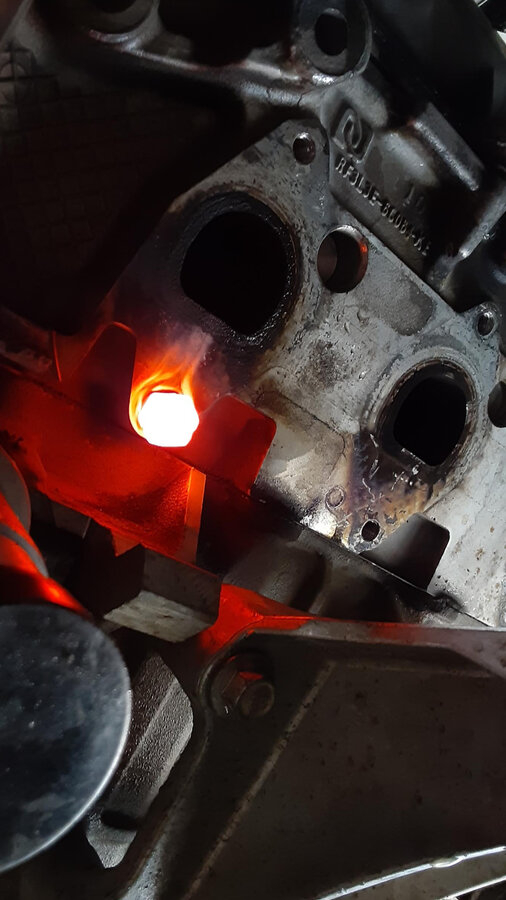
297E3CC9-8A68-4FD8-B10E-F1B198DD88CC.jpeg


As it cools I put some tension on it, not much but looking for the point it moves as it cools, then work back and forth, penetrating oil is helpful once it starts moving.
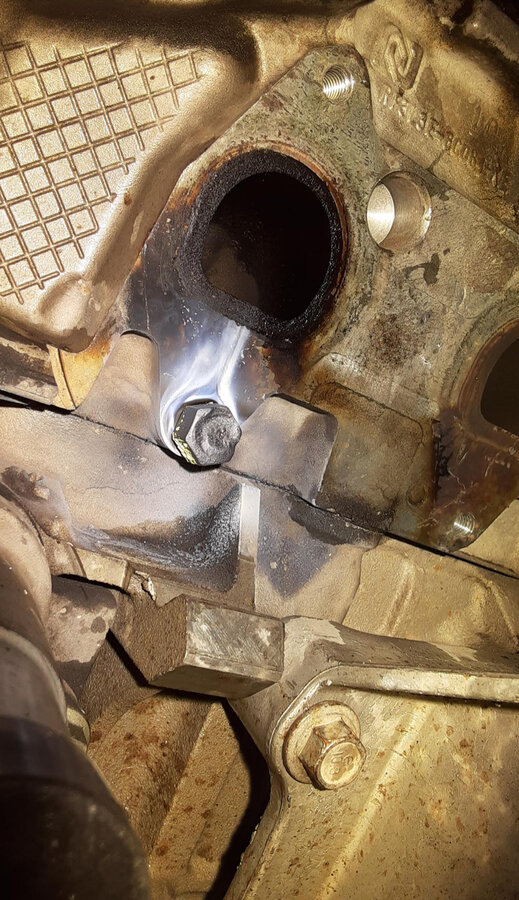
AF7A97F9-BE11-43D0-A950-105B808621BE.jpeg


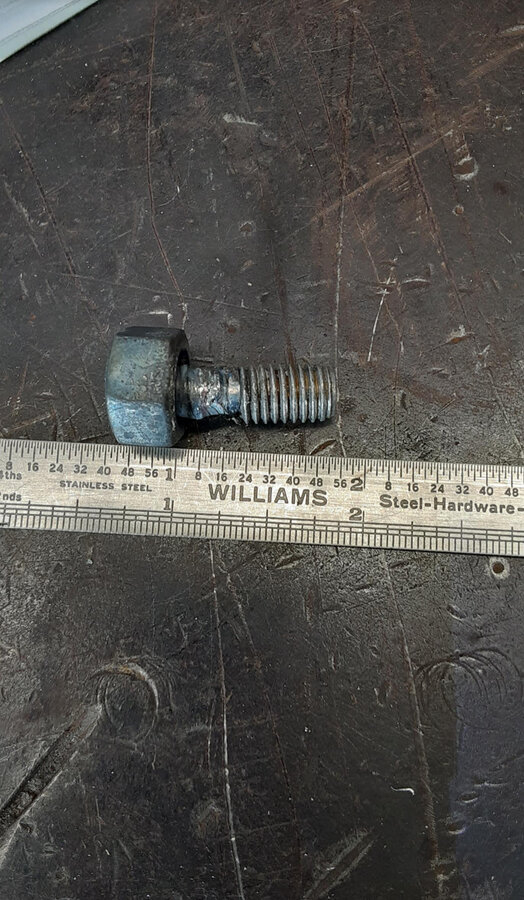
Once out, your ready to go back together.
C87146F2-20DE-4A36-B4D6-58A20DE7331E.jpeg


You can see the depth of the broken stud, once removed because that’s how much weld bead vs threads there are.
B4119AE6-EAA4-4F8A-ABFA-E63367B17160.jpeg


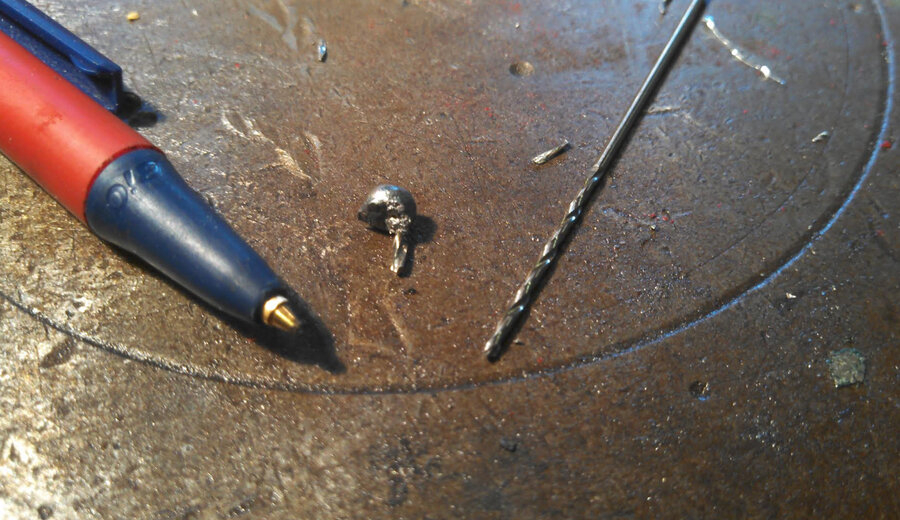
Dissimilar metals make things a lot easier but with care steel on steel isn’t that difficult. It’s also useful for things that are not fasteners like the tip of this small drill bit that broke off in a part and successfully removed.
9C650477-78B6-4D4C-985E-AFFE90AAC2C2.jpeg
 
   / Broken fastener removal #2  
Beautiful, patient work, but I don't understand how you weld your "false" stud to the broken AND BELOW the surface stud?
I'm going back to read it again to see what I missed, but my hats off to you. 👍
 
   / Broken fastener removal #3  
I've never done that. I don't have a TIG setup and I shake but I've heard of the method before. Thank you for going to the trouble of providing an illustrated step by step.
 
   / Broken fastener removal
  • Thread Starter
#4  
I don't understand how you weld your "false" stud to the broken AND BELOW the surface stud?

The deeper the hole, the more you will have to extend the tungsten out from the torch. Shielding gas works fine because you are inside a blind hole.

If the fasteners are large enough MIG and Stick will work too, you can’t sink in as much heat with them though. You can throttle back a TIG and just keep it glowing vs melt away.
 
   / Broken fastener removal #5  
Have been able to extend the deep broken stud with a MIG welder, but requires a bit of finesse as it is not quite as controllable as TIG....
 
   / Broken fastener removal #6  
(y) Gotta remember that try.
 
   / Broken fastener removal #7  
Very impressive. I especially like rule number 1. "not do anything to make things worse than they already are. Very important, you drill an off center hole, then break an ez out off and I’d tell you, you should have come seen me earlier."
In my past, I unfortunately have broken the rule.

When you weld to the stud how are you able to keep the weld off the threads of the hole? I see picture 2 and you did it.


Thanks
 
   / Broken fastener removal #8  
Very impressive.
When you weld to the stud how are you able to keep the weld off the threads of the hole? I see picture 2 and you did it.


Thanks
The head is aluminum
 
   / Broken fastener removal #9  
Beautiful, patient work, but I don't understand how you weld your "false" stud to the broken AND BELOW the surface stud?
I'm going back to read it again to see what I missed, but my hats off to you. 👍

When the broken stud is recessed, as in this one, I've had success by building up small beads, layer by layer, until it protrudes above the surface of the block/cylinder/whatever. Think momentary puddle with a tad of filler rod. Build it up bit by bit. TIG/Pedal control. Once enough layers have built up and it above the surrounding surface add a on short bolt or a nut as appropriate. There's a good video of a fellow in Australia removing a deep automotive stud this way. If I can find it I'll post a link.

Later: couldn't find the one I had in mind. This one shows a slightly recessed broken press pin being removed, start at about the 3 1/2 min point

Wish I could control a torch like the guy below. Instead, I do an on/off pulse with the tungsten in one location. Issue I have when deep in a hole is arc sometimes wants to jump to the filler rod
 
Last edited:
   / Broken fastener removal
  • Thread Starter
#10  
When you weld to the stud how are you able to keep the weld off the threads of the hole? I see picture 2 and you did it.
Dissimilar metals. Aluminum and cast iron are easy as your steel filler rod wants to go to the steel fastener and not the material it broke off into. It takes more precise control on something like that tiny drill bit broken off in steel. Generally start the arc then make sure it is arching off the part you want to remove vs the parent material before you throttle up the current enough to melt anything.
 
   / Broken fastener removal #11  
I wish i would have tossed them all in a coffee can over the years.
 

Attachments

  • tap washer.JPG
    tap washer.JPG
    117.4 KB · Views: 222
   / Broken fastener removal #12  
I can do it any way but prefer mig. I had to fish for this one.
 
   / Broken fastener removal #13  
Thanks very much for the detailed step-by-step... great stuff!

I am currently working on a broken off metal screw. I have a TIG setup but am very new to welding and have only done stick and MIG (currently I'm not very good... I'm the Salvidor Dali of welding). The screw is very tiny and you with your TIG abilities, you could get it out but I can't at this point. I have some tiny easy-outs coming and the screw is soaking in penetrating oil. We'll see what happens but I may have already broken rule #1.

Thanks again for the inspiration!
 
   / Broken fastener removal
  • Thread Starter
#14  
If you don’t feel comfortable so you didn’t, you are on the right track already.
 
   / Broken fastener removal #15  
I have done the weld on a nut on a broken stud a few times with success. Prefer using stainless steel nuts and steel mig wire or stick. The SS nuts have no coating, zinc or cadmium to blow a hole. The little nickel helps bond dissimilar metals.

Also use welded stainless nuts for threaded holes.
 
   / Broken fastener removal
  • Thread Starter
#16  
This is my least favorite method because it is quite time consuming; however, it does seem to always work, when you can’t use other methods.

This one is an 8740 chromemoly fastener that broke off in a crankshaft and the threads are several inches deep in the crankshaft before they start. Welding is out and the chances of a decent drilling are slim, without some help.

4F2F55F3-0093-4A20-BBD7-4C7322F0D7BC.jpeg


This help comes from a piece of 3/4” cold rolled that is turned to fit the ID of the bore on the crank shaft. It runs all the way down to the edge of the broken bolt.

D3B90A73-98EE-43FF-A7F7-F46D05F7A59A.jpeg


I started out with just a 1/4” hole in the sleeve because the center of bolts is generally softer than the edges. Then drill out the sleeve with the next size drill bit in a lathe, then go back and open up the broken bolt and repeat.

5AD7875F-459F-466A-A972-0FC535244319.jpeg


I generally like to use left hand twist drills because if it’s not galled like this one was, they often will come out while going up in hole size. If they don’t just keep going up to the correct drill size to tap the hole. This was a 16mm-2, and the correct drill size is 14mm.

57A21AFC-1D4C-40A6-8B42-7E4AAC614A36.jpeg


Once the core is drilled out of the broken bolt, what is left are just the threads that you can pick out like a mangled helicoil, leaving the original internal threads untouched.

4B7C9C53-D2CD-47EF-8022-D285F4BB7043.jpeg


This makes it easy to see why absolutely perfect alignment is necessary for this to be an effective technique.

After that I run a tap in to clean up the galled spot where the fastener seized.

B893EF1C-FD89-476D-B1D3-562888E2CEA7.jpeg
2DC58D7B-F0F3-41E5-BADA-31885ADA3CA3.jpeg


Then it’s ready for the new bolt.

C0E5AEB4-353E-41EA-BD31-ABF0C758C25D.jpeg
 
   / Broken fastener removal #17  
This is my least favorite method because it is quite time consuming; however, it does seem to always work, when you can’t use other methods.

This one is an 8740 chromemoly fastener that broke off in a crankshaft and the threads are several inches deep in the crankshaft before they start. Welding is out and the chances of a decent drilling are slim, without some help.

View attachment 786113

This help comes from a piece of 3/4” cold rolled that is turned to fit the ID of the bore on the crank shaft. It runs all the way down to the edge of the broken bolt.

View attachment 786112

I started out with just a 1/4” hole in the sleeve because the center of bolts is generally softer than the edges. Then drill out the sleeve with the next size drill bit in a lathe, then go back and open up the broken bolt and repeat.

View attachment 786114

I generally like to use left hand twist drills because if it’s not galled like this one was, they often will come out while going up in hole size. If they don’t just keep going up to the correct drill size to tap the hole. This was a 16mm-2, and the correct drill size is 14mm.

View attachment 786115

Once the core is drilled out of the broken bolt, what is left are just the threads that you can pick out like a mangled helicoil, leaving the original internal threads untouched.

View attachment 786116

This makes it easy to see why absolutely perfect alignment is necessary for this to be an effective technique.

After that I run a tap in to clean up the galled spot where the fastener seized.

View attachment 786117View attachment 786118

Then it’s ready for the new bolt.

View attachment 786119
(y)(y) As i was looking at that a thought came to mind. The thought was I wonder how long it took to remove the parts to provide such a clean and open work area.
 
   / Broken fastener removal
  • Thread Starter
#18  
It was a brand new engine intended to go into a vehicle. I was confident enough on success work carried on getting it ready and made my life easier because of work height.

Some vehicles the engine/transmission and front subframes are faster to drop than pulling just the engine. Such is the case with this car too, I imagine.
 
   / Broken fastener removal #19  
Beautiful, patient work, but I don't understand how you weld your "false" stud to the broken AND BELOW the surface stud?
I'm going back to read it again to see what I missed, but my hats off to you. 👍
Yeh, same thing I'm impressed with, he go right in there! I've done this before with a stick welder, but in my case the screw was partially exposed, although only slightly. I fit a washer over it, and then I dab dab dabbed the exposed screw with 6013 rod until I had enough buildup to grab with vise grips. With the broken screw inside like that, I don't even know. I guess I'd find an aluminum spacer that fits just in there, and weld inside of it.

Oh, I just read, the head is aluminum!
 
   / Broken fastener removal #20  
I don't have any pictures of this method you will just need to visualize how this is done. To the machinist in house I think most of you can remember Ingersoll cutters, face mills end mills etc. The cutting inserts were generally held in place with a single Torx screw in the 10-32 range. The insert pocket was just a milled relief in the cutter that captured 2 sides of the insert plus the mounting face. If you had an accident with the cutter and broke out the insert and screw the cutter was repairable if you dressed the insert pocket with a file and removed the broken screw. To remove the broken screw we would use a air scribe aka pneumatic pencil, vibropeen etc. It was just hand work. You would get a small divot started on the radius of the screw and the walk the screw leftie loosie direction to remove it. The vibration basically walked the screw out with very little effort. Now this did not work all of the time maybe 75% successful. Then it was either to the tap burner or back to the manufacturer.
 

Tractor & Equipment Auctions

2020 Chevrolet Silverado 1500 (A55315)
2020 Chevrolet...
2004 FORD F-350 XL DUALLY CREW CAB FLATBED TRUCK (A59823)
2004 FORD F-350 XL...
(2) UNUSED 460/85R30 TRACTOR TIRES / WHEELS (A57192)
(2) UNUSED...
WATER TRAILER (A58214)
2018 HINO CONVENTIONAL TYPE TRUCK (A55745)
2018 HINO...
2014 CATERPILLAR 627K SCRAPER (A60429)
2014 CATERPILLAR...
 
Top
