Burning down trees for electricity

   / Burning down trees for electricity #1  

Bob77064

Elite Member
Joined
Sep 28, 2011
Messages
3,966
Location
KY @ TN line
Tractor
2011 LS R3039
When I travel aorund this area and see all the dead trees lying on the ground. They are a fire hazard during the hot dry summer months. What if someone could built an electricity generating plant that could burn these trees for fuel?
 
   / Burning down trees for electricity #2  
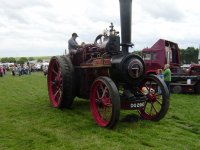
You're only about 150 years late there bud....

Ruston_and_Hornsby_steam_tractor_sn_115100_of_1922.JPG
 
   / Burning down trees for electricity #3  
Biomass generators (chopped up trees burnt to power a steam turbine generating plant) have been built here. They tend to be expensive sources of power. The paper mills use them to do on-site power generation, but that is a waste by-product use of the trees that are going to be trucked to the paper mill anyways.

They get reduced rates from the utility because they can offset peak loads, and they can sell the generated power and get renewable energy credit prices.
 
   / Burning down trees for electricity #5  
The economics of burning wood is dominated by collecting and transporting costs. The successful biomass projects are generally located at a lumber mill or some other kind of processing facility where all the transportation costs are already paid for by the primary process and the electrical generator gets the leftovers free.

There have been plans to grow various crops as feedstock but the harvesting and transportation costs have always been a problem.
 
   / Burning down trees for electricity #6  
Even though I do not buy into the Carbon Reduction hype for climate change reasons, I do burn wood for heating my house as a major supplemental to propane. As I look at it the tree is going to rot and release its carbon so why not accelerate that release via rapid oxidation and thereby eliminate the release of carbon from burning propane, natural gas, fuel oil, etc.? I think it also help that I have trees very nearby and can in a couple of hours cut and stack a cord of wood, i.e. it is very cost effective for me since the supply and the consumption are very near to each other. I also like the fact that it is physical exercise but as the years pass I am liking that part less and less.

I would prefer to have an outdoor wood burner but our I live too near town and they have banned those too close to town. Consequently I am stuck with much more cutting and splitting and carrying to be able to use the wood in my fireplace insert. I also have to live with the mess of the wood in the house. but the heat is so nice that I will live with the issues that arise!
 
   / Burning down trees for electricity
  • Thread Starter
#7  
The economics of burning wood is dominated by collecting and transporting costs. The successful biomass projects are generally located at a lumber mill or some other kind of processing facility where all the transportation costs are already paid for by the primary process and the electrical generator gets the leftovers free.

There have been plans to grow various crops as feedstock but the harvesting and transportation costs have always been a problem.

You are exactly right. It would have to be economically feasible. It's just a shame to see all these trees rotting.
 
   / Burning down trees for electricity #8  
Here in northern California in the last 8 or 9 years they have really changed how they log on land owned by the large timber companies. Before they would mostly pile and either leave or burn the waste trees, a little bit was chipped. Now they will go in before logging and remove everything that is to small to use and the oaks that will fit through the chipper and stack them to the side to be chipped along with the limbs and tops after they are done. There are subsidies for agricultural and timber material that can be used in cogeneration plants so that helps but also with timber prices so low they are looking at more ways to make money.
Tom
 
   / Burning down trees for electricity #9  
There is 1 obvious answer to your question and that is labor cost. There are far too few specialized logging machines and too much manual labor involved. Not to mention you are talking selective logging, which only pays with expensive large trees of a desirable species for exotic application (veneer or furniture). Selective logging would never work out to keep a boiler fired. If you start a more systematic logging process, the environmentalists will be putting the brakes on because of some obscure bug or rat.

There is a lot more potential for decentralized combined heat and power using natural gas (each home generates its own electricity and gets heat as a by product). Commercial units have been built and pilot projects run in several states, but it never seems to be able to compete against coal powered electricity. One needs to sell millions of units before the development costs are covered at which point it starts getting cheaper. Summer can be a problem when you just don't need the heat and so far they don't have an absorption type AC unit set up to use the heat in the right way.
 
   / Burning down trees for electricity #10  
Even though I do not buy into the Carbon Reduction hype for climate change reasons, I do burn wood for heating my house as a major supplemental to propane. As I look at it the tree is going to rot and release its carbon so why not accelerate that release via rapid oxidation and thereby eliminate the release of carbon from burning propane, natural gas, fuel oil, etc.? I think it also help that I have trees very nearby and can in a couple of hours cut and stack a cord of wood, i.e. it is very cost effective for me since the supply and the consumption are very near to each other. I also like the fact that it is physical exercise but as the years pass I am liking that part less and less.

I would prefer to have an outdoor wood burner but our I live too near town and they have banned those too close to town. Consequently I am stuck with much more cutting and splitting and carrying to be able to use the wood in my fireplace insert. I also have to live with the mess of the wood in the house. but the heat is so nice that I will live with the issues that arise!


I, too, heat almost solely with wood and have been doing it since 1976 at a 6 cord plus/yr rate. I is "sorta" carbon neutral as you pointed out. that wood would rot and release its carbon 'eventually'. Tht is the rub. Short term it adds carbon as you burn far more wood in a give time span than that same amount of wood would have rotted.

The offset by not burning oil/gas doesn't cover it all as wood is nowhere near as efficient as oil/gas appliances are.

Harry K
 
   / Burning down trees for electricity #11  
There is a cycle of wood growing, consuming carbon dioxide, dying and releasing carbon dioxide - and creating soil components for the next generation of tree growth. If the net amount of trees is stable, this is a carbon neutral cycle. What comes out of the ground goes in the air and back into the ground.

Not so with coal & petroleum products that get "unsequestered" from the ground, released into the air, but don't get returned to the place they came from. Net carbon in the air just keeps going up.

Or so I tell myself as I watch the wood smoke from my chimney.
 
   / Burning down trees for electricity #12  
I see a lot of construction/clearing sites that chip up wood and haul it off to be made into compost or mulch. I really prefer that over seeing huge burn piles around cleared areas as we used to see. Of course, a huge dirt filled stump doesn't chip up very well and the stump piles normally get burned around here. Even so, lots of the tree masses are chipped and re-purposed. In one area near my house, several hundred acres burned due to a wild fire. It's a rural area with few homes and the oak trees were just left to stand and rot after they died. It's hard for me to drive by and see that, but there is a green layer starting to regrow under all those dead trees. I guess Mother Nature will eventually put all that dead wood to use.
 
   / Burning down trees for electricity #13  
The other problem with biomass burners is air quality. Some of the plants burning waste wood have gotten into trouble with the EPA because of air pollution.

Later,
Dan
 
   / Burning down trees for electricity #14  
From a forestry perspective, it is better to leave "slash" lay on the ground. The current thinking is at least 1/3 of what would be considered waste wood from tree tops and limbs should be left in the woods, not in piles though, just leave it spread out.

This feeds the soil and provides shelter for natural regeneration of seedlings. That advice is for New England, of course.
 
   / Burning down trees for electricity #15  
In some cases, burning is better for "global warming" issue. If you have a situation where the biomass is buried it will tend to decompose in the absence of oxygen, resulting in methane instead of CO2 and methane is a much more potent greenhouse gas than CO2. That's why putting wood, grass, etc into landfills is a really bad idea.
 
   / Burning down trees for electricity
  • Thread Starter
#16  
Maybe it would be more cost efficient to pay people to bring the dead trees to the electric generating plant. Especially if the plant was in an area with lots of trees.
 
   / Burning down trees for electricity #17  
You're only about 150 years late there bud....

View attachment 303133

Interesting. Looks like that old smoothie has be retrofitted with some solid rubber pads to enable it to run on pavement. Reminded me of something I hadn't thought of for years...when I was a kid back in the 40's and 50's, I recall road signs in rural areas that read as follows: "Tractors with lugs prohibited". Didn't mean much then, but I can imagine what one of those old tractors with steel wheels and big lugs would do to a blacktop road.
 
   / Burning down trees for electricity #18  
Search for wood-gas generator.
I'm on a different computer and can't find it immediately, but there's a LOT of info on it and there are some small units to generate about 10KW of power.

That despised organisation, FEMA, published http://www.woodgas.net/files/FEMA_emergency_gassifer.pdf

There's
http://www.gvepinternational.org/si...eb_final.pdf?gclid=COaE9sO5uLUCFcGqPAodyXUAGg

One of the "problems" was that with the abundance of cheap oil it wasn't worth it to chip wood for gas and electricity.
 
   / Burning down trees for electricity #19  
Local mills have gotten so efficient they no longer make enough wood waste to run the boilers. They chip trash trees and haul in fuel to run the mill. They use the boilers to run generators, steam kilns, steam presses for chip board, fuel pellets, resin stills and use waste heat to dry the fuel before it goes into the boiler. They ship logs in one end and the only thing that comes out the other is the sweet smell of new milled lumber. Bark gets ground up and shipped to landscape suppliers, and the ash gets spread back on the timber land.

During the Enron energy crisis in California, they were firing up mothballed mills just to run the generators.

Co-generation is very profitable if you have some use for the waste heat, like heating buildings.
 
   / Burning down trees for electricity #20  
Originally Posted by dirtyoldman

You're only about 150 years late there bud....

Attachment 303133


Interesting. Looks like that old smoothie has be retrofitted with some solid rubber pads to enable it to run on pavement. Reminded me of something I hadn't thought of for years...when I was a kid back in the 40's and 50's, I recall road signs in rural areas that read as follows: "Tractors with lugs prohibited". Didn't mean much then, but I can imagine what one of those old tractors with steel wheels and big lugs would do to a blacktop road.

I must be missing something. I saw that in the

original post and was wondering. What does that have to do with generating electricity other than it _could_ be used to drive a generator. It certainly doesn't show any sign of an on-board generator.

Harry K
 

Tractor & Equipment Auctions

WERK-BRAY 23" PIN ON BUCKET (A52706)
WERK-BRAY 23" PIN...
2020 Chevrolet Silverado 1500 Pickup Truck (A59230)
2020 Chevrolet...
*Selling at Royal Auction Tampa, FL Location* (A59231)
*Selling at Royal...
2021 Club Car Carryall 500 Electric Utility Cart (A59228)
2021 Club Car...
2024 CATERPILLAR 305 CR EXCAVATOR (A52709)
2024 CATERPILLAR...
2001 Pierce Spartan Model Tilt Pumper Fire Truck (A59230)
2001 Pierce...
 
Top
