Deadly Blue Green Algae

/ Deadly Blue Green Algae
  • Thread Starter
#21  
For instance, my dump trailer and container are covered in MOSS. That has never happened before.
 
/ Deadly Blue Green Algae #26  
It's not a freak out event. sheesh. many, many people take their dogs to a park, lake, etc... where they've gone for years to let the dogs play in the water, fetch sticks, balls, etc... then one day the dog dies after having a great time.

I think several of you do not understand what this stuff is and are making uneducated comments.

For example, this woman's three dogs all died within hours of each other.
- Two of the dogs NEVER GOT IN THE WATER.
- The water was clear.

No one in their right mind would even think that there was something in that water that could kill their dog with just a couple licks.

Watch this video
Blue-green algae kills dogs at North Carolina pond, owner says

Interestingly enough that article includes links to the same site I posted earlier -- so as I've said in prior posts this seems like a lack of education issue that's resulting in people being surprised.

...which is surprising to me. Though I may very well be biased/confused as I grew up in MN, and may very well have been taught to watch/study the water more than most because of stuff like this (whether plant, bacterial, viral, whatever) as some of them (even in small quantities) can kill a person. Which in a land that has literally thousands of small bodies of water spread everywhere makes learning the dangers associated with open bodies of water rather important to know.

So perhaps I'm not in my right mind, but from what I was taught growing up I would expect water in lake/pond to potentially be hazardous/lethal --- and more likely to be hazardous under certain conditions (some of which may change over just a few days, or even hours depending on environmental conditions and body of water). As well as there being an increased danger for certain parts of the body of water (like around the edges where conditions tend to favor growth of a lot of different organisms).

On that note, (while it may sound absurd) we were usually told to wash our hands (or even rinse off completely) after swimming/playing around in lakes/ponds in the summer (and they weren't polluted bodies of water). At this point between things like that and the education I received checking out the water every time I'm going to be in/around it seems rather like basic water safety to me.

....though this thread is making me think that what I considered "basic water safety" many not be so basic or even taught everywhere -- which is incredibly unfortunate as it leads to things like this:
Deadly water: The Dangers of Swimming in Warm, Freshwater Lakes, Ponds and Rivers (which I only found while looking for the links like the below)

So I guess my question is: Are things like this:

5 Signs that a River or Lake is Not Safe to Swim In

(which didn't specifically include films across the top of the water even though films generally aren't a good thing to see as it means there's something on the water) ...and she did mention seeing a film, which I'd suspect one dog got on itself and then shared (in some way) with the other two (and if there was any licking involved.... )

and these:

Steps of Healthy Swimming | Healthy Swimming | Healthy Water | CDC (mostly for pools)
Recreational Water Illnesses | Healthy Swimming | Healthy Water | CDC (generic freshwater pathogen advice/precautions)

-- not universally taught?

Not trying to be disrespectful here, but it's just hard for me to wrap my head around not knowing these sorts of things -- and even harder when it comes to not being taught these things (particularly given the potential consequences).
 
/ Deadly Blue Green Algae #27  
^^^^
Aside from the obvious about drowning, the points in the link you provided are foreign to me. Although I don't recommend drinking untreated water, or swimming in beaver ponds; I've never really known or thought about unsafe water. Perhaps it's because most of ours flows fast enough so that it doesn't get stagnant?
 
/ Deadly Blue Green Algae #28  
Fresh water ain't fresh. I remember as a kid we carried Halazone tablets when camping. You didn't drink untreated or unboiled water.
 
/ Deadly Blue Green Algae #29  
Fresh water ain't fresh. I remember as a kid we carried Halazone tablets when camping. You didn't drink untreated or unboiled water.
No, but my dog certainly does. :D
 
/ Deadly Blue Green Algae #30  
"Fresh water ain't fresh." <- That's a good way of putting it ..... I'm going to need to try and remember it.

I'm right there with you on not drinking unboiled or untreated water .... though (if I'm recalling it correctly) from what I was taught even boiling & treating doesn't get rid of all the hazards -- just most/all (depending on what's present) of the living ones.

If I recall correctly one of the things we were taught in grade school was boiling and water treatments were good measures to use, but the safest treatment for surface water sources (if time and resources were available) was to distill the water by condensing water vapor on the underside of a pan/clean surface and funneling that into a canteen/reservoir for drinking. Which if memory serves was also taught with the fact that combustible containers (like paper cups, and birch bark pots) won't burn as long as they're in contact with water since the water takes the heat to boil and in doing so keeps the combustible material below its ignition point. The only (slight) disadvantage to distilled water is that it doesn't have some of the essential trace minerals that other water sources can provide. The other disadvantage was that distilling requires a fair amount of time and material (a container to boil water, a sanitary surface to collect and condense the water, a suitable container for collection, and all the fuel to boil the water).

Again going from memory: stagnant water was the most likely to support things growing in it, but even running water wasn't completely free of hazards as where it was running from, and what it might be eroding and carrying along could introduce it's own set of hazards. For example: mineral concentrations (even the safe ones can reach hazardous concentrations), runoff from areas with lots of fecal, or decaying matter present, along with all the obvious (and some not so obvious) human-caused hazards. (I'd rather not take this discussion into all the things that may not get tested for, monitored, or filtered out of public water sources, which may also find their way into surface water sources).

The other "good" sources of water were melted snow, and intentionally collected rainwater (assuming there isn't a whole lot of air pollutants in the area -- though frequent/hard precipitation can help reduce that, by knocking it down and putting the previously airborne material into surface water sources).

A few more useful links I just found:
WATER SAFETY FOR CAMPERS
A Guide to Drinking Water Treatment and Sanitation for Backcountry and Travel Use | Camping, Hiking, Travel | Drinking Water | Healthy Water | CDC
Ground Water — Safe Drinking Water Foundation (this one looks to have links to a fair amount of other educational material ... I think I may even have experienced some of the older versions of the EPA educational activities when I was in grade school a few decades ago)

Over all it's not something to be paranoid about, but it is something to be aware of so if/when the need arises you can make the water safe (enough) to drink. ...and of course this is one of those things where not knowing can indeed result in sickness or even death.
 
/ Deadly Blue Green Algae #31  
40 years ago it wasn't at all uncommon to be driving down the road and see a spring where people stopped to get water. Often these had been used since time immemorial, and some were once used to bottle water. (My father had one of these on one of his properties.) Now most of them have been capped, and if there is one available the landowner is responsible to have it tested every year. I had one dug out on my property and when we hit ledge the water was boiling out in three places. During a drought I pumped 10,000 gallons of water out of it before it went dry. Yet it failed the water test, and I never tried to fix it.

One thing that I have and should be carrying is a water filter; I can put a quart of unclean water in and it will (supposedly) come out the other end clean.
 
/ Deadly Blue Green Algae #32  
The other "good" sources of water were melted snow, and intentionally collected rainwater (assuming there isn't a whole lot of air pollutants in the area --

I'm reminded of a situation many years back. There was an extended power outage. I was talking to a neighbor who was concerned about where he would get water since his well pump wouldn't work without power. I looked around the several acres of yards with 6-8" of new fresh snow and the 500 gallon propane tank feeding his gas stove and furnace ....
 
/ Deadly Blue Green Algae #33  
40 years ago it wasn't at all uncommon to be driving down the road and see a spring where people stopped to get water.

20 years ago, this house didn't have water. Previous owner tried to get a well drilled and came up dry (pun intended). Owners before them had a 1,000 gallon cistern that would be filled by a local water truck. When I first moved in, that all I had. Every few weeks, I'd had to call the guy and have water delivered. He'd go to a certain place along the road, drop a hose in a running spring, start his gasoline pump and fill up. I'd pour a cup or so of bleach in the cistern as he dumped the load. Never got sick or had any problems.

Luckily that only lasted about 5 years before the county system installed water lines to most every one.
 
/ Deadly Blue Green Algae #34  
^^^^
You're really knocking out the play on words today! :D
 
/ Deadly Blue Green Algae #36  
Also, it's not really algae, it's a bacteria.

Cyanobacteria - Wikipedia

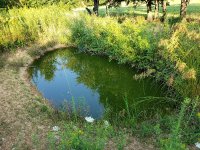
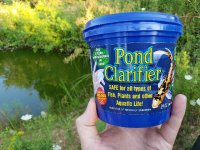
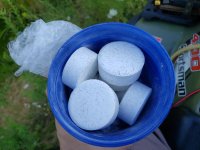
So, I have a couple of areas (That I made) on my property to tank some water (all surface) for the critters. This year weather wise we have been very hot and dry and I can tell that the critters are not visiting it as much (game cams) and I am seeing it quite green. Well, I want to see if I can clean this up so today I added 2 of these tablets. So, will see if it gets better in the next few weeks. The stuff is not cheap but if it works I guess I will keep it going at least in the hot months.
 

Attachments

  • pond-1.jpg
    pond-1.jpg
    195.7 KB · Views: 61
  • pond-2.jpg
    pond-2.jpg
    93.3 KB · Views: 72
  • pond-3.jpg
    pond-3.jpg
    99.2 KB · Views: 61
/ Deadly Blue Green Algae #37  
Interestingly enough that article includes links to the same site I posted earlier -- so as I've said in prior posts this seems like a lack of education issue that's resulting in people being surprised. . . .

I think there is a lack of basic education in sanitation everywhere! When I was growing up, washing your hands after the bathroom and before you ate was a given. Now, businesses have to post signs, etc reminding their employees . . .
 
/ Deadly Blue Green Algae #38  
I notice moss growing on all kinds of seldom moved stuff around here and I have never experienced that before.

never experience what?

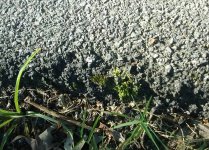
Moss. Even on roads.


I've seen it in places that don't get as much Sun as others.

Nice play on words. :thumbsup:

Yes it was :laughing:

Y'all thought I was funnin' ya', didn't ya'?


MossRoad.jpg


Just a few small patches left. Used to be a lot more, even out into the cracks in the pavement, but the recent dry weather has killed a lot of it off.
 
/ Deadly Blue Green Algae
  • Thread Starter
#39  
sign.jpg
 

Marketplace Items

UNKNOWN 500BBL WHEELED FRAC TANK (A58214)
UNKNOWN 500BBL...
UNUSED RAYTREE RMRB72-72" HYD POWER RAKE BUCKET (A60432)
UNUSED RAYTREE...
NEW HOLLAND 706 30 INCH 3PT DIRT SCOOP (A55315)
NEW HOLLAND 706 30...
2003 International 9200I (A53317)
2003 International...
1996 Ford Ranger Pickup Truck (A59230)
1996 Ford Ranger...
yellow ball Trailer (A56859)
yellow ball...
 
Top