Dump trailer direct wire?

   / Dump trailer direct wire? #1  

LD1

Epic Contributor
Joined
Apr 30, 2008
Messages
22,822
Location
Central Ohio
Tractor
Kubota MX5100
I know quite a few here have a dump trailer. Anyone decide to direct wire to run off the trucks battery?

I see it is a fairly common thing cause when googling it, lots of posts on landscape type forums.

I only dump the dump trailer with the electric maybe 20-30 times a year. Most of the time it runs off the remotes on my tractor. Im at the point where the battery just wont hold a charge. Not sure the exact amps a dump trailer wants to pull. I have seen some say 250+. Doing some voltage drop calculations and wanting to keep over 12v (figuring 14v supply off truck alternator) Im coming up with 4/0 wire.

But I have also read people that have used 2/0, down to as small as 2 ga. And some even with a 200a breaker. They seem happy.

Looking at a kit like this https://www.polepalsolarlightingsys...NUwxnatVE974zkY6v6UaAr68EALw_wcB#.YWSIohrMKM9
There are several out there.....and seems several people have done this to dump trailers. I'd connect the "winch" side to the dump trailer.

AS a bonus I'd be able to jump stuff from the back of the truck and never have to pop the hood with the clamp accessory.

Question I am pondering is whether or not to leave the dump trailer battery in the circuit......to kinda act as a buffer yet still be as fully charged as my pair of truck batteries....or just get rid of it?

Wondering if any fellow TBN members have done this. Seems a $120-$150 kit makes more sense than spending $150 on a battery every few years. Seems its a wiser use of funds to direct wire.
 
   / Dump trailer direct wire? #2  
I would think you would want a really good connector, one that wouldn't corrode as well as a very good ground on both the vehicle and trailer. Since 12v winches use the same kind of power I see no reason not to. The only risk would be the fuse. If the wire got damaged and partially shorted out it may not blow the fuse and would most likely cause a fire. One trick I have found for grounds is to drill a hole in the frame and then put a stainless bolt through it. Weld the head of the bolt (it's on the opposite side of the frame from the threads) and then paint the head. It'll never rust so you'll always have a good ground. I do it on all my trailers for the brakes and lights.
 
   / Dump trailer direct wire? #3  
take the battery out, if its already dying all the time, then your just putting a strain on the system to charge it, for what i assume is a short duration.

I disagree about the ground frame, don't even change it, the wire kit will dedicate a ground wire up to the battery. otherwise you will need to upgrade the ground strap.
 
   / Dump trailer direct wire? #4  
If you can wire it of sufficient gauge and buy connectors that do the job for $150 that’s what I would do. I don’t like the battery pump in my dump trailer either. A vehicle dependent setup wouldn’t work for my use. If I was going to do anything with mine I would put a Honda motor on it but that’s more work than I want to do.
 
   / Dump trailer direct wire? #5  
For a single dump here and there it should be fine.
But multiple dumps could sap your truck's battery down too far if there's not much recharge in between.
 
   / Dump trailer direct wire? #6  
Based on your use, I would eliminate the battery also, I do not see any advantage to keeping it. I don't know anything about the company you are looking at (as far as their quality goes) but for less than $26 dollars more they offer a kit for dump trailers that includes the proper sized manual reset circuit breaker... I might look at that for the extra few dollars....

7pc Dump Trailer Wiring Set
 
   / Dump trailer direct wire? #7  
Step by step, with pictures:

 
   / Dump trailer direct wire? #8  
To add a suggestion to the instructions that nikerret suggested - If you are thinking about doing the wiring to your dump trailer so that it is "keyed" (i.e. only live when the truck is running) or switched power otterboxes make excellent water/dust resistant housing for relays and such.

I wanted auxiliary power distribution for my truck to power lights and air bags and put all of the relays and the necessary bus bar in an otterbox, with the solenoid and main fuse mounted adjacent to the relay housing.
 
   / Dump trailer direct wire?
  • Thread Starter
#9  
Well, as it turns out....so many of those $100-$120 "winch" kits are CCA or DCCA wires:mad:

But I did find a kit from a company out of Michigan that uses 2ga pure copper welding wire

I also got a 15" piece of 2ga with ring terminal ends so I can go from battery to a 300A breaker which I also ordered.

All in everything was ~$160 which is about the cost of the battery. I measured at the truck and trailer and 24' for the truck and 8' for the trailer was about perfect. 32' total cable.

14.5v out of the truck running and 200A load should still give me just shy of 12v. Which should be sufficient to run the pump. But I think I am gonna leave the battery in the circuit to let it help whatever it can. It may come back to life when I actually have sufficient power back there to keep it charged. But I havent decided yet. I guess I wont decide until I install it and see how it works both ways.
 
   / Dump trailer direct wire?
  • Thread Starter
#10  
Step by step, with pictures:

I ran across that post when I was searching the subject. Basically the same thing I am doing. Curious why you used 2 breakers....at the truck and at the trailer?

I saw the kit you linked but dont have an amazon account....and couldnt find whether or not it was pure copper wire or CCA/DCCA

Now that you have had some time since you have done yours....is it still preforming as expected? Anything you have changed or would do different if you do it again
 
   / Dump trailer direct wire?
  • Thread Starter
#11  
To add a suggestion to the instructions that nikerret suggested - If you are thinking about doing the wiring to your dump trailer so that it is "keyed" (i.e. only live when the truck is running) or switched power otterboxes make excellent water/dust resistant housing for relays and such.

I wanted auxiliary power distribution for my truck to power lights and air bags and put all of the relays and the necessary bus bar in an otterbox, with the solenoid and main fuse mounted adjacent to the relay housing.
Not adding a solenoid or any other complexity to the system.

Just heavy gauge wire (protected by a breaker) back to a plug. SO I can run straight to the dump trailer with sufficient current to keep that battery charged and/or run pump direct from truck.

These are the same pumps used on 350/3500 and 450/4500 dump truck bodies. They dont have their own batteries. Just heavy gauge cables going from the battery to the pump. I basically want the same thing just a little farther from the battery.

Actually this is one of those times I wish PTO options out of the T-case on the truck were a little more common. Because I'd just hang a pump off it....and give myself a set of remotes on the back of the trucks flatbed and run the trailer just like I do off the tractor
 
   / Dump trailer direct wire? #12  
I have a battery on my dump trailer that has been there for about 10 years. I installed an Anderson plug on truck and trailer with 8 awg wire. I plug the trailer in when I hitch up. I use the trailer sometimes once a month and sometimes 10 times, sometimes not for 3 months. As long as I plug-in when I hitch up it works great.
 
   / Dump trailer direct wire? #13  
i have an electric forklift battery connector by my 7 way light connector. #1 wire from battery. frame ground. my liftgate is on the same wire. do a voltage check at the hyd motor to confirm 11 volts when starting to dump a heavy load.
 
   / Dump trailer direct wire? #14  
Now that I've scrolled down past all your post signatures (kidding, kidding), I'll add 2c,

Keep the battery. It will be a nice buffer, allowing local, high-amp discharge to power the hydr pump, then taking slower recharge from your truck in between dumps. And you can easily control the battery charging situation by just deciding when to have it plugged in. It won't need to be anywhere near fully charger to still give good performance as long as you have it backed up by the truck on your fancy new cables.

When I use my neighbors dump trailer, it usually has a dead battery in it, or no battery at all. SO I throw in a dead battery of my own (as long as it has at least 10V on it) and run jumper cables from my (running) tractor battery. I tried it once without a battery present in the dump trailer, and it was much harder on my tractor battery/engine, and all the jumper cable connection points.

I want to do this also, and get a hitch-mounted winch. But maybe also set up a high-power 12v flood light setup that I could run off the truck too.
 
   / Dump trailer direct wire? #15  
My dump trailer battery charges off my truck when it is hooked up and running. It also has a small charger in it that I plug up some of the time to keep the battery charged. No problems for years. Never replaced the battery.
 
   / Dump trailer direct wire?
  • Thread Starter
#16  
My dump trailer battery charges off my truck when it is hooked up and running. It also has a small charger in it that I plug up some of the time to keep the battery charged. No problems for years. Never replaced the battery.
Mine charges off the truck too. But the small 12ga wire through the 7-way is only capable of so much.
 
   / Dump trailer direct wire? #17  
I ran across that post when I was searching the subject. Basically the same thing I am doing. Curious why you used 2 breakers....at the truck and at the trailer?

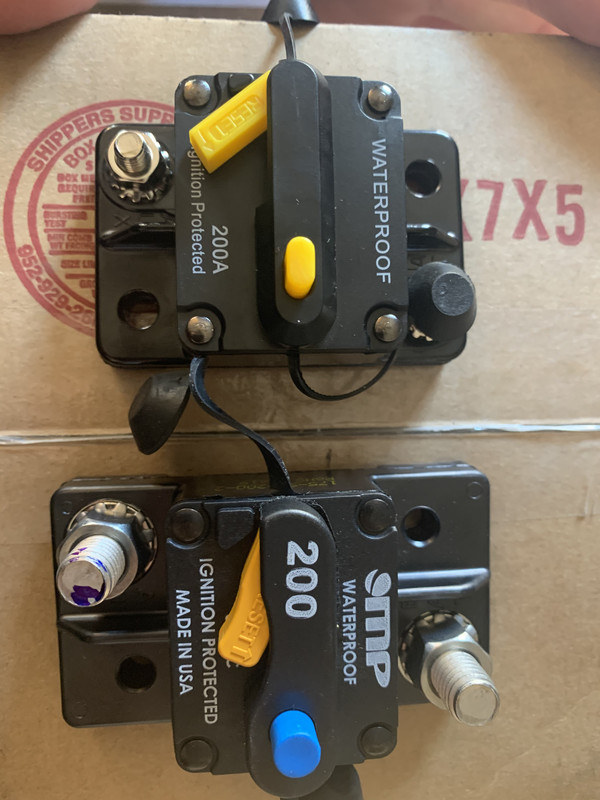
Since there are batteries, at both ends, I didn’t want either connector to be hot, when disconnected. My thoughts were it would be safest to be able to kill them, without disconnecting from the battery. If the plug got compromised, I wouldn’t have a hot whip flopping around.

I saw the kit you linked but dont have an amazon account....and couldnt find whether or not it was pure copper wire or CCA/DCCA

It‘s DCCA.

Now that you have had some time since you have done yours....is it still preforming as expected? Anything you have changed or would do different if you do it again

The ends were crimped and not soldered, on the kit. They corroded and I had to cut the corroded part out. I then had all of the connections soldered. My setup stayed connected, quite a while and was exposed to a lot of rain. I also cut the ends a bit shorter and built a jumper, so I could stow them, easier.

The DCCA has been fine. When I bought the kit, I couldn’t afford to build it with copper. That would be better, but not enough to justify the cost difference. Doing it, again, I would solder it, right from the start.

The breakers are awesome. I have never had an issue, in that regard. They do their job and are robust enough to hold the current, even during hard pulls.

It takes two more connectors and more time, but I like having the jumper, instead of the long ends, at the connection point.

My truck has a high idle system. I can let the truck idle, at 600 RPM, if it’s a light load. The high idle allows for 900 RPM, minimum. After that, I have a potentiometer that I can dial from 900-2,400 RPM.

We put a meter on it, to see if having the truck connected was doing anything and if using the high idle mattered. It did. Huge advantage. I don’t recall the exact numbers, but when we tested with an empty box (16’ of 7g steel), the trailer battery, alone, went from around 12.5 volts to around 7 volts, as it pulled power. With the second battery (truck battery) connected, but the truck off, the voltage only dropped to around 9 volts. With the truck running, at regular idle, the voltage only dropped to around 12 volts. With high idle maxed out, it was around 13 volts, while lifting. Obviously, a loaded bed would pull more power.

Volts X Amps = Watts. The pump needs a certain amount of watts, to move the load. If the voltage drops, the pump will pull more amps to make the same power. If you can keep the voltage higher, it requires less amps, to do the same work.

For me, this setup has paid for itself many times over. I have the 7-way plug charging (it’s just a trickle charger-will keep a full battery topped off, but won’t charge up a depleted battery) and a solar panel (7.5W with a controller, again, just a trickle charger). My trailer is legal to haul 5 tons. I can get 4-6 dumps, at maximum weight capacity, on a full battery. I do a lot of commercial hauling. With the plug setup, I can go a full day and never have a low battery.

Of course, this is harder on my truck alternator (only a 157A unit) than it would otherwise work. To me, it’s a calculated cost of doing business.

Last week, I did a job where we demo’d a house. The dump was only two miles away. I was able to dump four heavy loads, in the morning, then dump several loads of heavy dirt, in the afternoon. We got the dirt from a mile away. That’s not much time to let a different method charge up the trailer battery. When I got to where I dumped, I kicked the high idle up. Even a load I put too far forward (my first time on an articulating loader) was lifted, without fuss. Without the 2 AWG setup, I would have been home, at lunch, while someone else hauled dirt.

I see people recommending no battery, on the trailer. For me, I want it to stay. I’ve even considered adding another trailer battery. Where I live, we have major temperature extremes and often, in the same week. That’s hard on batteries. It’s less hard on them, if you can keep them topped off.
 
   / Dump trailer direct wire? #18  
Removing the battery also removes the emergency brakes if trailer disconnects. The 12v power plug could be damaged if it's not parallel to trailer pull direction.
 
   / Dump trailer direct wire? #19  
You don't even need a heavy wire to charge. Install an automatic resetting circuit breaker and run it. I've done it on my dump trailer for over ten years without an issue.
I didn't read it all but if you want to do away with the battery in the trailer you will need heavy gauge wires running from both the positive and negative from the truck battery. I once bought a retired rescue truck (think rescue squad) that had heavy cables coming from the trucks batteries to the control panel in the box, they did wrap the wires with a protective sleeve.
 
   / Dump trailer direct wire?
  • Thread Starter
#20  
You don't even need a heavy wire to charge. Install an automatic resetting circuit breaker and run it. I've done it on my dump trailer for over ten years without an issue.
I didn't read it all but if you want to do away with the battery in the trailer you will need heavy gauge wires running from both the positive and negative from the truck battery. I once bought a retired rescue truck (think rescue squad) that had heavy cables coming from the trucks batteries to the control panel in the box, they did wrap the wires with a protective sleeve.
There were only 18 posts prior to yours. Everything you mentioned was addressed.

Yes there is a charge wire. It's only 12 ga and really limits the charge ability. The trailer already came with an automatic reset breaker for charging. It has always worked.

This is not a new problem with dump trailers. Fact of the matter is, if you own a dump trailer, at some point you are gonna experience a battery that just don't have enough juice.

In a perfect world, you'd just sit there till the truck charged it enough, or you would be in reach of an extension cord and charger. Worst case, you are hand unloading.

Yes, I know I will need "heavy" wire. Hence why I ordered a kit with 2ga purr copper welding wire.

I am glad you went 10 years of your factory battery without any issues whatsoever. Most don't get that lucky
 

Tractor & Equipment Auctions

2013 VOLVO VNL (A55745)
2013 VOLVO VNL...
2015 JOHN DEERE 1050K WH CRAWLER DOZER (A52707)
2015 JOHN DEERE...
500 BBL FRAC TANK (A58214)
500 BBL FRAC TANK...
AEREATOR (A58214)
AEREATOR (A58214)
(INOP) 2016 CATERPILLAR 259D SKID STEER (A52709)
(INOP) 2016...
Le Roi 80-Gallon Air Compressor, 220 Volts (A59076)
Le Roi 80-Gallon...
 
Top