Gas Welding Practice

/ Gas Welding Practice #1  

k0ua

Epic Contributor
Joined
Jun 28, 2009
Messages
30,638
Location
Branson, Mo.
Tractor
Kioti DK35se Hydrostat
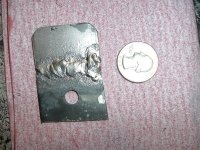
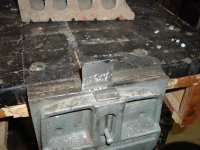
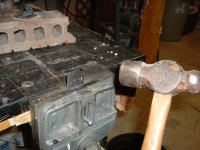
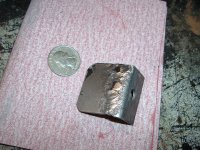
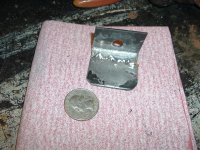
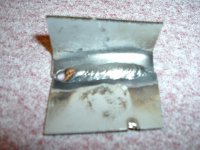
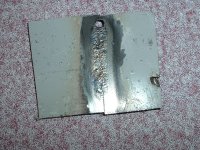
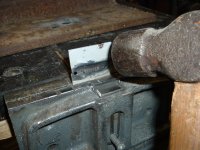
I tried some butt welding practice on a small scrap of rusty steel I cut in two today just for fun.
Welder: Lincoln (Harris) PortaTorch.
Tip : #1
Rod: RG45 1/16
Pressure: about 2 lbs of Ace and Oxy
Metal thickness: about that of a Quarter.

Notice side 2 is more smoothed out. I practiced that technique, of running the puddle with the torch. Hit it with a hammer, and bent the base metal.
I will get better with practice.
James K0UA
 

Attachments

  • side 1.jpg
    side 1.jpg
    486.5 KB · Views: 393
  • side 2.jpg
    side 2.jpg
    492.3 KB · Views: 259
  • destructive test.jpg
    destructive test.jpg
    490.6 KB · Views: 241
  • moment of truth.jpg
    moment of truth.jpg
    485.1 KB · Views: 221
  • side 1 after test.jpg
    side 1 after test.jpg
    488.5 KB · Views: 226
  • side 2 after test.jpg
    side 2 after test.jpg
    484.3 KB · Views: 466
/ Gas Welding Practice #2  
What kind of torch are you using? I'd step up to a larger welding rod. It also looks like you have a lot of cold lap going on there. Watch for the keyhole to develop and then add the rod at the rear of the key hole using a slight circular motion, swiping from one side to the other side of the weld to create nice, smooth ripple. Keep the rod on the edge of the flame, just enough to keep the end of the rod wet but not melting. Are you using a forehand approach?
 
/ Gas Welding Practice
  • Thread Starter
#3  
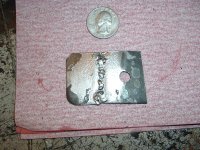
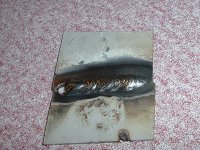
Harris torch, here are some more..pix.

the 3rd series is done with the Everlast 160 set on 39 amps with 1/16 Campbell Hausfeld rod. I moved too fast, not in a straight line:( and as expected the penetration was poor, and when tested the weld broke. to be fair if I had welded the back side, it would have held,. Metal thickness was about like a quarter. the 4th series was gas welded on the Lincold/Harris PortaTorch with the #1 tip , A little better results, expecially on one side. of course when hit with the hammer, the base metal bent, and the weld held perfectly. My technique is not good, sometimes I can get the "wetting action" I am looking for and you can chase the puddle down the seam really well. sometimes it just wants to "boil", and a puddle never really forms. Too hot?.. I need lots more practice with the torch and stick for that matter. But I could have done better with the stick if I had tried. Probably wouldnt have used CH rod either.:laughing: It was just handy and I am trying to burn it up. And now I am out of OXY!:( Oh well, done for the day.
James K0UA
 

Attachments

  • weld 3 after.jpg
    weld 3 after.jpg
    479.6 KB · Views: 171
  • weld 3 moment.jpg
    weld 3 moment.jpg
    486.5 KB · Views: 226
  • weld 3 not full.jpg
    weld 3 not full.jpg
    469.1 KB · Views: 194
  • weld 3 side 1.jpg
    weld 3 side 1.jpg
    438 KB · Views: 250
  • Weld 4 after test.jpg
    Weld 4 after test.jpg
    486.7 KB · Views: 360
  • weld 4 moment.jpg
    weld 4 moment.jpg
    479.6 KB · Views: 202
  • weld 4 side 2.jpg
    weld 4 side 2.jpg
    199.5 KB · Views: 172
  • weld 4 side 1.jpg
    weld 4 side 1.jpg
    458.1 KB · Views: 207
/ Gas Welding Practice #4  
Well,you got it stuck together but you failed the test,,,first test is to make it look good,,than you see if it will bend,,,forget about fusing two pieces together for now,,practice just running a bead on a piece of steel and making it look uniform without filler[just get a puddle going and move without melting through,,might need something a little thicker],,than try to do the same with filler,,than when you got it looking decent,,,than put two pieces together.
 
/ Gas Welding Practice #5  
One of the interesting things I've found out about welding is if you concentrate on making a good weld it will usually turn out a good looking one. You can't say the same thing always about welds made to look good, especially with mig.

I personally recommend learning to weld first using gas. That's because you learn what's happening with the metal. It also reinforces a saying I use, "when you're almost melting it away you're closer to welding than when you're not."

Welding is about the "wet". Forge welding (blacksmithing) is done with the metal wet. So is gas, arc, mig, and tig. It's easiest to see and understand with gas welding.
 
/ Gas Welding Practice #6  
For the stick, did you have the torch stuck in the positive side? It looks a little like straight polarity. What were your amps? What rod? Campbell hausfield should stick to air compressors. Get some real rods whether hobart, lincoln, McKay or even US forge. And get at least 3/32 to weld anything like that. It'll work just fine at about 60-70 amps. A little more for 7018. You should have easily penetrated through that.

Gauthier, the best welder I ever knew and could make anything hold did not have pretty looking welds. But they were strong and he could make and weld anything.(and fix anything too). My first welding instructor, that taught most of the commercial welders in S. GA, taught us, he'd rather have a gorilla weld rather than a nice smooth finished weld that didn't have any penetration. He defined a Gorilla weld as: Ugly as sin, but strong as a gorilla.
 
/ Gas Welding Practice
  • Thread Starter
#7  
Mark it was electrode positive. yes Campbel Hausfeld rods are pretty much junk, I just did that for fun.. I know better, and can make pretty good welds with good rod and correct technique on the stick. It was 39 amps and 1/16 rod. this was pretty thin metal.
James K0UA
 
/ Gas Welding Practice #9  
Well mark,thats why you're selling welding machines:),no offence really intended,,beauty can indeed be only skin deep,but in a weld,ugly goes clear to the bone,[generally speaking],,,
If you don't have the skill to put a decent looking weld on,you don't have the skill to make a quality weld,,,now you might have the skill to back yard weld something,maybe,,,

but gorrilla welds and brail welds are just for those who can't make anything else,,,plus,thats not how you learn,,thats not how you learn to do anything,you strive for perfection and never get it of course but you get better that way,you don't get better at anything saying,thats ugly and crooked but it will work...:thumbsup:
 
/ Gas Welding Practice #10  
Gauthier,
Not sure what you meant by that comment...It sure didn't seem very friendly despite the smiley.
I haven't always sold welders. I still weld on the side, and have worked commercially welding for over 20 years.I've crew welded and owned my own business. I have been trained and hold multiple certificates in multiple processes including 6G pipe. I weld AND I can fabricate. I also have a background in VoAg where teaching welding is taught.

No, a quality weld doesn't have to be a perfect ripple weld. I've seen many certified welders who welds look like steaming pile of poo. But they pass X ray. I've seen perfect top welds full of slag underneath.
Basic needs of a quality weld are not asthetic beauty, but rather free from serious defect. Ripples can be inconsistent, but it doesn't mean it has to be poorly tied in or full of slag. A little shake in the hand can be compensated for. I agree practice makes perfect, but some people never get what I call a beautiful looking weld, but are making a good living at welding and passing inspections. There are others that make better looking welds and pass inspection. If what you say is true, then I would say: Beauty is in the sight of the beholder. To me, a properly tied in weld, free of slag, with decent heat lines is a thing of beauty.

Am I saying that because my welds look bad? No, my welds usually receive compliments. Of course every welder now and then puts one up that he knows will hold but he isn't proud of. A hot piece of slag in the wrong place can make a welder to a lot of squirming...
 
/ Gas Welding Practice #11  
Mark,must not been around many code welds than,,if your welds look even close to dog poop you don't x-ray them,[you don't waste your time in other words],,,all welds[to any welding code] require that they first must pass a visual,,,than you do whatever to it,,and before the welder welds on job,he must pass a qual. test,,and,again,you got to pass visual before bending or x-raying the coupon. Don't really know what your trying to say,[weld looks like dog poop and passes x-ray,,than you say something about little shake of your hands causes not so perfect ripples],,big difference in those two...

And,I have a resume too,but not going to get into it unless your hiring:laughing:

Yeah,will agree,alot of opinions around,,but thats why they got code books,,it tells you in code books[api,asme,aws,and more],what is and what is not acceptable,,and no where in any of them does it say if your weld is ugly and looks even kinda like dog poop,that it could possably still pass.
 
/ Gas Welding Practice #12  
I know code welds must pass visual. I have seen welds I wouldn't care to see pass visual, as long as there is nothing glaringly obvious wrong with the weld they will. Poor tie ins, cold laps, excessive undercuts are all criteria in judging a weld visually. Being "purty" may be the requirement of some inspectors, but that begins to get subjective at a point that certain asthetics are judged. You can quantify undercut, visual flaws such as entrapped slag, starting the arc outside of the weld, cold lap,etc. But when it comes to quantifying beauty, you begin a subjective evaluation, that cannot be judged the same way by two different people. The point of standards is to have something you can judge objectively. As I said, beauty is in the site of the beholder (inspector).
 
/ Gas Welding Practice
  • Thread Starter
#13  
well guess I failed the look good test again.. but sure didn't fail the knock the he** out of it test! the hole at the end was where I stopped, and wanted to fill the "weld crater" oops.. too long, blew a big hole in the little quarter thickness sheet-metal..

Welder: Everlast 160
Rod: US Forge 7018 3/32
Current: 69 amps DCEP
Sheet-metal: thickness of a quarter-dollar coin, No paint removal (we don't need no stinking weld prep). Actually I suppose weld prep is a good thing.. I was just too lazy to do it, and the pieces were very small. So not all that pretty, but strong, and I could have fixed the hole easy, but that would be cheating. Personally I am satisfied that I can make functional welds on pretty thin stuff with some care. and 1/8 or 1/4 inch stuff seems easier to me. I think I can learn to make pretty gas welds, given enough practice and gas:laughing:
but the arc welder is easier, and loads faster!
Thanks guys..
James K0UA
 

Attachments

  • side 1.jpg
    side 1.jpg
    500.6 KB · Views: 267
  • side 2.jpg
    side 2.jpg
    492.1 KB · Views: 208
  • DSCF0364.JPG
    DSCF0364.JPG
    485.5 KB · Views: 151
  • after.jpg
    after.jpg
    449.7 KB · Views: 257
/ Gas Welding Practice #14  
While on the gas torch, have any of you used a Dillon gas torch? I sold them many years ago. I kept one for myself. They can do some pretty neat welding easier that most of the regular gas setups. They run at a super low pressure and burn almost completely. You can gas weld aluminum almost as easy as steel. I know a "good" welder can gas weld aluminum, but I am not a pro and with the Dillon I have done some pretty nice jobs on very thin aluminum and steel as thin as paper. The example they used when I sold them was to take a bread wrapper tie and strip the wire from the inside, then weld the two ends together. I always thought it was a pretty good test, even if there isn't much use for it.
 
/ Gas Welding Practice #15  
Mark,No its not[or it shouldn't be,lets put it that way],,if you have a weld,that meets code requirements,it can not be a gorrila weld or it wouldn't meet code requirements:laughing:

Lets say you have a spec or code that said[and most generally do say something about like this],no lack of fusion,or lack of penatration in root,no more than 1/8th inch internal reinforcement,no internal udercut more than 1/32 inch,,no more than 1/32 inch suck back[all this just for the root that you could see inside a welders test coupon on pipe or plate on full pen weld.

Than from root on out,no burn through on second pass[hot pass],,than on cap[final bead or beads],no more than a certain width,no more than 3/32 height,no more than 1/32 inch undercut,no arc strikes,no concavity,no single porosity over 1/16 of inch in dia and no more than 3,1/32 porosity spots in any inch of weld,and a few more I'm missing without looking at a code book.

Now,if a weld will meet all those requirements,,,it ain't a gorrilla weld,and it don't look like dog poop.:D

And than,you bend it or x-ray it,,on a code job I'm saying,,

You can bend them anytime you want at a school or in your backyard shop,,but your first priority if your trying to learn,is to get your welds looking decent,by making them look decent,you learn to weld,than if you want to see if they will bend without breaking into,bend them.

Speaking of bending,there are requirements for that too,,alls you need is an opening in say a 1 1/2 inch wide strap that is bent in the weld 180 degrees that is greater than 1/8th inch and you fail the bend test. They rarely break all the way into.
 

Marketplace Items

2008 MACK CHU613 DAYCAB (INOPERABLE) (A58214)
2008 MACK CHU613...
2017 Ford F-150 Crew Cab Pickup Truck (A59230)
2017 Ford F-150...
2017 Volkswagon Passat Sedan (A59231)
2017 Volkswagon...
JCT 48" HYD TRENCHER (A52706)
JCT 48" HYD...
2025 27in. MB27 Hydraulic Concrete Mixing Bucket Mini Skid Steer Attachment (A59228)
2025 27in. MB27...
2017 Ram 5500 Bucket Truck (A61306)
2017 Ram 5500...
 
Top