Hay field improvement ideas.

   / Hay field improvement ideas. #1  

twinotterpilot

New member
Joined
Apr 16, 2011
Messages
14
Location
Smiths Falls, ON Canada
Tractor
New Holland TN75
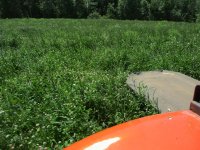
Hello from Eastern Ontario, Canada. I'm looking for some advice on improving my 20 acre hayfield. We've owned the place for about 16 years. I have all my own equipment and have taken about 40-65 round bales off over the years. Per my seed store I have top dressed a couple of times, most recently 3 years ago, by using a seed spread on my ATV and applying very late winter or early spring before the ground gets soft, but temps are on plus side. Also an August application has been suggested.
I spread mostly composted horse manure (done yesterday) typically after a couple of frosts have hit. We are on the Canadian Shield and have shallow soil on top of solid rock, so 6 to 8 inches in some spots. We do not apply fertilizer, as I cannot justify cost for 3 horses, and now on a pension income. As we require the yearly hay, I cannot lose it for a year to till and resow. Just wondering should I be using a chain harrow (which I don't have) every few years, aggressive side or other? What about running a roller (I have an old one, but need some weight) to flatten out the bumps caused by seasonal frost and ruts with all the wheeled traffic over the years. When is the best time to run either the harrow or roller if their use is recommended. Any other ideas? Thanks for reading and responding.
 
   / Hay field improvement ideas. #2  
Hello from Eastern Ontario, Canada. I'm looking for some advice on improving my 20 acre hayfield. We've owned the place for about 16 years.
First question, first priority ---> Have you had your soil tested by an ag lab? In Florida, such a lab is available in every Florida county and is operated by the University of Florida. I would submit four soil samples for twenty acres. In Florida soil tests are $7.00 each. You are operating blind without a soil test.

What about running a roller (I have an old one, but need some weight) to flatten out the bumps caused by seasonal frost and ruts with all the wheeled traffic over the years?

A box frame Disc Harrow is the implement best suited for for smoothing fields.

A Chain Harrow, even a heavy Chain Harrow, will only flatten/smooth earth across the top 1".

We are on the Canadian Shield and have only 6" - 8" soil on top of solid rock in some spots.

A roller of less than 2,000 pounds weight will not flatten uneven ground and one ton+ compaction MAY squeeze the life out of your existing grass requiring years for restoration.


Last edited:
   / Hay field improvement ideas. #3  

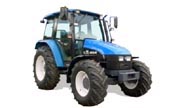
New Holland TN75​

New Holland TN75 tractor photo
1999 - 2003
TN Series
Utility tractor

New Holland TN75 Weight

2WD Cab Operating:5645 lbs
2560 kg
4WD Cab Operating:6460 lbs
2930 kg
 
   / Hay field improvement ideas. #4  
I’d send soil samples to your local extension and see what you’ve got.
I re-hab 1-2 fields per year and the best start is soil samples, THEN take appropriate steps.

I don’t think a roller is a good idea since it will further along compaction.
Instead, fill the ruts with new soil.
In fact, I’d rent an aerator (I am renting a big aerator now) and plug your soil to open it up and get some air, water & nutrients down there. It’ll break up root-bound clumps of grass and promote new growth.
 
Last edited:
   / Hay field improvement ideas.
  • Thread Starter
#5  
First question, first priority ---> Have you had your soil tested by an ag lab? In Florida, such a lab is available in every Florida county and is operated by the University of Florida. I would submit four soil samples for twenty acres. In Florida soil tests are $7.00 each. You are operating blind without a soil test.

What about running a roller (I have an old one, but need some weight) to flatten out the bumps caused by seasonal frost and ruts with all the wheeled traffic over the years?

A box frame Disc Harrow is the implement best suited for for smoothing fields.

A Chain Harrow, even a heavy Chain Harrow, will only flatten/smooth earth across the top 1".

A roller of less than 2,000 pounds weight will not flatten uneven ground and one ton+ compaction may squeeze the life out of your existing grass.


I had soil tested in 2009. Results recommended 280 lbs potash/acre and 80 lbs phosphate per acre. I was thinking the roller would crush material, so glad that's confirmed. I'm reluctant to get a disc harrow. I guess an option would be to disc half the filed year one, and take hay off other half. Do the reverse in year two? I have a TN 75, so 65 at the PTO.
 
   / Hay field improvement ideas. #6  
You are due for updated soil tests.

Did you apply 280 lbs potash per acre and 80 lbs phosphate per acre after the 2009 soil test? Do you know your soil pH after the 2009 test? If the soil pH is not within the range suitable for your grass fertilizer utilization will be inefficient by the grass.

A Disc Harrow adjusted flat, for shallow penetration, would stimulate Bahia grass growth (9" roots) in moist Florida sandy-loam soil after one pass. Shallow penetration, however, is not much of a remedy for ruts. Stimulation might not occur under Ontario conditions.
 
Last edited:
   / Hay field improvement ideas. #7  
What type of grass or hay do you have on that field. If 8” to bedrock I would be very cautious in disturbing what you have since root system is also pretty shallow and topsoil is precious.I agree on soil test to see where are and also fertilizer is ridiculously expensive now so maybe add what you can afford every year.
 
   / Hay field improvement ideas. #8  
Need current soil test to know what you should be doing.

I typically have to lime and fertilize.

I have best results renewing land with this order.

moldboard plow
lime
disk harrow
fertilize
spring tooth harrow
seed with drill

Edit: I often have to deal with rutted land so I want a level field so I can travel a reasonable speeds with equipment, to me key thing is to level with plow and harrows before seeding. Turns under old stuff to rot and gives the new seed a chance. You can plow shallow, I normally do 6" deep.
 

Attachments

  • IMG_4415.JPG
    IMG_4415.JPG
    487.3 KB · Views: 171
Last edited:
   / Hay field improvement ideas. #9  
Twin,

The soil test will help. As Hay Dude said an aerator would most likely help if you can rent one. If you can not rent an aerator you could substitute a disk with the cutters set to go straight. Just enough to open the soil. Do it in one pass to open the soil You do not want turn the soil and start over but stimulate the grass that you have. You will still be able to take hay off of it.
 
   / Hay field improvement ideas. #10  
Just did 75 tons of lime today.

1665624366020.jpeg
 
   / Hay field improvement ideas.
  • Thread Starter
#11  
Thanks all for responding. I've got some ideas to follow up on over the next while. When would you folks suggest aerating or discing, fall, before the snow or spring when the frost is out the ground?
 
   / Hay field improvement ideas. #12  
Alternative freeze/thaw cycles help break down plow furrows, so discing is most often done in the Spring.As you will not be plowing, timing your Disc work is less important.

Disc when the ground is slightly moist. If your tractor is leaving ruts, compacting, the ground is too wet.

Time your ground contact work to minimize rain erosion.
 
Last edited:
   / Hay field improvement ideas. #13  
The soil test will help. As Hay Dude said an aerator would most likely help.

For your thin soil conditions a plug aerator may work better than a Disc Harrow.

A plug aerator will certainly preserve your existing grass.

But an aerator will only minimally remediate ruts and bumps.


And to clarify, a field roller is the opposite/contrary implement to a plug aerator.
 
Last edited:
   / Hay field improvement ideas. #14  
I had soil tested in 2009.

Results recommended 280 lbs potash/acre and 80 lbs phosphate per acre.


Did you apply 280 lbs potash per acre and 80 lbs phosphate per acre after the 2009 soil test?

Do you know your soil pH after the 2009 test?

In most northern North American fields soil pH is low relative to grass needs, requiring lime to increase soil pH.

If the soil pH is not within the range suitable for your grass fertilizer, even only manure, nutrient utilization will be inefficient by the grass.

While ag conditions vary enormously, the few ag studies I have read indicate returning animal manure to animal feed fields only supplies ~5% of nutrients required for OPTIMAL grass harvest.
(I understand you may only want a improved yield, not an optimal yield for three head.)

Just north of me in Florida a great deal of commercial hay is grown. Growers count on three hay crops per year. Poor years only yield two good crops. Exceptional years yield four crops. These fields are fertilized with commercial nitrogen and commercial potassium based on regular soil tests. Tests are cheap. Supplemental nutrients are expensive. Soil pH is naturally high and natural potash is high. Excellent conditions for profitable hay production.

(Mining potash for fertilizer production is big business in eastern Florida.)


Per my seed store I top dressed a couple of times, most recently 3 years ago, by using a seed spreader on my ATV.

Did you have enough successful seed germination to noticeably thicken your grass stand?

In Florida, unless pH is within correct range and unless ample nitrogen is available to the seed, germination to green stage growth is poor. Firm seed-to-ground contact is also important, which is where a moderate weight field roller or a dedicated Cultipacker is helpful for good germination.
 
Last edited:
   / Hay field improvement ideas. #15  
Where I live the wrong tools will pull up rocks. The smooth pasture turns rough, horrible sounds when cutting rocks, unless someone picks up the rocks, holes in dirt from rocks removed.
 
   / Hay field improvement ideas.
  • Thread Starter
#16  
Soil pH from the 2009 test was 7.5. If I remember my science classes, not overly extreme either way. No I didn't apply the suggested fertilizer back then. Even now with increased costs, I have trouble justifying that expense. I was always wondering about the spring seeding and the aforementioned "seed to ground" contact. I'm guessing if I used the old roller without excess weight in the spring, after a top dressing I would get some improved contact over relying on mother nature. In past years I have tried to ensure a rain would occur soon after the seeding. I had some improved thickening in areas, but others, not so much. We don't have a lot of rental or "loan" options for various implements, and it's hard to justify the cost of some equipment for a one time use every x number of years. It's a delicate balance between fixed retirement income, and wise places to spend it on. Although I'm not adverse to it. I've seen a Youtube video on an aerator used in California, and the owner wasn't sure of it's benefit, and it seemed to need a whole lot of weight to get the ground penetration. Think he had about 600 lbs weight plus front counterweights. on his sub-compact. I have a TN75 with ffront end loader, so less of an issue if I went that route. Again thanks all for comments.
 
   / Hay field improvement ideas. #17  
Soil pH from the 2009 test was 7.5. If I remember my science classes, not overly extreme either way. No I didn't apply the suggested fertilizer back then. Even now with increased costs, I have trouble justifying that expense. I was always wondering about the spring seeding and the aforementioned "seed to ground" contact. I'm guessing if I used the old roller without excess weight in the spring, after a top dressing I would get some improved contact over relying on mother nature. In past years I have tried to ensure a rain would occur soon after the seeding. I had some improved thickening in areas, but others, not so much. We don't have a lot of rental or "loan" options for various implements, and it's hard to justify the cost of some equipment for a one time use every x number of years. It's a delicate balance between fixed retirement income, and wise places to spend it on. Although I'm not adverse to it. I've seen a Youtube video on an aerator used in California, and the owner wasn't sure of it's benefit, and it seemed to need a whole lot of weight to get the ground penetration. Think he had about 600 lbs weight plus front counterweights. on his sub-compact. I have a TN75 with ffront end loader, so less of an issue if I went that route. Again thanks all for comments.

Fertilizer costs will kill you now. I cut way back this year because of it.

I had no noticeable success with seeding an existing stand (late summer or frost seeding). The existing grass just smothered it out. Tried some disking only then seeding, harrowing only then seeding. Plowing and starting fresh worked the best. Most old conventional tillage gear is cheap now, and still has a few acres left in it.
 
   / Hay field improvement ideas. #18  
No, I did not apply the suggested fertilizer in 2009. Now, with elevated fertilizer costs, I have trouble justifying fertilizer expense.

Your conditions in Ontario are a great deal different from my conditions in Florida.

However, you are not going to get a good stand of grass with the grass experiencing the equivalent of starvation. If you have taken hay off the field for your horses and have not replenished grass nutrients since 2009, your soil has likely declined in fertility considerably since 2009.

You are due for updated soil tests. Be sure to inform the soil test lab what grass you have. Make sure the pH is within the recommended range for your grass or your fertilizer will be inefficiently utilized by the grass. "Soil pH from the 2009 test was 7.5. If I remember my science classes, not overly extreme either way." This is not a reasonable approach.

After a four new soil tests apply some fertilizer in the proportions suggested by the soil tests. Perhaps 20% to 25% of the optimum recommendation. Apply fertilizer only to the most promising parts of your twenty acres. In Florida, fertilizer application to existing productive grass is a far better investment than trying thicken poor areas with additional seed.

Fertilizer is inefficiently used by grass when the soil is too cold. If you fertilize when the ground is too cold, the grass will sit there while some of the fertilizer leaches away during rains. Fertilize in the Spring when the ground is reasonably warm, which will be indicated by your existing grass showing growth.
 
Last edited:
   / Hay field improvement ideas. #19  
Look for sources of free or cheap “organic” fertilizers. You need to build up your soil levels and organic matter. It’ll attract worms and microorganisms vital for root health.

Check around for poultry houses (poultry litter) or mushroom growers (spent mushroom compost). You can also open your property to leaf composting and spread ground-up leaves.
 
   / Hay field improvement ideas.
  • Thread Starter
#20  
Thanks for response. Previous owner spread poultry litter before our time (maybe 20 years ago), and it did improve yield dramatically. Back then, they almost paid to have it taken away, but they've gotten smarter. Not so cheap any more. Thanks again.
 

Tractor & Equipment Auctions

PALLET OF 15 4 X 8 GROUND PROTECTION MATS (A58214)
PALLET OF 15 4 X 8...
2019 DRAGON ESP 150BBL ALUMINUM (A58214)
2019 DRAGON ESP...
Groundsmaster 3500-D madel 30839 (A56859)
Groundsmaster...
DEUTZ MARATHON 60KW GENERATOR (A55745)
DEUTZ MARATHON...
2018 CATERPILLAR 242D SKID STEER (A60429)
2018 CATERPILLAR...
Caterpillar 279-5360 72in Dual Cylinder Grapple Rake Skid Steer Attachment (A59228)
Caterpillar...
 
Top