How many Amps to charge an EV?

   / How many Amps to charge an EV? #21  
nope not suitable for the chargers I have experience with. Installation say alum. a no go.

Not supposed to use alum. wire as the charger is both a continuous use of high power (many hours) and regular use (very often)
ie: to much power to often but service drops are the same IMHO but its what the installation manual said.
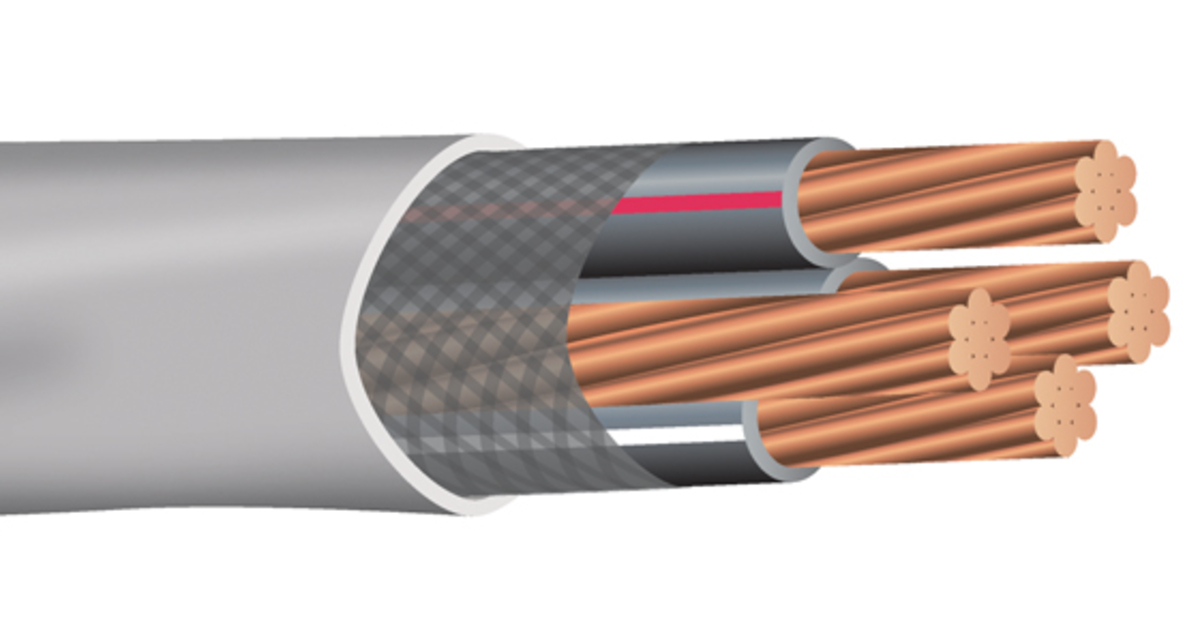
but 2-2-4 alum. USE-2 / URD from Southwire is rated 165 amps when buried though??? so I'm clueless only sharing what installers book said.
I'm a proponent of copper as well; lower power losses.

Can you point to where that specification is? On the Southwire website, it doesn't even go that high for copper on 2-2-2-4;
All the best,

Peter
 
   / How many Amps to charge an EV? #22  
Thanks. Aluminum would of been a lot cheaper. But I understand how much better copper is. I just hate paying for it!!!

If it wasn't your money, what size copper wire would be ideal to run?
I hear you on the cost of copper, but dealing with aluminum is not without issues in my book, especially in a place like Texas.

I would pull at least 2/0 copper to the panel, depending on how long the run is. After that, it is just sizing for a 60A circuit, 4-6ga, depending on the wire (TH vs THHN)

All the best,

Peter
 
   / How many Amps to charge an EV? #23  
Eddie, instead of terminating in a electrical box, how about making a false panel in the wall to terminate your heavy cable in for now. In the future remove the false panel and finalize the outlet and its box at that time. I actually ran my romex wiring on the outside of the wall covering and built a 2x2 and osb over it to cover it. That way I could go back and add another wire to my new needs. Jon
 
   / How many Amps to charge an EV? #24  
I'm a proponent of copper as well; lower power losses.

Can you point to where that specification is? On the Southwire website, it doesn't even go that high for copper on 2-2-2-4;

All the best,

Peter
I am no expert!!

I chated with Southwire about a year ago on their chat function from their web page and on the Lowes.com website under specifications both confirmed 2-2-4 for a service drop was rated up to 165 amps given a bunch of assumptions like run length, insulation they use, the high temp. rating they have on the insulation, etc....
So I am just parroting what I have been told by Southwire and from Lowes website

the no alum. observation comes from the chargers installation manual.

1715783443538.png
 
   / How many Amps to charge an EV? #25  
It depends on your usage, but at least for us if we ever have two EVs it's going to be extremely unlikely that we'll need to change both up from near zero to full charge overnight at the same time. If we do need to charge two at once, one can be at a low rate.
 
   / How many Amps to charge an EV? #26  
Consider just running conduit (make sure it's sized for more wire than you anticipate too, anchored well with really nice sweeping turns and a string left in it) from the panel to a couple likely install points (empty plug box with a blank faceplate) and forgo the wire for now - then you can add whatever wire, plug and breaker you really need, when you need it. Cheaper now too.

I think copper will pull through a conduit better - it's not as stiff in the same gauge and then the aluminum also has to be sized bigger which makes it that much more stiff.

[Aside - when I built my solar array I used 4/0 aluminum because no way was I going to pay for 2/0 copper; went a size bigger also to build-in expansion for another ground mount "later" - extra size cost about $200 in cable and may have required the bigger conduit. Built the conduit around the wire so I didn't have to pull 500+' of cable.]
 
   / How many Amps to charge an EV?
  • Thread Starter
#27  
Eddie, instead of terminating in a electrical box, how about making a false panel in the wall to terminate your heavy cable in for now. In the future remove the false panel and finalize the outlet and its box at that time. I actually ran my romex wiring on the outside of the wall covering and built a 2x2 and osb over it to cover it. That way I could go back and add another wire to my new needs. Jon
Brilliant!!! I should of thought of this, but I'm super glad that you did.

My first thought was to just leave the wire in the wall and when I want to do something, I can remove the sheetrock. After thinking about it, what if I'm not around, or I sell the place, or my memory fails me? I should have something on the wall to indicate that the wire is in there.

I've seen access panels for plumbing, which might work. Or I might cut a hole in the sheetrock, and put a blank face plate over it. Once the faceplate is removed, the wire would be visible.
 
   / How many Amps to charge an EV? #28  
Aluminum wiring is perfectly fine, as long as it’s sized correctly and all mating terminations are properly rated and applied for aluminum use.
I’ve specified it countless times on large circuits. It’s definitely a cost saving.
People still have unfounded fear from stories of it being misused in the 60’s-70’s residential wiring.
 
Last edited:
   / How many Amps to charge an EV?
  • Thread Starter
#29  
I read that Aluminum is supposed to be rated USE for inside the building. UDE is only used for outside, underground use because it's not fire rated. I haven't seen anything that says it's not OK to use USE for EV's, but I could be missing it in my searches.

Another question. Is there an ideal height for the EV outlet? A foot off the ground is where I place most of my 110 outlets in the house, but in my garage, I'm putting some at a foot off the ground, and some at 4 feet off the ground.
 
   / How many Amps to charge an EV? #30  
I read that Aluminum is supposed to be rated USE for inside the building. UDE is only used for outside, underground use because it's not fire rated. I haven't seen anything that says it's not OK to use USE for EV's, but I could be missing it in my searches.

Another question. Is there an ideal height for the EV outlet? A foot off the ground is where I place most of my 110 outlets in the house, but in my garage, I'm putting some at a foot off the ground, and some at 4 feet off the ground.
Your AHJ has the final word on what is allowed, but USE is permitted in some areas;
Do keep an eye on the permitted bending radius of the cable, which may be in an issue.

I would put the outlet panel closer to 30-36" above ground. Most chargers are designed to hold coils of cable when not in use, which favors a higher location. I would also put in bracing to support the weight of the charger and cable.

All the best,

Peter
 
   / How many Amps to charge an EV? #31  
I believe the cable he linked from Lowe’s is USE-2 cable aka mobile home feeder, not USE, or maybe I’m wrong.
Local and state rules aside, it can be run indoors in conduit with no NEC issues that I’m aware of, if desired.
If you don’t need the direct burial feature, I would call a couple local electric supply places and see what other types they can get you on a budget
 
   / How many Amps to charge an EV? #32  
This brings up a good point- EV charger circuits need to have derated breakers- the breaker is smaller than the wire capacity. Where welders can have uprated breakers. It's because the charger's demands are continuous but the welder is intermittent.

I didn't understand this when I had "welder/EV" wiring added to the garage. It's on a 50a breaker but I don't know if that's welder 50a or EV 50a. If it's welder 50a that might be about 30a for a charger. The wire's super thick and the electrician complained about how hard it was to deal with so maybe it's EV 50a.

Another mistake was to spec a 6-50 plug. Welders use that, and back then about half the chargers did, but now chargers seem to use 14-50. My wife still hasn't found an EV she likes so it only got used for welding.bb
The code for a circuit used for a continuous draw such as EV charging says to derate to 80%. So your 50A breaker (and presumably wire gauge to handle 50 A as well) would be suitable for up to 40 Amps when charging an EV.

We have a Chevy Bolt which can accept a max of 32A charging current, so we have a 40 A breaker and an EV charger rated at 32 Amps. (The wiring is actually sized for 50 A, so we could put in a larger breaker in the future to get a bit more out of the circuit if we ever got a different EV that can handle a larger charger. I suspect we'd just keep using the same charger unless it broke down. The Bolt is mainly used for my wife's commute to work. It typically only needs a couple of hours of charging each night.)
 
   / How many Amps to charge an EV? #33  
I am no expert!!

I chated with Southwire about a year ago on their chat function from their web page and on the Lowes.com website under specifications both confirmed 2-2-4 for a service drop was rated up to 165 amps given a bunch of assumptions like run length, insulation they use, the high temp. rating they have on the insulation, etc....
So I am just parroting what I have been told by Southwire and from Lowes website

the no alum. observation comes from the chargers installation manual.

View attachment 870197
This ampacity rating is for conductors in free air, suspended overhead. The free air gives up the heat, voltage drop would also be higher at higher amps..
In conduit #2 AL would be rated for 75 amps.
 

Tractor & Equipment Auctions

Peterbilt Tandem Axle Road Tractor (A47477)
Peterbilt Tandem...
Deere 35P (A53317)
Deere 35P (A53317)
20FT X 30FT STEEL CARPORT (A58214)
20FT X 30FT STEEL...
HUSQVARNA RIDING MOWER 42IN DECK (A56859)
HUSQVARNA RIDING...
ExMark Vantage 48in Stand-On Commercial Mower (A59228)
ExMark Vantage...
John Deere 644J Articulated Wheel Loader (A59228)
John Deere 644J...
 
Top
