How to tap into propane (iron pipe) line

   / How to tap into propane (iron pipe) line
  • Thread Starter
#41  
Very interesting thread.
Agreed. Much more to this than screwing in a new T and some pipe.

When this is complete, I might celebrate by going out and hooking up some propane pool heaters!! :)
 
   / How to tap into propane (iron pipe) line #42  
Surprised to hear you have that engine running on propane. I have the same engine in a muscle car and it gets 4mpg .... but I don't drive it gently.
🥺😢😭 Gawd why did you have to mentioned muscle car. I was used car shopping when a salesman had me test drive a Fairlane 427 side oiler. Being a small block chevy fan I was looking at 65 and 66 Impalas which got good milage,long service and just enough uump to make you smile when you occasionally pressed hard on the go pedal. I was married, expecting a child and we were not comfortable having an infant in our 61 Implala convertable. I had no clue and oboviously the salesman knew even less about the Fairlane because if he had offered it any cheaper he would have been making payments for me. I couldn't help but bark the tires in all 4 gears and eventhough my wife had driven 3 on tree since before she had license,she would smoke-um in 1-2 & 3 . And of course there was the fuel milage like you mentioned. I soon traded it off for a 65 Chevy and was happy.,,,,,,,,,,,,,,,,,,,until years later when I learned what the Fairlane actually was. Only twenty something were manufactured so only people like Jay Leo can afford to sit in one today,much less buy it. Even had i known,there was no way I could have afforded to keep it and buy something suitable for us to drive. Of course people tell me they would have kept and drove it but few people have drove a car of that caliber and how poor they behave on the street. In the short period we had it,my wife and I both were pulled over for showing out eventhough we were carful as possible. Ok,I have to stop crying and get back to the subject at hand.
Regarding the 426 Hemi on propane. It did well on fuel since it was manufactured to run at fixed rpm driving an irrigation pump. It would be a slug compared to street versions and even more so for one equipped for perfomance.
 
   / How to tap into propane (iron pipe) line #43  
75 feet of 3/4 line definitely won’t support 355k btu if it’s at the typical supply pressure of 2-3 psi. If you can bump the supply pressure up it might work.
He said he has propane, that should be a5 10 psi
 
   / How to tap into propane (iron pipe) line #44  
Neighbor bought a 10k duel fuel generator at Christmas and was unpacking it over the weekend.

He bought it because it is Propane rated and plans to use his small BBQ propane tank.

No doubt it will run on propane but I don't think it is going to work as planned.

I ran into problem at a small medical clinic where I maintained the natural gas generator for the medication refrigerators.

A tree damaged the utility meter and utility was replacing with a much smaller meter... and generator simply would not put out.

That was a long weekend as the nearest appropriate gas meter was in a service yard 100 miles away.

About the only time I have found existing homeowner service ok is when it was sized for large pool gas heater.

Very interesting thread.
Those small dual fuel can run off of a bbq tank, but not a bbq regulator. The gen kits generally have the proper sized regulator as part of the kit.
 
   / How to tap into propane (iron pipe) line #45  
I have not. I did investigate BTU's. The spa heater required about 90,000 btu's. The generator requires about half of that. I don't know how to evaluate that any further.

I do have access to a manometer and there is a manometer port on the generator.
A 45,000 btu generator ? That would be tiny. If you get the spec sheet from the generator in gallons or btu I can size it. Also need how many feet from 2nd stage regulator. But my .02 I would hire someone that is insured. California does require a G36 license for any related work valued at over $500. with length of pipe needed and btu we can size anything.
 
   / How to tap into propane (iron pipe) line
  • Thread Starter
#46  
I appreciate all the helpful replies.

The generator is 142 cu ft per hour, 3.9 gph, 10-12 in water column. So would that be 355,000 btu? Let's call is 70 feet from main tank to generator supply, to add some footage for turning pipe down then back up. The regulator (2nd stage) is right at the location where it comes up out of the ground, about 5 feet from where the generator will sit.

Some suggested a new, dedicated regulator for the genset. This would be where the 3/4" comes up out of the ground into a T. If that is done, the existing regulator is in place for the pipe in the other direction-- going to a water heater 15 feet away. I don't have the btu's handy, but its a typical 40 gal gas water heater.

I don't know how you set line pressure. Does the propane company do that? Obviously, if increasing the line pressure makes running the genset possible, that is hugely more attractive than trenching!! :D
 
   / How to tap into propane (iron pipe) line
  • Thread Starter
#47  
California does require a G36 license for any related work valued at over $500.
At this point I may DIY, or may hire it out. I *do* want to identify everything needed end-to-end. Then I can choose whether to proceed or hire out.
 
Last edited:
   / How to tap into propane (iron pipe) line
  • Thread Starter
#48  
drove a car of that caliber and how poor they behave on the street.
It's wonderful pressing the gas while going straight. It's when you want to turn or stop that difficulties begin to arise! (at least my car has the optional front disc brakes...) :D
 
   / How to tap into propane (iron pipe) line #49  
I appreciate all the helpful replies.

The generator is 142 cu ft per hour, 3.9 gph, 10-12 in water column. So would that be 355,000 btu? Let's call is 70 feet from main tank to generator supply, to add some footage for turning pipe down then back up. The regulator (2nd stage) is right at the location where it comes up out of the ground, about 5 feet from where the generator will sit.

Some suggested a new, dedicated regulator for the genset. This would be where the 3/4" comes up out of the ground into a T. If that is done, the existing regulator is in place for the pipe in the other direction-- going to a water heater 15 feet away. I don't have the btu's handy, but its a typical 40 gal gas water heater.

I don't know how you set line pressure. Does the propane company do that? Obviously, if increasing the line pressure makes running the genset possible, that is hugely more attractive than trenching!! :D
If you have propane, and only a single water heater hooked to it, you may not even need a new regulator. Your propane company can determine how many btu that regulator can handle. If i am not mistaking, you have propane, so i really doubt youll need to trench back to tank.
 
   / How to tap into propane (iron pipe) line #51  
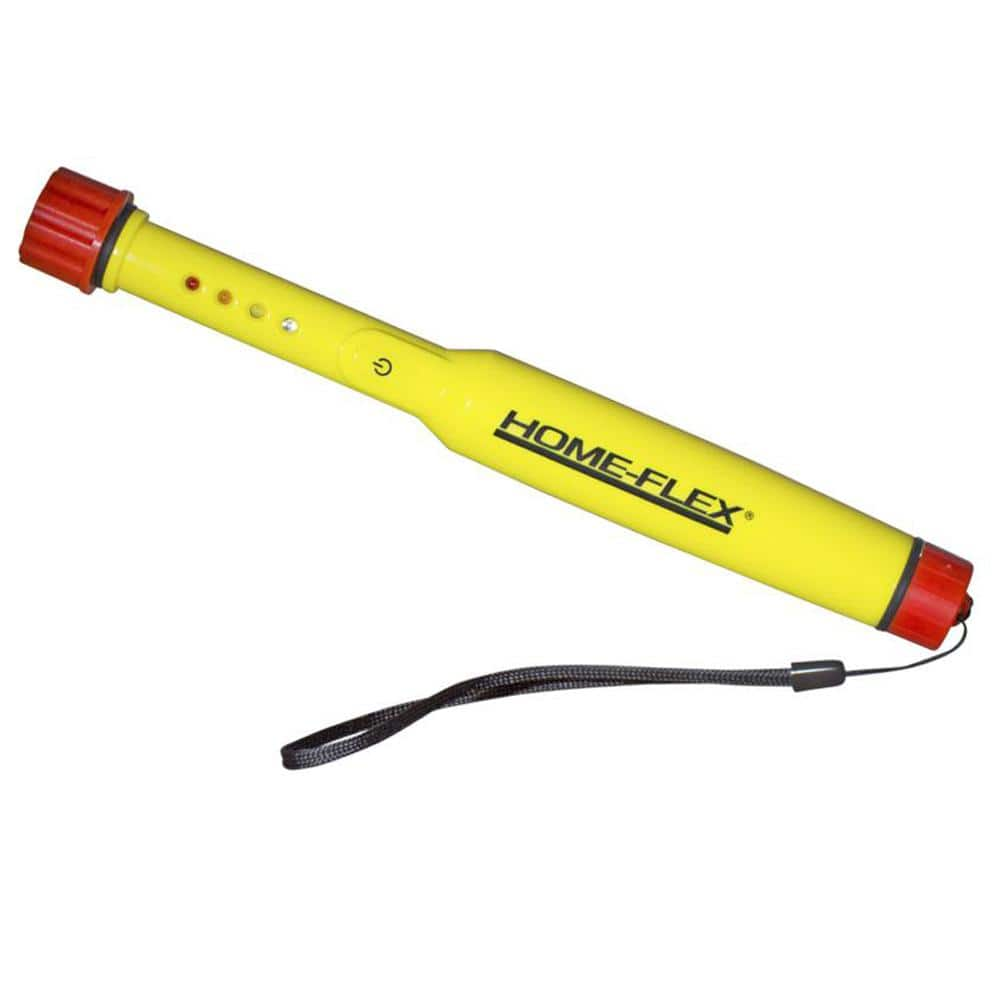
I plumbed a propane BBQ to run off the house tank and also installed a garage furnace. Gave me reason to buy a couple tools. A manometer and also this handy gas sniffer that you can check on all your gas appliances.
 
   / How to tap into propane (iron pipe) line #52  
You may not need a larger underground pipe from tank. You might just need to tee off before existing house secondary regulator and add another regulator for generator. But you need to have your propane supplier or heating contractor look at setup. They need complete list of all gas appliances max btu for house and generator. With this info they can estimate pipe sizing. The gas coming from tank primary regulator is probably 10 psi. You can move alot of gas at 10psi.

where i usually ran into issues is the houses up here are generally only supplied with 1/2” line from propane tank. If yours is really a 3/4” line, you may be ok.

I agree with that. Chances are that with a 3/4" line you can just tee into the existing high pressure line from the tank and add another low pressure regulator for the generator.
 
   / How to tap into propane (iron pipe) line #53  
I appreciate all the helpful replies.

The generator is 142 cu ft per hour, 3.9 gph, 10-12 in water column. So would that be 355,000 btu? Let's call is 70 feet from main tank to generator supply, to add some footage for turning pipe down then back up. The regulator (2nd stage) is right at the location where it comes up out of the ground, about 5 feet from where the generator will sit.

Some suggested a new, dedicated regulator for the genset. This would be where the 3/4" comes up out of the ground into a T. If that is done, the existing regulator is in place for the pipe in the other direction-- going to a water heater 15 feet away. I don't have the btu's handy, but its a typical 40 gal gas water heater.

I don't know how you set line pressure. Does the propane company do that? Obviously, if increasing the line pressure makes running the genset possible, that is hugely more attractive than trenching!! :D
3.9 GPH is 360,812 BTU / HR. At 80' and low pressure ( 11'-13" WC) you would need at least 1" black pipe. At high pressure ( 10 PSI to a new second stage regulator ) at 60' 1/2 back would handle it. The second stage regulator needs to be at least 5' away from any source of ignition. At 5' from the second stage to the generator 3/4" black is plenty. Me I would run whatever size pipe the inlet is to the generator. The SS flex should have no more than a 3/8 offset Any installation like this needs to be pressure tested to 1.5 the max working pressure but no less than 3PSI for at least 10 minutes. It sounds like your regulator is in a good spot to plumb the generator. I would suggest upsizing the pipe after the second stage so you create a reservoir of gas feeding the generator. I instead of a sediment trap I use strainers on generators to filter any imperfections before it gets to the generator. The line pressure is set at the first stage and shouldn't be touched without permission of the LP company. Same with the second stage If CA allows homeowners to do this work I would suggest you let the LP company know so they can a. Do a gas check, b. then they can add a new appliance to the gas check. If its that close I would suggest you hire somebody. JMO
 
   / How to tap into propane (iron pipe) line
  • Thread Starter
#54  
The second stage regulator needs to be at least 5' away from any source of ignition. At 5' from the second stage to the generator 3/4" black is plenty. Me I would run whatever size pipe the inlet is to the generator.
That is good information. I can adjust the pad location slightly to ensure I have 5' of clearance between the second stage and the generator.

The generator has a 3/4" inlet/supply pipe. It requires the purchaser to screw in a 3/4 nipple through a pre-drilled hole in the case. Where the nipple connects, there is already a drip leg pre-installed inside the unit.

I will have the propane company make any adjustments to pressure. Regarding pipe upsize, is that to allow for an inrush sudden demand such as on generator startup? And do you typically go up one size (1") or even larger (1 1/4?)? I presume you maintain the upsized pipe for several feet, then downsize back to 3/4 where the flex connects to the generator? btw a 3/4" flex line was supplied with the generator-- maybe 8-10 inches long.
 
   / How to tap into propane (iron pipe) line #55  
Yes the upsize at the generator is for start up most start on full throttle then cycle back. I would 90 out going back then flex ( is it stainless steel ? ) then union then nipple then full port ball valve such as a JOMAR then nipple then bell coupling 3/4 x whatever the reservoir pipe size is ( bigger is better ) then bell coupling at other end and 3/4 to second stage. On the outlet of the second stage you want as long a nipple as possible before any fittings that change direction. A Fisher R652 back mount was my favorite for generators because the inlet was on the bottom and the outlet was on the back so it changed the direction of flow for you with little pressure drop.
 
   / How to tap into propane (iron pipe) line #56  
They want the supply large to cover it but LP is 270 cf per gallon. This little genset does not use nearly 4 gallons an hour. I am running 350 chevy at 1/2 or 3/4 that runs that. To a home, a 3/8 copper tubing supplies 200K btu between stage 1 and 2 66 ft.
 
   / How to tap into propane (iron pipe) line #57  
LP is 2516 btu / CF and 1 gallon = 91502 BTU so 142 CF/HR = 357,272 BTU or 3.90452 GPH
 
   / How to tap into propane (iron pipe) line #58  
In the '50's my dad had the first propane furnace installed in the area.
Every time it started with a small 'boom' and often opened the trap door leading to the cellar.
Plumbers were the installers back then.

Once on a job site I was asked to finish the floor installation as the flooring guy quit on the job.
The propane installation guy had attached the gas line to the bottom of the sub floor rather than on the sides of the joists.
As I was nailing the floor down a sudden odor of propane permeated the air.
Yep, a flooring staple pierced that gas line.
I called for immediate evacuation and opened all windows and doors.
LOL, no BOOM.

I sure have learned to respect propane and its codes but then having camps and propane heat, lighting, cooking and refrigeration etc you had no choice if you DIY'd and wanted to live.
Hey, we even once had a propane 'cooker toilet'. (Phew!) and even a propane 'instant water heater' as used in some RV's.
Then I once converted a propane baggage tug from propane to gas.
(Sold it and made decent profit.)
 
   / How to tap into propane (iron pipe) line #59  
In the '50's my dad had the first propane furnace installed in the area.
Every time it started with a small 'boom' and often opened the trap door leading to the cellar.
Plumbers were the installers back then.

Once on a job site I was asked to finish the floor installation as the flooring guy quit on the job.
The propane installation guy had attached the gas line to the bottom of the sub floor rather than on the sides of the joists.
As I was nailing the floor down a sudden odor of propane permeated the air.
Yep, a flooring staple pierced that gas line.
I called for immediate evacuation and opened all windows and doors.
LOL, no BOOM.

I sure have learned to respect propane and its codes but then having camps and propane heat, lighting, cooking and refrigeration etc you had no choice if you DIY'd and wanted to live.
Hey, we even once had a propane 'cooker toilet'. (Phew!) and even a propane 'instant water heater' as used in some RV's.
Then I once converted a propane baggage tug from propane to gas.
(Sold it and made decent profit.)
vehicle conversions I have never done but everything else with LP and natural gas I have been doing since since 1980. But knees hips and back are shot from kneeling on concrete and wrestling boilers and tanks etc. so I teach at night and sell during the day. Its been a great industry and a decent living.
 
   / How to tap into propane (iron pipe) line #60  
In the '50's my dad had the first propane furnace installed in the area.
Every time it started with a small 'boom' and often opened the trap door leading to the cellar.
Plumbers were the installers back then.
Plumbers should be forbiden to work on anything past the gas stop valve or electric disconnect. They aren't trained so I don't understand why they are alowed to mess with it. My solution for those old booming appliances was extend the standing pilot accross all burners or larger than usual singles. I once did a furnace for a church that had paid multiple plumbers an absured amount of money trying to stop a furnace booming.
 

Tractor & Equipment Auctions

16ft x 8ft Flat Bed (A57454)
16ft x 8ft Flat...
2007 CATERPILLAR 725 OFF ROAD DUMP TRUCK (A52709)
2007 CATERPILLAR...
2024 CATERPILLAR 255 SKID STEER (A52707)
2024 CATERPILLAR...
2019 F-550 Bucket Truck (A56438)
2019 F-550 Bucket...
2012 NISSAN 110 FORKLIFT (A55745)
2012 NISSAN 110...
2020 KENWORTH T680 TANDEM AXLE SLEEPER (A59905)
2020 KENWORTH T680...
 
Top