live fire

/ live fire
  • Thread Starter
#41  
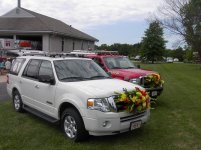
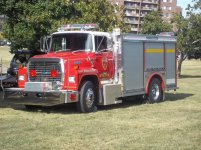
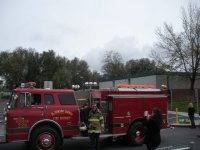
Amazingly enough, only a couple. E228 is one of the older rigs in our district; it is the second out from our station, and the one I am on the most. Old Ford 8000 series, CAT 3208T that is getting tired... I will have more in the coming days... As part of my driver/operator training, I have to document everything on the engine. So I am going to accompany that inventory with pictures of everything.

The attached picture was just after our annual Easter egg hunt.

Most of the newer rigs in our district are Ferrara. The rig on the left in this link, is our first out. The one on the right picture, is from another station up the hill. They get a lot of snow, so E21 is all wheel drive.

El Dorado County Fire District :: Photo Galleries

Have any pics of your rigs?
I can post some of mine if you want...
 

Attachments

  • DSCN0601.JPG
    DSCN0601.JPG
    174.5 KB · Views: 89
/ live fire #42  
Nice rigs! I like that old school Ford. :thumbsup:

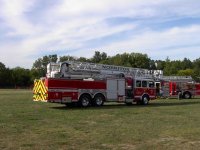
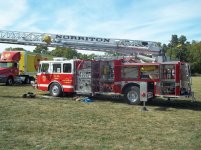
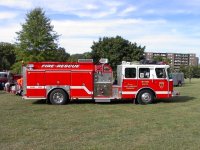
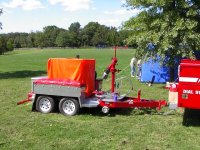
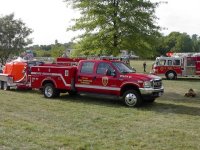
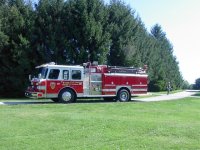
Here's pics of ours:

We also have a collapse trailer not sown...Now, I will go and take a nap after getting up at 6:30 a.m. to respond to a train fire...:thumbsup:
 

Attachments

  • 3.JPG
    3.JPG
    89.1 KB · Views: 84
  • 6.JPG
    6.JPG
    79.1 KB · Views: 88
  • 7.JPG
    7.JPG
    97.6 KB · Views: 98
  • 8.JPG
    8.JPG
    102.6 KB · Views: 80
  • 12.JPG
    12.JPG
    125.7 KB · Views: 78
  • 11.JPG
    11.JPG
    114.5 KB · Views: 97
  • 10.JPG
    10.JPG
    104.8 KB · Views: 80
  • 9.JPG
    9.JPG
    111.8 KB · Views: 77
Last edited:
/ live fire #43  
Who makes most of the trucks?? From what I have seen it seems like almost all the truck like (not cab over) ones are built on International platforms and are 4WD. Is this really the case and if so, do you guys know why??? Is it because they make crewcab 4x4 trucks platforms??

What you guys do is great!! Thank you for doing it.:thumbsup:

Ed
 
/ live fire #44  
Who makes most of the trucks?? From what I have seen it seems like almost all the truck like (not cab over) ones are built on International platforms and are 4WD. Is this really the case and if so, do you guys know why??? Is it because they make crewcab 4x4 trucks platforms??

What you guys do is great!! Thank you for doing it.:thumbsup:

Ed

When you are talking about the "cab over" trucks those are built on what we call "custom chassis" - they are built specifically for the fire service. Some are built on "commercial chassis": International, Freightliner, Kenworth, etc. Some of the larger builders like Pierce, KME, Ferrara, and E-One (What we buy) build their own chassis while some of the smaller regional builders use custom chassis from other manfactures or use commercial chassis. I'm going to guess that the reason the commercial chassis near you are 4x4 is because of the terrain in your aera. Not all trucks on commer chassis are 4x4.

Hope that answers your question. Thanks for the complement. :)
 
/ live fire #45  
When you are talking about the "cab over" trucks those are built on what we call "custom chassis" - they are built specifically for the fire service. Some are built on "commercial chassis": International, Freightliner, Kenworth, etc. Some of the larger builders like Pierce, KME, Ferrara, and E-One (What we buy) build their own chassis while some of the smaller regional builders use custom chassis from other manfactures or use commercial chassis. I'm going to guess that the reason the commercial chassis near you are 4x4 is because of the terrain in your aera. Not all trucks on commer chassis are 4x4.

Hope that answers your question. Thanks for the complement. :)

Ok, that makes alot of sence. Most of the fire trucks around here are the custom chassis trucks and I always wondered who made them. (what do you call them?? they are not true cab over but...) I am guessing they are build them this way because they are more maneuverable?

I think the closest county station to us has two engines built on the custom chassis and then their water truck is built on an International truck chassis. The fire engines I see on the truck chassis are what I believe you call wildland trucks like RobretN's photo shows. It would make sence that the trucks in the city need to be maneuverable and out in the country 4WD is more important.

Ed
 

Attachments

  • 223999d1312515336-live-fire-forumrunner_20110804_203539.png
    223999d1312515336-live-fire-forumrunner_20110804_203539.png
    485.4 KB · Views: 91
/ live fire
  • Thread Starter
#46  
We just got an International chassis Type-3 wildland engine last year. It is highly maneuverable, and off-roads very well. It is smaller and lighter than our other engines. But, it also carries less equipment, and has a much smaller pump(don't need a large capacity pump for wildland).

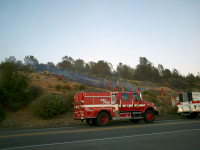
We have a lot of urban/wildland interface here in the Sierra foothills. Our Type-1 "structure" engines go a lot of places that most districts would not take them. Most of the local districts have some wildland engines, but most that you see will be like in the picture; Cal Fire state engines. Forest Service uses same engines as Cal Fire too, except in green.

I think the closest county station to us has two engines built on the custom chassis and then their water truck is built on an International truck chassis. The fire engines I see on the truck chassis are what I believe you call wildland trucks like RobretN's photo shows. It would make sence that the trucks in the city need to be maneuverable and out in the country 4WD is more important.

Ed
 
/ live fire #47  
Ok, that makes alot of sence. Most of the fire trucks around here are the custom chassis trucks and I always wondered who made them. (what do you call them?? they are not true cab over but...) I am guessing they are build them this way because they are more maneuverable?

I think the closest county station to us has two engines built on the custom chassis and then their water truck is built on an International truck chassis. The fire engines I see on the truck chassis are what I believe you call wildland trucks like RobretN's photo shows. It would make sence that the trucks in the city need to be maneuverable and out in the country 4WD is more important.

Ed

Well, we usually just call them "custom chassis" I guess you could call them cab over...They are build not just for maneuverability, but also cab space. At the most you can seat 5 in a crew cab custom cab chassis, but on a custom chassis you can seat up to 10. Also, you can get a "raised roof" on customs to give you more space...Most of the commercial cab trucks in flat areas are not 4x4 while 4x4 is more common in mountain areas...The biggest reason that commercial chassis are more common in rural areas is cost. Custom cabs cost a lot more than commercial...
 
/ live fire #48  
Wow, 10 people in one truck. I think most of the trucks around here have seating for 6 so I never thought about that. Then again, I don't think any of the stations around here ever have 10 people on duty at the same time. Now that you mention it, it makes sense that cost would make a difference in what they have.

I am guessing being able to hook up to a fire hydrant verse having to haul all the water in makes a difference in how it is approached also?

Ed
 
/ live fire
  • Thread Starter
#49  
Most of our rigs have seating for four. Our paid crews usually staff with three. As volunteers, when we staff and engine, it varies from two to four people; usually we'll respond as soon as we have two unless we know another person is coming very soon.

In our area, we have a mix of area's with and without hydrants. You'll often hear dispatch call for water tenders(don't ask for a tanker; you'll get a plane ready to drop retardant...).

I could not see ten people on a truck/ladder, unless it was a staffed/paid city rescue/truck company.
 
/ live fire #50  
The ones here might only have four seats, I am not sure. Thinking about it, I believe there are three people to an engine most of the time. It is a mix of paid and volunteers.

Hmmm, that could be interensting if you wanted a truck full of water and you got a plane ready to drop retardant.

I get the impression that large city firefighting is a fair bit different from rual/small town firefighting, even though they all have the same name. In the city you have large, tall buildings close together with many people and in rual/small towns two stories is as tall as any building will be and they are farther apart. Thank you for taking the time to explain/answer my many questions.

Ed
 
/ live fire
  • Thread Starter
#51  
Our area used to be staffed with two, but most area's around here are now staffed with three. In the big city you will see staffing with four. Around here, you will get a bunch more engines show up for a similar fire. Not, because so many engines are needed, but because the people/manpower is needed.

Yes, our "water trucks" are called tenders. Most in the local fire districts carry 2800-3000 gallons of water(engines typically carry 500-700 gallons). Tankers, are aircraft, the classic "borate bombers". They do not use borate anymore; it is a different formula.

In our area(east of Sacramento), you can run in to a mix... The fire in the picture I posted, was making a run uphill in to a neighborhood; that "city type" neighborhood had a lot of houses close together. On the other side of the coin, is my house a few miles away; we're all on 5-10 acres. A close friend a mile away, is on 46 acres. 9 miles up the road, in our district, is Placerville; very city environment, although the most we get is 3 story buildings.

The ones here might only have four seats, I am not sure. Thinking about it, I believe there are three people to an engine most of the time. It is a mix of paid and volunteers.

Hmmm, that could be interensting if you wanted a truck full of water and you got a plane ready to drop retardant.

I get the impression that large city firefighting is a fair bit different from rual/small town firefighting, even though they all have the same name. In the city you have large, tall buildings close together with many people and in rual/small towns two stories is as tall as any building will be and they are farther apart. Thank you for taking the time to explain/answer my many questions.

Ed
 
/ live fire #52  
Wow, 10 people in one truck. I think most of the trucks around here have seating for 6 so I never thought about that. Then again, I don't think any of the stations around here ever have 10 people on duty at the same time. Now that you mention it, it makes sense that cost would make a difference in what they have.

I am guessing being able to hook up to a fire hydrant verse having to haul all the water in makes a difference in how it is approached also?

Ed

All out trucks have seating for 6 except one which has seating for 9.
 
/ live fire #53  
Most of our rigs have seating for four. Our paid crews usually staff with three. As volunteers, when we staff and engine, it varies from two to four people; usually we'll respond as soon as we have two unless we know another person is coming very soon.

In our area, we have a mix of area's with and without hydrants. You'll often hear dispatch call for water tenders(don't ask for a tanker; you'll get a plane ready to drop retardant...).

I could not see ten people on a truck/ladder, unless it was a staffed/paid city rescue/truck company.

We are all volunteer except for two township employees who are also paid drivers during the day. I respond out of the sub-station (normally the paid people respond out of the main station). Normally during the day we get about 3 on the 1st out truck out of the substation. At night we usually get about 4...

I don't know how they do it, but I have seen some 10 seat trucks. I think most are in volunteer departments in the NE.
 
/ live fire #54  
In our area(east of Sacramento), you can run in to a mix... The fire in the picture I posted, was making a run uphill in to a neighborhood; that "city type" neighborhood had a lot of houses close together. On the other side of the coin, is my house a few miles away; we're all on 5-10 acres. A close friend a mile away, is on 46 acres. 9 miles up the road, in our district, is Placerville; very city environment, although the most we get is 3 story buildings.

Our area has hydrants throughout the district. We have residential, some light commercial, apartment buildings, and three hospitals in our 1st due. I think our 2.44 acres is one of the largest residential lots in our township...:laughing:
 
/ live fire
  • Thread Starter
#55  
Ya, it is a regional thing. Out here, a town/small city like that would be a staffed dept with volunteers augmenting, like in my district. Sadly, I'm seeing volunteer fire waning around here.

Our area has hydrants throughout the district. We have residential, some light commercial, apartment buildings, and three hospitals in our 1st due. I think our 2.44 acres is one of the largest residential lots in our township...:laughing:
 
/ live fire #56  
All our fire protection is volunteer.. I did it for 5 years as pumper captain...We cannot pump from the hydrants, so we use dump tanks or water tankers. For off-road it is army rio rig 4x4..We are doing good with our 25 person crews, of course not all respond at the same time. The payments are 25 dollars a year on the water bill.
 
/ live fire #57  
Ya, it is a regional thing. Out here, a town/small city like that would be a staffed dept with volunteers augmenting, like in my district. Sadly, I'm seeing volunteer fire waning around here.

We do have two township employees that also respond to calls. They and the volunteers like me serve about 13,000...
 

Marketplace Items

2007 Ford F-150 4x4 Ext. Cab Pickup Truck (A61568)
2007 Ford F-150...
New/Unused Mini Skid Steer Mounting Plate (A61166)
New/Unused Mini...
2005 Chevrolet C4500 Altec Bucket Truck (A56858)
2005 Chevrolet...
2025 SDLANCH SDLC2020 High End Carport (A60352)
2025 SDLANCH...
WHISPERWATT 220 DIESEL POWERED GENERATOR (A58214)
WHISPERWATT 220...
Snap-On Southern Thunder Edition 24-drawer tool box (A63118)
Snap-On Southern...
 
Top