My well water is terrible. Should I just use pool water?

   / My well water is terrible. Should I just use pool water? #61  
I think if you do research, you’ll find the amount of sodium it adds is minimal. The amount depends on the hardness but an example is a gallon of softened water has the same amount as half a cup of tomato juice.
 
   / My well water is terrible. Should I just use pool water? #62  
Actually, they do add salt. We rented a cabin for interim living between forest fire home loss and relocating to new home. The was a notice in the manual similar to this:
'Water softeners add sodium to drinking water, which can be a concern for individuals on a low-sodium diet, particularly those with high blood pressure. However, for most healthy individuals, the sodium levels in softened water are generally considered safe.'
There are also studies, for what they're worth, that show long term drinking sodium treated water can lead to hypertension.
I can taste low amounts of salt in food, and it definitely adds salt. Not like a snorkel full while Abalone diving, but it was obvious to me.
Patrick
Just an FYI....

An 8 oz glass of 15 grain soft water has 4X LESS sodium than an 8 oz glass of skim milk.
 
   / My well water is terrible. Should I just use pool water? #63  
And, only about 30% of the population is "salt sensitive", that is responding to increased dietary sodium with slightly increased blood pressure. 10% of the population gets lower blood pressure with increasing sodium in the diet. So, perhaps not really relevant as a population wide public health recommendation, but one that may be important for certain individuals with kidney disease or high blood pressure.

All the best,

Peter
 
   / My well water is terrible. Should I just use pool water? #64  
Just now while reading your post, is when I learned that draining the hot water tank is a thing you're supposed to do. I've never done it once in my life. I've never heard anyone else mention that it's something they do either. I did not receive any handbook for being an adult and I'm just making this stuff up as I go along :ROFLMAO:.

Thanks for pointing out the obvious (only obvious now that you mention it) reason for why my water heater is half full of minerals and likely beyond recovery. As soon as I get a new water heater, monthly draining will be on the calendar.
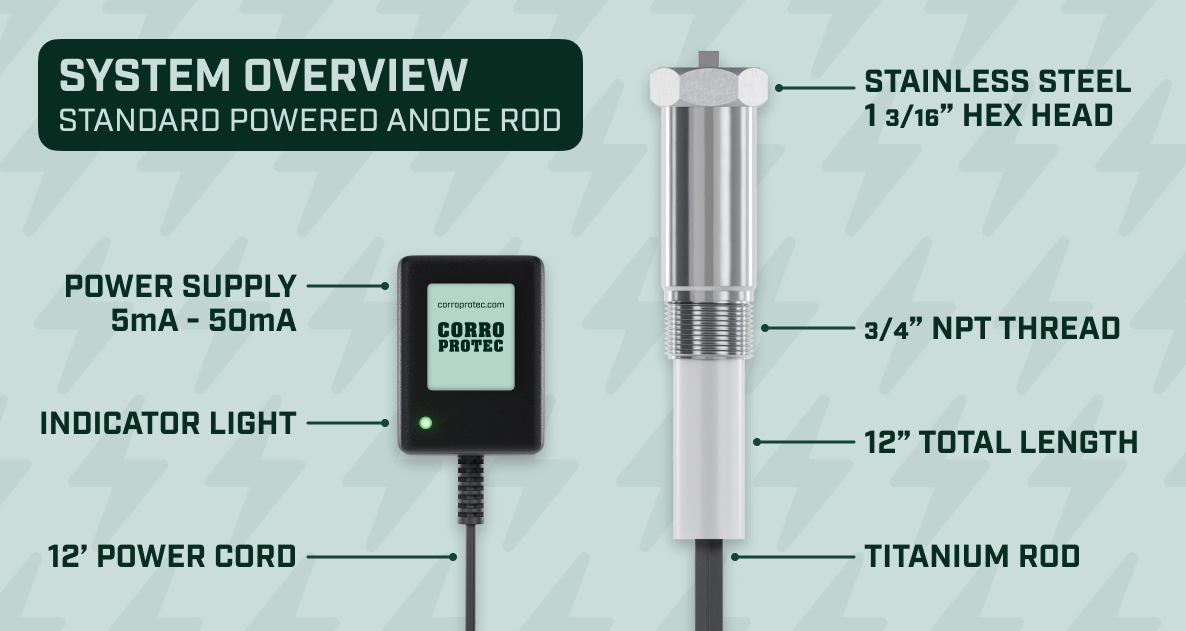
Not only are you supposed to drain a water heater regularly, they need the anode rods checked and replaced, unless you install an electronic anode. I replaced the crappy drain valves with a full port drain. This allows for full water pressure to evacuate all sludge build up in water heater. On my new waterheaters i added electronic anodes.


And fill port drains


IMG_7458.jpeg
 
   / My well water is terrible. Should I just use pool water? #65  
An idea to increase your water quality and the need to have your pipes redone as frequently.

Put in a cistern before the filter. Have a drain that you can flush sediments monthly or as needed. Then pump the water from that to the filter. This would save you the sediment fiasco.

Not sure if there is a better pipe to use that inhibits plaque from building up on the pipe walls, that may also be something worth while to investigate. Filters are to help for sure.

I'd guess you could prove if it would help if you ran some water straight into a bucket, clear jar and look for trash/sediment in there.
 
   / My well water is terrible. Should I just use pool water?
  • Thread Starter
#66  
Ok I got the $250 water test and the results are attached. It seems the reason for everything eroding is Clorides and it seems the only way to eliminate those is with a whole-home Reverse Osmosis system. I have gotten a quote, $16k. Not sure why it's that high?

1746201994201.png


Does this make sense? Cost seems really high. googling "how much does a whole home reverse osmosis system cost" yields dozens of results all suspiciously citing the same exact maximum number: $4,800. I suspect this means they are all plagiarized from one common ancestor that might be 20 years out of date, so I wouldn't be surprised if the real cost is higher, but $16k does seem excessive to me.

I do not think a settling tank, softener, or filter will help with the chlorides, please correct me if I'm wrong.

@Sportsman762 @ponytug @5030
 

Attachments

  • 2025030073 Results.pdf
    1.1 MB · Views: 61
   / My well water is terrible. Should I just use pool water? #67  
It's 'chlorides' btw. I use a Pentair 40 gallon settling comingling tank in my well water system that allows the chemicals my Pulsafeeder chemical injection pump to mix (comingle) with the raw well water, prior to it being used. In my case, the chemical I use precipitates the undesirable elements out of the water and they settle out in the tank. The Pentair tank is made from spun fiberglass strands epoxied together and lined with a plastic liner and the tank is bottom fed and top exit for the water. The bottom feed is also equipped with a blow down valve so I can remove almost all the precipitated elements out the bottom and into my sump crock. I also run a Cumo inline filter with 10 micron replaceable filters post tank before the treated water gets into my system. Between the Pentair tank and the filter, I can capture over 99% of anything and no need for an external softener or RO unit but your situation may vary. If I were you, I'd contact Aquascience in Rhode Island, they are the distributors for not only Pentair but many brands of Reverse Osmosis units, water softeners and associated systems are are very technically astute and helpful as well.

They also sell Pulsafeeder positive displacement injection pumps as well as chemical holding tanks and they can help you with your issue way better than anyone on this site can.

They have a rather hard to navigate website but they list their contact numbers there so you can call them.
 
   / My well water is terrible. Should I just use pool water? #68  
Ok I got the $250 water test and the results are attached. It seems the reason for everything eroding is Clorides and it seems the only way to eliminate those is with a whole-home Reverse Osmosis system. I have gotten a quote, $16k. Not sure why it's that high?

View attachment 3417088

Does this make sense? Cost seems really high. googling "how much does a whole home reverse osmosis system cost" yields dozens of results all suspiciously citing the same exact maximum number: $4,800. I suspect this means they are all plagiarized from one common ancestor that might be 20 years out of date, so I wouldn't be surprised if the real cost is higher, but $16k does seem excessive to me.

I do not think a settling tank, softener, or filter will help with the chlorides, please correct me if I'm wrong.

@Sportsman762 @ponytug @5030
It is good to see the attached water quality report. I think that data really helps decision making.

My takeaway from that report would be that in my opinion your well water has pretty high TDS (Total Dissolved Solids), with a fair amount of magnesium and calcium, in addition to a lot of salt in your water. Having calcium and magnesium means that an RO unit will absolutely require a softener pretreating the feed water.

So, you need a good whole house water filter.

Yes, using the well water as is will likely continue to generate corrosion in your pipes and hot water heater. A powered electrode in your water heater is likely a very helpful addition, even if you do whole house RO. Adding a water softener will reduce or eliminate the crud/precipitate in your water heater, but won't help corrosion. A water softener will help with crud in the water heater, but not with corrosion.

One possibility might be to use a whole house water softener, replacing pipes and fittings with PEX, a powered electrode in your water heater, and a small RO unit for drinking water. This would minimize the running costs.

I think that the whole house RO is a viable solution, but I would move to water efficient appliances (dishwasher and front loading washer), because there is a non-zero per gallon cost to RO, as sediment filters, charcoal filters, and RO membranes need periodic replacement, and you have to soften 4-5 times as much water. RO water can be hard on metal pipes as well because of the pH as it is usually a little acidic, and most whole house systems will do something like put the RO water in a concrete holding tank to neutralize the pH before it gets put in the house plumbing. I don't see a pH adjustment in your whole house quote. A whole house RO will use 4-5 times the amount of water that you are now using. That is because a 95% TDS reduction rate usually has around a 4 gallons to drain per gallon of product water, and that again adds to the cost per gallon of RO. And no, you can't take the reject water and run it through a second RO without lots of chemical monitoring.

I do think the the DOW Filmtec RO membranes have superior performance and durability.

I would want to see a more detailed breakout of the cost before commenting on it. Just for some perspective, a large whole house water softener (4-6cu.ft.) around here used to be used to be $2k-ish, plus installation, and a 1000gpd RO unit starts at about $900, but you need to add a prefilter and a pump. I've used this one in the past;

This is more of a complete unit;
1000 GPD PUMP DRIVEN COMMERCIAL RO $1,600
I've bought other items from them and their technical support has been excellent. The air water ice system above has the option of flush valves, and I would recommend getting them.

You would still need to add a RO storage tank to accommodate the high demand times of showers and washing, some float valves or water level monitor, and a booster pump to get the water from the RO tank up to normal 40psi water.

So, perhaps $4-5k in parts, plus labor, and then it is on you to service it. Personally, I enjoy that sort of thing, but I realize that it isn't for everyone.

If it were me, I'd buy a good large water softener, with a self flushing prefilter somewhere upstream, switch to all plastic PEX piping, add a powered anode for the hot water heater, and put in a 50gpd RO (from APEC or Air Water Ice, as I think that there are lots of less than great vendors out there) with a booster or permeate pump for drinking water, along with a 10 gallon RO storage tank, and call it good.

A large storage tank means that the RO can be run less frequently, increasing the delivered water quality; our system is under the sink, where I have an on/off valve to turn the feed water off after the RO has filled the tank, and on again when it runs out. Yes, a manual valve is more fiddling, but it gives us higher quality water.

At some point in a quote, I think that you have to allow for the cost of running a business having competent staff, and markups on stocking parts, etc, and being available to service your system. That all costs something. I would ask your vendor for recommendations that you could contact (especially commercial users), and then ask around at perhaps some of your local restaurants and chain restaurants what they use, and more importantly who they use.

All the best,

Peter
 
Last edited:
   / My well water is terrible. Should I just use pool water? #69  
The trials and tribulations concerning well water versus city water...lol

Problem is, oftentimes city water is as bad or worse than well water.

At least with city water, the TDS is most times less.
 
  • Good Post
Reactions: JJT
   / My well water is terrible. Should I just use pool water? #70  
The trials and tribulations concerning well water versus city water...lol

Problem is, oftentimes city water is as bad or worse than well water.

At least with city water, the TDS is most times less.
As required by law.
 
   / My well water is terrible. Should I just use pool water? #71  
As required by law.
Required but most times no adhered to. One never knows what is lurking in residential water pipes between the a pumping and treatment station and the end users spigot.
 
   / My well water is terrible. Should I just use pool water? #72  
We built a couple years ago.
I looked at a whole house RO. Then they were quoting $16-$20k in my area.
My pump house is 8x8. They said it was too small for a RO system. Equipment plus storage tank. Also, they recommend a quality UV system behind the RO storage tank to kill anything that might grow in the storage tank.
I kinda wish I could have done it though.
We have an air injection system with a softener. Air injection to bind TDS and the softener to remove then.
There is enough salt that gets to the house to hinder house plant growth.
We use an undercounter RO for watering the house plants and drinking.

IF, you can find someone that knows chemistry and is not just a sales... quack, they "should" be able to help you get the correct system.
I talked to a bunch of companies. Fortunately I know a chemist/microbiologist that helped me filter BS from fact.

But, keep in mind all your valves are some form of brass. So, by going to PEC you may save your pipes. Your seats and valves are at risk. As is your hot water tank.
 
   / My well water is terrible. Should I just use pool water? #73  
@Huntinguy I agree with you about corrosion in metal valves, though our brass valves seem to be doing ok.

Around here, stainless components need replacing ever so often, 15+ years, even longer if the valve is used more frequently. I think water trapped behind the seal in a ball valve is most of the issue. I would have to say that 100% plastic valves are available. Our local big box stores even have them. They are some of my most reliable valves.

And I completely agree that finding someone you trust to sort out the hype from reality is a huge help. I do not know why but water filters seem to bring out the hype and "used car salesman" tactics.

All the best,

Peter
 
   / My well water is terrible. Should I just use pool water?
  • Thread Starter
#74  
One possibility might be to use a whole house water softener, replacing pipes and fittings with PEX, a powered electrode in your water heater, and a small RO unit for drinking water. This would minimize the running costs.
That's what the guy said too, the one who quoted the $16k system. He pitched that as the next-best-thing since I wasn't happy with the fact that a softener wouldn't address the chlorides. He said basically "since you're already re-plumbing the house in PEX..." but I'm not particularly happy with that either. Because the mist/vapor from the water settles on everything within some radius of the bathrooms and kitchen and corrodes stuff that doesn't even directly contact the water. It's in the air.
  • Every silver and copper thing in the whole house tarnishes immediately.
  • Faucets/fixtures, every metallic thing in every bathroom needs replacement annually at least.
  • The fittings in a PEX system are still metal, so maybe I get 50 years, maybe 5, maybe I don't know, but eventually I'm going to have leaks again.
  • The intake for the air handler is right across the hall from the bathroom so it inhales the steam from hot showers. Now I know why my evaporator coil needs replacing every 12-18 months and why the new air handler I had installed 3 years ago already has 30 years worth of damage done to the inside.
  • I replace refrigerators about as often as I do evaporator coils and I thought that's just because "they don't make em like they used to" but now that I'm connecting dots, the refrigerator is in the laundry room right across from a couple of machines using hot well water to make hot hell vapor.
  • I'm concerned about the nails holding my house together actually.
After I made those points to him, he said that the whole house RO is the way to go. So I don't know if those points were actually compelling to him and this is the cost he would charge anyone for an RO system, or if this is the "screw you, you're being a pain in my ass" price.
I think that the whole house RO is a viable solution, but I would move to water efficient appliances (dishwasher and front loading washer), because there is a non-zero per gallon cost to RO, as sediment filters, charcoal filters, and RO membranes need periodic replacement, and you have to soften 4-5 times as much water. RO water can be hard on metal pipes as well because of the pH as it is usually a little acidic, and most whole house systems will do something like put the RO water in a concrete holding tank to neutralize the pH before it gets put in the house plumbing. I don't see a pH adjustment in your whole house quote.
I will ask him about this. But there is a softener on the quote and a chlorinator. Maybe that is to address the pH?
A whole house RO will use 4-5 times the amount of water that you are now using. That is because a 95% TDS reduction rate usually has around a 4 gallons to drain per gallon of product water, and that again adds to the cost per gallon of RO. And no, you can't take the reject water and run it through a second RO without lots of chemical monitoring.
wow!

At some point in a quote, I think that you have to allow for the cost of running a business having competent staff, and markups on stocking parts, etc, and being available to service your system. That all costs something. I would ask your vendor for recommendations that you could contact (especially commercial users), and then ask around at perhaps some of your local restaurants and chain restaurants what they use, and more importantly who they use.
Agreed, I do not mind paying the cost of business. I just want to make sure I'm not paying more than that ;).

Thanks for your help and advice and for taking the time to read my report.
 
   / My well water is terrible. Should I just use pool water? #75  
That's what the guy said too, the one who quoted the $16k system. He pitched that as the next-best-thing since I wasn't happy with the fact that a softener wouldn't address the chlorides. He said basically "since you're already re-plumbing the house in PEX..." but I'm not particularly happy with that either. Because the mist/vapor from the water settles on everything within some radius of the bathrooms and kitchen and corrodes stuff that doesn't even directly contact the water. It's in the air.
  • Every silver and copper thing in the whole house tarnishes immediately.
  • Faucets/fixtures, every metallic thing in every bathroom needs replacement annually at least.
  • The fittings in a PEX system are still metal, so maybe I get 50 years, maybe 5, maybe I don't know, but eventually I'm going to have leaks again.
  • The intake for the air handler is right across the hall from the bathroom so it inhales the steam from hot showers. Now I know why my evaporator coil needs replacing every 12-18 months and why the new air handler I had installed 3 years ago already has 30 years worth of damage done to the inside.
  • I replace refrigerators about as often as I do evaporator coils and I thought that's just because "they don't make em like they used to" but now that I'm connecting dots, the refrigerator is in the laundry room right across from a couple of machines using hot well water to make hot hell vapor.
  • I'm concerned about the nails holding my house together actually.
After I made those points to him, he said that the whole house RO is the way to go. So I don't know if those points were actually compelling to him and this is the cost he would charge anyone for an RO system, or if this is the "screw you, you're being a pain in my ass" price.

I will ask him about this. But there is a softener on the quote and a chlorinator. Maybe that is to address the pH?

wow!


Agreed, I do not mind paying the cost of business. I just want to make sure I'm not paying more than that ;).

Thanks for your help and advice and for taking the time to read my report.
You are welcome! I used to work on delivering high purity water for research work, and perhaps that makes me especially allergic to the hype that I see many places around water.

I do understand not wanting to be taken advantage of. Nobody wants that.

When you write "silver", you mean real silver, sterling?

I would like to ask how far from the coast you are. The amount of corrosion around the house that you describe seems similar to what I have seen being quite close to an ocean. Are you? If so, it might explain at least some of the refrigerator and air handler damages. (Just trying to assign "blame" here; is it just the water, or is it possibly airborne salt from coastal breezes, or a combination?)

I've lived in a place with similar levels of chloride, and we did not have the air handler or faucet issues that you describe, so I do not fully understand what is going there, and as your water tested slightly alkaline, that generally helps. I wonder if the sediment that you were describing somehow makes things worse. I did live for a time on the beach and the salt in the air there was really tough on aluminum and exposed metal, but we did not have refrigerator or air handler issues as you describe, so that one is an "I don't know" from me.

Given the high level of manganese (150mg/l) in your water, I think that you do really should get an RO for your health, as the manganese level is about 3X the maximum recommended levels of manganese.
https://www.epa.gov/sites/default/files/2014-09/documents/support_cc1_magnese_dwreport_0.pdf
Do check with whomever you get your water softener from that they know the manganese amount and the potential water usage of a whole house RO. You may need a supplementary manganese (green sand) filter.

You do mention more than a few non-water issues related to your water, specifically the amount of corrosion and damages that happens to your air handler, evaporator, fixtures, refrigerators, and to me, yes that does change the picture. That all adds up to a lot of damage and cost. If you aren't close to the gulf, then it probably seems reasonable to point the blame at the water. Going with marine grade fittings, 316 stainless, brass, bronze, or plastic faucets would help the fittings, though the non plastic ones tend to be "professional grade" fittings ($$$). How often have you needed a new washing machine?

I know that this isn't what I wrote above, but... With the additional corrosion and damages, I would be inclined to the whole house RO, though I would get a few more quotes, think about a concrete storage tank, and think about how to get as much metal as you can out of your plumbing. With PEX A you can find non-metallic fittings. On the water softener, get a commercial unit 6+cu.ft., and try to put in a large brine tank somewhere that could be easily loaded with your tractor. I buy the bags in bulk, and put them on a pallet that I can move with my tractor until they need to go in the brine tank. Saves work.
As you get more quotes, I would talk to the technical people at each company to get a better sense of who actually knows one end of a screwdriver from the other.

I would also consider upgrading the exhaust fan(s) in your shower area(s), and get the type driven by humidity. I'd also consider an filter at the return vent closest to the spray, but I would also check that nobody has been using an acid evaporator cleaner on your coils.

Here's an example of some non-metallic PEX-A fittings that would also work for RO water.

IMG_1516.jpeg

This seems like a bit of a project, but it also seems as if you have been putting out fires in many directions for a while now.

All the best,

Peter
 
   / My well water is terrible. Should I just use pool water? #76  
The whole house RO system that will be going in my house in Oregon will cost about double what you've been quoted. Part of that is the storage tank system and part is capacity so it can water a garden but I think a lot of it is in special RO equipment to remove boron. Boron is the only real problem with the water but it's difficult to remove.
 
   / My well water is terrible. Should I just use pool water?
  • Thread Starter
#77  
You are welcome! I used to work on delivering high purity water for research work, and perhaps that makes me especially allergic to the hype that I see many places around water.
That explains a lot!
When you write "silver", you mean real silver, sterling?
yes
I would like to ask how far from the coast you are. The amount of corrosion around the house that you describe seems similar to what I have seen being quite close to an ocean. Are you? If so, it might explain at least some of the refrigerator and air handler damages. (Just trying to assign "blame" here; is it just the water, or is it possibly airborne salt from coastal breezes, or a combination?)
yes we are near the coast and I have suspected for a long time that was part of the reason for things turning to dust so fast. Even things outside the house. Our patio furniture doesn't last more than a few years before collapsing on the job. But I am not sure we actually live close enough to the ocean for coastal breezes to factor in. We are definitely close enough to bayous if that counts.

1746228847854.png


1746229236540.png


1746229118765.png

I've lived in a place with similar levels of chloride, and we did not have the air handler or faucet issues that you describe, so I do not fully understand what is going there, and as your water tested slightly alkaline, that generally helps. I wonder if the sediment that you were describing somehow makes things worse. I did live for a time on the beach and the salt in the air there was really tough on aluminum and exposed metal, but we did not have refrigerator or air handler issues as you describe, so that one is an "I don't know" from me.
Yeah I don't know either.
How often have you needed a new washing machine?
I just replaced the washer after 12 years which I consider absolutely amazing considering all the issues I have described so I replaced it with one of the same brand (LG). Also my water heater probably should have exploded by now, not sure why it hasn't. I'm going to buy a new one as soon as the system is installed.
I know that this isn't what I wrote above, but... With the additional corrosion and damages, I would be inclined to the whole house RO, though I would get a few more quotes, think about a concrete storage tank, and think about how to get as much metal as you can out of your plumbing. With PEX A you can find non-metallic fittings. On the water softener, get a commercial unit 6+cu.ft., and try to put in a large brine tank somewhere that could be easily loaded with your tractor. I buy the bags in bulk, and put them on a pallet that I can move with my tractor until they need to go in the brine tank. Saves work.
As you get more quotes, I would talk to the technical people at each company to get a better sense of who actually knows one end of a screwdriver from the other.

I would also consider upgrading the exhaust fan(s) in your shower area(s), and get the type driven by humidity. I'd also consider an filter at the return vent closest to the spray, but I would also check that nobody has been using an acid evaporator cleaner on your coils.

Here's an example of some non-metallic PEX-A fittings that would also work for RO water.

View attachment 3417884
Ok thanks!
This seems like a bit of a project, but it also seems as if you have been putting out fires in many directions for a while now.
Indeed 🤕
 
   / My well water is terrible. Should I just use pool water? #78  
@strantor I think based on my very limited experience (n=2) that your location is close enough to count as close to the Gulf for getting some salt in the air, but not enough to explain the fast turnover of your evaporators.

All the best,

Peter
 
   / My well water is terrible. Should I just use pool water?
  • Thread Starter
#79  
@strantor I think based on my very limited experience (n=2) that your location is close enough to count as close to the Gulf for getting some salt in the air, but not enough to explain the fast turnover of your evaporators.

All the best,

Peter
That is in line with my feelings on the matter too. I think it there is a combination of things going on. Some salt in the air, everywhere, and some chlorides from the well water inside the house.

I have attached a study of atmospheric corrosion which shows that, depending on how you represent the data, my area can be said to be somewhere barely affected and severely affected. And it seems that the air can be corrosive far far inland. Like as in the whole state of the Florida has a corrosive atmosphere according to some of the representations.
 

Attachments

  • mappingatmoscorrosion.pdf
    2.5 MB · Views: 61
   / My well water is terrible. Should I just use pool water? #80  
Ok I got the $250 water test and the results are attached. It seems the reason for everything eroding is Clorides and it seems the only way to eliminate those is with a whole-home Reverse Osmosis system. I have gotten a quote, $16k. Not sure why it's that high?

View attachment 3417088

Does this make sense? Cost seems really high. googling "how much does a whole home reverse osmosis system cost" yields dozens of results all suspiciously citing the same exact maximum number: $4,800. I suspect this means they are all plagiarized from one common ancestor that might be 20 years out of date, so I wouldn't be surprised if the real cost is higher, but $16k does seem excessive to me.

I do not think a settling tank, softener, or filter will help with the chlorides, please correct me if I'm wrong.

@Sportsman762 @ponytug @5030
Gotta luv the way they reverse engineered their price using an exact 16,000.00 post 8.25% tax number 😂
 

Tractor & Equipment Auctions

2020 INTERNATIONAL MV607 REEFER BOX TRUCK (A55745)
2020 INTERNATIONAL...
2019 Land Rover Range Rover Sport AWD SUV (A55853)
2019 Land Rover...
KNOW BEFORE YOU BID - DO YOUR HOMEWORK AND BE HAPPY WITH YOUR PURCHASE (A60429)
KNOW BEFORE YOU...
2022 Ford Explorer AWD SUV (A59231)
2022 Ford Explorer...
2007 Chevrolet Silverado 3500HD (A60462)
2007 Chevrolet...
2019 PJ TRAILER 32FT GOOSENECK (A58214)
2019 PJ TRAILER...
 
Top