Please explain this difference between diesel and gasoline engines

   / Please explain this difference between diesel and gasoline engines #101  
This is non sense!
He's correct. Diesel fuel is added AFTER the air is preheated by compression. In a spark ignition engine, the fuel mixture is BURNED with a flame front advancing from the spark location.
IF the mixture happens to ignite by compression before the spark starts the burn, it's called 'knock'. And if this occurs before the piston reaches TCD, the extra load trying to reverse the piston early can deform bearings and crack pistons or damage head gaskets. I've even seen a connecting rod fail as if the engine had hydro locked.
 
   / Please explain this difference between diesel and gasoline engines #102  
He's correct. Diesel fuel is added AFTER the air is preheated by compression. In a spark ignition engine, the fuel mixture is BURNED with a flame front advancing from the spark location.
IF the mixture happens to ignite by compression before the spark starts the burn, it's called 'knock'. And if this occurs before the piston reaches TCD, the extra load trying to reverse the piston early can deform bearings and crack pistons or damage head gaskets. I've even seen a connecting rod fail as if the engine had hydro locked.
You’re kind of right, kind of wrong.
Spark ignition gasoline engines actually spark, and start the burning process, well before TDC, while the piston is moving towards the cylinder head, similar to a diesel.
Knock is an untimed, uncontrolled accelerated burn, before the spark event.
Both knock, and normal spark events happen before TDC
 
   / Please explain this difference between diesel and gasoline engines #103  
Looks like you have that backwards. Direct injection diesel, tends to have a lower compression ratio, not higher
My old John Deere 955s (Yanmar 3-cyl port injected) were only 18:1 compression ratio. If I recall, all of my 3-cylinder Kubotas were DI and in the low 20s CR.
 
   / Please explain this difference between diesel and gasoline engines #104  
My old John Deere 955s (Yanmar 3-cyl port injected) were only 18:1 compression ratio. If I recall, all of my 3-cylinder Kubotas were DI and in the low 20s CR.
1733318357894.png
 
   / Please explain this difference between diesel and gasoline engines #105  
You’re kind of right, kind of wrong.
Spark ignition gasoline engines actually spark, and start the burning process, well before TDC, while the piston is moving towards the cylinder head, similar to a diesel.
Knock is an untimed, uncontrolled accelerated burn, before the spark event.
Both knock, and normal spark events happen before TDC
The peak pressure buildup from the burn is timed to produce the 'ideal' pulse timed with the change in piston velocity. I've seen hundreds of high speed videos and pressure /velocity measurements while at the GM Emissions lab in Milford, MI. It's obviously a function of crank rpm, too. Nowdays, electronic controls also participate in the combustion process because emissions generate by an 'ideal' burn (mainly nitrogen oxides) are counter to EPA laws (especial the California versions). That's what we call 'Non-stoichiometric' combustion. Besides, excess fuel and downstream air injection are also needed to heat the catalytic converter to oxidize carbon monoxide. One of several reason your vehicle doesn't get optimum gas mileage.
 
   / Please explain this difference between diesel and gasoline engines #106  

Attachments

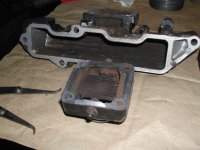
  • head_a.jpg
    head_a.jpg
    142.8 KB · Views: 107
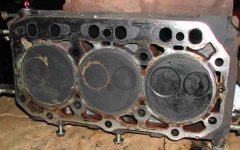
  • DSCN0073.JPG
    DSCN0073.JPG
    532.9 KB · Views: 96
   / Please explain this difference between diesel and gasoline engines #107  
He's correct. Diesel fuel is added AFTER the air is preheated by compression. In a spark ignition engine, the fuel mixture is BURNED with a flame front advancing from the spark location.
IF the mixture happens to ignite by compression before the spark starts the burn, it's called 'knock'. And if this occurs before the piston reaches TCD, the extra load trying to reverse the piston early can deform bearings and crack pistons or damage head gaskets. I've even seen a connecting rod fail as if the engine had hydro locked.
Diesels inject fuel BTDC. Depends on the engine to what degrees you set it on. 18 BTDC was common if I recall correctly. So it's close up there, but not at 0. The amount of fuel is controlled in the old injection pumps, and is controlled by HEUI systems now. Common rail fuels systems now are controlled by the PCM with stacked capacitor injectors. There are even more variants out there. This is just off the top of my head. The properties of the fuel change the whole game, as far as comparison. I have run diesels on used cooking oil my class brought into the shop when I was an instructor. They wanted to know the next day why the whole building smelled like someone frying chicken. I told the car people why, and their mouths dropped open. :) They always knew the next day I had been running an engine, of course I jacked with the timing so to really give them something to complain about:).
 
   / Please explain this difference between diesel and gasoline engines #108  
Diesels are only "lean" if you think about them like gas engines where the air and fuel are completely mixed. They're not. Think of a diesel idling. It's still getting a full flow of air (no throttle plate) but only tiny squirts of fuel. Only the area right around the injector will have fuel concentrated enough to burn. The rest of the chamber's mostly air, with maybe a small amount of unburnt fuel. When the fuel droplets are too far apart there's no chain reaction to maintain combustion.

I dont think EFI vs MFI makes a difference in the basic theory of how the two systems differ in combustion. Same with IDI and CVCC.

Modern EFI gas engines can run pretty lean compared to the old days but they're nothing like diesels. And they can only do it with knock sensors and the ability to fine tune the fuel and timing.
Actually, the injector atomizes the fuel. So the idea that just around the injector will have a flame front is not entirely correct. I have a tool that I can actually see the flame in the cylinder. It's always white hot at idle and throughout the combustion event.
 
   / Please explain this difference between diesel and gasoline engines #109  
You’re kind of right, kind of wrong.
Spark ignition gasoline engines actually spark, and start the burning process, well before TDC, while the piston is moving towards the cylinder head, similar to a diesel.
Knock is an untimed, uncontrolled accelerated burn, before the spark event.
Both knock, and normal spark events happen before TDC
Why are the newer diesel engines a lot quieter than they used to be? Because some electronic engines atomize the fuel in as many as 6 times before the final event where they make the power. With different amounts of fuel. Comparing diesels to gasoline engines is like comparing apples to oranges, except intake compression power exhaust. Unless it is of course a two stroke diesel engine. Or, an opposed cylinder diesel engine. As in the Napier Deltic engines.
1739945165726.jpeg
 
   / Please explain this difference between diesel and gasoline engines #110  
Why are the newer diesel engines a lot quieter than they used to be? Because some electronic engines atomize the fuel in as many as 6 times before the final event where they make the power.
Because a judicious mix of exhaust has been added along with compression from the turbo charger to create a slower combustion, to control the combustion byproducts. Also combustion is timed by the Direct Injection.

Cant "atomize the fuel 6 times" from a direct injector.
 
   / Please explain this difference between diesel and gasoline engines #112  
Great engine info in this post. And here I thought it magical when I turned the ignition key there were a bunch of fairies under the hood doing all that work. A little pixie dust (diesel/or gas) goes a long way.

😁 😀:)
 
   / Please explain this difference between diesel and gasoline engines #114  
Why are the newer diesel engines a lot quieter than they used to be? Because some electronic engines atomize the fuel in as many as 6 times before the final event where they make the power. With different amounts of fuel. Comparing diesels to gasoline engines is like comparing apples to oranges, except intake compression power exhaust. Unless it is of course a two stroke diesel engine. Or, an opposed cylinder diesel engine. As in the Napier Deltic engines. View attachment 2726359
Actually, they are closer than you think, now that Direct Injection is Widely Used in Spark Ignition Gasoline Engines.

You are correct about Multiple Injection Cycles though making the Diesel Compression Ignition Engine quieter.

So main difference is Spark vs Compression Ignition, and the Build Strength to Handle either, and Potential Energy Found in either Fuel, I believe Diesel has 25% potential energy, weather the Engine design can harness the extra or not is another topic.
 
   / Please explain this difference between diesel and gasoline engines #115  
Actually, they are closer than you think, now that Direct Injection is Widely Used in Spark Ignition Gasoline Engines.
...and just to really mess with you, there are now engines that feature both compression-ignition and spark-ignition. Notably the Mazda Skyactiv-X technology, which has gasoline compression ratios as high as 16, instead of the 13-14 ratios in their sparky gas engines (Skyactiv-G).

Plus, Mazda's diesels (Skyactiv-D) have been running CRs as low as 14, utilizing multi-nozzle DI piezo injectors, and computer-controlled exhaust valve lift.
 
   / Please explain this difference between diesel and gasoline engines #116  
This is a really fun thread!
 
   / Please explain this difference between diesel and gasoline engines
  • Thread Starter
#117  
This is a really fun thread!
I started it and never expected it to go on this long. I also learned a bunch of stuff and have a much better understanding of diesel engine operation.
Eric
 
   / Please explain this difference between diesel and gasoline engines #118  
Actually, they are closer than you think, now that Direct Injection is Widely Used in Spark Ignition Gasoline Engines.

You are correct about Multiple Injection Cycles though making the Diesel Compression Ignition Engine quieter.

So main difference is Spark vs Compression Ignition, and the Build Strength to Handle either, and Potential Energy Found in either Fuel, I believe Diesel has 25% potential energy, weather the Engine design can harness the extra or not is another topic.
Yes, I own two vehicles that have direct cylinder fuel injection.
Actually, they are closer than you think, now that Direct Injection is Widely Used in Spark Ignition Gasoline Engines.

You are correct about Multiple Injection Cycles though making the Diesel Compression Ignition Engine quieter.

So main difference is Spark vs Compression Ignition, and the Build Strength to Handle either, and Potential Energy Found in either Fuel, I believe Diesel has 25% potential energy, weather the Engine design can harness the extra or not is another topic.
Yes, I very well know about direct injection on the gasoline engines. I know that the valves begin to neck with carbon deposits and can cause premature problems as compared to other systems for automotive fuel injections. In fact, two of my personal vehicles run with direct injection. But, they sure do have plenty of power on the open road.
 

Attachments

  • Copy (2) of IMAGE7.JPG
    Copy (2) of IMAGE7.JPG
    651 KB · Views: 77
   / Please explain this difference between diesel and gasoline engines #119  
Yes, I own two vehicles that have direct cylinder fuel injection.

Yes, I very well know about direct injection on the gasoline engines. I know that the valves begin to neck with carbon deposits and can cause premature problems as compared to other systems for automotive fuel injections. In fact, two of my personal vehicles run with direct injection. But, they sure do have plenty of power on the open road.
 
   / Please explain this difference between diesel and gasoline engines #120  
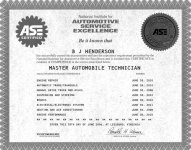
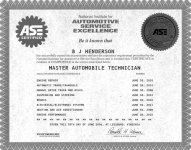
Here is some of my qualifications as to why I know.
 

Attachments

  • Copy (2) of IMAGE7.JPG
    Copy (2) of IMAGE7.JPG
    651 KB · Views: 89

Tractor & Equipment Auctions

CAT 312C EXCAVATOR (A58214)
CAT 312C EXCAVATOR...
2002 AMERITRAIL 32FT GOOSENECK TRAILER (A58214)
2002 AMERITRAIL...
2008 New Holland B110 MFWD Loader Backhoe (A57024)
2008 New Holland...
Husqvarna Riding Mower (A56857)
Husqvarna Riding...
Tandem Axle Rear Truck Frame (A59230)
Tandem Axle Rear...
2014 CATERPILLAR 930K WHEEL LOADER (A60429)
2014 CATERPILLAR...
 
Top