You are using an out of date browser. It may not display this or other websites correctly.
You should upgrade or use an alternative browser.
You should upgrade or use an alternative browser.
Please explain this difference between diesel and gasoline engines
- Thread starter etpm
- Start date
- Views: 41408
More options
Who Replied?
/ Please explain this difference between diesel and gasoline engines
#141


sd455dan
Super Member
- Joined
- Oct 23, 2012
- Messages
- 6,314
- Location
- North Idaho
- Tractor
- Rhino 554, Ford 550 TLB (JD X500, MTD, Gilson riding mowers) Ford 3000-Sold
Cummins engines in RAM trucks during certain years do employ an electronically controlled throttle valve. When they fail in the closed condition lets just say drivability goes out the window.Not really. There’s no free lunch air compression energy. The only energy is from burning the diesel fuel, and diesels are inefficient at idle, because, unlike a gasoline engine that throttles air intake thus minimizing thermal and internal pumping losses, the diesel keeps pumping in full unrestricted volumes of cold air, and pumping it out the exhaust system. That’s why diesel’s don’t warm up well when started and idled. A high percentage of heat energy is wasted heating the unrestricted air. It’s essentially an air pump at idle
Never heard of engine cloaking, have heard of coking. Tear down some hi mile engines, and gas or diesel it is amazing how Clogged up they can get. We had a Crown Vic that was so full of the EGR crap it was easier to replace the intake manifold with a new one than clean it. Same working on a 3.0 ecodiesel the egr had really narrowed the intake ports with all of the soot.

RandyT
Elite Member
Here is a video showing the exact problem with the intake valve sticking shut. In this case looks like no compression.Cummins engines in RAM trucks during certain years do employ an electronically controlled throttle valve. When they fail in the closed condition lets just say drivability goes out the window.
Never heard of engine cloaking, have heard of coking. Tear down some hi mile engines, and gas or diesel it is amazing how Clogged up they can get. We had a Crown Vic that was so full of the EGR crap it was easier to replace the intake manifold with a new one than clean it. Same working on a 3.0 ecodiesel the egr had really narrowed the intake ports with all of the soot.
SPYDERLK
Super Star Member
- Joined
- Feb 28, 2006
- Messages
- 12,534
- Location
- VA
- Tractor
- JD2010, Kubota3450,2550, Mahindra 7520 w FEL w Skid Steer QC w/Tilt Tatch, & BH, BX1500
I didn’t read the posts but I’ll give you my explanation on gas verses diesel.
A gasoline engine works with a constant cylinder volume decreasing pressure combustion process while a diesel is constant pressure increasing volume process.
A gasoline engine takes in a fixed volume of fuel & air that does not change during combustion cycle. It is compressed ignited and peak cylinder pressure occurs after ignition near top dead center (tdc) where there is very little mechanical advantage because of the rod crankshaft relationship. As the piston goes down the cylinder the mechanical leverage increases but the cylinder pressure is also dropping so torque quickly drops off.
A diesel on the other hand takes in excess air and compresses it to very high pressures causing the air temperature to increase to the point that when diesel fuel is injected it spontaneously ignites. As the piston is pushed down the cylinder fuel continues to be injected increasing the volume and maintaining combustion pressure. Fuel continues to be injected as the rod/crankshaft approaches the point of greatest leverage. But we’re still not done here. Fuel can continue to be injected maintaining pressure on the piston until past the point of maximum leverage and the available oxygen is used up.
That’s why diesels make so much more torque and pull so hard and feel like they don’t want to quit. Diesels produce increased amounts of torque thru more degrees of crankshaft rotation than gasoline engines.
Diesels take advantage of the mechanical leverage where (gas jobs) just peter out.
Hope this helps.
90cummins
During the intake and compression of a gas engine the atomized intake mixture evaporates cooling everything it touches; valves, piston, and the combustion chamber. A leaner charge means less cooling. Further, when the burn happens it burns slower and doesnt complete before the ex valve opens. This causes some pretty hot spots! Diesel burn is controlled by metering the fuel into the burn, avoiding this effect.I have not yet. Many answers did not address the question. Others tried to justify incorrect statements or had faulty logic. Like applying conditions to a diesel engine but ignoring the fact that a gasoline engine would have the same conditions. I guess I'm gonna need to really learn how the two different types of engines work and then post my findings. It looks like the library is in my future. Or I could get Chat GPT to write me some BS that I could then post here. Strike that. I'm heading to the library.
Eric
Last edited:

deserteagle71
Elite Member
- Joined
- Dec 30, 2017
- Messages
- 2,690
- Location
- northern Nevada
- Tractor
- John Deere 2020 diesel, Kubota M7060HDC12
Lots of angry people here in northern Nevada....apparently a fuel delivery driver inadvertently dumped a load of diesel into the "regular" tank. Lots of cars not running too well...........
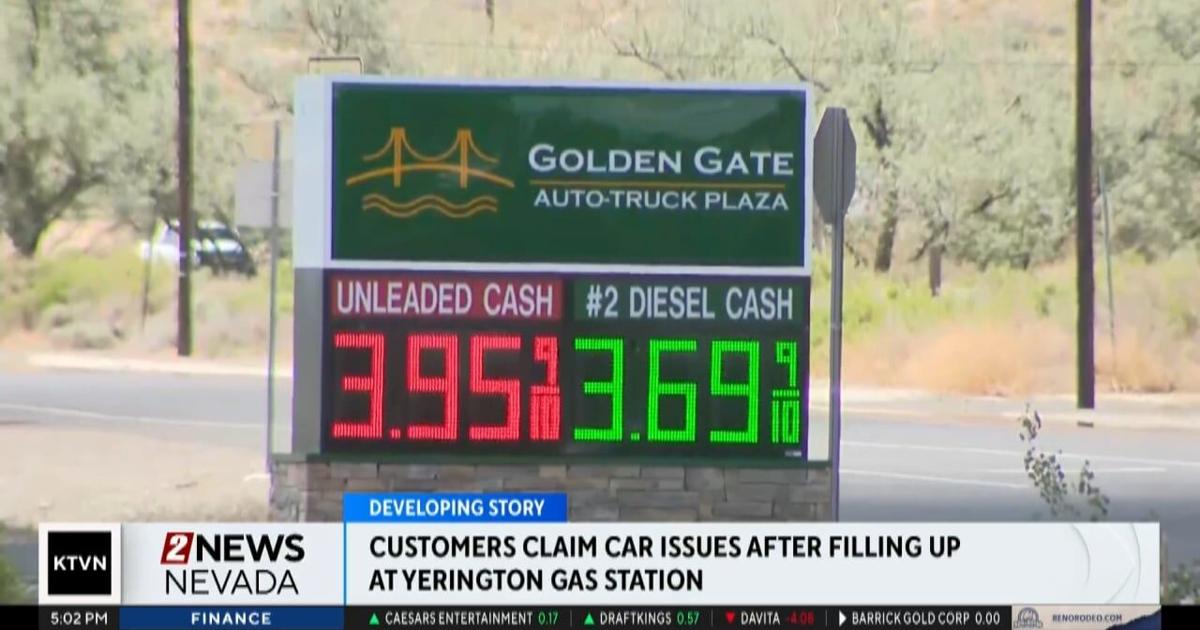
 www.2news.com
Yerington Golden Gate gas station says it will pay for damage claims after fuel mix-up
Dozens of people are claiming their cars are breaking down after filling up their tanks at the Golden Gate Gas Station in Yerington.

bmaverick
Super Member
- Joined
- Sep 17, 2013
- Messages
- 6,787
- Location
- Beloit-WI
- Tractor
- Yanmar YM2610 ■YANMAR GURU■ EXTRAORDINAIRE
The original diesel engines were developed to run on nearly anything as an oil based fuel. Mr. Diesel wanted farmers around the world to be independent of the supply chain. With the world wars, diesel was the option of choice for engines as fuel could be made from a vast amount of resources locally, not needing refineries like gasoline.I know someone here can help me with this question. Maybe the question should be spark ignition versus compression ignition, but I will just use gasoline spark ignition vs diesel compression ignition. Anyway, gasoline engines are very sensitive to air/fuel ratios. For example, gasoline engines when run too lean can run way too hot and this can result in pre-ignition, burnt valves, and melted pistons. I have personal experience with a melted piston crown, darn it. So the air/fuel mixture is closely controlled. Diesel engines don't control the air at all, the engines are always sucking in as much air as possible. This means that the air/fuel mixture is all over the place. So why is it that a compression ignition diesel engine can tolerate the very lean condition at low throttle settings? And, from what I have read here, diesel engines run hotter at higher throttle settings and running them at too low of a throttle setting, such as excessive idling, can cause problems such as "wet stacking". The reason being that the engine is running too cool and all the fuel is not burning completely. It's just idle curiosity on my part and I figure a good answer is likely to be found here.
Thanks,
Eric
Diesel engines on average have about 200 to 300 less engine parts compared to a gasoline engine from the early days up to the mid-1980s.
Diesel engines pre-1990 are simple to work on.
CalG
Super Member
- Joined
- Sep 29, 2011
- Messages
- 9,193
- Location
- vermont
- Tractor
- Hurlimann 435, Fordson E27n, Bolens HT-23, Kubota B7200, Kubota B2601
This is an entertaining thread that brings back many memories of the years gone bye.
Anyone remember Smokey Yunick?
He wanted higher compression engines that would run at much higher temperatures (Materials yet to be developed)
How about
Squish bands
Hemi Heads
Pent roof pistons
Schnuerle loop porting
Stratified induction
Tuned port induction
Ported and polished
Tuned headers
Tuned pipes
Resonance chambers
Two spark plug heads
Heron heads
Scavenging
the list goes on...and on.
Mostly to tame the uncontrolled flame fronts of "volatile fuels" like gasoline.
The oil burners rely on compression of the induction air to do all of the things mentioned above to gain PERFORMANCE. While many other methods and configurations assist with convenience.
The difference is the fuel burn characteristics.!!
One needs to get deep into fuel octane, aromatic hydrocarbons, vaporization, stoichiometry, flame propagation, Radicals,
Brake Mean Effective Pressure,Volumetric Efficiency, (it can be greater than unity for a well designed engine!)
My bet is.....
That the real difference between the most modern Otto cycle engine, and most modern Diesel cycle engines is getting more difficult to describe every day.
I can sum up with this.
Diesel engines usually have recessed piston crowns, while gasoline engines usually have flat topped or domed piston crowns.
There! That should simplify things! '-)
Great thread by the way!
Anyone remember Smokey Yunick?
He wanted higher compression engines that would run at much higher temperatures (Materials yet to be developed)
How about
Squish bands
Hemi Heads
Pent roof pistons
Schnuerle loop porting
Stratified induction
Tuned port induction
Ported and polished
Tuned headers
Tuned pipes
Resonance chambers
Two spark plug heads
Heron heads
Scavenging
the list goes on...and on.
Mostly to tame the uncontrolled flame fronts of "volatile fuels" like gasoline.
The oil burners rely on compression of the induction air to do all of the things mentioned above to gain PERFORMANCE. While many other methods and configurations assist with convenience.
The difference is the fuel burn characteristics.!!
One needs to get deep into fuel octane, aromatic hydrocarbons, vaporization, stoichiometry, flame propagation, Radicals,
Brake Mean Effective Pressure,Volumetric Efficiency, (it can be greater than unity for a well designed engine!)
My bet is.....
That the real difference between the most modern Otto cycle engine, and most modern Diesel cycle engines is getting more difficult to describe every day.
I can sum up with this.
Diesel engines usually have recessed piston crowns, while gasoline engines usually have flat topped or domed piston crowns.
There! That should simplify things! '-)
Great thread by the way!

DarkBlack
Elite Member
What 200-300 extra engine parts are you talking about in early gasoline engines?Diesel engines on average have about 200 to 300 less engine parts compared to a gasoline engine from the early days up to the mid-1980s.
DarkBlack
Elite Member
Sure, If one ignores the fact that the accepted measured value of the fuel used, is volume, and a gallon of diesel fuel has 14% more BTU’s and weighs 16% more.The oil burners rely on compression of the induction air to do all of the things mentioned above to gain PERFORMANCE.
When one accounts for efficiency vs mass of fuel consumed, instead of volume, the efficiency line advantage of compression ignition diesel engines starts to blur when compared to recent design direct injection gasoline engines.
bmaverick
Super Member
- Joined
- Sep 17, 2013
- Messages
- 6,787
- Location
- Beloit-WI
- Tractor
- Yanmar YM2610 ■YANMAR GURU■ EXTRAORDINAIRE
spark plugs, timed distributor, upper cams, carburetor or throttle-body, engine sensors for air mixture, PCV system, etc.What 200-300 extra engine parts are you talking about in early gasoline engines?
Diesel engines also have fewer components than gas engines, which means your car has fewer potential parts that could malfunction.
DarkBlack
Elite Member
Upper cams? What unique “upper cams” are required for gasoline engines?spark plugs, timed distributor, upper cams, carburetor or throttle-body, engine sensors for air mixture, PCV system, etc.
Diesel engines also have fewer components than gas engines, which means your car has fewer potential parts that could malfunction.
I call BS
An equivalent diesel is every bit as complicated and roughly equal parts count to a gasoline engine.
Throttle body? Try counting parts in a diesel injection pump, and related repair costs compared to a throttle body and carburetor.
Spark plugs……glow plugs…..
PCV system isn’t a unique requirement for gasoline engine design
Last edited:
CalG
Super Member
- Joined
- Sep 29, 2011
- Messages
- 9,193
- Location
- vermont
- Tractor
- Hurlimann 435, Fordson E27n, Bolens HT-23, Kubota B7200, Kubota B2601
There are a LOT of parts in an early magneto, and a lot of parts in any carburetor. They may be small and relatively simple parts, but they add up.Upper cams? What unique “upper cams” are required for gasoline engines?
I call BS
An equivalent diesel is every bit as complicated and roughly equal parts count to a gasoline engine.
Throttle body? Try counting parts in a diesel injection pump, and related repair costs compared to a throttle body and carburetor.
Now most of us can service both carbs and mags, but don't let us get anywhere near an injector pump assembly! ;-)
I wonder how they did it back in 1910?
Those "upper cams" are what are holding us back, for sure!
;-)
DarkBlack
Elite Member
Was magneto ignition the point of the pre-1980’s comment?There are a LOT of parts in an early magneto, and a lot of parts in any carburetor. They may be small and relatively simple parts, but they add up.

Does an early diesel injection pump have less parts than a simple carburetor?
Look at reality for just a moment..….
How many average Joe’s can fix/modify/repair their diesel engines no problem, but struggle to, with their gasoline engines?

Last edited:
OP
etpm
Veteran Member
- Joined
- Jun 30, 2021
- Messages
- 2,338
- Location
- Whidbey Island, WA
- Tractor
- Yanmar YM2310, Honda H5013, Case 580 CK, Ford 9N
When I posted my original question I in no way would have thought it would have become a thread with 151 posts. But I did learn a lot. Folks posted stuff and I went online to further learn about what they posted and now have a much better understanding of the differences of diesel and gasoline combustion engines. I am NOT gonna ask about turbine engine combustion though, I am sure that would really get me into the weeds of learning about a different combustion mode.
Eric
Eric
bmaverick
Super Member
- Joined
- Sep 17, 2013
- Messages
- 6,787
- Location
- Beloit-WI
- Tractor
- Yanmar YM2610 ■YANMAR GURU■ EXTRAORDINAIRE
I could care less if you call BS. I'm into vintage diesels only. The modern diesels are crap.Upper cams? What unique “upper cams” are required for gasoline engines?
I call BS
An equivalent diesel is every bit as complicated and roughly equal parts count to a gasoline engine.
Throttle body? Try counting parts in a diesel injection pump, and related repair costs compared to a throttle body and carburetor.
Spark plugs……glow plugs…..
PCV system isn’t a unique requirement for gasoline engine design
My diesel injection pump is super small, compact and easy to work on. Then after the mid-80 came the crappy Tier-1 emission junk. Yeah, those pumps are over complicated, lots of parts and involve timing. Nope, not wanting those problems.
Last edited:
bmaverick
Super Member
- Joined
- Sep 17, 2013
- Messages
- 6,787
- Location
- Beloit-WI
- Tractor
- Yanmar YM2610 ■YANMAR GURU■ EXTRAORDINAIRE
Eric, just be happy we have vintage diesels. They are so simple and easy to work on. 2 and 3 cylinders does a bunch for our needs. What a Ford 8N has for power in a 4-cly gas engine, we can do in a simple 2-cly diesel from the 1970s.When I posted my original question I in no way would have thought it would have become a thread with 151 posts. But I did learn a lot. Folks posted stuff and I went online to further learn about what they posted and now have a much better understanding of the differences of diesel and gasoline combustion engines. I am NOT gonna ask about turbine engine combustion though, I am sure that would really get me into the weeds of learning about a different combustion mode.
Eric
OP
etpm
Veteran Member
- Joined
- Jun 30, 2021
- Messages
- 2,338
- Location
- Whidbey Island, WA
- Tractor
- Yanmar YM2310, Honda H5013, Case 580 CK, Ford 9N
Yeah, I love my Yanmar YM2310. My son does too. A truly great machine and a beast for its size.Eric, just be happy we have vintage diesels. They are so simple and easy to work on. 2 and 3 cylinders does a bunch for our needs. What a Ford 8N has for power in a 4-cly gas engine, we can do in a simple 2-cly diesel from the 1970s.
Eric
pmsmechanic
Elite Member
- Joined
- Dec 6, 2013
- Messages
- 4,395
- Location
- Southern Alberta, Canada
- Tractor
- 4410 and F-935 John Deere, MF 245
This is not hard to figure out even though it could have been more plainly stated. Most newer engines have overhead cams that are in the head vs the old style where the camshaft was in the block.Upper cams? What unique “upper cams” are required for gasoline engines?
Grumpycat
Super Member
Early carburetors were quite simple section of pipe with fuel fed to a venturi jet. A perfume bottle in a closed passage.There are a LOT of parts in an early magneto, and a lot of parts in any carburetor. They may be small and relatively simple parts, but they add up.
Grumpycat
Super Member
The claim was "early engines".This is not hard to figure out even though it could have been more plainly stated. Most newer engines have overhead cams that are in the head vs the old style where the camshaft was in the block.

