Rain Saturated Ground and Septic System

   / Rain Saturated Ground and Septic System #1  

ultrarunner

Epic Contributor
Joined
Apr 6, 2004
Messages
28,913
Location
SF Bay Area-Ca Olympia WA Salzburg Austria
Tractor
Cat D3, Deere 110 TLB, Kubota BX23 and L3800 and RTV900 with restored 1948 Deere M, 1949 Farmall Cub, 1953 Ford Jubliee and 1957 Ford 740 Row Crop, Craftsman Mower, Deere 350C Dozer 50 assorted vehicles from 1905 to 2006
Need some advice…

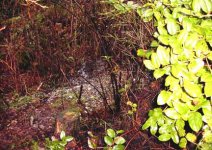
Last night my tenant sent me this picture and said the septic drain field has failed. My home is located in an area of Washington State that has just had 33 days of record setting rain. My first thought is that the seepage will subside once the saturated ground has a chance to dry. The Septic System has performed flawlessly for 25 years. Any ideas?
 

Attachments

  • 810467-Drain Field.JPG
    810467-Drain Field.JPG
    36.4 KB · Views: 1,910
   / Rain Saturated Ground and Septic System #2  
It's a real good probability the the ground water table is abnormally high given the rain. No where for the effluent to go but up. This is assuming that you have pumped your tank out a few times in the 25 years. If not then the solids may have clogged up a percentage of the drain field and the moist ground the rest.

Jack
 
   / Rain Saturated Ground and Septic System
  • Thread Starter
#3  
The last pumper's report issued 2 years ago listed no problems. Since then, the home has been vacant except for an occasional weekend visit until 4 months ago when I reluctantly rented it.
 
   / Rain Saturated Ground and Septic System #4  
As noted above, an elevated water table caused by record rainfall could cause problems like this, which would be temporary ...

but also ... </font><font color="blue" class="small">( until 4 months ago when I reluctantly rented it. )</font> ... raises some troubling possibilities.

If the tenants have never used a septic system before, they may not be aware that some things should NOT go "down the sewer".

Also, if just a few people used the property in the past, and a now family with lots of kids (many loads of laundry) are now there, the increased stress on the system could cause this.

You might care to search TBN on the word "septic" and read the answers, because this topic has been discussed extensively in past, several times.

At the least, I would go to the property and open the septic tank. See if it is in fact clogged. If it is, you'll have to clean it out, or have it cleaned out (usually only $100 or so). Then make sure your tenant understands they need to use some sense and caution in what they flush away or run down the sink.

Also, if you are running a water softener backwash into the system, or high levels of laundry, etc. all can cause the problems you are indicating.

But the fact that the house was empty for so long allowed the septic field to dry out and clean out, and if the tenants are at all careless in their input, that also could cause these problems, or aggravate the excess rain problem.

Hopefully it is all due to the extraordinarily high water levels.
 
   / Rain Saturated Ground and Septic System #5  
ultrarunner,

I suspect that with all the recent rain that the water table is higher than normal which doesn't allow the effluent to dissapate or evaporate. We have experienced the same problem. The alternatives are 1. to hook up to city sewer, 2. replace the failed septic system with a mound system. Both aren't cheap!

Kevin
 
   / Rain Saturated Ground and Septic System #6  
Good advice. We had a month of rain here in the fall and I dealt with a few problems too. One of them was in a brand new setup on a high area with great soil the owners hadn't even moved into yet. Reason was the landscaping never got done, so lots of low areas over the septic allowing the water to pond and seep into the ground instead of running off into the nearby ditch. So maybe look over the area over the septic while it's still wet, and check for low areas and ponding. Maybe a little landscaping and grading can help prevent this in the future.
 
   / Rain Saturated Ground and Septic System #7  
There's not much you can do about the weather and it may happen again so I'd be inclined to try a fix rather than wait for the weather to dry up and the water table to drop.

A legal solution won't be cheap but you could adopt an unofficial fix by installing a rumbling drain between the field and the nearest water course or ditch. You'll find that about 100 feet or more of rumbling drain, terminating in a sand pit, will purify the field discharge pretty well and there will always be a place where the field can outflow to. When the weather is dry, likely it won't but at least it won't back up and come to the surface if it does get really wet again.

A rumbling drain is like a french drain, a trench 12" wide x 3' deep, fill with large, rounded rocks (which will leave plenty voids) to about 12" of ground level with a geotextile membrane, to stop the drain silting up, before backfill final 12" with soil.

As I said, not legal but it's a fix for sure.
 
   / Rain Saturated Ground and Septic System
  • Thread Starter
#8  
Thank you to all who responded. To be on the safe side, I am having a local septic contractor take a look.

In hindsight, it would have been nice if I had installed a water meter to track domestic usage. My well was tested to put out 35 gpm for several hours and one of the first things my tenant mentioned is that he runs out of hot water for showers and baths. My home has two 50 gallon electric water heaters...so I think the problem may be a combination of too much septic load and ground saturation from 33 days of rain.
 
   / Rain Saturated Ground and Septic System #9  
BTW, I looked at the photo again. While I am no expert on septic systems at all, and the photo is not particularly revealing, the fact that water trickles out into the ground after being processed by the spectic tank and leech field, is how most septic systems DO WORK. There may be nothing wrong with your system at all.

I would ask the tenant more questions , like is there any backup from drains within the house, slow water flow down the toilets, etc. You can search on Google and find a checklist to use when trying to determine if a septic system is failing.

</font><font color="blue" class="small">( (I am having a local septic contractor take a look.) )</font>

This is a wise decision. You might want to keep a couple of things in mind.

There is a difference between a septic "contractor" and a septic "engineer." (Like I need to tell you /forums/images/graemlins/blush.gif). While there are probably many who are competent and honest septic contractors, I sometimes have trouble finding one with both qualities /forums/images/graemlins/shocked.gif.

In NY state, anyone can do septic work, but in order to perform installation or significant repairs, we needed to have the work plan approved before work began, and again after the work was completed. This approval, of course, comes from "the State." You'll have to inquire locally to find out who approves septic plans, installs and repairs.

The problem with letting the State know about your septic problems is that they can always issue an order that the house is not habitable, and force you to install a whole new system, even. There can be "local politics" involved too.

When I had problems with an older system failing, I got some conflicting advices ("nothing's wrong" to "$35,000 to fix"). I had hired a NY State Engineer and he dealt with the local authorities all the time. I had no concern that the work, once completed, would not be approved.

I am not at all familiar with your local situation in Washington state. But before paying out a lot of money, in my opinion it would be worth the expense to get a WA-licensed state engineer to do your evaluation. You could have two septic contractors come and eyeball the situation and give you an "estimate." If they have woldly different "opinions" you liely would be better off with hiring an engineer.

The septic engineer will charge maybe a few hundred dollars, but I am certain you'll get a far better and more thorough evaluation than a "contractor" or "home inspector" who runs some dye through.

A septic engineer will look up the history of your specific system on your piece of property, including studying the original plans for the septic. He'll also consider water flow patterns on all underground water sources and surrounding parcels.

He'll know for certain the impact of the current local record rainfalls and how many other systems may be similarly affected. He will perform any needed tests (perc, etc.). He also will know and understand the underground soil and water conditions of not only the septic, but also your housing's plumbing, number of occupants, types of effluents, water usage, etc. They are really good.

I realize your profile inducates you are an engineer, so please excuse me if I have stated the obvious. I go into these details for the typical homeowner (like myself) who find themselves with septic issues.

Another reason I mention all of this is that with a tenant, you hopefully will not have occupancy/habitability issues. Most every state has laws regarding minimum occupancy requirements; I am certain it includes a working septic or sewer system in every state. As the landlord, you could be liable for temporary relocation, etc.

Check 1) your lease and 2) your insurance. This likely could be considered as flood or water-related damage, and everything may be covered by your insurance (just guessing here). That is another reason to have it evaluated by an engineer rather than any other trades person.

You probably may know a local enginner who does septic work, or you can look in the yellow pages for engineers, and one or two of them may include "septic systems" as part of their ad.

Finally, you may want to have a talk with your tenant and give them a min-seminar on reasonable water usage. /forums/images/graemlins/grin.gif

All the best,
 
   / Rain Saturated Ground and Septic System #10  
"the fact that water trickles out into the ground after being processed by the spectic tank and leech field, is how most septic systems DO WORK"

The effluent should NEVER surface. Septic systems do not work by evaporation, the ground is supposed to absorb the liquid. A small percentage, say 3% wicks upwards towards the surface to evaporate. Once the effluent surfaces, the house can be redtagged by something as simple as a neighbor ratting you out. Keep it quiet until the effluent goes back down. Take pictures but don't park a septic truck outside to alert neighbors that your house is where the stench is from and maybe they should call the health department since their well is right down from your drainfield.

Septic contractors, pumpers, and designers get real busy when there is a long rain event in the winter. Lots of people experience a shift from a marginal system to a failing system when the ground is saturated. That's you. Right now your saturated drainfield is lacking oxygen so it has gone anaerobic and the drainfield is not able to provide the secondary treatment that it is supposed to under non-saturated conditions. Anaerobic bugs stink, and eat much more slowly so the system will be overwhelmed, a nasty mat of nutrients(slime) will form and the drainfield may never recover.

You have a problem. It needs to be fixed in the long term and short term but you should wait until the ground dries enough for the surface effluent to go away. Then install a french drain around the system in such a way to drain the groundwater. This is even legal if the french drain is a good distance from the drainfield. Heck, you can have a creek within a good distance. The effluent is "treated" after falling through 18" of non-saturated soil, after that you just need to dispose of it. The french drain diacharge won't stink since the non-saturated drainfield will be filled with aerobic bacteria which eat fast and don't stink. Still, route this french drain to a drywell or something other than a pipe sticking out of the ground oozing year round.

Don't get caught out there with a backhoe and stinky effluent around your ankles.

Renters and septics don't mix. Not only from a water use perspective but also the other junk they are sending down the drain like bacon fat and bleach. At the minimum, I would be sure that the septic tank has a very good discharge filter. It is much cheaper to have that cleaned and your tank pumped than to have to replace a ruined drainfield. If the sewer backs up into their bathtub, call to have the filter cleaned. They will soon learn that this is not convenient and change their habits.
 
   / Rain Saturated Ground and Septic System #11  
Highbeam,

It is agreed that "effluent should NEVER surface" -- but the post was talking about something else ... clear water being released "downfield" -- AFTER is has been completely processed by the tank and leech field.

The term "effluents" usually means an outflow from a sewer or sewage system, in other words garbage and waste by-products, not clean water.

The word 'effluent" can refer to all substances that transit a septic system. Here it is used it to distinguish waste products from clean water.

If you re-read the post, you should see that it was not being suggested it was acceptable or desirable to have effluents "evaporate" away after having rising to the top of the soil.

If my description was unclear, I am sorry. You stated essentially the same thing, here: "Heck, you can have a creek within a good distance. The effluent is "treated" after falling through 18" of non-saturated soil, after that you just need to dispose of it."

My system was composed of soil, rock, sand and various pipes and channels. The effluents (wastes) were processed through the system, and ultimately a small amount of clean (and potable) water found its way out of the end of the system, and simply evaporated away, or ran into a small creek bed.

Systems like this are all over upstate NY, where there are a lot of very low/no perc soils. Upstate NY also has high water tables, and it is not uncommon to have septic problems.

Septic systems come in many, many configurations, as you know, and they do vary by what part of the country one is in. One really has to "manage" a septic system, as opposed to just flushing everything down the drain.
 
   / Rain Saturated Ground and Septic System #12  
Agreed. I have had many, somewhat heated, discussions with people who believe that a) septic tanks never need to be pumped, and b) that a drainfield works by evaporation.

Effluent in this case is just the stuff leaving the system. The quality of the effluent is very good after leaving the drainfield of a functional system and passing through the 18" of non-saturated soil. Potable is a stretch, don't pour me a glass. It is still effluent and is branded with the "yuk" factor.

Here's the trick, the effluent has to pass vertically through the aerobic 18" of soil to qualify as receiving the secondary treatment. That's what the WA state EPA determined. So if the effluent hits hardpan a foot below the lowest drain rock and seeps horizontally out of the bank down hill then it hasn't been treated fully and is potentially hazardous.

For most cases if the seepage is clear and doesn't stink and the toilets keep flushing then life is good.
 
   / Rain Saturated Ground and Septic System #13  
Agreed. /forums/images/graemlins/grin.gif
 
   / Rain Saturated Ground and Septic System #14  
<font color="blue"> There is a difference between a septic "contractor" and a septic "engineer." (Like I need to tell you ). While there are probably many who are competent and honest septic contractors, I sometimes have trouble finding one with both qualities . </font>

This was a piece of advise you gave me a few years ago when I was having my septics issues.

A local local menonite man (I guess he couldn't be Amish, since he drove a truck?) installed my septic system. He was the septic contractor my builder used, and his job failed the county's inspection. A few months after he dug it up and fixed it, I started having problems again. I was made aware of septic engineers by Hakim and found someone in the yellow pages. This septic engineer came to my house, evaluated my situation, and told me how I could fix my issues. He didn't charge me for this, and I have since sent many referrals his way!

Here I learned the difference between my builder's contractor (the lowest bidder) and a septic engineer. This was a valuable lesson.

While I'm not able to offer any advise, I can offer good luck and hope everything works out.
 
   / Rain Saturated Ground and Septic System #15  
</font><font color="blue" class="small">( The problem with letting the State know about your septic problems is that they can always issue an order that the house is not habitable )</font>

Hakim gave you good advice with that statement.

I have mentioned before on this board a problem with my septic field when I lived in MD. I noticed a wet spring 3 months after moving in. It was crystal clear but smelled of septic. I called the Board of Health for help. They came out and ran the standard dye test. Yep... it was my septic coming to the surface.

At this point I was expecting input and help from the B of H septic inspector. Know what I got - a citation to fix it w/in 90 days or the house would be condemned. The kicker is this inspector had just tested the system and signed my occupancy pernit 3 months earlier.

Anyway I had to get a lawyer and it was resolved (temporarily) by the builder. But I will not repeat that mistake and would only involve gov't inspectors after investigating it myself with contracors or the septic engineer Hakim mentions.


Phil
 
   / Rain Saturated Ground and Septic System #16  
Phil,

</font><font color="blue" class="small">( only involve gov't inspectors after investigating it myself with contracors or the septic engineer )</font>

Yes, and then there are always what I call "local politics" that can affect everything, especially in rural areas thast are undergoing an influx of "out of area" people.

The local "boards" and various authorities can and will do whatever they want with their powers. You just have to play it very cool and "get along." Don't ever barge into a "local" office of any kind (assessors, zoning, constable, etc.) or be prepared to "pay" for it for years. I oughtta write a book /forums/images/graemlins/tongue.gif...
 
   / Rain Saturated Ground and Septic System #17  
Andy,

</font><font color="blue" class="small">( Here I learned the difference between my builder's contractor (the lowest bidder) and a septic engineer. This was a valuable lesson. )</font>

Thanks for sharing your experience.

I learned my "lesson" at a cost of nearly $10,000 --- after a non-expert "flagged" my field as failing. Even if done by an incompetent contractor, if you get flagged, you are unlikely to convince anyone it was done in error. Who wants sewage in their water?
 
   / Rain Saturated Ground and Septic System #18  
Hakim wrote
"It is agreed that "effluent should NEVER surface" -- but the post was talking about something else ... clear water being released "downfield" -- AFTER is has been completely processed by the tank and leech field.
"
In Massachusetts this would be considered a failed system. A finding I agree with.
Guy
 
   / Rain Saturated Ground and Septic System #19  
Ultrarunner,

Just a couple ideas:

Here in Oregon they want us to have grass over the drainfield. Tree roots plug up the holes in the drainpipe, especially cottonwoods. Brush might do the same.

On your soil in general--outside the drainfield area-- is there restricted drainage? You could have a compacted layer that prevents drainage. If you have that, saturated soil uphill from your drainfield could be causing underground flow to your drainfield. Could be caused by natural or unnatural conditions--a clay layer down there only a couple of feet or by machine operation when the soil is not dry. A quick & dirty check on natural compaction could be done by looking at nearby road cuts, checking for layers that weep. Or check the county soil survey which should be available at the Soil Conservation Service Office. The sure way is to dig.

Could be that the septic requirements when the house was built weren't up to par. Do new homes in the area have sand filtration systems? If so, that may be what your place should have had, but they may not have required them at that time. Or maybe they require longer leach lines than they did when your place was built.

Don't know much about septic systems, but it seems to me that when the tank was pumped, the guy couldn't tell you much about the drainfield as he could only see what was in the tank. He can probably tell something about whether it was working with the loads it had when he pumped it, but I doubt if he oculd tell you if the entire drainfield was OK. This may be your clue that it might not be.

I hope the couple of dry days we have just had give you some improvement.
 

Tractor & Equipment Auctions

Club Car Carryall Electric Utility Cart (A55851)
Club Car Carryall...
1999 WEST WIND 30FT PINDLE FLATBED DOVETAIL TRAILER (A58216)
1999 WEST WIND...
2001 John Deere 6210 (A60462)
2001 John Deere...
2010 Dodge Ram 4x4 Crew Cab Pickup Truck (A59230)
2010 Dodge Ram 4x4...
Brent 420 Grain Cart (A56438)
Brent 420 Grain...
2011 INTERNATIONAL WORKSTAR 7400 SBA 6X4 DUMP TRK (A52706)
2011 INTERNATIONAL...
 
Top
