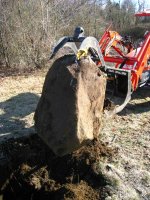
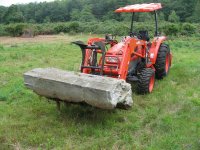
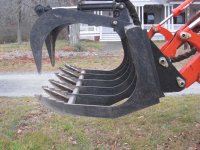
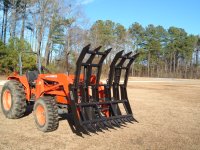
The terminology with these things really is confusing. I have (see avatar photo) what I call a standard root
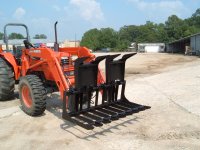
grapple. The Anbo style is a rake
grapple I guess from how people are using the term in this thread. Sometimes clamshell is used to describe the same thing.
To me the distinction is based on several parameters. First is that a root
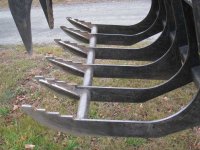
grapple has longer bottom tines and they are parallel with the ground when in a neutral position. To rake with a root
grapple you need to "dump" the
grapple down to insert the tine tips while a clamshell type is just lowered. A more important distinction is that a standard root
grapple can hold a load without hydraulic pressure. Gravity will keep a load in place but we use the upper
grapple to stablize the load especially for travel. Rocks can be scooped up and different size rocks can be carried together so long as the bottom tines are close enough together to keep them from falling through. Root grapples can have one or two upper arms and those can be either full length coverage or partial length of the bottom.
Rake or clamshell grapples always have just one upper arm that is full length with a cylinder at either end. A key characteristic is that they cannot hold any load at all without clamping the upper arm. The lower tines point down into the ground when the
grapple is in a neutral position and even with a full curl usually the bottom tines are not parallel to the ground (hence the need for hydraulic upper arm pressure to hold the load). Loads such as logs can be a problem for this type of
grapple as a big log will preclude clamping on to smaller logs as the first log will jam the
grapple partially open. Same thing would be true for rocks. If you get one big rock in a load, the upper arm will be stuck at that point when it closes and any smaller rocks will not be secured and will fall out when you lift the loader.
With regard to the actual raking action, the clamshell type is mechanically better as the lower tines are shorter and therefore less vulnerable when inserted into the ground while the tractor moves forwards. A root
grapple can tilt down to insert the tips and this can be controlled partially by the connector pipe between the tips so the
grapple will scoot along with only about 9 inches or so in the ground while the connector pipe acts as a skid and keeps the tines from digging deeper. Still, the
grapple tips are three or so feet in front of the mounting plate so there is more risk of a twisting event if you hit a buried stump or large rock than with a clamshell where the lower tines are essentially right beneath the mounting plate. I've never used a rake/clamshell so I don't know if either is technically more likely to pop rocks up. I can certainly collect rocks with my standard root type
grapple though. I am careful doing it and certainly don't just go charging through a field with the
grapple buried.
Once you have a pile of rocks, I don't think there should be much debate that a standard root
grapple would be more efficient at carrying them off the field, especially if you have many different sized rocks. The ability of the standard root rake to act as a "bucket" with the load held only by gravity allows many different sized rocks to be carried together simultaneously. You do need to make sure the bottom tines are appropriately spaced for the size rock you want to collect however. Some folks have intermediate tines installed just from the back of the connector pipe to the mount (simple welding project) or you can just lash in some wire mesh for the carrying operation.
If you are mostly concerned about getting just surface rocks off a field, a rock bucket would be a good option too. That is designed to just skim along the field slightly below grade and collect rocks while allowing dirt to fall through. One step operation as it carries them too.