Small pond management?

   / Small pond management? #1  

IHDiesel73L

Silver Member
Joined
May 13, 2010
Messages
167
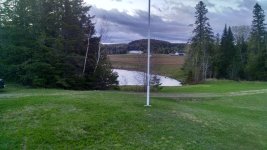
Just curious if anyone here has a small pond that they manage.* The rear of our property is basically a small valley where everything drains through, going north to south (from the hay farm down to my neighbor on the other side). The previous owner took what was basically swampland/a vernal pond and had an excavator dig it out to make it an actual pond about 25 years ago. He mounded up the spoils around the low side and put an 8" PVC drain in which drains to the south into the swamp on my neighbor's land.*

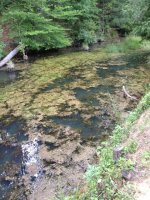
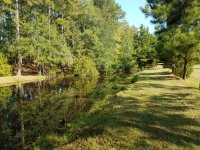
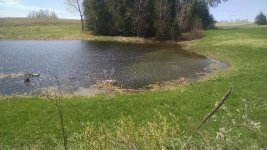
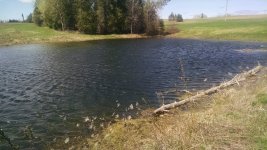
The result was this:

vnXWRDd.jpg


ex3U7D0.jpg


HSLJPsR.jpg


These images were taken late summer/early fall-the first two with my cell phone the second two with a trail cam I had posted back there. As you can see it is getting kind of weedy/grassy around the edges. One of my fears is that it will slowly turn back into a swamp, but I do realize that the grasses/weeds do provide cover for fish, so any information on what to pull/what to leave would be great. Here are some facts about it:

  • Located in Northwest NJ
  • Oblong shape - about 50' x 75'
  • Pond is about 300' from the house so aeration would potentially be big $$$
  • Average depth of 5' in the center, 3' as you get closer to the sides
  • Very shaded
  • Water is what I would describe as "tea colored" with a visibility of about 2'
  • Level stays fairly constant with water almost always even with top of drain pipe-I saw it drop about 3-4" below the top of the pipe last August/September
  • Water source seems to be mix of drainage from the fields and ground water (there is 25' hand dug well on the property up the hill from the pond-water level is fairly close)
  • Bottom is fairly mucky-when I was doing depth measurements (from my canoe) I found that if I stiffened the tape measure I could jam it down another 6-8" and when I pulled it up it had that "swamp gas" smell
  • This winter it probably froze 6" thick or more with no slushy or open spots
Given all of this, what can I do in order to manage this pond as a (relatively) mosquito free, fun fishing pond for my young (currently 3 and 6) daughters and their friends? Also, the long term goal is to make the clearing next to the pond a picnic/BBQ area with a grill, firepit, picnic table, etc... I don't really care what goes into the pond (sunnys, bass, catfish, carp) as long as it provides some fun for my girls. The previous owner said that he would catch fish elsewhere and throw them in but didn't really apply any thought to it. We haven't seen any signs of life beyond frogs, tadpoles, and one medium sized snapping turtle. Looking forward to learning a lot as a new pond owner and hopefully finding some ways to get more out of this little pond.
 
   / Small pond management? #5  
What area are you in and what is your climate like?

An average maximum depth of 5' plus 6 inches of ice in winter is going to be problematic for fish. The pondboss forum is an excellent resource.

I stocked my pond with bass, bluegill, and catfish. That combo (around here) is a good, sustainable mix.
 
   / Small pond management?
  • Thread Starter
#6  
What area are you in and what is your climate like?

An average maximum depth of 5' plus 6 inches of ice in winter is going to be problematic for fish. The pondboss forum is an excellent resource.

I stocked my pond with bass, bluegill, and catfish. That combo (around here) is a good, sustainable mix.

I actually put up a post on Pond Boss as well but figured I'd see what I get here since Tractorbynet'ers love their ponds too. I'm in Northwest NJ BTW. At least in terms of temperatures, last winter was pretty average. Summers tend to be hot and humid, but the pond has a lot of shade.
 
   / Small pond management? #7  
If you have a snapping turtle, you won't have fish for long...
 
   / Small pond management? #8  
All things considered - -

- its going to be quite difficult to maintain a year round "livable aquatic condition" with a pond that small and shallow

- aeration will be REQUIRED if you want even a chance for fish to make it thru the winter aeration will be required 24/7/365

- IF you go the aeration route - install and operate the aeration for a FULL YEAR prior to planting any fish The aeration will stir the organics up off the bottom of the pond - the organics will use every bit of oxygen you can generate just in their breakdown process. If there are fish in the pond during this process - - they will die.

- you best consider fish that are very tolerant to low oxygen levels - - carp, catfish, grass carp, gold fish - - try bass but don't be surprised if they don't make it thru the winter.


View attachment 561854 This is my pond viewed off my front porch. Its ten acres - five acres of open water, five acres of cattails with water depths from three to eight feet. The pond is 80 feet deep. About every 20 years, or so, we will get an early winter and long spring. Even this pond can winter kill in these conditions. I've had it happen once in the 36+ years I've been here.

I had five acres of dead bass floating on the little pond.
 
   / Small pond management? #9  
My pond is very similar to yours in the fact it basically a dam across a natural watershed. It sat untouched for 15-years before I purchased the property, like yours it was overgrown. My advice to you is buy about six 8" sterile grass carp from a local fishery, I added 12 to our pond several years ago and it is amazing how much grass they eat. We don't live on the property so they are pretty much self sustaining, we occasional throw in some fish food which they eat. Out of the 12 there are only three left but they are bout 3' long. Winter freeze will be an issue but your local fishery or extension office can help you with the details. It is low on my project list but sediment removal and aeration will be my next steps with our pond.

Good Luck!
 
   / Small pond management? #10  
+1 for sterile grass carp. Put 12 in our 1 acre pond in 2015, now ALL weeds (including cattails) are gone. Also if there are trees growing on the dam they should be removed because eventually the roots will cause the dam to leak.
 
   / Small pond management? #11  
My two cents. Yes, the snapping turtle will eat any fish in your very cool looking pond. He is also keeping the frog numbers down, but I don't think turtles eat mosquito larvae, frogs will. The tea color is likely caused by tannins created by decomposing vegetation like leaves and twigs drifting down and rotting over 25 years. Same thing for the muck. I've had two knowledgeable guys tell me that a pond fed by runoff will silt up over the years, or more muck.
You probably have 2 options, one being to enjoy it as it is. The other is more expensive and involves a large excavator and experienced operator. If you go the excavator route you could dig it deeper, use the muck to build up the sides, maybe widen it, and probably wind up with twice as much water to hold some fish. Should be good for another 25 years. ???
FWIW I don't have fire hydrants near me, my insurance company said they would knock off about $100 per year in premiums if I went with a 3/4 acre pond - about one million gallons if I recall correctly. My local volunteer fire department has an unofficial motto "No small fires." as no water means most everything burns to the ground.
You ought to talk to someone at the Soil Conservation Service in your area. Some of them are true pond experts and know a lot more than us well meaning people on TBN
 
   / Small pond management? #12  
Attached pictures are before grass carp (2007) and after grass carp (2017) I am sure there were other contributing factors to the huge algae bloom we had but after adding the grass carp we have never even come close to the mess we had prior.
 

Attachments

  • Pond.JPG
    Pond.JPG
    198.9 KB · Views: 176
  • 20170923_094950.jpg
    20170923_094950.jpg
    8.8 MB · Views: 185
   / Small pond management? #13  
Hmm - - grass carp. There is a typically shaped lake about 25 miles south of me - Rock Lake. Its about half to three quarter mile wide and seven miles long - and extremely deep - many hundreds of feet. Grass carp were introduced by Fish & Wildlife and those carp have COMPLETELY stripped every water weed out of the entire lake. They spawn in the spring and I saw a few of them a couple years ago - tearing up the shore line like a pair of spawning Red salmon. They were pretty big fish and, I guess, the ones in this lake are not sterile.

This lake is seasonally open for fishing ( spiny rayed types) but the carp are definitely catch and release.
 
   / Small pond management? #14  
I have a pond about your size. Longer but narrower. I bit the bullet and had it dredged to 8 to 10 feet deep. If you have good access for a trackhoe, an excavator can do it very quickly.

Grass carp will clean out a pond but are not necessarily recommended for a healthy pond. Generally "hybrid" or "sterile" fish are not 100% sterile and will eventually overpopulate. Aeration is better. Don't worry about the distance. Just bury PEX from the power/pump location. I run my small aerator 50% of the time on a timer and have no algae.

Don't get too worried about snappers. I always have one or two big snapping turtles and I have bluegill, bass and catfish as well as plenty of frogs, a muskrat family and regular visits from herons. The ducklings don't seem to fare so well though.
 
   / Small pond management? #15  
I have a small 3/4 acre pond on our property. It's fed by surface and groundwater runoff (via a small brook) and several natural springs. To one side there's an earthen dam. At the time (11 years ago) that we purchased the property it was apparent that the pond was filling in with silt from surface runoff. There are surface water drainage designs you can look into to capture some of the silt before it enters your pond but this can be expensive to implement and will require regular maintenance.

Three years ago I had someone drain the pond and dig it out (it's about 15' deep now) and it's apparent that silt is beginning to fill in the area where the brook enters the pond. When the weather is dry and the water level drops, grasses propagate into this area and have now become established there. The grasses provide protection for water foul and food for moose and birds. They also act as a filter. The previous owner kept trout in the pond but a stream runs by the property about 1000' to the north and river otter visit regularly eating anything they can find. When the pond was drained I had several large pine and cedar trees trunks placed at the bottom so that fish would have a place to hide.

My general advise is that unless you have a lot of money to throw at your pond to let nature do what it's going to do and participate. It will likely attract a variety of wildlife that you wouldn't otherwise attract. You might also enjoy ice skating on it in winter and sleigh riding down it's banks.

IMG_20180511_104110918.jpgIMG_20180511_104140452.jpgIMG_20180511_104123312.jpgIMG_20180511_044626745_HDR.jpg
 
   / Small pond management? #16  
My pond is full of painted turtles. They never bother anything. I do have a pair of otter visit in the fall or early winter almost every year. They will stay about a week - eat bass - have a grand old time. If its winter and the lake is frozen over - they will slide down the slopes in the snow and out onto the ice on the lake. In the evening - after sunset - hear them out on the ice - eating bass. Sounds just like a kid eating a dry ice cream cone.

I have often wondered where they come from and where they go when they leave. The next lake immediately south is a two and a half mile hutch overland.
 
   / Small pond management? #17  
My general advise is that unless you have a lot of money to throw at your pond to let nature do what it's going to do and participate.

All ponds are temporary, unnatural structures. Nature is constantly working to undo those structures. Just a matter of time.
 
   / Small pond management? #18  
My pond is full of painted turtles. They never bother anything. I do have a pair of otter visit in the fall or early winter almost every year. They will stay about a week - eat bass - have a grand old time. If its winter and the lake is frozen over - they will slide down the slopes in the snow and out onto the ice on the lake. In the evening - after sunset - hear them out on the ice - eating bass. Sounds just like a kid eating a dry ice cream cone.

I have often wondered where they come from and where they go when they leave. The next lake immediately south is a two and a half mile hutch overland.

Otters can range over twenty miles per day. They ate almost all my catfish last winter during their nocturnal visits.
 
   / Small pond management? #19  
rekees4300 - you are correct regarding the longevity of lakes/ponds. 19,000 years ago the final out washing of ancient Lake Missoula cleaned all the sediments out of my little lake and it started its life being 90 feet deep. Today 19,000 year later it is 80 feet deep. My little lake has been an ongoing research project for a hydrogeological company here in the area for the last seven years.

I've learned things about my little lake that I never even though about previously.
 
   / Small pond management? #20  
rekees4300 - you are correct regarding the longevity of lakes/ponds. 19,000 years ago the final out washing of ancient Lake Missoula cleaned all the sediments out of my little lake and it started its life being 90 feet deep. Today 19,000 year later it is 80 feet deep. My little lake has been an ongoing research project for a hydrogeological company here in the area for the last seven years.

I've learned things about my little lake that I never even though about previously.

I've got an area fishing map from the 30's that lists all the lakes within 25 miles of here. There's probably 100+ lakes on that map. It shows what kinds of fish are in those lakes. Today, about 1/3 of those lakes have no visible water. They are just wetlands with cattails and willow trees. Heck, some of the small lakes I used to fish on in the 70's are no longer navigable. It's an interesting process to watch.
 

Marketplace Items

2013 FREIGHTLINER CASCADIA (A55745)
2013 FREIGHTLINER...
2012 Kenworth T800 T/A Day Cab Truck Tractor (A55973)
2012 Kenworth T800...
2014 International WorkStar 7300 4x4 Altec A55F 55ft. Material Handling Bucket Truck (A60460)
2014 International...
2396 (A60432)
2396 (A60432)
UNUSED RAYTREE RMSG29 HYD STUMP GRINDER (A60432)
UNUSED RAYTREE...
2024 YANMAR TL100VS SKID STEER (A60429)
2024 YANMAR...
 
Top