
houstonscott
Elite Member
- Joined
- Dec 19, 2010
- Messages
- 3,674
- Location
- Oglesby, Texas
- Tractor
- Kubota L3800, Kubota GR2120, Kubota RTV1100, Kubota 5100sc


That's not a negative. Moving a major pollution source far from population centers is a major plus for public health; far fewer city children growing up with respiratory damage.Electric vehicles don't cut the pollution, they simply move the pollution around.
I agree.That's not a negative. Moving a major pollution source far from population centers is a major plus for public health; far fewer city children growing up with respiratory damage.


Shoot... I was hoping for a leap in technology would come along for a power source to replace my heart and I would be around when ICE were no longer. :laughing:Time will tell what energy source will prevail. However internal combustion will still be around in all our lifetimes.

Electric vehicles don't cut the pollution, they simply move the pollution around.
The grid could not handle the added load of ev's. Wind and solar don't produce a lot at night when the demand would Spike, therefore the more dirty fuels would be needed to keep producing energy.
Battery powered Ev's I don't think work yet, the range and the lack of infrastructure are prohibited. I don't see any rush by energy companies to add capacity or even modernise. Toyota is all in on hydrogen fuel cells. That makes more sense as range is back to American standards. Plus it's easier and cheaper to have the infrastructure build up for hydrogen.
Time will tell what energy source will prevail. However internal combustion will still be around in all our lifetimes.
T
Are you figuring only the operating energy cost or production cost as well?Do the math. Electric cars polute 4 to 5 times less. Typical ICE car uses about 5% of the energy contained in the hydrocarbon when it was still underground. Electric cars use at least 20-25%. or way less if powered from wind or solar.
Are you figuring only the operating energy cost or production cost as well?
Best fuel for a hydrogen car is diesel.Toyota is all in on hydrogen fuel cells. That makes more sense as range is back to American standards. Plus it's easier and cheaper to have the infrastructure build up for hydrogen. doesn't hydrogen have some performance downside like less energy output? I have seen the hydrogen Toyota cars in magazines but I think they are kept in California and a few test areas. Why do you see hydrogen as better? Certainly refilling would be easier/faster than waiting for a supercharger. Can current service stations add hydrogen without ripping up the whole place?

Best fuel for a hydrogen car is diesel.

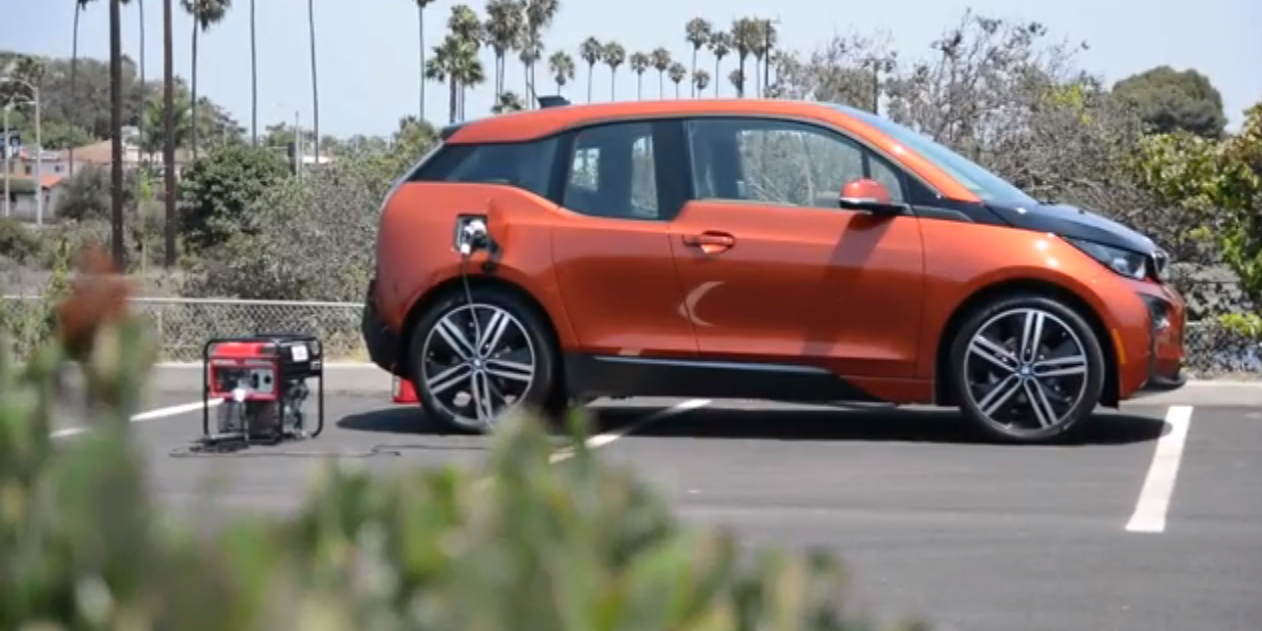
Pictures worth 1000 words.So I had to go to Jackson Hole Wyoming and Yellowstone this summer and this sight caught my attention. Electric cars, mostly from California, having to either be rescued or provide their own energy for charging up their car. The hotels in Jackson had signs that said they have no facilities to charge EV and they should not take them to Yellowstone because they too do not have charging facilities. That did not stop people, they just had a Honda generator and 5 gallons of gas that they would chain to their rim and charge their cars with. It was the funniest thing I ever saw, and carrying around a jug of gas kinda defeats the purpose of EV. But it shows just how much infrastructure would be needed for EV to be viable on a large scale. I do not think the park service in Yellowstone would build out huge parking lots with charging stations at each spot. Now Toyota has discovered the EV is great in concept, but their success would be dependent upon power companies producing cheap power, distribution companies building out the grid, and local business like hotels providing charging stations for their clients, not to mention cities proving stations on street sides. It would be a massive investment on a lot of levels. The thing that makes the internal combustion engine so workable is the ability to have a centrally located gas stations that can serve thousands of people fast and efficiently with a fuel source. EV would go away from a central location to individual stations. Toyota knows the best approach is to be able to stick with a central location distribution system, where a hydrogen tank could be located next to gas and diesel. No need to reinvent the wheel, just refine it...don't forget Toyota started the hybrid thing with the Prius. If the EV was workable, Toyota would have already been on it. The EV is great if you don't ever leave a radius of your house where you know 100% you could recharge every night. Hydrogen fuel cells make the most sense, no grid updates and the range is limited by the size of the tank. Plus it would be far cheaper to just add a hydrogen tank to a gas station than add charging stations everywhere. Musk is doing good things to further technology, but I don't see EV as the future of transportation.
