What gave 60's Greyhounds their distinctive smell

   / What gave 60's Greyhounds their distinctive smell #21  
We had a fleet of IHC trucks back in the 70s, all with Detroits. Some were 6-71s and some were 8V-71s. I still have a few tools for working on them and rebuilding the blowers, and could probably put one back together in my sleep.
Most Detroits didn't leak per se, the oil that dripped was from the airbox drains, which was scraped off the pistons as they moved by the intake ports in the sleeves. On a few, I brazed a fitting into the oil pans and dumped the drains back into the oil pan. Problem solved!
 
   / What gave 60's Greyhounds their distinctive smell #22  
If you drove a double breasted Yamaha, you always parked on the gravel at a truck stop so the puke tubes didn't destroy the asphalt.

My very first tractor was a Kenworth with a 318 Detroit. Only truck I ever had (4x4 twin stick) you had to downshift to drive over a cigarette butt.

Graduated to an 855 Cummins and then to Cats.

All Detroit 2 strokes have a distinctive exhaust smell. it's the smell of unburnt fuel mixed with blowby vapor.

They do make great stationary engines or in say a crane where they can run at rated rpm constantly. Not so good in a truck however.

Used to say, the only way you could drive one was to slam the door on your fingers before starting it. That way you'd drive it with your foot mashed on the floor.

Those were the days...........
 
   / What gave 60's Greyhounds their distinctive smell #23  
Back in the day, Roadway routed the puke tubes to the fuel tanks and burned it. They never changed the oil, just kept adding.
 
   / What gave 60's Greyhounds their distinctive smell #24  
Last time I went to an antique car show, I noticed that the interior of one or two smelled just like some of the old prewar bangers my dad used to drive to work. I think the smell came from some kind of adhesive in the upholstery. Wish I knew for sure.
It was the plastic used in the interior for the seats. The vinyl (or the equivalent) parts. But made using animal and maybe vegetable oils instead of petroleum oils as the feedstock. Germany, during the Second World War, needed to use raw petroleum as the feedstock for more important stuff like fuel and explosives. After the war Germany still had the same problem except that fewer explosives were being made. At least that's the story I was told. I do know that Germany was making synthetic fuels from coal during the war, but not a very large percentage of the total fuel use during the war.
 
   / What gave 60's Greyhounds their distinctive smell #25  
It was the plastic used in the interior for the seats. The vinyl (or the equivalent) parts.
Naugahyde...lol I seem to remember that a company offered seat covers made out of that stuff back in the 60's and it stunk too. Think the name of the company was Fingerhut.
 
   / What gave 60's Greyhounds their distinctive smell
  • Thread Starter
#26  
In the 60's our neighbors had their furniture recovered in Naugahide. I hope it lasted longer than some of the vinyl covers I've known.
 
Last edited:
   / What gave 60's Greyhounds their distinctive smell #27  
Naugahyde...
I actually thought it was that, as well. But at least the few sites I found before posting about the wax all refuted that idea.
 
   / What gave 60's Greyhounds their distinctive smell #30  
The use of Naugahyde caused the total extinction of the Naugie, a cute six legged rat.
this caused Chrysler to go to Corinthian leather in many of their vehicles. I am still looking for a Corin. So many names for the same cheaap vinyl.
 
   / What gave 60's Greyhounds their distinctive smell #31  
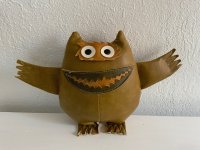
When I was a kid, our neighbor worked for Uniroyal. He developed some process for printing dyes on naugahyde. It seemed every house in the neighborhood had Nauga Monsters like these.

AAFA8973-CBA7-40F9-B3BA-C4C23EA46A02.jpeg

That neighbor made a kite out of wood and naugahyde. It was well over 8' tall. One really windy day he took it out in a local park and up it went! Amazing. Then down it came. It was so heavy that when it crashed it blew to pieces.
 
   / What gave 60's Greyhounds their distinctive smell #32  
I had heard that the smell in VWs was because of the coconut fibre used in the seat padding. Some people said it was horse hair, but everything I find says coconut.

My parents had 4-5 VW vans, a beetle and a Karmann Ghia. I don't recall any odd smells. But I do recall the chirp of the beetle exhaust.

 
   / What gave 60's Greyhounds their distinctive smell
  • Thread Starter
#33  
I love the reply about and corins. and extinct naugies.
 
Last edited:
   / What gave 60's Greyhounds their distinctive smell #34  
In my younger days Greyhound bus exhaust didn't smell like the exhaust from any other diesel I knew of. What caused it?
Sulphur content, well maintained Detroit Diesel & Maxidyne engines in the 80s made that wonderful aroma...
Also had that 'trademark' restroom deodorant...
Worked on an asphalt highway crew, & even without seeing or hearing the GREYHOUND, those 2 smells lingered.
 
   / What gave 60's Greyhounds their distinctive smell
  • Thread Starter
#35  
Sulphur content, well maintained Detroit Diesel & Maxidyne engines in the 80s made that wonderful aroma...
Also had that 'trademark' restroom deodorant...
Worked on an asphalt highway crew, & even without seeing or hearing the GREYHOUND, those 2 smells lingered.
Thank you. I believe you've cracked the mystery.
 
   / What gave 60's Greyhounds their distinctive smell #36  
I think you can take just about anyone of a certain age, blindfold them and somehow lift them in to an original VW Beetle, with out touching anything, and they would instantly recognize it just by the scent. Like Winterdeer said. It might be cause of how they were heated off the exhaust or the materials used. My uncle had a beetle, and I had an early type III fastback for a while. "Old socks and a hint of unburned gas?" It wasn't unpleasant, but it was distinctive.
 
Last edited:
   / What gave 60's Greyhounds their distinctive smell #37  
I actually thought it was that, as well. But at least the few sites I found before posting about the wax all refuted that idea.
The use of Naugahyde caused the total extinction of the Naugie, a cute six legged rat.
this caused Chrysler to go to Corinthian leather in many of their vehicles. I am still looking for a Corin. So many names for the same cheaap vinyl.

There must have been several qualities of it.

GM's version " MORROKIDE"
was Tough stuff, every early GTO that had it never really seemed to wear.
Compared with the really cheap cloth GM put in the 1980's cars it was much better wearing.
 
   / What gave 60's Greyhounds their distinctive smell #38  
Anyone else notice when being passed by an army convoy of trucks, the distinctive smell. Its not diesel. It smells sort of like cosmoline. Or something the army uses to protect the canvas.
 
   / What gave 60's Greyhounds their distinctive smell #39  
I think you can take just about anyone of a certain age, blindfold them and somehow lift them in to an original VW Beetle, with out touching anything, and they would instantly recognize it just by the scent.
I don't offhand recall any specific odor from old VWs, but Japanese vehicles from the 70s had a very distinctive, and not very pleasant smell to them. I presume if was from the plastic they used, that's what it kind of smelled like.
 
   / What gave 60's Greyhounds their distinctive smell #40  
Anyone else notice when being passed by an army convoy of trucks, the distinctive smell. Its not diesel. It smells sort of like cosmoline. Or something the army uses to protect the canvas.
Many times military trucks are fueled with JP-8 (aviation fuel). Different from diesel
 

Marketplace Items

2020 FORD F-150 XL CREW CAB TRUCK (A59823)
2020 FORD F-150 XL...
2016 PALADIN 22197MM SWEEPSTER 97" HYD BROOM (A60429)
2016 PALADIN...
2019 BOBCAT T870 SKID STEER (A60429)
2019 BOBCAT T870...
2006 CATERPILLAR 420E BACKHOE (A59823)
2006 CATERPILLAR...
JCB 3CX 14HFCA BACKHOE (A60429)
JCB 3CX 14HFCA...
SKID STEER ATTACHMENT SIFT BUCKET (A58214)
SKID STEER...
 
Top