When / how to rejuvenate soil in raised planters?

   / When / how to rejuvenate soil in raised planters? #21  
plowhog,

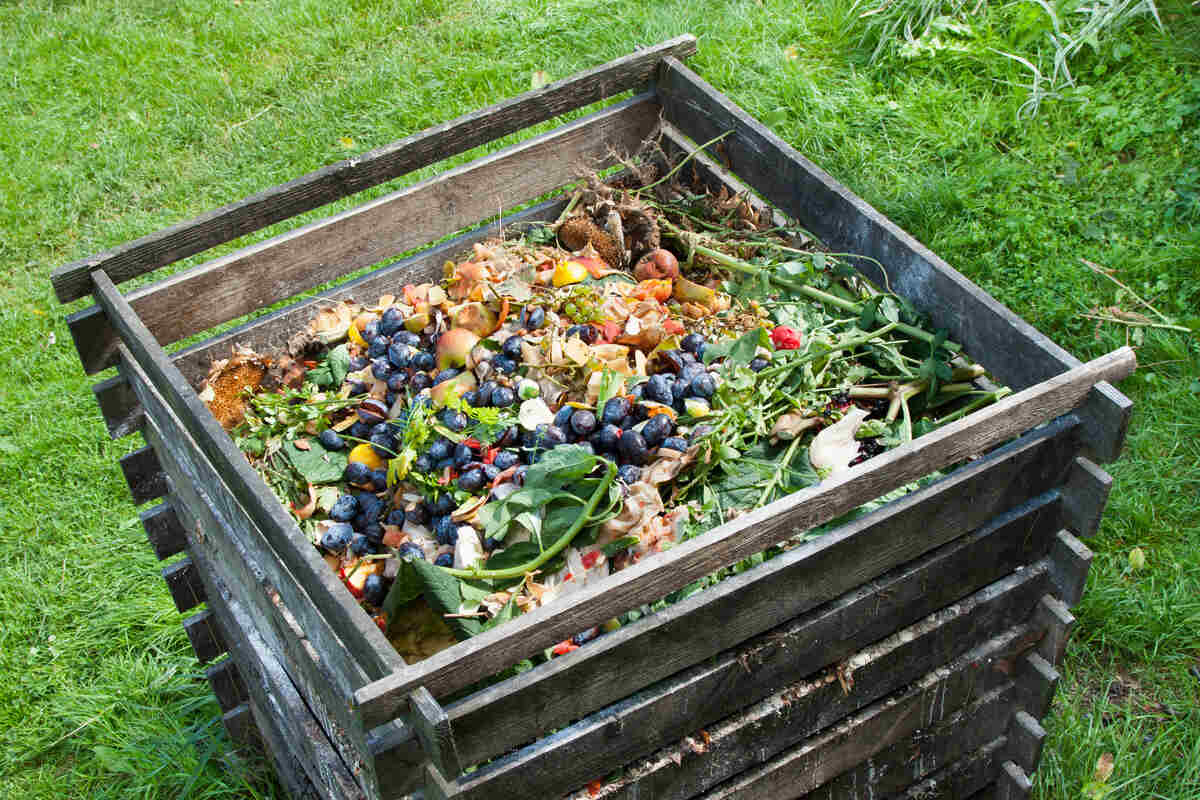
Do you maintain a compost bin? We have one and our neighbor lady even brings her material over to help out. Working that into your raised beds in the late summer (after harvest) or the fall would be the best time to add it. Adding it in the spring works as your second best time.

We put material such as the following in ours:
  • Grass clippings.
  • Tree leaves.
  • Vegetable food scraps (coffee grounds, lettuce, potato peels, banana peels, avocado skins, etc.)
  • Black and white newspaper.
  • Printer paper.
  • Most disease-free yard waste.
  • Cardboard.
  • Egg shells.
  • Vegetarian animal manure (e.g. cows, horses, rabbits, hamsters, etc.)
I just make piles and collect kitchen compost in an old garbage container. When container gets full, I flatten the compost pile and dump kitchen stuff in, which has been layered with some wood chippy stuff from top of the compost pile. They retoss the compost pile.

Has worked great for 21 years there underneath a red cedar tree.

You'll need to toss yours every so often.
 
   / When / how to rejuvenate soil in raised planters? #22  
Before you decide not to use the oak leaves, check your soil pH. I have so much clay and limestone rock in my soil that oak leaves, chips, bark are all welcome additions to the soil here.

All the best,

Peter
It's an old wives tale that any tree leaves lower the pH. When fully composted, they are neutral. The earlier research just didn't go far enough.
 
   / When / how to rejuvenate soil in raised planters? #23  
Thanks for that input, Larry. A few years ago I was chipping a large volume of oak twigs and someone else advised not to use the chips for garden mulch. For the same reason.

And I realize now I should start saving some of my late fall grass clippings ...
Not true. See my above comment.
 
   / When / how to rejuvenate soil in raised planters? #24  
Miracle Grow liquid fertilizer
 
   / When / how to rejuvenate soil in raised planters? #25  
It's an old wives tale that any tree leaves lower the pH. When fully composted, they are neutral. The earlier research just didn't go far enough.
Tannic acid is soluble and will leach out if you run enough water through it. The water also takes nutrients, so I'm more in favor of neutralizing the acid than flushing it.
 
   / When / how to rejuvenate soil in raised planters? #26  
Miracle Grow liquid fertilizer
If you want to kill everything in the soil and then depend on this stuff forever. I once bought some Miracle Grow soil. Great first year. Then didn't buy anything to put in the soil. NOTHING would grow until rejuvenated about 4 years later.
 
   / When / how to rejuvenate soil in raised planters? #27  
If you want to kill everything in the soil and then depend on this stuff forever. I once bought some Miracle Grow soil. Great first year. Then didn't buy anything to put in the soil. NOTHING would grow until rejuvenated about 4 years later.
I think it’s best for container growing. There are better options for plants in the native soil, but growing in containers is an artificial environment with man made soil and it is best with a balanced liquid fertilizer. Yes, containers do need regular infusions of fertilizer. That’s why greenhouse growers use them exclusively.
 
Last edited:
   / When / how to rejuvenate soil in raised planters?
  • Thread Starter
#28  
check your soil pH.
Good idea Peter-- thanks! I will do that.

I've never composted before but have an abundance of what I need to do so. So I will look into that .... here was a good article I found for anyone (like me) starting out ...

 
   / When / how to rejuvenate soil in raised planters? #29  
If you want to kill everything in the soil and then depend on this stuff forever. I once bought some Miracle Grow soil. Great first year. Then didn't buy anything to put in the soil. NOTHING would grow until rejuvenated about 4 years later.
I guess I am on borrowed time with my container plants...?

These Geraniums are typically seasonal plants and found all over the Alpine region of Bavaria in window boxes... it's hard to picture an old farmhouse or residence without.

It's now 4 years and I use a thimble of miracle grow bloom at least once a week if not every three days in summer.

Its out of character but I splurged and had the flower stock airmailed from Austria...

Not sure how much longer before the soil plays out but until then I will keep using Miracle…

As a side note in Alpine country it is quite a competition as to getting your window boxes out and blooming!
 

Attachments

  • IMG_20200516_161815165_HDR.jpg
    IMG_20200516_161815165_HDR.jpg
    2.4 MB · Views: 96
  • E946B58C-B7DA-4F90-B136-34F0C23106BC.jpeg
    E946B58C-B7DA-4F90-B136-34F0C23106BC.jpeg
    2.3 MB · Views: 111
Last edited:
   / When / how to rejuvenate soil in raised planters? #30  
OP, great article with some critical dos & don't at the end of it. Some gardeners I know will compost grass clippings separately. With high green to brown ratio and high moisture the piles take off fast and heat up quickly. Some of that will be stirred into 'slower', larger, older piles when turning both. Bins are easier to cover and monitor, 'work' faster for that.

Why I like to compost is that neglect 'is well tolerated' and time is on my side when piles get half as big as my tractor. I'm screening mere cu ft vs yards for my sparse use. I'll mention compost tea again because pots & planters don't always have room to top dress. This can buy time before more vigorous steps are taken & no carrier salts to build up in soils vs MG.
 
   / When / how to rejuvenate soil in raised planters? #31  
We compost plant materials and horse/cow manure. We have enough visits from skunks/opossums/raccoons wandering through that we don't include human food waste in our compost, but I would suggest trying it out to see what it is like where you live.

Any method to get soluble nutrients in helps, whether it is Miracle-Gro, compost tea, or kelp extract, or adding composted manure. How much, how often depends on what you are growing, and what your soil and water are like. Rain water adds nonzero amounts of nitrogen that city, or well, water won't. Tomatoes are heavy feeders, cyclamen almost nothing at all.

It has been a long time, but IIRC, the "Square Foot Gardening" book had some nice tips in it, but the advice is now available all over; Square Foot Gardening Foundation, Phipps Conservatory, just search for it. A friend on Cape Cod managed to keep his soil temp over sixty degrees all January, growing an amazing amount of vegetables on a couple of 4x8' beds with hoops for winter warmth.

Fresh horse manure, and coffee grounds, do wonders for roses; they lower the pH and have lots of soluble nutrients.

All the best,

Peter
 
   / When / how to rejuvenate soil in raised planters? #32  
We compost plant materials and horse/cow manure. We have enough visits from skunks/opossums/raccoons wandering through that we don't include human food waste in our compost, but I would suggest trying it out to see what it is like where you live.

Any method to get soluble nutrients in helps, whether it is Miracle-Gro, compost tea, or kelp extract, or adding composted manure. How much, how often depends on what you are growing, and what your soil and water are like. Rain water adds nonzero amounts of nitrogen that city, or well, water won't. Tomatoes are heavy feeders, cyclamen almost nothing at all.

It has been a long time, but IIRC, the "Square Foot Gardening" book had some nice tips in it, but the advice is now available all over; Square Foot Gardening Foundation, Phipps Conservatory, just search for it. A friend on Cape Cod managed to keep his soil temp over sixty degrees all January, growing an amazing amount of vegetables on a couple of 4x8' beds with hoops for winter warmth.

Fresh horse manure, and coffee grounds, do wonders for roses; they lower the pH and have lots of soluble nutrients.

All the best,

Peter
Composting and other organics are great for gardens in native soil. Potting mixes are made to drain quickly to avoid saturation and root rot. That’s why greenhouse growers use liquid fertilizers. Composts and other such things will slow drainage and keep the roots too saturated in a container situation. Growing in pots is not the same as a garden.
 
   / When / how to rejuvenate soil in raised planters? #33  
I guess I am on borrowed time with my container plants...?

These Geraniums are typically seasonal plants and found all over the Alpine region of Bavaria in window boxes... it's hard to picture an old farmhouse or residence without.

It's now 4 years and I use a thimble of miracle grow bloom at least once a week if not every three days in summer.

Its out of character but I splurged and had the flower stock airmailed from Austria...

Not sure how much longer before the soil plays out but until then I will keep using Miracle…

As a side note in Alpine country it is quite a competition as to getting your window boxes out and blooming!
The stuff literally kills all living organisms in the soil. Read Teaming with Microbes by Lowefels. He used to be a Miracle Gro pusher and now is way against it. Has all kinds of evidence in the little book showing how it kills everything.

It's similar to pouring salt on a snail: the snail just dissolves. Most of the stuff in chemical ferts like this is just a salt.

You're just growing chemically using this stuff. Yeah, it works, and what it grows won't kill you if you eat it, but you're essentially neutered the soil.
 
   / When / how to rejuvenate soil in raised planters? #34  
The stuff literally kills all living organisms in the soil. Read Teaming with Microbes by Lowefels. He used to be a Miracle Gro pusher and now is way against it. Has all kinds of evidence in the little book showing how it kills everything.

It's similar to pouring salt on a snail: the snail just dissolves. Most of the stuff in chemical ferts like this is just a salt.

You're just growing chemically using this stuff. Yeah, it works, and what it grows won't kill you if you eat it, but you're essentially neutered the soil.
Nonsense. All greenhouse production is with concentrated liquid fertilizer. Container soil will never have a robust environment of microorganisms like native soil. It is an artificial environment.
 
   / When / how to rejuvenate soil in raised planters? #35  
I've used annual rye for years as a cover crop, it's a bit challenging in raised beds as it can get really tall very quickly in the spring and needs to be chopped up fine before turning it under. A year ago I found out from my sister about a fava bean that is used for cover crop, it fixes more nitrogen than most other legumes. The stems are hollow and break down quickly. A small patch left to mature will provide you with the seed needed for the following winter.
My sister started raising them in large amounts when they lost some organic barley contracts due to the downturn in demand from craft brewing and distilleries from the covid shutdowns.
They use them now as both cover crop and for harvest.
 
   / When / how to rejuvenate soil in raised planters? #36  
If you want to kill everything in the soil and then depend on this stuff forever. I once bought some Miracle Grow soil. Great first year. Then didn't buy anything to put in the soil. NOTHING would grow until rejuvenated about 4 years later.
I must be living on borrowed time then. My field was so sterile that I didn't even have worms, so I've been using a combination of chicken manure, commercial seafood compost and Miracle Grow for the last few years. My plants don't even start to grow until they get at least 2 doses of liquid fertilizer. This year I've finally started to see earthworms so must be doing something right.
Thanks for that input, Larry. A few years ago I was chipping a large volume of oak twigs and someone else advised not to use the chips for garden mulch. For the same reason.

And I realize now I should start saving some of my late fall grass clippings ...
Don't use grass clippings if you treat your lawn with Scotts, any other type of Weed/Feed, or simply herbicide your lawn.
 
   / When / how to rejuvenate soil in raised planters?
  • Thread Starter
#37  
Don't use grass clippings if you treat your lawn with Scotts, any other type of Weed/Feed, or simply herbicide your lawn.
Thanks for the tip. I don't put anything on the lawn in CA, so I'm OK there.

Are compost piles any sort of fire hazard? I saw in the article the temp can raise to about 250 degrees?
 
   / When / how to rejuvenate soil in raised planters? #38  
It's an old wives tale that any tree leaves lower the pH. When fully composted, they are neutral. The earlier research just didn't go far enough.
Oak leaves have a PH of about 4.5-5. If you mix fresh-fallen oak leaves into the soil, it WILL lower the PH from neutral 7.

Your caveat is "when fully composted".

So, fresh fallen WILL lower the soil PH. No way around it. Compost them first.
 
   / When / how to rejuvenate soil in raised planters? #39  
We compost plant materials and horse/cow manure. We have enough visits from skunks/opossums/raccoons wandering through that we don't include human food waste in our compost, but I would suggest trying it out to see what it is like where you live.

Any method to get soluble nutrients in helps, whether it is Miracle-Gro, compost tea, or kelp extract, or adding composted manure. How much, how often depends on what you are growing, and what your soil and water are like. Rain water adds nonzero amounts of nitrogen that city, or well, water won't. Tomatoes are heavy feeders, cyclamen almost nothing at all.

It has been a long time, but IIRC, the "Square Foot Gardening" book had some nice tips in it, but the advice is now available all over; Square Foot Gardening Foundation, Phipps Conservatory, just search for it. A friend on Cape Cod managed to keep his soil temp over sixty degrees all January, growing an amazing amount of vegetables on a couple of 4x8' beds with hoops for winter warmth.

Fresh horse manure, and coffee grounds, do wonders for roses; they lower the pH and have lots of soluble nutrients.

All the best,

Peter
Funny you'd link to Phipps. One of our kids lives in/near Pittsburgh and we get her a membership there every year.

I bought the original Square Foot Gardening book by Mel Bartholomew probably 30 yers ago. Great book and concepts.
 
   / When / how to rejuvenate soil in raised planters? #40  
I must be living on borrowed time then. My field was so sterile that I didn't even have worms, so I've been using a combination of chicken manure, commercial seafood compost and Miracle Grow for the last few years. My plants don't even start to grow until they get at least 2 doses of liquid fertilizer. This year I've finally started to see earthworms so must be doing something right.

Don't use grass clippings if you treat your lawn with Scotts, any other type of Weed/Feed, or simply herbicide your lawn.
Understand that there is no chemical difference between nitrogen, phosphorus, potassium, or any other compound between a commercial fertilizer and chemicals that occur in organic matter. A simple chemistry class will explain this. Organic matter is great for field gardens because it provides tilth and water holding capacity to soils, neither of which are a issue with container soils.
 

Tractor & Equipment Auctions

Michelin CARGOXBIB High Floatation Tires (SET OF 4) (A56438)
Michelin CARGOXBIB...
2004 Ford F-550 Miller 301 Wrecker Truck (A55852)
2004 Ford F-550...
NEW HOLLAND 706 30 INCH 3PT DIRT SCOOP (A55315)
NEW HOLLAND 706 30...
John Deere 855DXUV Gator (A57148)
John Deere 855DXUV...
2022 Caterpillar 906M Compact Articulated Wheel Loader (A56857)
2022 Caterpillar...
TORO GREENS MOWER (A56857)
TORO GREENS MOWER...
 
Top