Homestead Grain Storage Shed

/ Homestead Grain Storage Shed
  • Thread Starter
#21  
I will check CL for that, even just the auger set up on one of my existing trailers would be an advantage. Ive never looked at augers before. Thanx for the heads up....Mabe I can make one.....Oh sorry.

I do like the idea of loading doors instead of a hinged roof, at this point, everything is on the table.
 
/ Homestead Grain Storage Shed #22  
Perhaps you are over-thinking things a bit.

3 year supply sounds like a lot of grain to keep in storage. I would think you might target no more than a year at a time, perhaps give yourself a few months extra in case prices fluctuate, or you need more or less grain.

I'm seeing a number of small silos around the Northwest for not too much. Keep in mind that many silos are outdoor stand-alone structures that are poorly insulated. Both ground level and conical silos. So, perhaps your barn with nitrogen is way overkill.

Grain Silo
Grain Silo
Silo
medium size grain silo
14 by 9 silo
SILO FOR SALE

As far as Augers, they vary somewhat. Not all prices are listed.
A bunch of auger parts, price not listed.
grain auger & grain piping

This one apparently came from a grain truck... it might be the best for adapting.
Seed Auger For Sale

One on wheels.
Grain Auger 33'

Another.
Hay elevator or grain auger

Bin & Auger?
GRAIN BIN & AUGER SYSTEM

I didn't see a lot of grain/feed trailers, but a few.
Case feed wagon
A & L 425 Grain Wagon
old feed wagon

My JD 602 fertilizer spreader was about $300. Like I said earlier, it would make a good bin trailer for a little over a ton of just about anything. I assume more will show up sometime.

Roller Mill.
I assume this makes stuff like rolled oats. Probably a lot lest dusty than our old hammer mill. I don't know about the feed quality for different animals.
Grain Roller Mill

Couple of old Hammer Mills, I think.
john deer grain mill for sale
grain mill for sale
Hammermill
Hammermill Is there a mill in there somewhere?

I drove from Eugene to Pendleton a few weeks ago. Too bad I didn't snag something on the way to bring your direction.

Assuming you're thinking a year or two ahead, have patience, and keep looking. You will find the parts and pieces you need at the price you're looking for. Perhaps some of the building and configuration could be done incrementally as you experiment with different ideas.
 
/ Homestead Grain Storage Shed
  • Thread Starter
#23  
Thankyou for all the links, those mills look interesting.

Question: Do they actually store grain in those feild graneries? I thought they were just for a few days or weeks until they had enough to take to the elevator. I didnt think they kept it in those for a year. Or mabe its feed grain that they dont care if it molds?
 
/ Homestead Grain Storage Shed #24  
Thankyou for all the links, those mills look interesting.

Question: Do they actually store grain in those feild graneries? I thought they were just for a few days or weeks until they had enough to take to the elevator. I didnt think they kept it in those for a year. Or mabe its feed grain that they dont care if it molds?

It depends on how the farmer sells his grain or feeds it. If they sell to a elevator it is paid for at an agreed price. It may also be stored at a elevator and sold for a futures delivery at a set price. This is includes a storage and handleing fee. On farm storage is used by farmers to sell when they think the price is right for them. Some storage on the farm is used as a buffer when the elevators are far away and harvest is going on. They can take the grain at their leisure and not have to wait in line to dump.
 
/ Homestead Grain Storage Shed
  • Thread Starter
#25  
So it sounds like a farmer would not be storing it thru winter in an uninsulated steel grainery and expect it to be still fit for human consumption. I guess a more applicable model for my uses would be how a flour mill stores grain for extended periods. I dont see why a moisture proof insulated shed could not maintain a low enough moisture level to keep the grain conditioned, especialy with a de-humidifyer. Im sure there are some simple methods to periodicaly test the moisture level. I could probably even use my lumber moisture meter on the plywood bin the grain is in.

Mabe Im too pig headed, but I dont see a reason to give up on the idea. I think I can make it work and be cost efective. I will document the process and post it next year. It may not be pretty, but I feel good about my chances.

Thank you, all who shared your thoughts. :)
 
/ Homestead Grain Storage Shed #26  
I think it is a interesting idea. I have about 25 chickens and 2 goats. I go to the feed store about once a month. I haul everything in my chevy HHR. I store everything in metal trash cans. Plastic or wood will just get chewed up. I think you will spend a lot more on this than you can save. Good luck.
 
/ Homestead Grain Storage Shed #27  
Some input from old farmers would be good. They would have a good feel for home grain storage. Preferably, some advice from your locale so that it fits the weather conditions. Have you looked for someone to give this sort of advice in your area?

The farm I worked on for a couple years, years ago :), took all their corn to the elevator at harvest. Usually to put in storage to be sold when the price was better mid-winter. Before corn picker-shellers, most farmers in that area (Ohio) stored their unshelled corn in outdoor bins, corn cribs, that had a roof but wire or wood slat sides to allow plenty of airflow.

The soybeans went into granaries on the farm and were sold the next mid-summer. One bean granary was a free standing building with concrete floor, brick, IIRC, construction. tight, but not airtight, and dry but nothing special. The other was on the second floor of a barn fixed up to store grain. They went up on an elevator and down into the truck from a floor opening. Both involved considerable shovel work.

Dehumidifiers are power hogs, it will cost you some electricity to run one, and they are not cheap to purchase either. So, that is something to consider.
 
/ Homestead Grain Storage Shed #28  
I think it is a interesting idea. I have about 25 chickens and 2 goats. I go to the feed store about once a month.

I think you will spend a lot more on this than you can save. Good luck.

Thank you all for the reality check. Here is my rationale: The multigrain feeds I am seeing for chickens and pigs are $.50 a pound, the cheapest chick grower is about $.26 a pound. Currently at my elevator, wheat is $.20 and barley is $.19 a pound. This fall after harvest, they will be considerably less.

Ok, so that is about $400 per ton for the raw grains.
About $1000 per ton for the finished feed.

So, the savings is about $600 per ton. Is that a good comparison? What is the bulk delivery cost of pellets (which would still require storage)?

Processed flour for human consumption is much more expensive, but one generally uses a lot less of it.

Anyway, say you put up a cheap silo, hammer mill or roller mill, engine (unless using PTO), and some processed grain storage. How much are you investing? $2000 to $5000?

With about 3 sows (6 litters of pigs a year raised to market size), we must have used somewhere around 5 to 10 tons of grain a year. If we saved $500 a ton, the investment would have broken even after a year or so.

If you are using 1 or 2 tons of grain a year, then your break even point might be out 5 or 10 years.

It never hurts to get a bit more accurate both on the lowest grain prices for processed vs raw, as well as any necessary protein supplements, and as accurate as possible estimate of annual consumption.
 
/ Homestead Grain Storage Shed #29  
Just to give a little different perspective. I live in Saskatchewan Canada, around here probably 50 to 75 percent of a farmers crop will be stored on the farm and then sold through out the winter and early summer so that the bins are empty for the next crop. The majority of the stored grain would be stored less then 6 months but I have heard of grain (canola) that has been in a bin for several years. That was a case of the farmer not selling the grain in the fall, the price dropping significantly over the winter and the farmer guessing the price would go back up the following year. I was hauling the canola to the crusher and I couldn't see a difference between the 3 year old canola and the new crop I hauled the load before.

I can remember my grandfather's grain bins were 2x4 construction with 1x6 boards on the outside. Then they started using 1/4 inch plywood on round bins with metal straps for strength, moved on to corrugated metal bolted together and now the welded metal hopper bins.

I think the biggest issue is getting the grain dry to start with. We always carried a tester in the truck when we were combining and when the moisture started to go up at night that's when we called it a day. If you had grain that was put in a bin at high moisture it would "heat", that is each grain would start to grow, this created heat and if left in the bin it would actually catch fire. Usually it was dumped out of the bin and fed to animals or if too far gone it was dumped in a pile and called a learning experience.

Now I realize Saskatchewan weather and Washington weather are totally different, mainly the relative humidity, but if I were you I would be more concerned with getting dry grain and keeping it dry. Insulating the bins and heating the storage area might even be a bad thing.

I will be interested in what works for you.

Gary
 
/ Homestead Grain Storage Shed
  • Thread Starter
#30  
I am afraid my goals are far more humble than you give me credit for. I could never afford a $5,000 investment in equipment. a $120 MonsterMill2 is more in my sights. And being a refer tech, I can cobble together a dehumidifyer from junk laying arround my shop, and it would probably run very litttle due to my dry climate.

My next step is to float my considerably refined idea (thank you TBN) by a few folks Ive met in my farming comunity. Im pretty sure the local grain elevator folks will be a resource too.

My goal is not to make a living with this, but to reduce my living costs, as well as the satisfaction that comes from a well equipt larder and self suficiency. I have learned so much from all of you, thankyou again.
 
/ Homestead Grain Storage Shed #31  
We actually just bought 2 tons of Barley seed, and we are growing it as fodder for our animals, and it has to last us about a year. We looked into multiple options, and the first I considered was using IBC totes, and we then found that they would not fit in the space that I needed them to, so I bought 55 gallon poly drums. They can be completely sealed from moisture, and I have two cats living where they will be stored, so hopefully rodents will not be an issue. I am looking into the dry ice idea, to remove the air. Each 55 gallon barrel, cost $5 used. I purchased them from a John Deere Tractor dealer who had used them for other purposes, and sold the barrels after they had been cleaned.. People around us use them all the time for sap collection to produce maple syrup.
It was very difficult locating organic, non-treated seed, non-cooked seed that will germinate. I originally ordered 1 ton directly through the USDA service center near us, and the seed that they sent, came from Canada, and even though the seed was marked certified organic, and made it through Canadian and US customs, it was treated heavily with very strong germicide, and herbicide that was developed by Bayer Pharmaceuticals. The reason I found this out was after initially mixing it with our bleach water solution, my arm was coated with the treatment, and It resulted in a chemical burn on my right arm, from my hand, to my shoulder. It turned out that the seed, with the treatment on it, required a suit with a respirator to handle it, and even after planted it would not be safe for humans, or livestock to walk on for 5 weeks.

In short, be very, very careful when buying your seed, because we were promised that ours was untreated. It came directly from the USDA, and it was the exact opposite of what we had ordered, and it would have most likely killed our animals if it had been fed to them after our 8 day growing cycle.
 
Last edited:
/ Homestead Grain Storage Shed #32  
We actually just bought 2 tons of Barley seed, and we are growing it as fodder for our animals, and it has to last us about a year. We looked into multiple options, and the first I considered was using IBC totes, and we then found that they would not fit in the space that I needed them to, so I bought 55 gallon poly drums. They can be completely sealed from moisture, and I have two cats living where they will be stored, so hopefully rodents will not be an issue. I am looking into the dry ice idea, to remove the air. Each 55 gallon barrel, cost $5 used. I purchased them from a John Deere Tractor dealer who had used them for other purposes, and sold the barrels after they had been cleaned.. People around us use them all the time for sap collection to produce maple syrup.
It was very difficult locating organic, non-treated seed, non-cooked seed that will germinate. I originally ordered 1 ton directly through the USDA service center near us, and the seed that they sent, came from Canada, and even though the seed was marked certified organic, and made it through Canadian and US customs, it was treated heavily with very strong germicide, and herbicide that was developed by Bayer Pharmaceuticals. The reason I found this out was after initially mixing it with our bleach water solution, my arm was coated with the treatment, and It resulted in a chemical burn on my right arm, from my hand, to my shoulder. It turned out that the seed, with the treatment on it, required a suit with a respirator to handle it, and even after planted it would not be safe for humans, or livestock to walk on for 5 weeks.

In short, be very, very careful when buying your seed, because we were promised that ours was untreated. It came directly from the USDA, and it was the exact opposite of what we had ordered, and it would have most likely killed our animals if it had been fed to them after our 8 day growing cycle.

How did you find out it was treated with a Bayer Germicide and Fungicide? Are you sure the Bleach wasn't the problem? The claim of not being able to walk on it for 5 weeks sounds a little off. I have handled pretty much every type of treated seed there is and that's a tough set of handleing requirements.
 
/ Homestead Grain Storage Shed #33  
The key to long term grain storage is moisture content and temperature. The MC should be below 14% (certain grains might be a point or two lower), and keeping grain temps 10-15 degrees cooler than outside air; and storing at 20-25 (grain temp) degrees during winter.

Temps and MC content are taken from several locations, at depth - not at surface. This should be done daily at harvest and twice monthly during storage.

Farmers who store grain onsite will have one bin that slowly drys the grain with forced air drying systems. These bins have internal mechanisms that keep the grain moving during the process. One the grain is dried to the target MC, it will be transferred into a holding bin for long term storage. Grains that are dried too quickly (too high of heat) are damaged.

If I recall correctly, there have been studies done by universities that show bug losses decrease significantly during long term storage by maintaining the proper MC. Check your university extension service, or repeat the search in a farming heavy state like Iowa or Nebraska. Bound to be a lot of useful info from their extension service.

Good luck, sounds like a neat project.
 
/ Homestead Grain Storage Shed #34  
How did you find out it was treated with a Bayer Germicide and Fungicide? Are you sure the Bleach wasn't the problem? The claim of not being able to walk on it for 5 weeks sounds a little off. I have handled pretty much every type of treated seed there is and that's a tough set of handleing requirements.
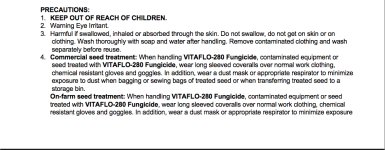
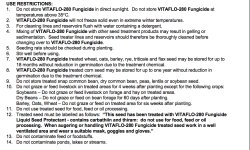
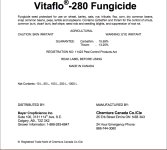
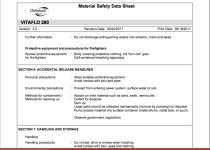
It had an emergency number sewn into the label. I contacted them, and found that it was treated with Vita-Flo 280, and I spoke directly with their chemical control hotline. They were the ones who gave me the information regarding the product, and they stated that the chemical burns would have been from direct contact with the product. The bleach mixture was only a splash of bleach to 5 gallons of water. Below are screenshots from the information that Bayer sent me from the seed that we had received, and Item Number 10 on the precautions refers to the Treated Barley that we received. The contact irritation only lasted a day, and was like a mild sunburn, but the seed was mis-sent, and not properly labeled, and not what we ordered, or what the USDA had ordered through the seed program. It incorrectly shipped, and labeled. There is a big difference between Barley that is treated to be planted, and what can be grown to feed as fodder, or mixed dry in feed. The MSDS advises using a respirator, and the precautions and if you read the full MSDS, it has a full page of nasty chemicals in it. Luckily we caught the error in time. http://www.uap.ca/products/documents/Vitaflo280MSDSE.pdf

316478d1367810093-homestead-grain-storage-shed-vflo1.jpg
316477d1367809297-homestead-grain-storage-shed-seed.jpg
316476d1367809292-homestead-grain-storage-shed-seed1.jpg
316475d1367809283-homestead-grain-storage-shed-seed2.jpg

seed2.jpgseed1.jpgseed.jpgvflo1.jpg
 
Last edited:
/ Homestead Grain Storage Shed
  • Thread Starter
#35  
In short, be very, very careful when buying your seed, because we were promised that ours was untreated. It came directly from the USDA, and it was the exact opposite of what we had ordered, and it would have most likely killed our animals if it had been fed to them after our 8 day growing cycle.

Duely noted, thanks for the warning and experience.
 
/ Homestead Grain Storage Shed
  • Thread Starter
#36  
The key to long term grain storage is moisture content and temperature. The MC should be below 14% (certain grains might be a point or two lower), and keeping grain temps 10-15 degrees cooler than outside air; and storing at 20-25 (grain temp) degrees during winter.

Temps and MC content are taken from several locations, at depth - not at surface. This should be done daily at harvest and twice monthly during storage.

Wow, this is excelent information, I think I can achieve the target temps by locating the grain shed in the shadow of my barn, and I have power there in case the temp creeps up. I will invest in a good moisture meter and make sure the grain is at the desired MC when I buy it. Very helpfull. I will continue to confirm the specifics at the local Ag Dept. and grain elevator. Thank you for posting.
 
/ Homestead Grain Storage Shed #37  
It had an emergency number sewn into the label. I contacted them, and found that it was treated with Vita-Flo 280, and I spoke directly with their chemical control hotline. They were the ones who gave me the information regarding the product, and they stated that the chemical burns would have been from direct contact with the product. The bleach mixture was only a splash of bleach to 5 gallons of water. Below are screenshots from the information that Bayer sent me from the seed that we had received, and Item Number 10 on the precautions refers to the Treated Barley that we received. The contact irritation only lasted a day, and was like a mild sunburn, but the seed was mis-sent, and not properly labeled, and not what we ordered, or what the USDA had ordered through the seed program. It incorrectly shipped, and labeled. There is a big difference between Barley that is treated to be planted, and what can be grown to feed as fodder, or mixed dry in feed. The MSDS advises using a respirator, and the precautions and if you read the full MSDS, it has a full page of nasty chemicals in it. Luckily we caught the error in time. http://www.uap.ca/products/documents/Vitaflo280MSDSE.pdf

316478d1367810093-homestead-grain-storage-shed-vflo1.jpg
316477d1367809297-homestead-grain-storage-shed-seed.jpg
316476d1367809292-homestead-grain-storage-shed-seed1.jpg
316475d1367809283-homestead-grain-storage-shed-seed2.jpg

View attachment 316475View attachment 316476View attachment 316477View attachment 316478

Now I get it!!!!
 
/ Homestead Grain Storage Shed #38  
It was kind of nasty stuff, but it the funny part was one of the binding ingredients use to used with alcoholics to make you sick if your drank. They told me not to drink for 24 hours. I know that the military use to use it on troops, and I am glad that they didn't when I was in!
Now I get it!!!!
 
/ Homestead Grain Storage Shed #39  
there is a grain storage shed here in Yakima that was build in the 50s by hand with wood... the old man that built it died in 91.... we went to an estate sale there recently and the grain from 91 was still in that shed dry and looking good as ever... if I wouldnt have seen it I wouldnt have believed it...
 

Marketplace Items

2023 Unverferth 3PT 10 FT Perfecta Field Cultivator (A61307)
2023 Unverferth...
2002 Bobcat 863 High Flow Compact Wheel Loader Skid Steer (A59228)
2002 Bobcat 863...
2020 Westfield MKX 100-83 Auger with Swing Hopper (A61307)
2020 Westfield MKX...
CATERPILLAR CB24B DOUBLE DRUM ROLLER (A52707)
CATERPILLAR CB24B...
1999 John Deere 7810 (A60462)
1999 John Deere...
2017 Dodge Ram SLT (A55314)
2017 Dodge Ram SLT...
 
Top