
what type if hydraulic system does my rig run? ?

/ what type if hydraulic system does my rig run? ? #1  

farm boy00

Veteran Member
Joined
Jul 17, 2014
Messages
1,296
Location
Howard City, MI
Tractor
John Deere M&MT, Case 1030 comfort king, Sears ST16, Craftsmen 6000, homemade articulation mini-loader
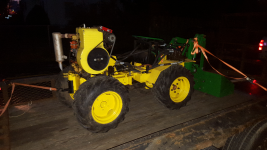
So I bought mini trencher that was striped to frame and turned into a mini loader. But I'll wondering what type of hydraulic system it runs

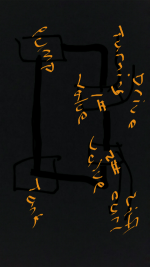
This is how it goes - pump to 1# 2 spool valve but then the outlet side feeds to 2# 2 spool valve. Then the outlet from the 2# goes to the tank
ForumRunner_20151110_223544.png


ForumRunner_20151110_223550.png


Next question. The pump is spinning backwards. Will that hurt it?? Seems to be fine.

Please no harsh/mean insults about the guy who built it. He's really smart when he designed this and built it and everything is great on the tractor so far except a leak by the pump and me breaking 2 welds from doing beyond what the tractor was made for abs digging up a sewage line in Clay ground
 
/ what type if hydraulic system does my rig run? ? #2  
Not enough info to really say. I am guessing it is a open center hydraulic system and the first valve has a power beyond valve that is letting fluid flow to second valve. The first valve should have a return to tank line also. If it is plumbed directly from the return side of the valve to the second valve, and the first valve is not PB equipped, then it is plumbed wrong. You diagram does not show a return to tank on the first valve. So something is wrong right there. first valve should have inlet, A and b ports, Return and PB. second valve should have inlet, A and B ports, Return. If the second valve is also PB, the PB port could be plugged as long as the PB conversion plug is removed also. If PB conversion plug is not removed, then the return port and the PB port should be tee'd together to provide flow back to tank. Return port of first vavle can also be tee'd to return port of second valve before going to tank. If hydraulic system is a closed center system, there still would be a return to tank on the first valve, and again, your diagram doesnt show this.
 
/ what type if hydraulic system does my rig run? ? #3  
Some pumps can turn cw or cc so I would say you are ok there. muddstopper has said the way it should be done. I don't agree all the way on the out of the 2nd valve about teeing the bp fitting and work ports out together. Just remove the pb fitting then tee it into 1st valve return line then plug the work port out. Right now you have no pb fitting in eather valve and it is putting back psi on the 1st valve. That could blow the spools seals out of the 1st valve. It well work the way it is but should be done like muddstopper said and get the back psi off of the 1st valve. Some people has said it would blow the 1st valve apart, but I have a hard time with that. People do it the way you have it now all the time.

Here is a good picture showing what muddstopper is saying.
 

Attachments

  • RD5000InstS.pdf
    222.9 KB · Views: 152
/ what type if hydraulic system does my rig run? ?
  • Thread Starter
#4  
Some pumps can turn cw or cc so I would say you are ok there. muddstopper has said the way it should be done. I don't agree all the way on the out of the 2nd valve about teeing the bp fitting and work ports out together. Just remove the pb fitting then tee it into 1st valve return line then plug the work port out. Right now you have no pb fitting in eather valve and it is putting back psi on the 1st valve. That could blow the spools seals out of the 1st valve. It well work the way it is but should be done like muddstopper said and get the back psi off of the 1st valve. Some people has said it would blow the 1st valve apart, but I have a hard time with that. People do it the way you have it now all the time.

Here is a good picture showing what muddstopper is saying.

Unfortunately I can not view your picture in either app or browser.


I can provide more pictures abs maybe info but that's basicly the hydraulic system. On the pump there is a arrow pointing one way but it spins the other way is why I ask.

Muddstopper-what would be the difference between open and closed system
 
/ what type if hydraulic system does my rig run? ? #5  
In an open center system, the pump is always pumping flow to the control valve and back to tank. A closed Ceneter system, fliud does not flow thru the valve until the valve is activated. A closed center pump is usually a variable displacement type pump. The pump itself is load sensing (sometimes internal and sometimes external),and pumps on demand. In an open center system, the pump is always pumping oil to the system.

The attachment that LeeJohn provided is a pdf file, you might have to download the free adobe software to view it. The diagram is the correct way to plumb two valves using a PB circuit.

LeeJohn, I did not say to plumb the work ports to the PB port. Not sure how you interpeted what I said to believe I said what you said I said. With out a pb port, the work ports return to tank internally and out thru the return port. With PB, the work ports return to tank internally and then thru the tank port, back to tank. Inlet oil continues on thru the valve, to the Pb port, and to the inlet port of the second valve. Returning oil from the work ports does not mix with the oil passing thru the PB. With a PB type valve, the PB port can be used as a return to tank port as long as the conversion plug is removed from the control valve. If the conversion plug is left in place, and you do not have any other valves down stream of oil flow, you can tee the Out Port to the PB port and just run one line to tank. you can also Tee the return line from the first valve to the return line of the second valvee before running the lines to tank. A lot of the times, you can also Leave the PB conversion plug installed in the valve and plug the PB port to convert the open center valve/with PB to a Closed center valve.

While it would seem that the two valves in the diagram are plumbed using the out port of first valve to provide flow for the inlet port of the second valve, this can work, but care must be taken to not allow pressure to get to a high pressure situation. The return ports of any valve is considered a low pressure port. Not sure what the save allowable limits are for a low pressure port, some say 500psi, but I dont now how accurate that is. At any rate, exceeding the low pressure limit can cause the control valve to crack or burst. any body connecting two valves together using the low pressure return port is just asking for trouble, if the pressure of the second valve is capable of exceeding the low pressure limit of the first valve return port, its not a matter of will it blow, but just how long before it does blow. Spool seals are not what you have to worry about, instead its the valve body itself blowing apart.
 
/ what type if hydraulic system does my rig run? ? #6  
This is why I said that. If PB conversion plug is not removed, then the return port and the PB port should be tee'd together to provide flow back to tank. All I wanted to say was why do it that way , when all you have to do is just remove the pb fitting. You didn't say how I said it, I should of said work ports "out" port.
 
/ what type if hydraulic system does my rig run? ? #7  
This is why I said that. If PB conversion plug is not removed, then the return port and the PB port should be tee'd together to provide flow back to tank. All I wanted to say was why do it that way , when all you have to do is just remove the pb fitting. You didn't say how I said it, I should of said work ports "out" port.

You are right, if you remove the pb conversion plug, and then cap the PB port, no need for a tee. You can just run a line from "out" back to tank or you can use the PB port as a return to tank. Only if you do not remove the PB conversion plug would you need to tee the out and PB before returning to tank. Unless of course the valve is being used as a closed center valve, then you would keep the pb conversion plug installed and also cap the PB port.
 
/ what type if hydraulic system does my rig run? ?
  • Thread Starter
#8  
You are right, if you remove the pb conversion plug, and then cap the PB port, no need for a tee. You can just run a line from "out" back to tank or you can use the PB port as a return to tank. Only if you do not remove the PB conversion plug would you need to tee the out and PB before returning to tank. Unless of course the valve is being used as a closed center valve, then you would keep the pb conversion plug installed and also cap the PB port.

Sorry about not earlier replying bit the tractor don't have a PB valve. Just a regular valve. No problems yet with valves but that leads to my next question.

Didn't want to start a new thread yet. The tractor is driven by hydraulic motor to the rear end then a shaft the front for full time 4X4. But it is extremely slow. Walking speed and don't have alot of power. When going into a dirt pile it will lose power and stop and has a you are lucky is you can craw over a 4by4 block of wood with bucket 1/2 full.
Is there any way to make it go faster and have better power with the current hydraulic motor or does it need a better motor. If it does I can get info off it and see if you guys got a suggestion for a upgrade? ?
 
/ what type if hydraulic system does my rig run? ? #9  
Hydraulic motor HP is determined by the torque and speed.

If the motor is working at full potential, it should do the intended job.

If the pressure is not developed by the motor and GPM's lacking, then the motor can not work to full potential.

Could be due to a weak pump , worn motor, or leakage somewhere else.

You need to do a flow and pressure test.

Higher pressure produces more torque.

More GPM will turn the motor faster.

With more HP, you can run a larger pump.

Larger hyd motor will produce more torque.

Larger motor will also be slower.
 
/ what type if hydraulic system does my rig run? ?
  • Thread Starter
#10  
Hydraulic motor HP is determined by the torque and speed.

If the motor is working at full potential, it should do the intended job.

If the pressure is not developed by the motor and GPM's lacking, then the motor can not work to full potential.

Could be due to a weak pump , worn motor, or leakage somewhere else.

You need to do a flow and pressure test.

Higher pressure produces more torque.

More GPM will turn the motor faster.

With more HP, you can run a larger pump.

Larger hyd motor will produce more torque.

Larger motor will also be slower.

Thanks J_J. I think it might be with the pump turning backwards. Have nothing to do pressure test. What do you mean by flow test? ?
 
/ what type if hydraulic system does my rig run? ? #11  
A pump flow test will determine if the pump is putting out the advertised GPM's .

The pressure test will determine if the pump can maintain the pressure developed by the hyd component.

You need to know if the pump is performing at spec.

You need to know if the motor is using the GPM's provided.

Knowing the displacement of the hyd motor and GPM's, the motor will turn at a certain speed.

If the hyd motor is worn and bypassing fluid, it will not produced the advertised speed.
 
/ what type if hydraulic system does my rig run? ? #12  
Most of those trenchers had an adjustable bypass or flow valve to control speed. I've rented three different styles and all had some type of ground speed control independent of the trencher chain speed. They went from creep to transport speed. The most basic was just a knob that controlled ground speed. Follow the motor circuit and see if there's a valve/diverter somewhere.

Some pumps have a valve body or gears that can be reversed to change drive direction. Running a pump in reverse usually produces little results because of the porting in the pump. Post a picture of the pump. Someone may be able to identify the type.

Here's a link to a video that show an example of changing pump drive direction on a gear pump.
https://www.youtube.com/watch?v=A8_r1tgyLgE


Here's another for a vane pump.
https://www.youtube.com/watch?v=wOqJor92r44
 
/ what type if hydraulic system does my rig run? ? #13  
You say the pump is spinning backwards. Do you know what kind of pump you have, some of lower cost gear pumps and vane type pumps can be converted to run either direction. Usually you just need to take the caps off each end and turn the center section around. Some of the higher volume and high dollar gear pumps, have plates inside the pump that have to be swapped as well. Sometimes the plates can just be swapped and sometimes they have to be replaced with a different type, so its not just a matter of spinning the pump backwards and reversing the inlet and outlet hoses.
 
/ what type if hydraulic system does my rig run? ? #14  
I thought that's what I just said. :rolleyes:
 
/ what type if hydraulic system does my rig run? ?
  • Thread Starter
#16  
Thanks a bunch guys! ! Can get pictures tonight. Just left for work. Talked to my dad to and we are thinking that it's the hydraulic motor. We have amazing power to the loader and even to the steering to turn the tractor. We got to talking about it and it seems like the motor is getting weak. Yesterday I was shovelling some old horse manure and was stalling hydraulic engine when scraping 2-4in of light stuff that has sat for 4-10yrs. It seems like only the hydraulic motor has a problem keeping up and stalling with light loads
 
/ what type if hydraulic system does my rig run? ? #17  
Before you go replacing the motor, make sure it is getting the correct pressure. Its very possible that the motor could be on a separate relief than the rest of the system. You might only need to tweak that relief a bit to get where you want to be. Also as CCWKen pointed out, the motor might use a flow control to adjust speed. Check to make sure the flow control is open and the pressure is correct before replacing expensive parts.

Edited to add, you say the tractor does not have a power beyond port, you should really think about swapping the first valve out for a valve that does have PB. The way the machine is plumbed, the first valve is providing oil for travel and steering before any oil is sent to the lift and curl cyl's. If you are trying to travel and work the lift and curl at the same time, there simply isnt any oil going to the lift and curl circuit, except what ever oil is being passed thru the travel motor. Weak travel could be a sign of pressure build up on both sides of the travel circuit as the lift and curl functions are being activated. If the fluid exiting the travel motor is meeting resistance before it flows back to tank, such as the lift and curl functions, this would reduce travel speed as it restricts flow, and reduce power because of pressure equalization on both sides of the motor.
 
Last edited:

Marketplace Items

2021 Chevrolet Silverado 1500 4x4 Crew Cab Pickup Truck (A59230)
2021 Chevrolet...
2000 KENWORTH T800 TANDEM AXLE MID ROOF SLEEPER (A59905)
2000 KENWORTH T800...
84" HYD ROCK GRAPPLE (A52706)
84" HYD ROCK...
2014 Eager Beaver 50SL/3 53ft 60 Ton Tri-Axle RGN Low Boy Trailer (A59230)
2014 Eager Beaver...
8 TOOTHED BUCKET FOR MINI EXCAVATOR (A58214)
8 TOOTHED BUCKET...
2004 Ford F-150 Ext. Cab Pickup Truck (A59230)
2004 Ford F-150...
 
Top
