Diesel Generator

   / Diesel Generator #41  
I agree with the group that you can use a much smaller genset. I have a 9.75 KW Kubota powered and I can run my entire house. I do shed the hot water heater. On a longer outage I switch off the heat/ac for an hour or two, switch on the water heater to get it back up to temp. Also we do not run the dryer or oven when on backup power. Other than that, 3 heat pumps (3 zones, one 2 ton and two 1.5 ton units), 2 refrigerators and a freezer, well pump and normal lighting, TV computers, etc. On a normal load over a day I use 0.3 g/hr. Except as mentioned no real change in lifestyle when running.

Diesel is the right decision. It is the lowest cost to run, especially compared to a propane fueled unit. Fuel does not "go bad" over time like gasoline, plus you are already a diesel user with your tractors. Just consider an additive to control moisture and algae. I got my gen from Central Maine and picked the 9,75 KW Kubota powered. I have a Kubota tractor so there is some commonality in filters and parts, which was part of my decision. I added a GSC control for engine start and monitoring. My box is a 200 amp, but as mentioned you should consider that you will not be drying, baking and cooking at the same time. Although I have a 200 amp box the utility transformer on my property (just feeding my house) is only 10 KW. The utility power has a high surge capacity, but continuous power is relatively small. A smaller size will save purchase cost, lower cost to run and less space and cost to install. A 12-15 KW should be more than enough for a normal household. Oversize will cost more to run.

Central Maine was good to deal with. They carry a number of brands and sizes. based on many comments and reviews, STAY AWAY fro the Chinese units. Low reliability, poor quality and hard to find parts are a big issue.


Paul
 

Attachments

  • Kubgen.JPG
    Kubgen.JPG
    144.3 KB · Views: 203
Last edited:
   / Diesel Generator #42  
I am not sure what wet stacking is???

But there is a Kubota 11,000KW with a 13,500KW surge that I really like, it is a portable unit that would simplify install greatly. But what will it run?? Like I said wife wants whole house as normal.

I am still researching I haven't pulled my card out yet.

Diesels wet stack when operated for extended periods of time lightly loaded . The combustion process and combustion chamber walls & stack are too cool . Unburned fuel, cylinder wall lube and water from combustion condense in the stack.
Don't blame me, it's the nature of the beast. Diesels are made to operate at full rated power for extended periods of time . Spark ignition engines are for light and varying loads .
 
   / Diesel Generator #43  
Glad my "user" tractors aren't deere's......sounds like they still have problems like the old slobbering models did...

SR
 
   / Diesel Generator #44  
Why should an 100% working diesel engine spit out unburned diesel? And what causes the degrade in performance?

The only reason for a diesel to spit out unburned fuel is loss of compression in a cylinder, but its tru that they often can spit out water an sot from the exhaust but that is just condense water from the exhaust system and not from the engine.

Nobody said a 100% diesel wet stacks ? It's the diesel putzing along under 1/3 power that wet stacks .
 
   / Diesel Generator #46  
How can the fuel get away from the combustion without getting ignited? The fuel is injected strait in to the combustion chamber in the top of the piston.
 
   / Diesel Generator
  • Thread Starter
#47  
Here is where I have decided to place the generator. Its the far side of the house and there is a 200amp sub panel. The house is made from ICF's so there is 3 inches of foam with 8 inches on concrete sandwiched between. I am hoping that is enough to muffle most noise.

I am going to have a slab placed where the ferns are.
1456244707595.jpg1456244730647.jpg

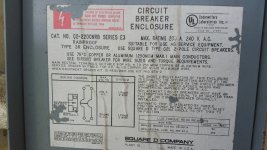
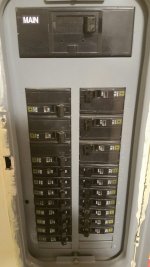
This is the inside panel. I am assuming the ATS will be wired in next to this panel.

1456244750090.jpg
 
   / Diesel Generator #48  
Ok so for what it's worth I'm going to add some of my experiences here.

First of all too light a load can affect gas generators also. While hunting if we run my 2200 watt Yamaha all night in the cold weather for a week on a light load the oil gets real thick. Probably a combination of an air cooled engine, light loads and below freezing weather resulting in incomplete combustion.

Secondly a generator is easy to run at full electrical load. It's done all the time to break in rebuilt engines. What you need is a plastic barrel with two electrodes in it. The electrodes need to be mounted on a piece of heavy plastic that insulates them from each other and supports them in the barrel. It's nice to have the electrode holder adjustable up and down to match the load to the generator but changing the water level will do the same job. The electrodes are hooked up to the electric output on the generator and they are adjusted up or down till the generator is running at full load. A bit of salt or baking soda in the water helps increase the electrical resistance if needed.

Adding a full load like this will cure any wet stacking problems. Probably done after running with a light load for a long time would be best. Just before changing oil would be good to. Those who say they haven't noticed any problems with wet stacking probably live in warmer climates and the motors run at operating temperatures even under light loads. An oil analysis would very likely show any problems with light loads if they exist.
 
   / Diesel Generator #49  
How can the fuel get away from the combustion without getting ignited? The fuel is injected strait in to the combustion chamber in the top of the piston.

The fuel is injected in small droplets. In modern diesels with higher pressure injection systems the droplets are smaller and need less time to burn. In older diesels not all of the droplets burned under light loads. And under a real light load (idling) on more modern diesels I'm sure not all of the small droplets burn either. Anything that doesn't burn either goes down the cylinder wall into the oil or puddles in the exhaust (wet stacking).

I was just going to add that Bank's Power Banks Power | Diesel Performance and Gas Performance Products has good articles (lower right hand side "Tech Articles") that use a lot more words than I do and explains the whole diesel combustion process a lot better than I can.
 
   / Diesel Generator #50  
Ok so for what it's worth I'm going to add some of my experiences here.

First of all too light a load can affect gas generators also. While hunting if we run my 2200 watt Yamaha all night in the cold weather for a week on a light load the oil gets real thick. Probably a combination of an air cooled engine, light loads and below freezing weather resulting in incomplete combustion.

Secondly a generator is easy to run at full electrical load. It's done all the time to break in rebuilt engines. What you need is a plastic barrel with two electrodes in it. The electrodes need to be mounted on a piece of heavy plastic that insulates them from each other and supports them in the barrel. It's nice to have the electrode holder adjustable up and down to match the load to the generator but changing the water level will do the same job. The electrodes are hooked up to the electric output on the generator and they are adjusted up or down till the generator is running at full load. A bit of salt or baking soda in the water helps increase the electrical resistance if needed.

Adding a full load like this will cure any wet stacking problems. Probably done after running with a light load for a long time would be best. Just before changing oil would be good to. Those who say they haven't noticed any problems with wet stacking probably live in warmer climates and the motors run at operating temperatures even under light loads. An oil analysis would very likely show any problems with light loads if they exist.
The OP stated earlier that anything beyond changing a light bulb is beyond him. How is he going to feel comfortable building an at home load bank????
 
   / Diesel Generator #51  
Here is where I have decided to place the generator. Its the far side of the house and there is a 200amp sub panel. The house is made from ICF's so there is 3 inches of foam with 8 inches on concrete sandwiched between. I am hoping that is enough to muffle most noise.

I am going to have a slab placed where the ferns are.
View attachment 458057View attachment 458058

This is the inside panel. I am assuming the ATS will be wired in next to this panel.

View attachment 458059


I would not put a diesel generator that close to the house unless you love the smell of diesel exhaust and want to feel and hear the engine running. Mine is about 25' away and it still sounds like a german panzer division coming out of the woods. The ground around my generator shed vibrates. I wouldn't want that noise or vibration right next to the house.

In addition, make sure you have a way to get the exhaust up and away. I have my exhaust going straight up, extended 2' above the roof of my generator shed inside a chimney. For extended runs I take the cap off the chimney so the exhaust can shoot straight up and rise with no obstruction. If leave the cap on -- which is like a horizontal exhaust, albeit one 7' above ground -- the exhaust is a lot more noticeable on the ground.

I am all in favor of diesel generators, but keep in mind they are not as clean burning as propane or gas, and they have a fair amount of vibration. Best to treat it like parking a medium size tractor running at 1800rpm non-stop. Would you want that parked right next to your house?
 
   / Diesel Generator #52  
FWIW we have a Kohler 14KW propane fueled genset. I put it on the far side of the 24' garage, which is 20' from the house. It is rated at 67dB at full load: the Kubota 10KW is rated at 68dB.

I would not want anything louder, or closer.
 
   / Diesel Generator #53  
I would not put a diesel generator that close to the house unless you love the smell of diesel exhaust and want to feel and hear the engine running. Mine is about 25' away and it still sounds like a german panzer division coming out of the woods. The ground around my generator shed vibrates. I wouldn't want that noise or vibration right next to the house.

In addition, make sure you have a way to get the exhaust up and away. I have my exhaust going straight up, extended 2' above the roof of my generator shed inside a chimney. For extended runs I take the cap off the chimney so the exhaust can shoot straight up and rise with no obstruction. If leave the cap on -- which is like a horizontal exhaust, albeit one 7' above ground -- the exhaust is a lot more noticeable on the ground.

I am all in favor of diesel generators, but keep in mind they are not as clean burning as propane or gas, and they have a fair amount of vibration. Best to treat it like parking a medium size tractor running at 1800rpm non-stop. Would you want that parked right next to your house?
Very good thought on vibration and exhaust. I would move it out a bit from under the house roof. Every foot distance from the house will reduce the dB rating a bit. Sometimes 5 dB drop means a lot when sleeping.
 
   / Diesel Generator #54  
Yep, and dB is a tricky scale. Every 3dB increase means noise has doubled!
 
   / Diesel Generator #55  
Here is where I have decided to place the generator. Its the far side of the house and there is a 200amp sub panel. The house is made from ICF's so there is 3 inches of foam with 8 inches on concrete sandwiched between. I am hoping that is enough to muffle most noise. I am going to have a slab placed where the ferns are. <img src="http://www.tractorbynet.com/forums/attachment.php?attachmentid=458057"/><img src="http://www.tractorbynet.com/forums/attachment.php?attachmentid=458058"/> This is the inside panel. I am assuming the ATS will be wired in next to this panel. <img src="http://www.tractorbynet.com/forums/attachment.php?attachmentid=458059"/>
That looks like a great spot. The code will require it be I believe 5' from any Windows, doors or vents.
 
   / Diesel Generator #56  
How can the fuel get away from the combustion without getting ignited? The fuel is injected strait in to the combustion chamber in the top of the piston.


Then I suppose all those wet stacks in truck stop parking lots and rail locomotives from overnight idling are just an old wive's tale .
 
   / Diesel Generator #57  
The 250 gal of diesel fuel for my 10kw generator is 15 years old. Still starts and runs just fine. Guess I didn't need a 550 gal tank, but it's nice to know it's there. Paid .99 a gallon back then.
 
   / Diesel Generator #58  
The 250 gal of diesel fuel for my 10kw generator is 15 years old. Still starts and runs just fine. Guess I didn't need a 550 gal tank, but it's nice to know it's there. Paid .99 a gallon back then.
My diesel tank has a vented lockable cap on it. It doesn't vent until there's quite a bit of pressure. It still keeps a good amount of pressure in the tank that helps keep moisture out. I still put stabilizer in it though.
 
   / Diesel Generator #59  
Wow. So many people just flinging around all this nonsense that is so not necessary for the post. The poster has a significant need for a generator and for his needs he feels diesel works best. Why bother trying to convince him that propane or gas are better, when he already decided what was best for himself?

To the original poster:
Get the diesel gen, you will love it! Just maybe get a second opinion on the size needed, don't buy to small based on the keyboard experts here, you may very well need the size you were recommended, but might not. None of us have been to your house, you have. If it were me I would spend the extra money and place it as far from your bedrooms as possible, either across the yard or opposite side of the house. If you use it that often, then in ten years from now you will be very happy if you spend $1000 extra on wire to place it further away. Oh and put it in a convenient spot for refueling. There is nothing on my house that I wish I didn't spend money upgrading, but there are a handful of things that I wish I wouldn't have saved $500 five years ago when we build because I am now wanting to redo them at a greater cost then doing it right the first time would have cost.
 
   / Diesel Generator
  • Thread Starter
#60  
I appreciate all points of view on this as I have limited experience in this area, I can understand the propane people and there view with what they bought and the diesel views but knowing where I live and talking to my 2 neighbors I just don't have confidence in the 1 propane company within 65 miles making an earnest attempt at helping me in a storm. I know all of you come from all over, and each area has its own natural occurrences and I don't claim that Florida is the worst but where I live with the Gulf on one side the Atlantic on the other and Lake Okeechobee 17 miles south my weather is great when its great and when it goes bad its really bad. So I cant risk having a $7000 yard ornament after the gas runs out and according to the neighbor that happened to him for 15 days in 2011.

PMSMechanis: Thank you for your suggestion but I think I might end up killing someone/thing with that as I do not have the knowledge to do something like that safely.

Garandman, S219, GaryFowler: I agree with you on the vibration and exhaust, though I am not as concerned with sound (read below) I will see what I can do to mitigate that problem, possibly the stack idea or some other type of exhaust. all units I am looking at are a tier 4 (NO DPS,EGR,DEF) just CRDI so exhaust will not be as bad as say an older diesel. I have a brand new Kioti that is tier 4 and my exhaust is minimal. But sitting stationary I can see were it could drift in the house.

KevinWak: Thank you for you suggestions, after reading here and talking to the wife I have decided that I am going with either a 18k or 20k unit (Depending if the dealer can work a deal on price) I think this should suit our needs and cover my usage of the engine to about 50 - 60% to prevent wet stacking.

I don't plan on attaching the slab to the house I figure something a kin to the A/C compressor with an independent pad, without engineering I'm guessing a 12-15inch footer with a 6 inch pad reinforced that is approximately 3-4 feet from the foundation of the house.

I am not overly fond of Chinese things but Yang-Dong has a large footprint in the USA with engines in things you wouldn't even think, I can source parts from many places, I have not confirmed this yet but was told that a lot of the parts and maintenance items cross reference to Perkins.

I think some might have miss-understood my house construction, when I built I made the decision to built a small fort instead of a large box for a house. With that all my exterior walls are solid poured 8 inch concrete with a total of 6 inches of polystyrene (3 on each side) the wall I showed in the picture actually has the mud room on the opposing side which was supposed to be a garage that we downsized with the design we wanted to an 10x9 room. That mud room is also 8 inches of concrete. As I live in sunny South Florida we decided to build the house to a 210 MPH wind code so doors are solid core and open outwards. In addition the roof is corrugated 26 GA. with blown insulation. I say all that to explain my experiment today, I decided to have my neighbor bring his 55hp New Holland over and park it right next to the house and turn it to 22oo RPM's, from the closest room I could barely hear anything but the vibration and that sounded like you washer doing spin cycle in the laundry room, and from the bedrooms I heard nothing at all. Now I do agree about the vibrations and that is something I would have to look into because I don't want to get into a scenario where I might damage something. I will have to get with and engineer and see what type of slab and how far from the house would be safe. Because of the orientation of the house it would be costly to place too far from the house as our home sits on 1 acre surrounded by 19 Acers of pasture. My new shop is going in the pasture ( Again property tax is lower if its in the pasture as opposed to 30 feet closer in the "residential use space ) so I would have about a 200 ft. in a L-shape to run it from the shop, next would be a free standing structure which is an option but not preferred. I think #1 I will see if there is an engineered slab that could handle the seismic loads presented by the generator and what would be the cost difference between pouring the slab as opposed to just running it from the shop.

My questions going outside my realm are as follows;

#1 - I looked at load shedding ATS last night I like the Generac Nexus - $1499 which handles 16 circuits on the primary and 16 secondary and is 200amp rated. Is this a suitable unit to handle my needs.

#2 - If running the generator from the shop becomes the option will I be back into a situation where I need to go up again to compensate for the run. I have read that the farther the run the more drop in power.

#3 - If I put it in the shop can I just save the money on the enclosure, meaning is it safe to run it in the shop if I vent it outside, hardydiesel.com had a setup you can purchase that allows the generator to be inside but exhausted and vented out. It was cheap and provided the ability to keep it inside and out of the weather. I think this would be better for the fuel tank too.
 

Tractor & Equipment Auctions

2023 JOHN DEERE 85G EXCAVATOR (A59823)
2023 JOHN DEERE...
2019 WABASH DVLSHPC 53FT DRY VAN TRAILER (A59905)
2019 WABASH...
Toro z turn (A56859)
2011 VOLVO VNL760 SLEEPER (A59904)
2011 VOLVO VNL760...
2017 Wacker Neuson LTV6 Towable Light Tower (A56857)
2017 Wacker Neuson...
JOHN DEERE 850K LGP (A58214)
JOHN DEERE 850K...
 
Top