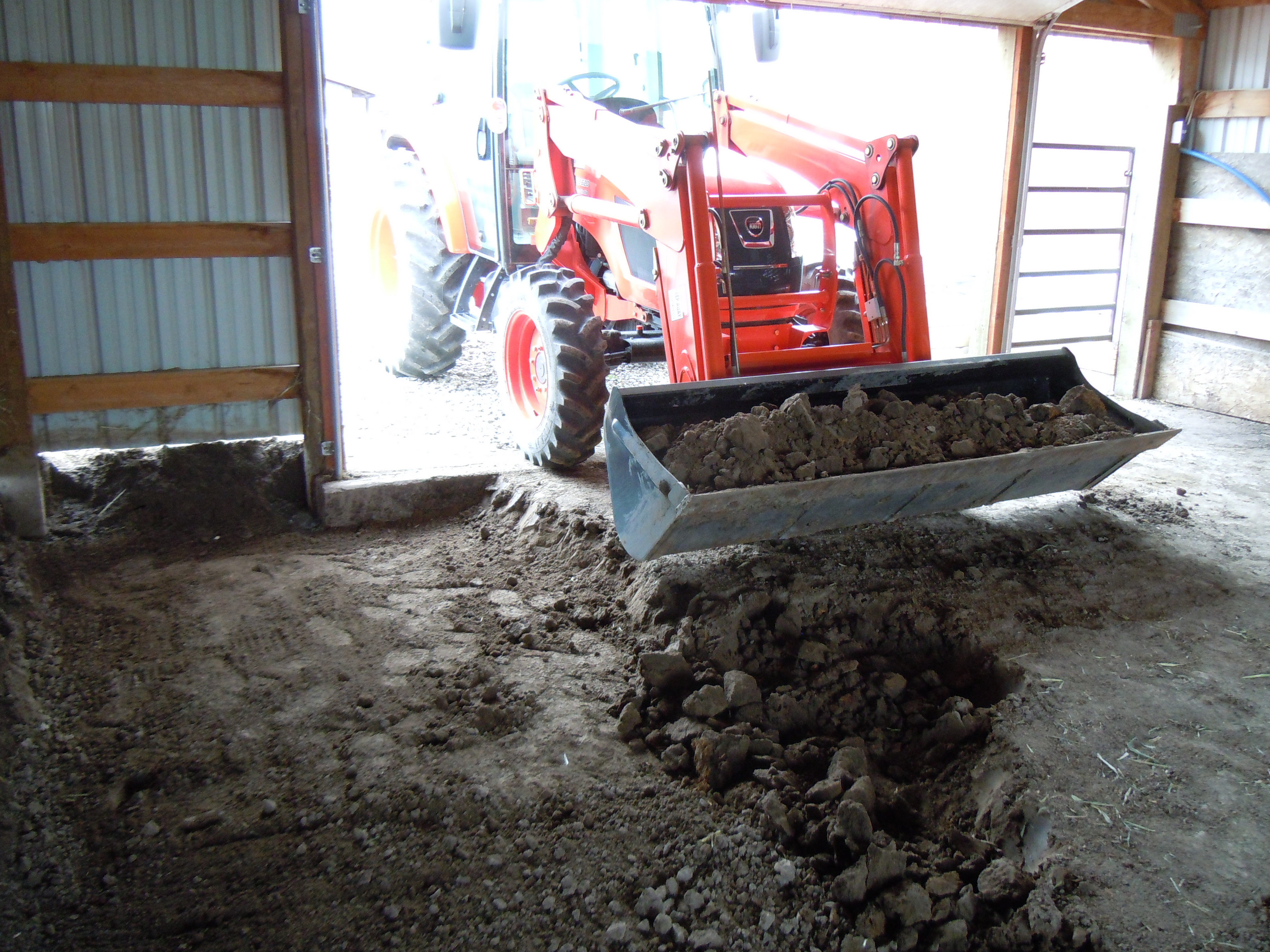
Removing dirt and going with concrete for barn.

   / Removing dirt and going with concrete for barn. #1  

cat fever

Elite Member
Joined
Dec 14, 2014
Messages
2,769
Location
Southeast Idaho
Tractor
Kioti RX6620PS
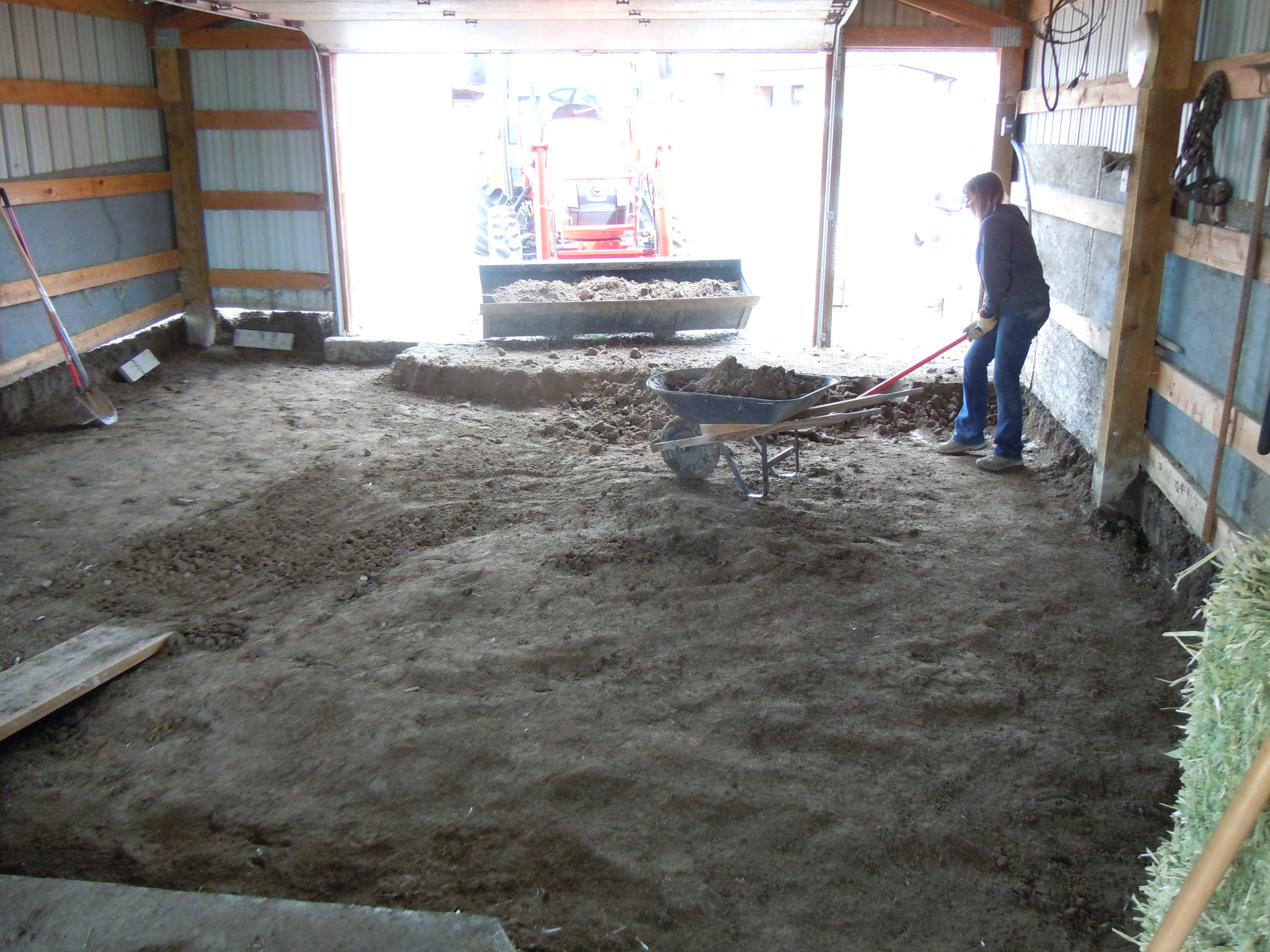
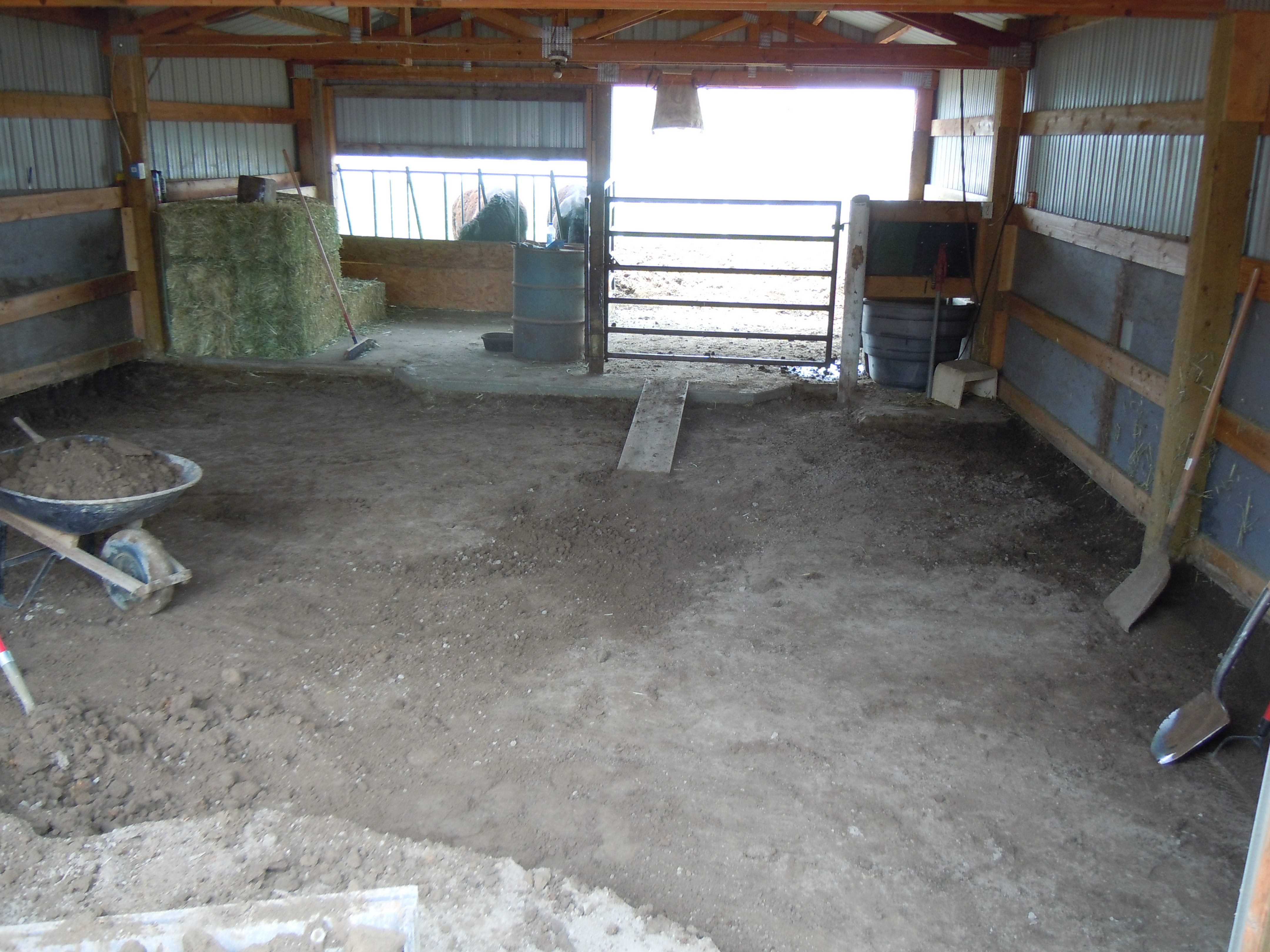
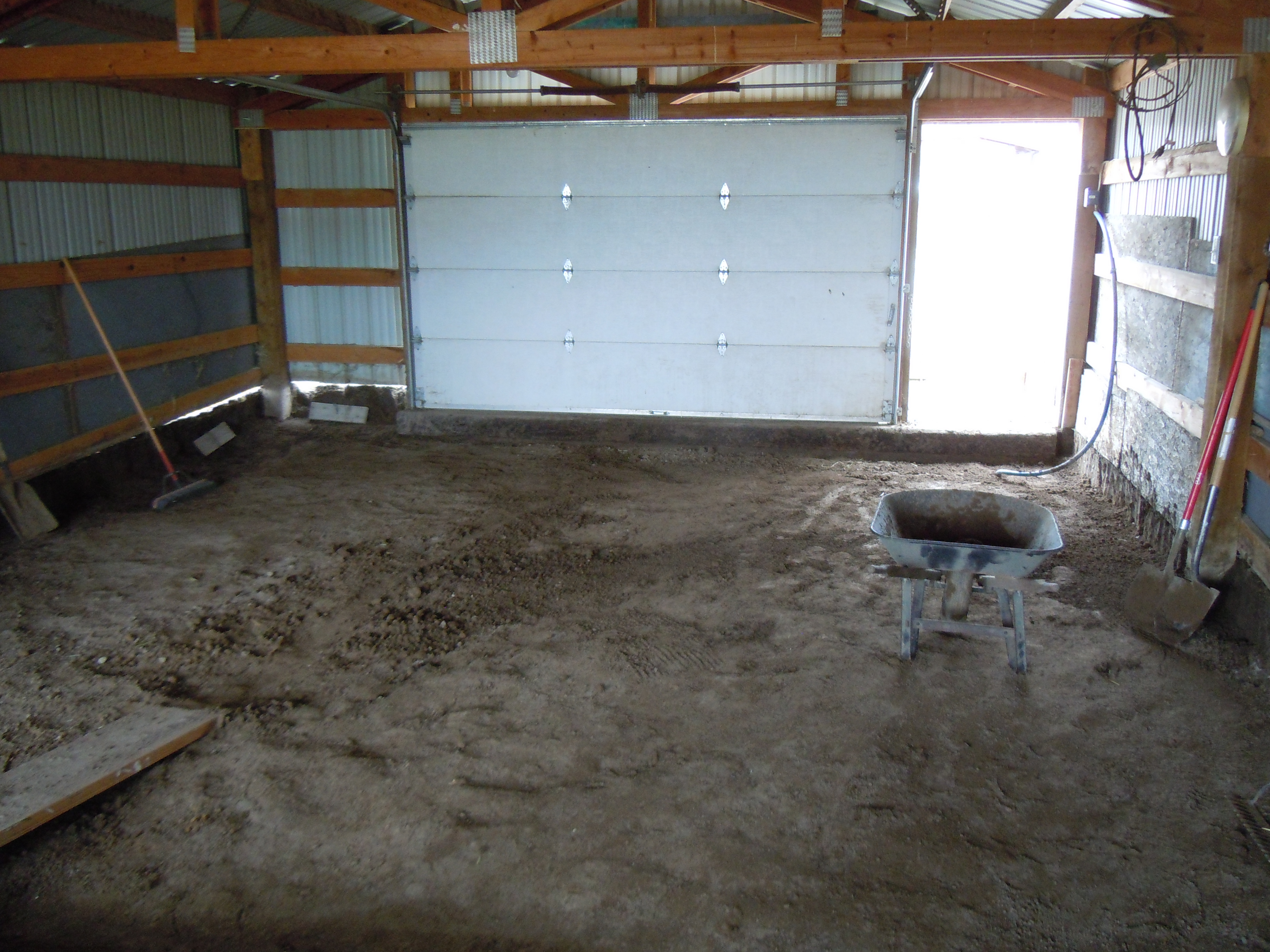
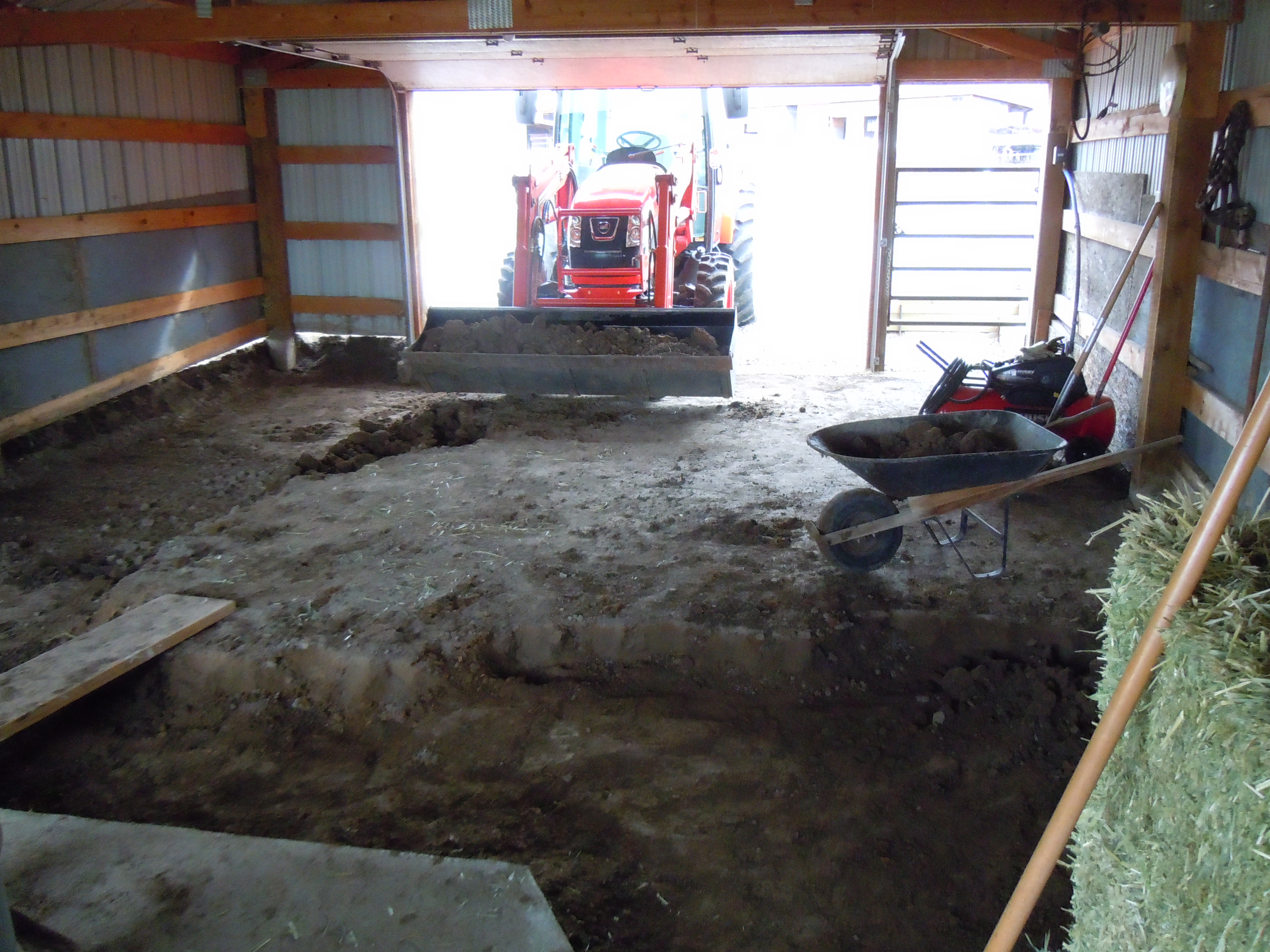
So this barn has been used for 15+ years with a dirt floor for storing hay. We have used a tarp to keep the hay off the dirt but we decided to just go with concrete. We had a guy that was supposed to come and dig it out with his bobcat. After waiting for a few weeks my better half got tired of waiting and started digging by hand. Of course I ended taking the shovel from her and started digging. (I was happy waiting for the bobcat) We removed about 8-9 inches of dirt. The total area is 24'X21'.

The digging went by pretty fast, we were using the tractor and a wheelbarrow to haul the dirt off.
Here's some shots of the work. We'll leave the dirt around the hydrant area just in case it ever needs to be dug up.
DSCN2872.JPG
DSCN2873.JPG
DSCN2874.JPG
DSCN2870.JPG
DSCN2871.JPG
 
   / Removing dirt and going with concrete for barn.
  • Thread Starter
#2  
Here's a couple more with the foreman looking on. He doesn't really do anything but stare.:laughing:


DSCN2875.JPG
DSCN2876.JPG
 
   / Removing dirt and going with concrete for barn. #3  
If you are going to continue to store hay take the time to throw a vapor barrier down before you pour.
 
   / Removing dirt and going with concrete for barn.
  • Thread Starter
#4  
If you are going to continue to store hay take the time to throw a vapor barrier down before you pour.

OK, thanks for the tip.

So, yes I will be storing hay there in the future.
 
Last edited:
   / Removing dirt and going with concrete for barn. #5  
RNumann is correct about the vapor barrier If you don't do it, you will think that it has been raining in there as the water will come right through the concrete.
 
   / Removing dirt and going with concrete for barn.
  • Thread Starter
#6  
I am putting in a few inches of gravel. Would the vapor barrier go under or over the gravel?
 
   / Removing dirt and going with concrete for barn. #7  
Put it on top of the gravel. Last layer before the concrete.
 
   / Removing dirt and going with concrete for barn.
  • Thread Starter
#8  
OK, Thanks.
 
   / Removing dirt and going with concrete for barn. #9  
I think I would put some expansion strips around the hydrant and pour concrete around it also. If you ever needed to dig it up you could just break out that small piece of concrete without damaging the rest of the slab.

Doug in SW IA
 
   / Removing dirt and going with concrete for barn. #10  
Impressive. These days we forget how much can be done by hand if you work at it.

What we used to do with hydrants, etc was box it out, then fill with gravel and surface with a thin layer of concrete.
 
   / Removing dirt and going with concrete for barn. #11  
I would nail 1/2" styrofoam around posts where concrete meets the post. I don't know if it would or not but a contractor told me the freezing, and raising of the concrete would crack outward from the post area.

Why would you dig anything except at the very edge where you couldn't get with the tractor FEL?
 
   / Removing dirt and going with concrete for barn. #12  
Looks great!!! nothing like getting it done on your own. What is wrong with hay sitting on dirt? Does it affect the hay even inside a building? Are you storing square bales or round bales in there?
 
   / Removing dirt and going with concrete for barn. #13  
If you are going to continue to store hay take the time to throw a vapor barrier down before you pour.

I've never understood this. How does moisture in the ground turn to vapor and then penetrate concrete? Since every building should be on a pad slightly higher then the land surrounding it so rain water flows away from the building, if there was moisture in the soil under the slab, why wouldn't it travel the path of least resistance and work it's way sideways instead of against gravity and through solid concrete?

My understanding for the reason to use plastic under a slab, also called a vapor barrier, is to stop the moisture in the bottom part of the wet concrete from soaking into the ground resulting in an uneven curing process of the slab. This is only needed in soils that absorb moisture, or drain it. If you pour over gravel or on sand you would want plastic to keep the moisture in the concrete. If you are pouring on clay, there is no need for this.

Having said that, there is no harm in spending the extra money for plastic under your concrete if it makes you feel better.

Moisture seen on top of concrete is from condensation in the air.
 
   / Removing dirt and going with concrete for barn. #14  
I think I would put some expansion strips around the hydrant and pour concrete around it also. If you ever needed to dig it up you could just break out that small piece of concrete without damaging the rest of the slab. Doug in SW IA

This is what I was going to say do also, I just framed out a 3 X 3 square and poured the floor, then a few days later came back after removing the forms and added expansion strips in place of the forms and poured sack create mix then it can be busted out easily later.
 
   / Removing dirt and going with concrete for barn. #15  
I've never understood this. How does moisture in the ground turn to vapor and then penetrate concrete? Since every building should be on a pad slightly higher then the land surrounding it so rain water flows away from the building, if there was moisture in the soil under the slab, why wouldn't it travel the path of least resistance and work it's way sideways instead of against gravity and through solid concrete?

My understanding for the reason to use plastic under a slab, also called a vapor barrier, is to stop the moisture in the bottom part of the wet concrete from soaking into the ground resulting in an uneven curing process of the slab. This is only needed in soils that absorb moisture, or drain it. If you pour over gravel or on sand you would want plastic to keep the moisture in the concrete. If you are pouring on clay, there is no need for this.

Having said that, there is no harm in spending the extra money for plastic under your concrete if it makes you feel better.

Moisture seen on top of concrete is from condensation in the air.

To be blunt- the thinking is flawed. Concrete is a giant porous sponge. Between evaporation and the wicking action it has the potential to be a major issue. It's required by building code inside occupied structures.
As far as moisture escaping the concrete- that's why you wet your sand before you pour sidewalk, driveways and other non vapor barriered pours.
People assume concrete is waterproof- that's simply not the case- actually it's quite the opposite.
 
   / Removing dirt and going with concrete for barn.
  • Thread Starter
#16  
Thanks for the comments; I'll try to address each.

KennyG, Thanks, while I don't go around looking for work I'm not afraid of it either. But I really was happy just waiting for the neighbor to come with his bobcat. :laughing: Leaving dirt around the hydrant does not bother me for the fact that the only time we use it is to water the cows, and it's dry.

Deere Dude, I'm not sure if I understand what you are asking/telling me. But I could not afford to raise the concrete height at all. That is why we dug down, head room is already limited. Basically the finished concrete should be where the dirt level was maybe even a little lower.
As far as the concrete cracking around the post, no offense to anyone that has posted so far; but I don't care if it cracks a little. It will always have hay on it. How good does a hay storage barn have to be? :laughing:

Eddie, The truth behind putting concrete in there is this; a year ago I was shoveling some BS (literally) out of the barn. I stepped back and my foot was on the existing concrete but hanging off and my ankle bent right over to the ground. (dirt) Nothing broken, but it was swollen for weeks and still is not as strong as it used to be. We purposely run ourselves low on hay just so we could do the concrete work. Usually there is always plenty of hay in there. I want a flat surface so I don't twist another ankle.
I'm kind of with you on the water vapor barrier thing. But it's not much at all to put down a barrier so I'll just do it. After all I've been using a tarp for 15 plus years under the hay. I have not had a problem with moisture yet. With the exception of baling with too much moisture content.

Countrybumpkin, I think I already addressed the issue. I will make the surface level with the concrete around the hydrant.

RNeumann, going with your suggestion and putting down a vapor barrier.

So along with the concrete inside I'll pour more outside where the cows stand to eat. It'll be about 6-8 feet wide by 21 feet long. I need to wait a few more days and let it dry some more. Very muddy and soft where they stand to eat.

I do want to frame up a counterweight for the Kioti so I can fill it with the cement truck while it's there. Seems a lot easier than bags.:)
 
   / Removing dirt and going with concrete for barn. #17  
I like to leave out a 2' square at the hydrant also, but only filled flush with gravel. While not a real drain, it's enough to catch a little spillage and keep the slab dry, and ice free in the winter. Look's good Driver!
 
   / Removing dirt and going with concrete for barn. #18  
Deere Dude, I'm not sure if I understand what you are asking/telling me. But I could not afford to raise the concrete height at all. That is why we dug down, head room is already limited. Basically the finished concrete should be where the dirt level was maybe even a little lower.
As far as the concrete cracking around the post, no offense to anyone that has posted so far; but I don't care if it cracks a little. It will always have hay on it. How good does a hay storage barn have to be? :laughing:
:)

Just concerned about cracks going from the post toward the center of the floor but you addressed that; it's just a barn. That is good.

I was just curious as to why the whole floor was dug by hand when you have a tractor with a FEL, unless I missed something? Just use the FEL to dig with. I wouldn't dig a shovelful if I could get it with my tractor.
 
   / Removing dirt and going with concrete for barn.
  • Thread Starter
#19  
Just concerned about cracks going from the post toward the center of the floor but you addressed that; it's just a barn. That is good.

I was just curious as to why the whole floor was dug by hand when you have a tractor with a FEL, unless I missed something? Just use the FEL to dig with. I wouldn't dig a shovelful if I could get it with my tractor.

If I could have gotten the tractor in there I would have used it. Door height is 7' tractor height is 9'. Look closer at the pictures in the first post, you'll see the cab is to high to fit in. That is why I was trying to get my neighbor who has a Bobcat skidsteer. He would have been done in 1/2 hour. O well, my wife and I got some good exercise.

If it did crack it would be under this.
DSCN2578.JPG
DSCN2579.JPG
 
   / Removing dirt and going with concrete for barn. #20  
Thanks for the comments; I'll try to address each.

KennyG, Thanks, while I don't go around looking for work I'm not afraid of it either. But I really was happy just waiting for the neighbor to come with his bobcat. :laughing: Leaving dirt around the hydrant does not bother me for the fact that the only time we use it is to water the cows, and it's dry

Deere Dude, I'm not sure if I understand what you are asking/telling me. But I could not afford to raise the concrete height at all. That is why we dug down, head room is already limited. Basically the finished concrete should be where the dirt level was maybe even a little lower.
As far as the concrete cracking around the post, no offense to anyone that has posted so far; but I don't care if it cracks a little. It will always have hay on it. How good does a hay storage barn have to be? :laughing:

Eddie, The truth behind putting concrete in there is this; a year ago I was shoveling some BS (literally) out of the barn. I stepped back and my foot was on the existing concrete but hanging off and my ankle bent right over to the ground. (dirt) Nothing broken, but it was swollen for weeks and still is not as strong as it used to be. We purposely run ourselves low on hay just so we could do the concrete work. Usually there is always plenty of hay in there. I want a flat surface so I don't twist another ankle.
I'm kind of with you on the water vapor barrier thing. But it's not much at all to put down a barrier so I'll just do it. After all I've been using a tarp for 15 plus years under the hay. I have not had a problem with moisture yet. With the exception of baling with too much moisture content.

Countrybumpkin, I think I already addressed the issue. I will make the surface level with the concrete around the hydrant.

RNeumann, going with your suggestion and putting down a vapor barrier.

So along with the concrete inside I'll pour more outside where the cows stand to eat. It'll be about 6-8 feet wide by 21 feet long. I need to wait a few more days and let it dry some more. Very muddy and soft where they stand to eat.

I do want to frame up a counterweight for the Kioti so I can fill it with the cement truck while it's there. Seems a lot easier than bags.:)
Muddy concrete can be slick, I had cow fall on concrete and break leg
 

Tractor & Equipment Auctions

golf cart (A56859)
golf cart (A56859)
Kubota SVL 75-2 (A53317)
Kubota SVL 75-2...
2017 Har-Tru CourtPac Tennis Court Roller (A59228)
2017 Har-Tru...
2005 Kubota L3130 (A60462)
2005 Kubota L3130...
2016 Case Magnum 310 (A60462)
2016 Case Magnum...
HYDRAULIC THUMB CLAMP FOR MINI EXCAVATOR (A58214)
HYDRAULIC THUMB...
 
Top