Which impliment

   / Which impliment #21  
I just got done planting pasture grass on 12 acres for horses.

Absolutely kill whatever is growing w roundup first. Then I used roto tiller and then drag harrow. Then planted grass seed.

Ground is not as smooth as I would want a yard. If I were going a yard I would have probably tilled twice and dragged until the wheels feel off the tractor (since those were the tools I have).

Once you plant the grass what is the plan to water? W my 12 acres the plan was to pray for rain. W 1.5 acres you can help Mother Nature along.

 
   / Which impliment #22  
How many passes after plowing to break up the sod?
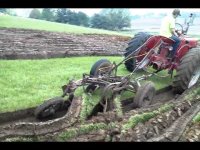
It is a simple process. Garden is about 50x200. I have an old ground powered manure spreader. I usually put 2-3 loads of manure on garden and the plow it under. Then put tiller on and till garden. It tills easy and only one pass is needed. Till it all up in 20-30 minutes. You spend nearly as much time putting tiller on and off tractor an you do actually tilling. It does a really nice job, is very efficient, effective, and is easy on the tractor and tiller.
 
   / Which impliment #23  
I'm not saying yea or nay on this Harley rake, don't know exactly what on is. I'd like to see it tie into some ground seeded down in brome grass. I'm not saying it won't cause I'm not sure what it is. If it will tear up a brome field I'm sold. You got to have a pretty good horse of a tractor to pull a plow through a brome field. Do you have any pics of this thing.

I don't know what brome grass is unfortunately, but it doesn't work like a tiller, it has small carbide knobs on the rotating drum (which does rotate similar to a tiller) which dig up the ground only a small amount at a time. I will typically go anywhere from 1" to 4" deep but usually somewhere in between. What it does is pull all the material out of the ground in front of the implement, and then there is a small opening that all the soil will go back through, which gets deposited behind the power rake, but the larger things like rocks, roots, old metal in the field etc, all get carried in front of it. At the end of the row you have a pile of debris with almost no dirt in it. Or you can windrow and push everything off to the side.

However, eventually you will have a pile of rocks or roots or what have you, to pick up with your bucket.

This job the op is trying to do, is THE purpose of a power rake. Absolutely the tool for the job.

Here is a before and after of some heavier duty use.

i-65TtGGQ-XL.jpg

i-xV94zFb-XL.jpg
 
Last edited:
   / Which impliment #24  
Maybe hire the job out?

When viewing implements look at it as a cost of doing a job. AND, no one says you have to hang on to the implement after it's done the job that you got it for: resell it!

I bought a dump trailer to facilitate a job I was doing on my property. $4k! It did the job, did exactly what I needed it to do (saved my money that I would have had to shell out for someone else to do the job), paid for itself and now is available for whatever else I may need it for: I could resell it and get some money back, but dump trailers are really handy; and, I've got an infinite supply of materials (and possible need) from a neighbor, for free!

Anyway, don't get too hung up on acquisition costs. Also consider resale.
 
   / Which impliment
  • Thread Starter
#25  
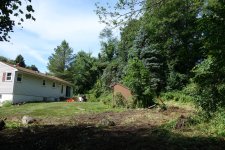
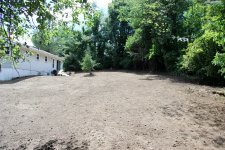
Thanks for all the reply痴 and info guys, you gave me some ideas that I can make work. As far as all the, what I would call 都pecialty equipment goes, they are definitely out because I live in a remote northern community where none of that stuff is available to purchase let alone rent. I did check with a buddy that has a kubota B series tractor and he actually has a pto rototiller that I can borrow. I think it will work fine for breaking up the land because it is sandy soil and isn稚 hard at all. I also have a drag for leveling and smoothing cross country ski trails that would probably work. It痴 6 feet wide and 8 feet long. I will do most of the leveling with my loader bucket and then finish it of with the drag.
Thanks again for the info and ideas
 
   / Which impliment #27  
Spray it with Roundup.
Mow it as absolutely close as possible.
Borrow a small plow or rent a rototiller.
Depending on how much dirt moving you have, a box blade 'could' make your life easier. If its only a bit, you could do it with the FEL, although I think your ultimate outcome would be better with a box blade.

If you have sprinkler irrigation, Broadcast the seed and then rent a roller to firm up the seed bed and improve seed/soil contact. You can rent a straw bale blower from SunBelt or other equipment rental store... OR... you can just break up straw bales by hand and spread it over the yard. Keep it well watered until well established and you will be the envy of your neighborhood.

If you can't rent because of location and lack of rental locations... I'd look for a box blade on Craigslist and do the above. Hand spreading straw isn't that tough... just monotonous.
 
   / Which impliment #28  
I don't know what brome grass is unfortunately, but it doesn't work like a tiller, it has small carbide knobs on the rotating drum (which does rotate similar to a tiller) which dig up the ground only a small amount at a time. I will typically go anywhere from 1" to 4" deep but usually somewhere in between. What it does is pull all the material out of the ground in front of the implement, and then there is a small opening that all the soil will go back through, which gets deposited behind the power rake, but the larger things like rocks, roots, old metal in the field etc, all get carried in front of it. At the end of the row you have a pile of debris with almost no dirt in it. Or you can windrow and push everything off to the side.

However, eventually you will have a pile of rocks or roots or what have you, to pick up with your bucket.

This job the op is trying to do, is THE purpose of a power rake. Absolutely the tool for the job.

Here is a before and after of some heavier duty use.

View attachment 523727

View attachment 523728
Thanks for the explanation, that helps give me a good idea. As far as brome grass, I'm starting to think that maybe a Midwest thing cause you are not the first person who is unfamiliar with it. It kind of grows naturally here along road side and what not. It is kind of hard on the ground (drains the nutrients) so if you want to use it for hay you have to fertilize it every year to get a good hay crop. It has a tremendous root system that sort of spider webs beneath the soil. If you want to plow it under say to plant corn or soybeans it is best to spray it first. When you go to plow the terraces, boy does it pull and beak hard. As far as the grass and hay feature, it depends on how well you fertilized it. Properly fertilized it will be pretty thick and waste high. It make for an excellent choice of hay for cattle. Hope this helps.
 
   / Which impliment #29  
ANY vegetation that could be used as fodder/feed is going to be used for its nutritional content. All extracts from the soils, thus depleting it. Soils rebuild, but WAY slower than we will allow them: soil microbes and rocks/rock dust being the main resuppliers.

I have Reed Canary grass, which, I believe, is probably similar to the brome grass: I've measured a stalk at 9 1/2'! I don't use chemicals, never will: I have animals; and, I basically refuse to use it- watershed area. I have found that repeated mowing will eliminate it, of course, this isn't likely the "solution" the OP is looking for (but for those who aren't in favor of chemicals and are patient then this is a way). I have similar issues with blackberries: takes years of mowing and they'll eventually give up; all mulching helps build up the soil for better grass (which supports healthier soil microbes).
 
   / Which impliment #30  
I'll challenge you on that. Red clover, soybeans, lespadesa are all used to rebuild the soil. This is wht you always plant soybeans behind corn. Corn tends to drain the soil while beans tend to replenish the soil.
 
   / Which impliment #31  
On my property you'll have a hard time getting any of that to grow. I've gotten upwards of 70" of rain in a year. Height of the drought here, almost two months with next to zero rain, I still (no, no irrigation either) had green grass. But, yeah, those are fine (nitrogen building) but they still require basic minerals in the soils in order to exist.
 
   / Which impliment #32  
I'll challenge you on that. Red clover, soybeans, lespadesa are all used to rebuild the soil. This is wht you always plant soybeans behind corn. Corn tends to drain the soil while beans tend to replenish the soil.

I'll challenge that... in a sense. The benefit of soybeans is that it 'helps' replenish the nitrogen content of the soil given the Nitrogen fixing bacteria inherent in its root structure. HOWEVER, ANY vegetation that is removed from the soil in any form will ultimately make the soil 'poorer'. Hay, soybeans, grass, etc. Organic matter in the form of nutrients are removed at fixed degree with crops such as both soybeans and corn. Corn does little to NO rebuilding given the ratio of 'Corn removed is >>> than organic/nutrient matter left over'. Soybeans do the same with everything but Nitrogen in which the ratio of 'Nitrogen left is >>> than nitrogen removed'. Soybeans still remove many other nutrients from the soil leaving it at a deficit.

The only 'real way' to rebuild soil is to plant something and leave it in the ground. Remember, the ONLY thing which is not in the soil to begin with is sunshine, nitrogen (obtained through the air) and water. Everything else which is in a plot of land is already there... whether it is the amount of Phosphorus in sandy or clay soil. The plants break down the soil particles and utilize the nutrients in some fashion. If we leave the plants on that soil, it will eventually have enough plants and roots to break down the soil and add organic matter back via roots and surface debris, to a 'rebuilt stage'.

But if we are taking crops of any sort 'off'... we are decreasing the speed at which that can occur. Many forage crops such as grasses etc which are removed are the worst, simply because of the tonnage of nutrients which can be removed in a year. However, those same grasses, if left on the land, can be some of the best ways to rebuild the land. Cattle can speed the process, IF they are not grazed at a rate which removed the plant material at a faster rate than the 'whole crop' can break down and rebuild. The action of hoof pressure combined with stimulation of cattle saliva on cut plants... (seriously... look it up) causes the plant being eaten to grow at a faster rate than if left completely alone.

There are a HUGE number of variables but the removal of nutrients must be less than the new structure of nutrients produced by the plant, in order for ANY crop to actually be 'rebuilding'.
 
   / Which impliment #33  
It is a simple process. Garden is about 50x200. I have an old ground powered manure spreader. I usually put 2-3 loads of manure on garden and the plow it under. Then put tiller on and till garden. It tills easy and only one pass is needed. Till it all up in 20-30 minutes. You spend nearly as much time putting tiller on and off tractor an you do actually tilling. It does a really nice job, is very efficient, effective, and is easy on the tractor and tiller.

I think your conditions are very different from that of freshly turned long time pasture sod.

image.jpeg

Which is also very different to the conditions of the OP's location. He is located on weathered Canadian Shield. His closest town has a population of just over 5000 people and is a long way from any major town. The area is not a farming region.
 
Last edited:
   / Which impliment #34  
Dadnatron, great post!

I've been mowing for years now, building up soil health. Increased mole activity (in areas where I previously had none) tells me there's more life in the soils now.
 
   / Which impliment #35  
Thanks for the explanation, that helps give me a good idea. As far as brome grass, I'm starting to think that maybe a Midwest thing cause you are not the first person who is unfamiliar with it. It kind of grows naturally here along road side and what not. It is kind of hard on the ground (drains the nutrients) so if you want to use it for hay you have to fertilize it every year to get a good hay crop. It has a tremendous root system that sort of spider webs beneath the soil. If you want to plow it under say to plant corn or soybeans it is best to spray it first. When you go to plow the terraces, boy does it pull and beak hard. As far as the grass and hay feature, it depends on how well you fertilized it. Properly fertilized it will be pretty thick and waste high. It make for an excellent choice of hay for cattle. Hope this helps.

Thanks for explaining that! I have a rule I try to live by, "learn something new everyday". Now I can check today off the list :)
 
   / Which impliment #36  
If you ever have access and time... put an add on Craigslist that you will take 'old moldy hay' if its delivered to 'your place'. Wherever that might be. Pull the twine and compost it for a year or so. Make sure its fully composted as unsold hay is typically weedy hay unless it's just unfortunate bad hay from inopportune weather.

After that hay has composted, take it out to your 'poor producing areas' on your property and lay it on thick. Don't work it in, unless you are specifically already tilling the soil. Just spread it on top of your ground/crop, preferably in the late winter/early spring before regrowth. And watch your production flourish.

If you feed cattle during the winter... feed in areas where your ground is 'weakest' . The left over hay which is stomped into the ground will compost and improve your ground. The only reason I wouldn't immediately spread out new 'rotten hay' is that you will be spreading weed seeds into your place if you don't compost and kill them first. But if you have hay that you KNOW is good quality but just happens to be bad/rain/etc, you could just take those rolls out to your pasture... roll them out, and leave them over the winter. You just have to be confident that you aren't transplanting another guys thistles to your place.

This is a good way to IMPORT soil health materials rather than our usual EXPORT via crop sell, of them.
 
   / Which impliment #37  
I kind of like the idea of feeding cattle up.by the barn all winter and then in the spring spread the manure out in the pasture. Another good organic trick is to harrow the pasture every spring.


Tractor & Equipment Auctions

MANIFOLD TRAILER (A58216)
MANIFOLD TRAILER...
Meyer 8' Snow Plow w/ Bracket (A55272)
Meyer 8' Snow Plow...
2022 CAT 289D3 (A60462)
2022 CAT 289D3...
Bobcat T66 (A60462)
Bobcat T66 (A60462)
1996 FORD F-SERIES FLATBED TRUCK (A52706)
1996 FORD F-SERIES...
CATERPILLAR 627K SCRAPER (A52707)
CATERPILLAR 627K...
 
Top